 Русский





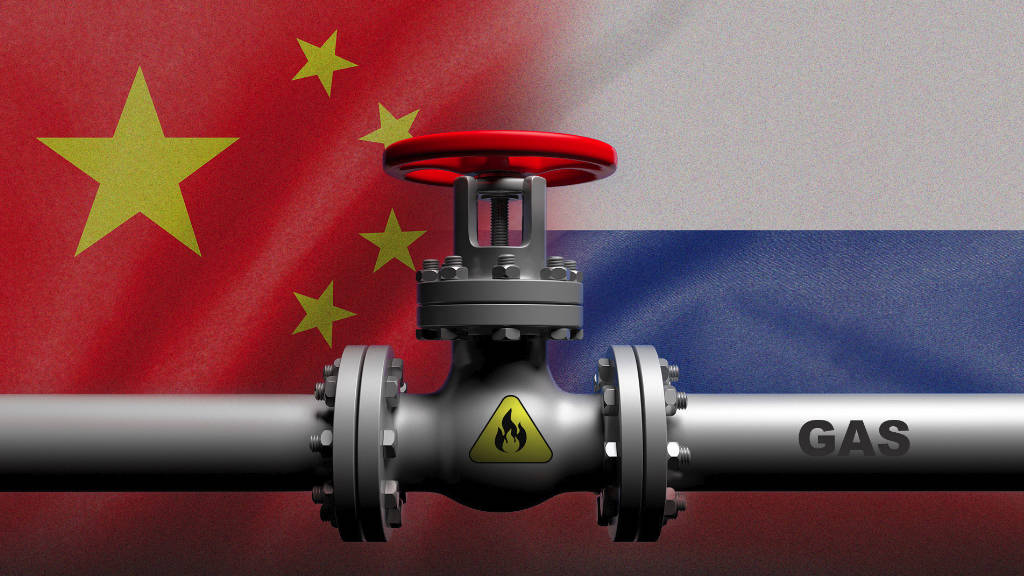

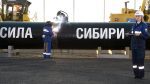
China has signaled further intent and an energy development strategy to secure more natural gas from Russia. The draft version of China’s development blueprint for 2026–2030, submitted to the China National People’s Congress (NPC) last week, states that Beijing will “advance preparatory work on the central route of the China-Russia natural gas pipeline.” This almost certainly refers to the Power of Siberia 2 pipeline and implies that, given the developments in the Middle East, its construction timeframe will be accelerated. At present, the manufacturing logistics and costings are still being worked out.
The move comes as conflict in the Middle East threatens China’s LNG shipments transiting the Strait of Hormuz from Iran, a key energy chokepoint. Although Chinese shipping is permitted by the Iranian side, the costs of regional insurance for ships has skyrocketed, making the route unprofitable.
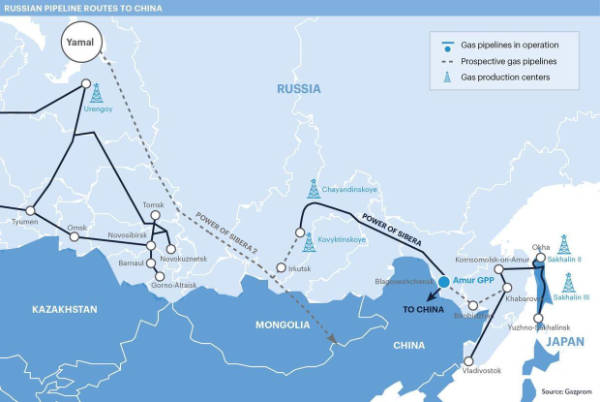
In September last year, Russia and China signed a legally binding memorandum to construct the pipeline after nearly a decade of talks. The agreement was announced during President Vladimir Putin’s visit to Beijing. The pipeline is designed to deliver up to 50 billion cubic meters annually from western Siberia to northern China via Mongolia.
The Chinese budget draft also refers to the “China-Russia Far East Natural Gas Pipeline.” Built by Russia’s Gazprom and China’s CNPC, this pipeline runs from Dalnerechensk, some five kilometers from the Chinese border, and has an annual capacity of 12 billion cubic meters. It is fully constructed and is set to become operational in January 2027.
Russia already delivers natural gas to China via the Power of Siberia pipeline, which began operations in 2019 and reached full operational capacity in December 2024. Moscow has also become Beijing’s second-largest source of LNG, behind Qatar. That though may change if Qatari supplies become problematic.
Middle Eastern supplies have been disrupted over the past week by the escalating conflict triggered by US-Israeli strikes on Iran. China sources around 18% of its LNG from Qatar and up to 5% from the UAE, with cargoes typically routed through the Strait of Hormuz.
Russian President Vladimir Putin warned last week that Moscow could halt gas supplies to the EU ahead of a planned 2027 ban and redirect them to “reliable” partners. Deputy Prime Minister Aleksandr Novak later confirmed that Russia would reroute some LNG from Europe to Asia-Pacific markets, including China. The remarks prompted concern over European energy security and calls from politicians to roll back sanctions on Russian energy.
Despite sweeping Western restrictions, China has deepened energy trade with Russia. Beijing and Moscow declared a “no-limits” partnership in 2022. In a virtual summit with Xi Jinping last month, Putin highlighted bilateral trade exceeding US$200 billion annually for the third year running and Russia’s role as a leading energy supplier to China. Xi, for his part, pledged to deepen energy cooperation at the China-Russia Energy Business Forum in Beijing in November—and the current NPC illustrates that this is exactly what has happened.