 Русский








Chinese investors may participate in a project to develop one of Russia’s largest copper deposits, Russian President Vladimir Putin has stated. He was speaking at the plenary session of the Valdai Discussion Club (We will feature Putin’s full Valdai Discussion Club speech tomorrow).
Putin said that “Chinese companies are among the most active investors in the Russian Far East. A decision is currently being submitted to the government commission, and it looks likely to be positive, regarding one of the largest copper deposits in Russia, and the world. Chinese investors may get involved there. It is located in Siberia.”
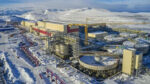
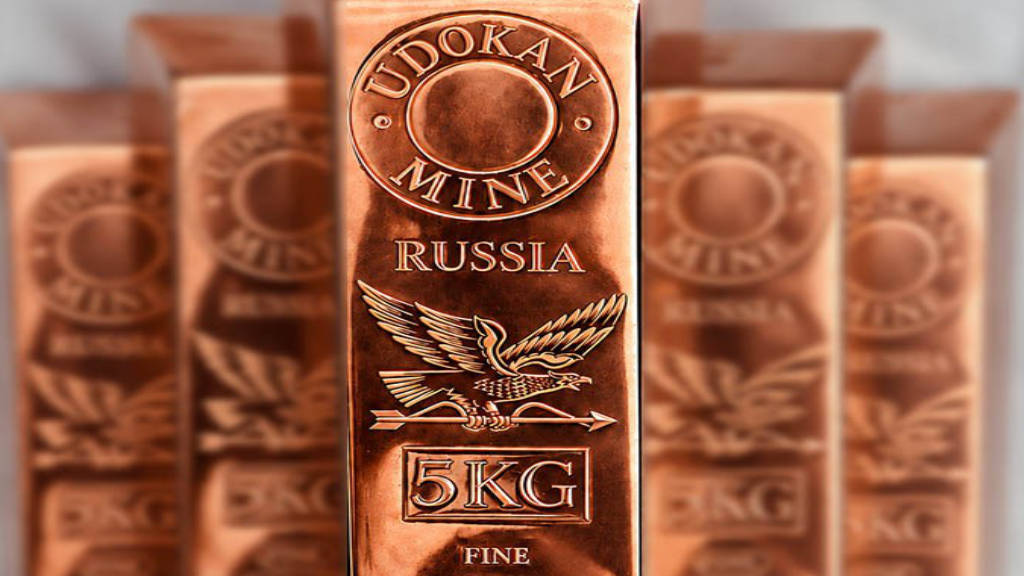
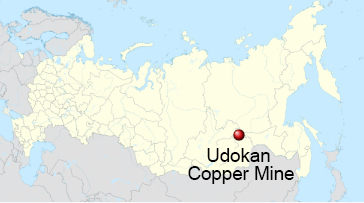
The Udokan deposit in the Zabaykalsky Territory is the largest copper deposit in Russia in terms of reserves. Putin himself inaugurated the hydrometallurgical plant at the Udokan Mining and Metallurgical Complex; the project operator, Udokan Copper, part of the USM holding company, last month, during the Eastern Economic Forum. The complex is now capable of producing cathode copper with a metal purity of 99.99%. Previously, Udokan only produced copper concentrate.
Production capacity of the first phase of the Udokan complex , comprising the processing plant and the hydrometallurgical plant, will average 150,000 tonnes of copper per year. Following the construction of the second phase, this figure will rise to 550,000 tonnes annually, enabling Udokan to rank among the world’s top five copper producers.
The Udokan copper deposit holds an estimated 26.7 million tonnes of copper resources, equating to about 19.6 million tonnes of metal. It is Russia’s largest copper deposit and the third-largest untapped copper deposit in the world, situated in the Udokan Range of the Zabaykalsky Krai (Trans-Baikal Territory) in southeastern Russia, near Novaya Chara and the Baikal-Amur Mainline.
Copper is a critical resource widely used for electrical wiring, plumbing pipes, industrial machinery, and metal alloys like brass and bronze due to its high conductivity, ductility, and corrosion resistance. It is widely used in electrical and electronics equipment, including power transmission cables, residential wiring, motor windings, printed circuit boards, and microchips, as well as electric vehicle (EV) batteries and motors, wind turbine generators, solar panel wiring, and automotive radiators.
It also has important industrial and thermal management uses such as heat exchangers, industrial machinery, and computer heatsinks that pull heat away from processors.
Global copper reserves total approximately 980 million tonnes according to recent U.S. Geological Survey (USGS) data. Over half of the world’s copper reserves are concentrated in just five countries: Chile with 180 million tonnes (around 18% of the global total), followed by Australia (100 million tonnes), Peru (85 million tonnes), and both the Democratic Republic of Congo and Russia at 80 million tonnes each.
Additional notable reserves are held by Mexico (53 million tonnes), the United States (47 million tonnes), China (41 million tonnes), Poland (33 million tonnes), and Indonesia and Zambia with 21 million tonnes each. Smaller reserves are found in Kazakhstan (20 million tonnes), Canada (7 million tonnes), and India (2 million tonnes), with the remaining 210 million tonnes distributed across the rest of the world.