 Русский






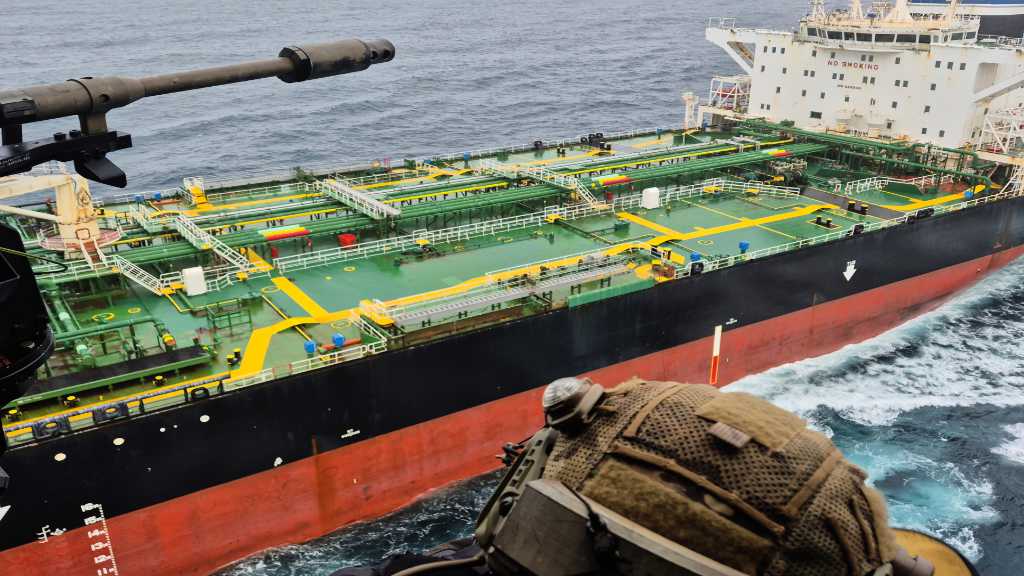

The French Navy, with assistance from British military helicopters have arrested a ship, the Tagor, in the North Atlantic while underway in international waters. The ship was carrying Russian oil to Cameroon. The ship is registered under the Madagascar flag and was engaged in routine shipping.
Both France and the UK have stated the arrest is justified because the vessel is sanctioned under EU regulations. However, the ship was outside EU waters, while neither Madagascar nor Cameroon have issued sanctions against the vessel.
The ship is apparently being escorted, under military instructions, to a port in northern France. The vessel was reported to be “virtually empty,” carrying only about 100,000 barrels of Russian crude oil. At typical 2026 sanctions-adjusted crude rates, 100,000 barrels would be valued roughly in the range of about US$6 million. It is the fourth time since September 2025 that France has apprehended such a vessel. Russia has condemned the incident as ‘piracy.’
The Madagascar Issue
Also concerned will be authorities in Madagascar, where the ship is registered. A ship’s flag registration establishes the vessel’s nationality, subjecting it to the laws and jurisdiction of that specific “flag state.” It grants the vessel the legal right to travel in international waters and provides protection, regulatory standards, and operating privileges.
A registered ship is essentially floating territory of the flag state. The laws of the flag country govern the vessel, handling matters like admiralty cases, crimes on board, and contracts. It grants the vessel the right to navigate international waters and ensures that the flag state has the authority to protect the ship and its crew under international law.
The correct procedure would have been for the French authorities to inform the Madagascar authorities about any concerns they may have had over the vessel, and to leave the handling of any errant issues to the Madagascan Navy and Coast Guard to deal with. The Madagascar navy includes 500 sailors and possesses seven ships, two of which were purchased from France. The country has five naval bases. It was a French colony from 1883 until 1960. It is worth noting that France achieved its colonial status over Madagascar by bombing Majunga, the then financial capital.
Bilateral relations with France are strained due to Madagascar’s efforts to curb former French colonial influence and pivot toward alternative strategic alliances, including Russia and China.
It is uncertain whether France engaged in any diplomatic notice with Madagascar concerning the arrest of the Tagor.
The Cameroon Issue
The original planned route for the Tagor was to arrive at Cameroon, presumably at the main port at Limbe, which possesses oil refining capabilities. The fact that the oil cargo was underway suggests that contracts had been agreed between the Russian seller and the Cameroonian purchaser, and duly factored into Cameroon’s energy needs. While Cameroon is an oil-producer in its own right, its domestic refined production is insufficient to meet its requirements, hence the need for imports. The Tagor was estimated by the French authorities to be carrying 100,000 barrels of Russian crude—equivalent to just two days of Cameroonian consumption. Why instigate such actions for a relatively small amount?
Meanwhile, in historical terms, Cameroon was divided among both British and French colonialists from 1915 to 1960. It too has difficult relations with France as regards the colonial legacy but does maintain strong trade ties.
The Russian Issue
Russia is apparently the owner of the contents, valued at about US$6 million. It will be concerned about what now happens to this oil. There are two scenarios: either the ship is allowed to continue its journey to Cameroon or France may seize the oil. In the latter situation, Russia will declare this a theft and instigate legal actions.
Summary
The apprehension of the Tagor is curious in many ways, as firstly, it contravenes international maritime laws. The actions of the French and the British imply that sanctions imposed by them are higher in rank than previously internationally agreed legislation. This is a breach of those internationally understood agreements and renders the understanding of these as at best ‘flexible’—or in stronger words, a breakdown of the global regulatory system in favour of local military might.
Also curious is the reason why. The tanker was only carrying a relatively small amount of oil valued at about US$6 million and en route to a non-sanctioned country, operated under a non-sanctioned national flag. The operation costs to apprehend it will have equated to about the same as the content value. In pure economic terms, the arrest of such a cargo is nonsensical.
France and the UK have also shown apparent disregard for their previous colonial possessions. They have long been accused of riding roughshod over their previous territories, with this latest incident showcasing this further. In arresting a ship carrying Russian cargo, they have also damaged their diplomatic relations with two African nations. None of this makes either diplomatic, economic, or sanctions imposition sense. It is a relatively small seizure of a ship going about its normal business and involving African nations that are not sanctioned by the EU. The only assumption can be that this exercise was carried out as a form of harassment against Russia and to annoy Moscow. However, the annoyance created is likely to stretch rather further. In footballing terms, actions such as these amount to little more than showboating. The question is whether these arrests are really worth the actual results.