
 Русский






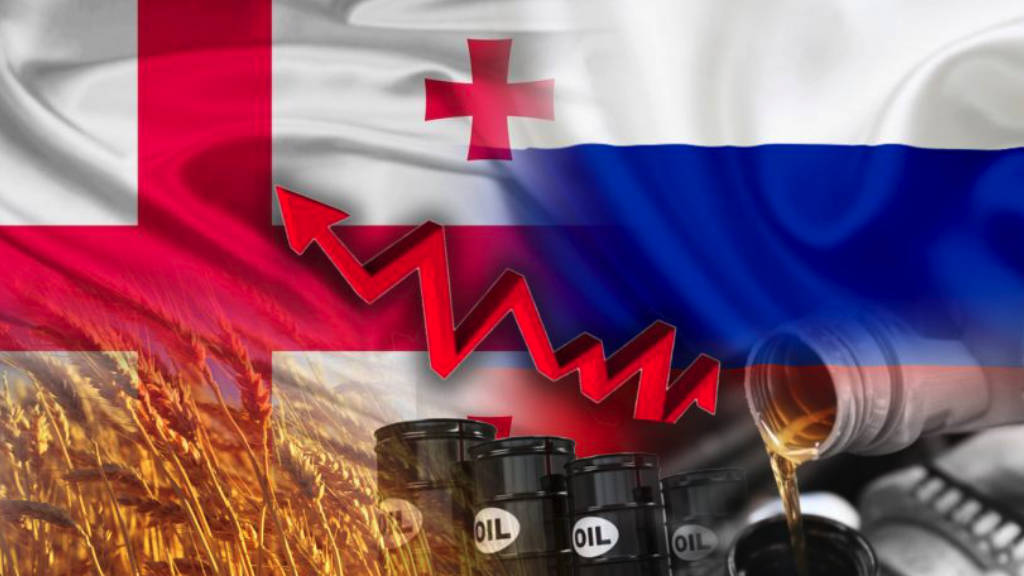

Georgian petroleum product supplier companies have approximately a two-week supply of fuel, and although the country lacks large storage facilities, a shortage is not expected given increased supplies available from Russia, according to Vakhtang Iobashvili, the chairman of the Georgian Association of Oil Products Importers and Distributors.
He stated that “We have a two-week period to find new strictures for importing petroleum products. We have about two weeks of reserves, because large amounts of supplies require large oil terminals.”
Georgia does not have large petroleum product storage facilities due to the high cost of their construction, Iobashvili said. “There are no large Georgian oil terminals, as this is an expensive luxury. All our oil refining companies have small reserves. Importing and storing large amounts requires a lot of money, and it should also be noted that gasoline quality deteriorates over time. However, a shortage of petroleum products in Georgia should not be expected, considering available imports from Russia. According to the U.S. Department of the Treasury, all restrictions on Russia may be lifted. Because a shortage has formed on the global oil market, and Russia will fill it. As of today, we no longer have problems with product supplies from Russia; all structures are working. Be it railways, sea, or ports, we are ready for everything. We are also ready to buy wherever we find petroleum products cheaply. A shortage is not expected. There will be no famine on the Georgian oil market.”
European Exposure
Georgia’s position is similar to many other eastern regional markets, where its geographical position means it has available energy sources from Russia, as do Armenia, Azerbaijan, and Kazakhstan. The energy problems lie to the West and in Europe, where political isolation from Russia has cut off energy supplies, as has the Iranian conflict, making the European region dependent on either its own small supplies from Norway, pipeline supplies via Turkiye or shipped in from the United States. Of these, the TurkStream pipeline is regionally significant, providing the EU with the sole remaining, consistent, and direct pipeline conduit for Russian gas to Central and Southeast Europe, channeling about 18 billion cubic meters (bcm) annually, after Ukraine cut its pipeline supplies from Russia to Europe from 2025.
Ukraine’s position in this supply chain mix should not be underestimated. Its refusal to transit gas from Russia to Europe makes some sense in terms of its ongoing conflict with Russia; however, it also illustrates that Kiev wishes to insert itself directly into European energy supply chain needs. It should be noted that its intent to force this issue has been the subject of some concern that Kiev has plans to attack the TurkStream pipeline to the EU. That would make the EU wholly dependent upon Ukrainian pipelines. Given that these concerns were raised by Russian President Putin and transmitted to the Turkish President, it has at present been enough to persuade the EU that this is Russian propaganda. However, it should also be noted that the Ukrainian motivation remains. The EU’s energy position therefore remains precarious.
In contrast, in terms of Georgian supplies, it purchased 1.8 million tonnes of petroleum products in 2025, up 13% compared to the previous year, which were worth US$1.35 billion (+4%). Russia remains the largest supplier with a share of more than 40%; supplies amounted to 694,000 tonnes in 2025 (-0.6%). Romania is in second place at 306,000 tonnes (+46%), followed by Bulgaria with 264,000 tonnes (+19%), Azerbaijan with 172,000 tonnes (+30%), and Turkiye with 120,700 tonnes (+37%). If TurkStream were attacked, Georgia could rely instead on supplies from Russia or Azerbaijan, meaning the country’s energy security is currently sustainable.