
 Русский










Russia is introducing multiple improvements to its various social security payments to citizens during 2026, with increases across the board—good news for Russian nationals. These range from financial support for families to taxation and pension payments. Basic pension indexations will be implemented, new tax breaks for families with children will be introduced, and other measures aimed at improving citizens’ living standards will be implemented. We identify these increases and when they will become available.
Pensions Increases

In 2026, several payment increases are planned for different categories of pensioners. From January 1, the state insurance pension will be indexed by 7.6%, meaning it will more than keep pace with the inflation rate (now just under 6% and scheduled to fall further during the year). The fixed pension from the state will be ₽9,584.69 (US$121). The increase will affect both working and non-working pensioners. For pensioners who turn 80 in 2026, as well as citizens with the first disability group, their pension will be doubled.
Starting April 1, the pension will then be indexed by 6.8%, after which its base amount will be ₽9,424.12.
Military pensions are expected to increase by 4% commencing October 1, 2026.
Minimum Wage

In 2026, a significant increase in key social indicators affecting the size of payments and citizens’ incomes is planned. Effective January 1, the per capita subsistence minimum will increase to ₽18,939 (US$240). For the working-age population, it will be ₽20,644; for children – ₽18,371; and for pensioners – ₽16,288. However, regional subsistence minimums may differ from the federal level.
The minimum wage will also increase starting January 1. It will be set at ₽27,093 (US$343) and will apply throughout Russia. It cannot be lower than the regional subsistence minimum and directly affects wages, benefits, and social payments, as well as the calculation of insurance premiums and alimony.
Maternity Pay

Effective February 1, 2026, maternity capital will be indexed by 6.8%. After the increase, the payment for the first child will be approximately ₽737,200 (US$9,320), and the payment for the second child will approach ₽1 million (US$12,650). The exact amounts will be published at the beginning of the year. This goes hand in hand with Russia wanting to stimulate its birth rate, which has fallen to historic lows.
The indexation is stipulated by the federal budget law and will apply not only to new certificates but also to any unused balances. Maternity capital can still be used to improve housing conditions, pay for children’s education, or build up the funded portion of a pension.
Child Care Allowance (to 18 months)

In 2026, the minimum child care benefit for children up to eighteen months old will increase, following the increase in the minimum wage. The minimum payment of about ₽10,700 can be claimed by mothers who are not officially employed, students, and employees with less than six months of insurance coverage. The maximum payment will be approximately ₽80,000.
Maternity benefits for citizens who have entered into a voluntary insurance agreement with the Russian Social Fund will be calculated based on the minimum wage in 2026. This category includes individual entrepreneurs, lawyers, and other self-employed professionals who have paid insurance premiums.
Unified Benefits and the “8 Minimum Wages” Rule

From January 1st, the “8 minimum wage” rule will apply to eligible children’s benefits for able-bodied family members. If the income of each adult family member during the billing period falls below this threshold, the payment may be denied.
Given that the minimum wage has been set at ₽27,093 from January 1, 2026, the minimum annual income for each able-bodied family member must be at least ₽216,744. The calculation period covers 12 months.
If the applicant or their family members lack the minimum income for valid reasons, this must be documented. However, exceptions to this rule are provided for large families and families raising children with disabilities.
Family Mortgage Loan Terms Tightened

In 2026, the terms of family mortgages will be tightened, limiting the use of subsidized loans for investment purposes. The main change is the “one family, one subsidized loan” rule.
From February 1, 2026, only families with children aged six and under will be able to apply for a family mortgage at the preferential 6% rate. Families with older children will only be able to purchase housing through market-based mortgage programs.
Both spouses are required by the agreement to act as co-borrowers. The previous option for each spouse to apply for a separate, preferential loan is no longer available. Third-party co-borrowers are also no longer permitted.
Allocation of Property Shares to Children

Effective January 1, 2026, the procedure for allocating shares to spouses and children in housing purchased with a mortgage using maternity capital funds will be simplified. Written consent from the mortgagee bank will no longer be required.
Parents will be able to register joint property ownership after the mortgage loan is repaid, or even before it is fully closed, without further approval from the lending institution. These changes are enshrined in Federal Law No. 195 of July 7, 2025.
At the same time, the rule that property remains pledged to the bank until the loan is fully repaid remains in effect.
Far Eastern and Arctic Mortgage Terms

In 2026, preferential mortgage options for the Russian Far East and Arctic regions will be expanded. The interest rate under the program will remain at 2%, while the maximum loan amount will increase to ₽9 million (US$114,000) for the purchase or construction of a home over 60 square meters in size and up to ₽6 million (US$76,000) for the purchase of an apartment.
For families with three or more children, the program will become more accessible. Age restrictions for parents will be lifted if the third child was born after January 1, 2024. Previously, only young families with parents under 35 could take advantage of the preferential mortgage.
Housing and Communal Services

Effective March 1, 2026, utility payment deadlines in Russia will change. The payment deadline will be moved to the 15th of the month following the billing month. Previously, the deadline was the 25th. The new rules are aimed at improving consumer payment discipline.
Late payment penalties will begin to accrue starting on the 16th at a rate of 1/130 of the Bank of Russia’s key rate for each day of delay. The deadline for submitting payment documents will also change. Starting in 2026, they must be submitted no later than the 5th of the month following the billing month, instead of the previously applicable 1st.
Income Tax Deductions

Effective September 1, 2026, the personal income tax deduction for long-term savings products, such as the IIS-3, the long-term savings program (LTSP), non-state pension provision (NSP), and others, will increase. If parents contribute to these products for their children, the deduction limit for each parent will increase from ₽400,000 to ₽500,000. (US$6,320). The maximum deduction for a family can reach ₽1 million.
The right to an increased deduction is granted provided the child is under 18 years of age, or 24 years of age if studying full-time. The deduction calculation mechanism remains the same, but the increased limit is only based on contributions made on behalf of the child.
The tax treatment for payments under the PDS is also being clarified. They will be subject to personal income tax at rates of 13% or 15%, depending on the size of the tax base. Progressive rates of 18–22% will not apply. Thus, the tax treatment for PDS is aligned with the current rates for insurance payments, pensions, and income from securities and derivative financial instruments in individual investment accounts.
Additionally, the tax changes establish rules for employer contributions. Contributions under the Social Tax will be included in employer expenses up to 12% of the payroll fund, and amounts within this limit will not be subject to insurance contributions—calculated per individual employee for the relevant billing period.
New Rules for Buying On Credit

Starting April 1, 2026, new rules for installment payment services, including popular BNPL services, will come into effect in Russia. These rules are stipulated by the law “On the Activities of Providing Installment Payment Services,” adopted in June 2025. The key change is that when purchasing an item on an installment plan, its price must be the same as if it were paid in full. Furthermore, the law prohibits any hidden fees or additional charges.
The new rules also allow for early repayment of the debt at any time without penalties or fees. However, there are limitations on the installment plan duration: from April 1, 2026, it cannot exceed six months, and from April 1, 2028, it cannot exceed four months.
For violation of installment payment obligations, a maximum penalty amount is introduced—no more than 20% per annum of the user’s overdue debt amount.
Particular attention is being paid to the transparency of such obligations. Installment plans for amounts of ₽50,000 (US$760) or more will be reported to credit bureaus and reflected in credit histories. Banks and microfinance organizations will be able to consider this data when reviewing loan applications.
However, the new requirements apply only to cases where installment plans are offered by a specialized online payment service. They do not apply to situations where installment plans are offered by the seller themselves, such as a housing developer, nor do they apply to point-of-sale loans or installment cards.
Ban on Automatic Debiting of Funds from Cards
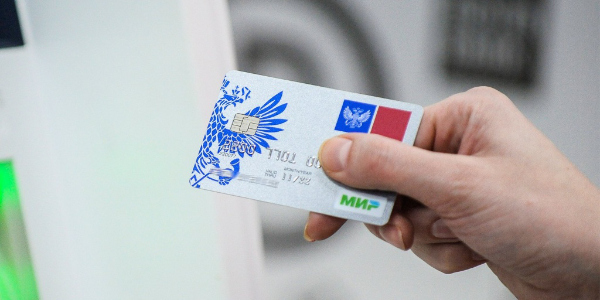
Starting March 1, 2026, online services will no longer be able to automatically debit users’ bank cards if they have previously blocked such transactions for subscription service payments from a specific card. The new rules are aimed at strengthening citizens’ control over regular payments and protecting them from unwanted charges. The corresponding amendments to the Law on Consumer Rights Protection were adopted in October 2025.
The law could affect a variety of popular online services, including online cinemas and music platforms, as well as gaming services and mobile apps with subscriptions and premium features.
Additionally, restrictions may apply to educational platforms and language apps with monthly subscriptions, as well as marketplaces and delivery services that use auto-renewal subscriptions, such as paid delivery or loyalty programs.
However, the new regulations do not apply to cases where the user pays for services manually each time; such payments will still be possible without restrictions.
Securities Trading

Starting September 1, 2026, the procedure for transferring securities between brokers in Russia will be simplified. Through the Faster Payment System (FPS), investors will be able to transfer Russian stocks and bonds available to non-qualified investors from one broker or management company to another.
Previously, to transfer assets, investors had to personally obtain a package of documents from their current broker and transfer them to the new professional participant. This procedure typically required a personal visit to the broker’s office and was time-consuming. The introduction of transfers through the Fast Payment System (FPS) will allow such transactions to be conducted electronically, reducing the timeframe and making the process more convenient for private investors.
Further Reading
The Moscow Stock Exchange Ends The Year Where It Began: Russia 2026 Market Predictions