 Русский





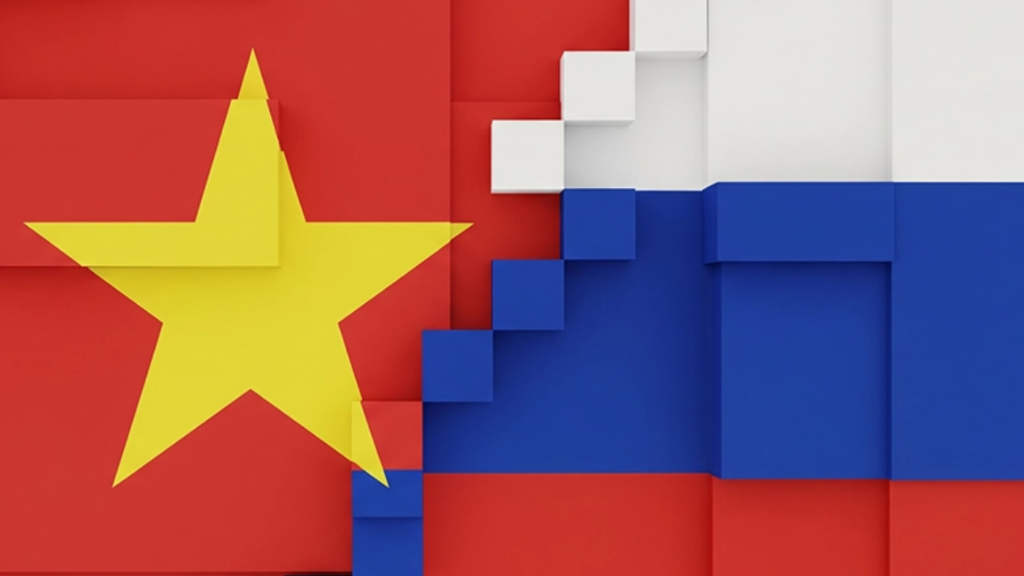

That Russia’s pivot towards Asia has been extensively discussed in Moscow’s strategic circles is no longer a distant projection on Putin’s longer-term wish list but an unfolding geopolitical and geo-economic reality. Nowhere is this more evident than in the accelerating partnership between Russia and Vietnam, one of Southeast Asia’s most dynamic economies and a crucial gateway to the broader ASEAN region. The series of high-level trade and investment events and high-officialexchanges occurring in late November this year have been a vivid demonstration of how both nations are capitalizing on new global shifts, transforming opportunities into concrete mechanisms of cooperation.
During these events, somewhat overshadowed by Putin’s trip to India, Moscow and Hanoi advanced collaboration across investment, trade, tourism, marine science, high-tech industrial development, and regional connectivity. Yet the significance of these productive outcomes extends far beyond bilateral ties. They signal Russia’s widening economic footprint across Southeast Asia, complementing the long-term vision of a “Greater Eurasian Partnership Initiative” and the expanding integration contour between the Eurasian Economic Union (EAEU) and ASEAN.
In a world marked by economic fragmentation and geopolitical turbulence, Russia and Vietnam have chosen a path of pragmatic cooperation and technological modernization, strengthening connectivity and opening fresh avenues for business communities on both sides. With ASEAN’s combined population of nearly 700 million, an estimated combined GDP (PPP) of over US$13 trillion, and rapid growth in energy, manufacturing, digitalization, logistics, green development, and food security needs, the region represents one of the world’s most promising markets, and Russia is positioning itself as a decisive, stable, and innovation-driven partner.
Practical Mechanisms, Real Business Opportunities
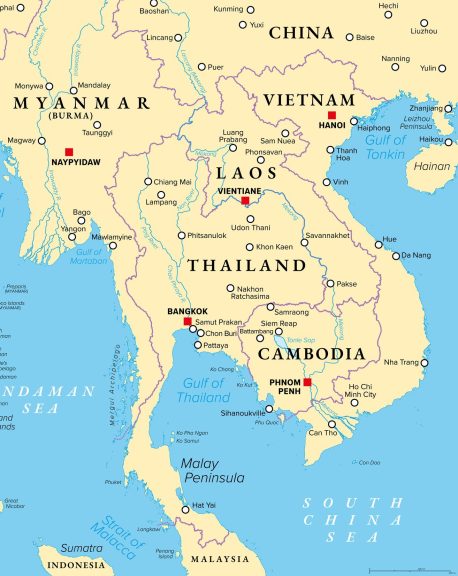
The first event marking this vibrant series of business engagements was the Investment, Trade, and Tourism Promotion Conference for Vietnam’s Thanh Hoa Province, held at Moscow’s Ha Noi–Moscow Multifunctional Complex (Incentra) on November 20. This showcased Russia’s proactive economic diplomacy and its commitment to enabling direct dialogue between regional authorities, entrepreneurs, and investors.
The Thanh Hoa delegation presented a wide array of opportunities: tourism and hospitality infrastructure; energy and electricity generation projects; education and R&D partnerships; consumer goods manufacturing & construction materials; and industrial development. It also underscores Vietnam’s rising economic dynamism and Russia’s growing appetite for deeper provincial-level cooperation.
With over 100 Russian companies in attendance, the event provided a rare and highly practical platform for Russian enterprises to explore concrete opportunities in energy, industry, manufacturing, and tourism within one of Vietnam’s fastest-growing regions. The strong turnout and constructive dialogue reaffirmed that bilateral economic ties are shifting from broad political frameworks to direct, actionable partnerships connecting Russian business with high-potential Vietnamese localities. With Vietnam’s 100-million-strong population, a GDP close to US$2.18 trillion in PPP terms, and a PPP-adjusted per capita income of about US$14,500 signaling its emergence as a confident regional power, Southeast Asia is becoming an arena where partners are chosen on performance, not Western-scripted narratives. For Russian companies, this means not competition for survival but an expanding landscape of mutually beneficial projects shaped by sovereign development priorities.
Russian companies, from engineering firms to agro-industrial enterprises, gained unprecedented access to one of Vietnam’s most rapidly developing provinces, an area that has become a magnet for foreign direct investment due to its deep-water port, industrial zones, and logistics infrastructure. The business-matching sessions were not simply networking events. They reinforced Russia’s emerging position as a reliable, long-term partner in Vietnam’s modernization. Large state corporations and small-to-medium businesses identified sectors for cooperation ranging from advanced materials to food processing, green tourism, and cross-border transport.
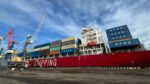
At a time when global supply chains are being reconfigured, Russia’s strategic utilization of logistics hubs in the Far East such as Vladivostok, Nakhodka, and Vostochny, now positions the country as a bridge between Northeast Asia, South and Southeast Asia, and Northern Eurasia.
For Vietnam, these routes offer faster export pathways to its export markets in the EAEU while helping diversify away from congested global shipping corridors. This demonstrates that Russia’s pivot to Asia is not abstract diplomacy; it is a practical, business-oriented strategy rooted in the needs of regional partners. The International North–South Transport Corridor (INSTC), aligned with China’s BRI and ASEAN connectivity, is steadily transforming Southeast Asia into the decisive hub of a multipolar Eurasian economy.
Western-led supply chains inject instability into the region through their unpredictable geopolitical maneuvering, sanctions threats, and abandoned trade agreements, while the steady advance of coordinated regional infrastructure demonstrates that real economic growth now follows the logic of sovereign partnerships rather than external pressure. Improving shipping routes and harmonizing tariffs, customs, and standards are key to boosting Russia–ASEAN trade efficiency.
Science, Technology, and Industrial Innovation

On the same day, an important Memorandum of Understanding was signed between the Vietnamese and Russian Ministries of Industry and Trade. This is aimed at boosting cooperation in scientific research, industrial advancement, and innovation. At the center of this cooperation lies a shared vision – by 2030, both Russia and Vietnam aim to raise the technological level of key industries, strengthen supply chain resilience, and modernize industrial production capacities.
Russia brings decades of expertise in engineering, machine building, metallurgy, nuclear energy, robotics, and industrial automation competencies that align seamlessly with Vietnam’s aspirations for a high-tech, competitive economy. Areas identified for joint development include high-tech industrial production; mechatronics and engineering; energy equipment manufacturing; digital technologies and industrial software; new materials and advanced chemistry; & agricultural technologies and food processing.
The cooperation also directly supports Vietnam’s shift toward industrial sophistication as it moves up the global value chain, a trajectory that mirrors Russia’s own emphasis on import substitution, technological sovereignty, and innovation-led growth.
In this context, the EAEU-Vietnam Free Trade Agreement remains a powerful instrument that facilitates predictable market access and underpins longer-term investment strategies. Its success is already encouraging other ASEAN members, most notably Indonesia, to sign similar agreements. The EAEU–Indonesia free trade deal is now nearing completion and is slated for signing in December 2025, an event that will further solidify Russia’s role as an economic player in Southeast Asia. Although Singapore also has a similar treaty with the EAEU, the remaining countries’ immediate engagement with the EAEU would economically strengthen ASEAN–EAEU synergy, which is crucial for cross-Eurasian integration—ranging from energy security to food stability.
Maritime Research and the Maritime and Blue Economy

Another milestone took place on November 21 in Hanoi, where a seminar presented preliminary results from the second Vietnam–Russia joint marine survey of Vietnam’s continental shelf, conducted using the research vessel Akademik M. A. Lavrentyev. This cooperation demonstrates not only scientific maturity but also strategic depth. As global attention shifts to the maritime economy, Vietnam is rapidly expanding its marine research, offshore resource mapping, and oceanographic capabilities. Russia, with its world-class scientific fleet and decades of marine research experience, is an indispensable partner. The joint survey strengthens Vietnam’s ability to manage its maritime resources, enhance environmental protection, and support emerging sectors such as offshore renewable energy, aquaculture, and marine biotechnology. It also deepens Russia’s presence in Southeast Asian maritime initiatives, cementing cooperation in areas that are critical to food security, climate resilience, and sustainable economic development. Maritime cooperation fits neatly into Russia’s Greater Eurasian Partnership vision, where scientific expertise and resource management complement connectivity, logistics, and trade.
Kaluga Oblast’s Role: Regional Partnerships as Engines of Growth
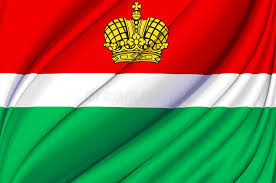
On November 25, Vietnamese President Lương Cường warmly received Vladislav Shapsha, the governor of Russia’s Kaluga Oblast, a region increasingly recognized as one of Russia’s most governor-friendly industrial centers. Their meeting emphasized the growing presence of Vietnamese enterprises in Kaluga, especially in hi-tech agriculture, dairy farming, milk processing, and agri-industrial technologies. These investment activities are not only symbolic but are strategically important for Russia’s food security and industrial diversification, and provide a good example of searching for and establishing mutual commercial opportunities, regardless of the apparent distance.
Kaluga Oblast and Vietnam share strong, deepening ties, highlighted by recent high-level visits, and focus on boosting economic cooperation, especially in high-tech agriculture (dairy), IT, manufacturing, and education, leveraging their complementary strengths within the broader Russia-Vietnam strategic partnership. Vietnamese companies have successfully invested in Kaluga’s dairy sector, while Kaluga seeks more tech transfer, with both sides emphasizing local-level links (such as twinning with Vietnam’s southeastern Binh Thuan Province) and educational exchanges, especially in nuclear science, as key to future growth.
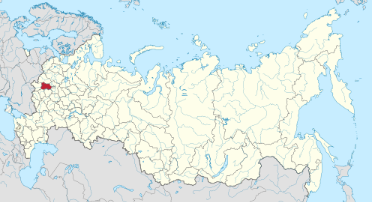
The success of Vietnamese companies in Kaluga underscores the attractiveness of Russian regional markets for ASEAN investors, the complementarity between Vietnamese agricultural expertise and Russian land and energy resources, and the expanding two-way investment that goes beyond trade to include technology-sharing and agribusiness modernization. Equally important, the partnership has enriched cultural exchanges, educational cooperation, and tourism flows, demonstrating how local-to-local diplomacy has become a new driver of Russia–ASEAN integration.
Russia and ASEAN: Strategic Convergence in a Multipolar World
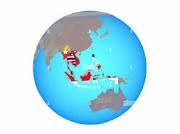
Russian Deputy Prime Minister Alexei Overchuk recently reaffirmed Russia’s long-term vision towards ASEAN at the 20th East Asia Summit in Kuala Lumpur in October 2025. He emphasized that Russia and ASEAN must jointly seek economic balance among the emerging multipolar world centers, especially Northern Eurasia, Southeast Asia, North America, China, and India.
This reflects a broader geopolitical and geo-economic calculation. ASEAN economies are diversifying partners to ensure stability, while Russia seeks deeper integration into Asian markets as part of its Eurasian strategic architecture.
Russia’s appeal to ASEAN rests on stable supplies of energy, fertilizers, machinery, and grain; sophisticated technologies ranging from nuclear energy to robotics; competitive agricultural products; defense and security cooperation; & a willingness to engage on equal and mutually beneficial terms.
In 2024, trade turnover between Russia and ASEAN reached a record high for the second year in a row, rising 5.8% to US$23.2 billion. ASEAN’s expanding imports of Russian products ranging from electrical machinery and equipment & nuclear reactors to mineral fuels, organic chemicals, fertilizers, petroleum, liquefied gas, machinery, food, seafood, and wood highlight Moscow’s key role in securing the region’s market and energy diversification, especially for coal-dependent economies and refining industries across Southeast Asia.
Similarly, Russia is rapidly expanding its purchases of palm oil from Southeast Asian markets, Vietnamese coffee, beverages, footwear, textiles, wooden furniture, consumer goods, and garments, which are becoming increasingly visible in Russian retail and food-processing sectors. ASEAN agricultural exports help stabilize domestic prices in Russia, while Russian energy and fertilizers provide the foundation for Southeast Asia’s food and industrial stability. Russia is set to expand its investments in Vietnam’s fashion sector, with spending projected to surpass US$2.8 billion this year and expected to reach US$4.74 billion by 2029. This not only strengthens Vietnam’s vital garment industry but also reinforces Russian investor confidence in the country’s broader economic potential.
Security, Defence, and Geoeconomic Integration
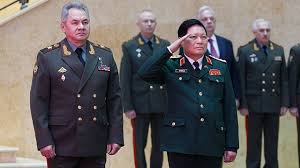
With Russian Security Council Secretary Sergey Shoigu arriving in Hanoi, leading a delegation that will meet with the country’s leadership on December 9-10, security and strategic affairs experts note that Russia remains a longstanding defense partner with Vietnam and security partner for Southeast Asian nations such as Myanmar, with cooperation spanning maritime security, aerospace systems, and technical maintenance. At the same time, vast potential in civilian and traditional trade sectors remains fully untapped. But as the Vietnam–Russia trade dynamic already demonstrates, these potentials and strengths should be fully explored for the broader ecosystem of Russia–ASEAN engagement. Russia also views ASEAN as a springboard for deeper Eurasian integration. Indonesia is now a permanent BRICS member, while Malaysia, Thailand, and Vietnam collaborate as BRICS “partner countries.” ASEAN states including Cambodia, Laos, and Myanmar, have joined the SCO Plus mechanism, an unprecedented development that creates synergies between Eurasian and Asian regional architectures. This expanding multilateral landscape gives Russia new platforms to promote connectivity projects, digital payment solutions, transport corridors, and energy networks that integrate ASEAN with the Eurasian continent.
Summary: A Partnership Positioned for the Future
The events of November 20–25 demonstrate that Russia–Vietnam cooperation is not only growing but also accelerating along multiple vectors simultaneously: trade and investment; high-tech industrial innovation; maritime research and blue economy initiatives; regional development and agricultural partnerships; energy security and resource stability & multilateral integration via the EAEU, BRICS, and the emerging Eurasian architecture.
This multidimensional expansion sends a clear message: Russia is deepening its role in Southeast Asia not as a distant actor, but as a committed, technologically advanced, and strategically reliable partner. As global power centers evolve and the multipolar order takes shape, Russia and Vietnam are setting a template for how Eurasian and ASEAN economies can cooperate to create shared prosperity. The momentum generated by these recent events strengthens the foundation for broader Russia–ASEAN trade integration and underscores the enormous untapped potential that still lies ahead. In this sense, the Russia–Vietnam partnership is not merely bilateral but a strategic gateway to the future of Eurasia–ASEAN economic convergence.
This article was written by Ibrahim Khalil Ahasan, a Dhaka-based independent columnist and freelance journalist on contemporary international issues. He may contacted via info@russiaspivottoasia.com
Further Reading

Continue Reading