 Русский




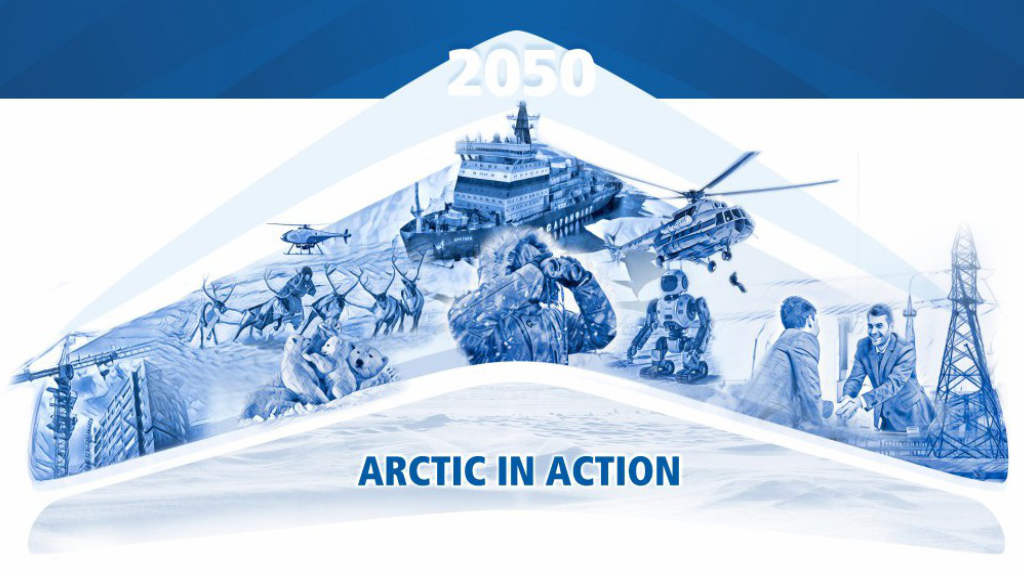

The Arctic Present and Future forum was held between December 9 and 10 in St. Petersburg, and reaffirmed a simple but powerful truth: the Arctic is no longer a distant frontier of ice and exploration, but it is becoming one of the central arteries of the 21st-century global economy. Against a backdrop of geopolitical turbulence and climate-driven transformation, Russia is repositioning the Arctic as a platform for connectivity, investment, and mutually beneficial cooperation, particularly with Asia.
Organised by the Association of Polar Explorers and whose president is Arctic researcher Arthur Chilingarov, the forum brought together federal and regional authorities, parliamentarians, indigenous representatives, scientists, diplomats, and business leaders. Its message was consistent and deliberate: Russia’s Arctic strategy is not episodic or tactical, and it is structural, long-term, and deeply economic in nature.
It is also worth noting that the 6th International Arctic Forum, held on 26–27 March in Murmansk under the theme “To Live in the North,” reinforced Russia’s long-term Arctic vision by placing socio-economic development at the centre of regional strategy. Organised by the Roscongress Foundation with government support, that forum focused on natural resource processing, Northern Sea Route expansion, energy systems, logistics, and urban modernisation. Together with this December’s St. Petersburg forum, these events underscore Moscow’s commitment to multilateral cooperation and sustainable investment as the Arctic transitions from frontier to economic heartland.
They strengthen Russia’s case for the Arctic as a long-term investment destination by firmly linking resource development with transport, energy, and urban infrastructure. By convening successive high-level platforms to unlock Arctic potential for Asian partners, the forums highlighted the Northern Sea Route as a commercial and connectivity-driven corridor rather than a geopolitical abstraction. Taken together, they positioned the Arctic as an emerging hub for Eurasian trade, capital flows, and industrial cooperation, anchored in pragmatic economics and long-term development.
The Arctic in Russia’s Economy

Russia possesses nearly half of the Arctic coastline, the world’s only nuclear icebreaker fleet, and an unmatched logistical footprint across high latitudes. These are not symbolic advantages; they are material foundations of economic power. According to official estimates, the Russian Arctic already contributes over 6% of national GDP and more than 10% of exports, primarily through energy, metals, and mineral resources. Russia accounts for over 53 percent of the Arctic Ocean coastline, with approximately 2.5 million citizens living in its Arctic territories—nearly half of the Arctic’s total population worldwide. Stretching across 24,150 kilometers of coastline, the Russian Arctic encompasses the Murmansk Region, Nenets, Yamal-Nenets, and Chukotka Autonomous Okrugs, the Komi Republic, and northern areas of Arkhangelsk, Krasnoyarsk Krai, Yakutia, and Karelia, alongside vast Arctic archipelagos. This geographic scale makes the efficient and sustainable development of the Arctic a core national priority for the Russian Federation.
Beyond resources, the region represents a long-term platform for transport, energy, logistics, and urban infrastructure expansion. Backed by special preferential regimes and priority development areas, Russia’s Arctic and Far Eastern strategy is already delivering tangible results, with more than 1,000 investment projects launched and over ₽2.5 trillion (US$31.5 billion) of private investment attracted, as noted by Alexey Chekunkov, the Minister for the Development of the Russian Far East and Arctic.
Building on this momentum, President Vladimir Putin has proposed the introduction of a unified preferential business regime across the entire Far East and Arctic from 2027, creating a single, predictable investment space. By preserving the advantages of existing advanced development territories while harmonizing incentives, Moscow is signaling long-term regulatory stability, an essential condition for domestic and foreign investors planning multi-decade Arctic projects.
For Asian businesses from China and India to Saudi Arabia, the UAE, Qatar, Vietnam, Indonesia, Thailand, Malaysia, Brunei, Japan, and even the Korean Peninsula and the Russian Arctic, it offers access to new markets and strategic supply chains. Investment in ports, LNG, shipbuilding, minerals, fisheries, and Arctic services can generate durable returns while anchoring Eurasian connectivity. In this context, the Arctic is emerging not as a remote frontier, but as a shared economic space for Asia-Russia cooperation.
As Foreign Minister Sergey Lavrov noted in his message to the forum, Moscow remains committed to peace, stability, and development in the Arctic, while advocating equal, depoliticized cooperation. This commitment, however, is now unfolding within a rebalanced geography of partnerships. As traditional Western channels narrow, Asia has emerged not as an alternative but as a natural economic counterpart.
The Northern Sea Route: A New Eurasian Trade Route
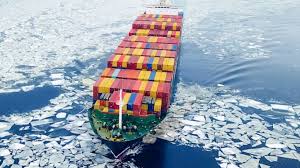
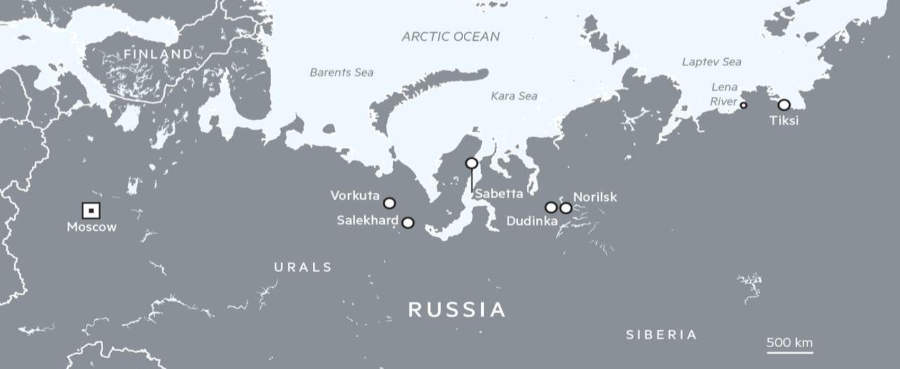
At the center of Russia’s Arctic economic architecture lies the Northern Sea Route (NSR), a 5,600-kilometre maritime corridor along Russia’s northern coast connecting Europe and the Asia-Pacific. It is the shortest shipping route between the western part of Eurasia and the Asia-Pacific region. In purely commercial terms, the Northern Sea Route (NSR) is compelling: it can shorten the maritime distance between East Asia, South and Southeast Asia, and Western Europe from roughly 21,000 kilometres via the Suez Canal to about 12,800 kilometres, reducing transit times by 10–15 days. The route lowers fuel and insurance costs while easing pressure on shipping capacity. Just as importantly, it allows cargo to bypass congested or unstable chokepoints such as the Suez Canal and the Red Sea, enhancing supply-chain resilience for Eurasian trade. In 2024, cargo volumes on the NSR reached a record 38 million tons, according to Rosatom, the route’s infrastructure operator. This represents an increase of more than 1.6 million tons compared to the previous record. While this falls short of the earlier 80-million-ton target, the trajectory is unmistakably upward. Russia projects 270 million tons annually by 2035, driven largely by energy exports and Asia-bound trade. 2024 marked a breakthrough year for the Northern Sea Route, with a record 92 transit voyages carrying over 3 million tons of cargo- nearly 1.5 times the 2013 level—reflecting rising commercial confidence and safety standards.
Demand reached historic highs, as 1,312 navigation applications were reviewed by GlavSevmorput, the highest annual total ever recorded for permit-based Arctic shipping. Symbolically, the largest container vessel to date completed a full NSR crossing in under six days in September, underscoring the route’s growing operational maturity. While projections of 270 million tons annually by 2035 may appear ambitious, the growing interest of Asia’s two economic giants, such as China and India,in Arctic connectivity and trade makes a more pragmatic target of around 150 million tons both credible and attainable. Expanding Asian energy demand, supply-chain diversification, and investment in Arctic logistics are steadily strengthening the commercial case for the Northern Sea Route. In this context, volume growth on the NSR is likely to be driven less by vision alone than by sustained Eurasian trade flows and long-term industrial partnerships.
Crucially, the NSR is no longer a seasonal experiment. With eight nuclear icebreakers already in operation and new vessels such as the recently laid Stalingrad under construction, Russia has effectively moved to near year-round navigation, a qualitative leap that reshapes global logistics calculations. Nuclear energy is poised to play a key role in Russia’s Arctic development, reflecting Moscow’s commitment to a sustainable and technologically advanced path for the region’s long-term growth. By leveraging nuclear-powered icebreakers and energy solutions, Russia aims to balance economic expansion with environmental stewardship across the Arctic. This strategy underscores the country’s resolve to ensure safe, reliable, and continuous development of its northern territories.
Russia is also significantly expanding its Northern Sea Route fleet, planning 11 nuclear-powered icebreakers by 2035 to ensure year-round Arctic navigation. Complemented by around 100 high ice-class support vessels, this fleet will safeguard cargo flows and reduce ice-related risks. Already home to eight nuclear icebreakers, Russia is strengthening its Arctic operational capacity, with new vessels like Project 10510 Rossiya set to become the world’s most powerful icebreaker. For Asian economies such as China, India, Japan, South Korea, and ASEAN members, the NSR represents diversification and resilience. For Russia, it is a strategic economic stabilizer.
Energy as An Anchor, Not An Endpoint

Energy remains the backbone of Arctic development, but Russia’s strategy is increasingly about value chains, not just extraction. Projects such as Yamal LNG and Arctic LNG-2 exemplify this shift. Built with significant Asian participation, particularly Chinese capital and technology, these projects channel liquefied natural gas directly to Asian markets, reinforcing long-term supply contracts while generating reinvestment capital for Arctic infrastructure. Russia is urging China to ensure conditions for the smooth implementation of Arctic LNG projects, highlighting the strategic role of Chinese partners in Yamal LNG and Arctic LNG 2. Joint technological cooperation, including energy storage and green infrastructure, aims to reduce costs and localize production. Strengthening this partnership not only secures energy supplies but also expands investment, innovation, and strategic cooperation across Eurasia.
Asia’s demand dynamics make this alignment logical. China’s combined oil and gas demand is projected to peak before 2030 and 2040, respectively, with oil reaching 780–800 million metric tons and natural gas hitting 605.9 billion cubic meters. India’s energy consumption is expected to grow by more than 30.4% (to 90.5 quadrillion Btu) by 2040, while Japan and South Korea continue to seek stable LNG supplies to manage energy transitions. China and India are expected to be large consumers of natural gas in the future. Arctic LNG, shipped via the NSR, fits neatly into this demand profile. Importantly, Russia is also developing Far Eastern energy hubs from Murmansk to Vladivostok to integrate Arctic production with Pacific distribution, turning geography into commercial leverage. India, Qatar, the UAE, and KSA can invest in Arctic LNG exploration, leveraging their expertise and capital in global energy projects. Their participation could accelerate technology transfer, infrastructure development, and production efficiency. Strategic partnerships would also strengthen Arctic energy security and expand export markets in Asia and beyond.
Infrastructure, Connectivity, and the Asian Multiplier
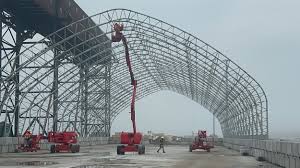
What distinguishes the current Arctic strategy from earlier phases is its integrated connectivity vision. Investment is flowing not only into ports like Murmansk, Sabetta, Dixon, and Pevek, but also into railways, power grids, digital communications, and urban modernization across Arctic and Far Eastern regions. This is where Asia’s role becomes catalytic. China’s concept of a Polar Silk Road dovetails with Russia’s NSR ambitions. India, meanwhile, is exploring multi-modal integration linking the NSR with the Chennai–Vladivostok Maritime Corridor and the International North-South Transport Corridor (INSTC). During recent high-level engagements on December 04-05, Moscow and New Delhi reaffirmed their goal of $100 billion in bilateral trade by 2030, with Arctic logistics, energy, mining, and shipbuilding as priority sectors.
ASEAN economies, particularly Vietnam and Indonesia, view Arctic routes as long-term hedges against supply chain volatility, while Gulf and Middle Eastern investors from the KSA and the UAE to Iran are increasingly attentive to Arctic port, storage, and ship-financing opportunities. In this sense, Russia’s Arctic is evolving into a pan-Eurasian economic platform, rather than a closed national zone. Cut off from Western capital and technology, Russia is pivoting to Asia to sustain Arctic development, fostering trilateral coordination with China and North Korea. Through energy and logistics projects, including Yamal LNG-2 and the Northern Sea Route, Moscow links the Arctic to the Pacific, while Beijing’s Polar Silk Road investments deepen Sino-Russian interdependence. China and North Korea provide additional coastal access, with North Korea’s port city of Rason serving as the main gateway, currently undergoing modernization to handle higher trade volumes.
Russia’s Siberia, together with China’s Tianjin and Dalian ports, provides strategic land routes for pipelines, rail, and road expansion, supporting mineral-driven Eurasian supply chains. Russia-North Korea joint ventures in the Rason-Sonbong Economic Zone and China’s Dalian and Tianjin ports further connect the NSR to East Asian markets. Russia-North Korea relations are currently at a historic high, marked by deepening economic, logistical, and military coordination, particularly in support of Arctic and Far Eastern development initiatives. Russia’s labor shortages increase reliance on North Korean and Chinese workers, a resource long sought despite UN sanctions. Beyond economics, joint Russian-Chinese naval patrols and emerging military cooperation with Pyongyang extend operational reach, reshaping the Arctic–Northeast Asia continuum and challenging Western influence.
Technology, Science, and the Human Dimension
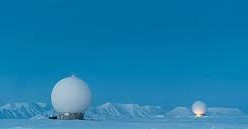
Director of the Foreign Ministry’s Department of European Problems and Senior Arctic Official Vladislav Maslennikov emphasised at the forum the importance of expanded scientific cooperation with constructively minded partners. This is not rhetorical diplomacy. Arctic development is technologically demanding: permafrost engineering, ice navigation, satellite monitoring, and environmental risk management require shared expertise. Here, cooperation extends beyond states to companies, universities, and research institutions. India’s permanent Arctic research station Himadri, China’s polar research fleet, and Russia-China joint monitoring initiatives under GLONASS and BeiDou navigation systems frameworks illustrate how science becomes an enabler of commerce.
Equally important is the humanistic dimension. Indigenous communities are not peripheral stakeholders; their livelihoods, traditions, and social infrastructure are integral to sustainable Arctic development. Forum discussions repeatedly stressed that economic growth must align with social investment in housing, healthcare, education, and local employment, ensuring that Arctic cities become livable hubs rather than extractive outposts. Russia’s growing pivot to Asia is creating a framework where Arctic trade, investment, and connectivity momentum with Asian powers naturally drive the region’s development. Strategic partnerships are not just about resources—they spur social, economic, and infrastructural growth in Arctic communities. By linking Arctic potential with Asia’s capital and expertise, Russia is setting the stage for sustainable, long-term development in the North.
Security Tensions, Economic Rationality
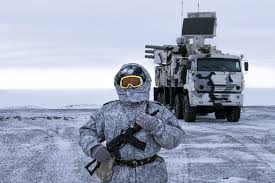
It would be unrealistic to ignore the strategic tensions surrounding the Arctic. NATO’s increased presence, Sweden and Finland’s accession, and Russia’s own military modernization have altered the security environment. However, the economic logic presented in St. Petersburg was notably restrained and pragmatic. President Vladimir Putin has consistently framed Arctic development as a multi-generational national project, not a theater of confrontation. Russia always prioritizes Arctic trade, investment, and connectivity over geopolitics and block confrontation. Western countries’ continuous hegemonic pressure and sanctions have not only hindered coordinated Arctic development but also stalled the Arctic Council’s effectiveness. Even U.S. policies, such as Trump’s expansionist approach, deepened rifts between Europe (Denmark), Canada, and the U.S. Today, Russia’s pivot to Asia in the Arctic is unlocking the region’s true potential, creating new avenues for trade, investment, and infrastructure growth beyond Western constraints. Moscow’s position, echoed by multiple speakers, is that economic interdependence, particularly with Asia, can act as a stabilizing force, even amid political disagreements. China’s approach reinforces this logic. Beijing has shown little appetite for Arctic militarization, preferring long-term energy security, shipping diversification, and infrastructure returns. India, similarly, approaches the Arctic through trade, research, and connectivity rather than power projection.
The Arctic Investment Outlook

From an investment perspective, Russia’s Arctic strategy offers a clear proposition: high upfront costs balanced by long-term returns and strategic relevance. The often-cited US$300 billion Arctic infrastructure plan of incentives for new oil and gas projects north of the Arctic Circle encompasses ports, icebreakers, power stations, telecommunications, and urban development. While environmental and technical challenges are real, they are increasingly manageable through technology and regulation. For Asian investors, particularly sovereign funds, shipbuilders, logistics firms, and energy companies, the Arctic offers portfolio diversification and first-mover advantages in what is the last major addition to global maritime geography.
Summary
The Arctic: Present and Future forum demonstrated that Russia’s Arctic policy is neither isolationist nor improvisational. It is a structured, economically grounded strategy that seeks partners, not blocs; investment, not ideology. By opening its Arctic door to Asia, Russia is not merely redirecting trade, and it is reshaping Eurasian connectivity. The Northern Sea Route, Arctic energy clusters, and Far Eastern logistics corridors together form a new economic grammar, one written in ice, steel, data, and cooperation. In an era of fractured globalization, the Arctic offers a paradoxical promise: that geography, once frozen, can become a bridge. Whether this promise is fully realized will depend not on rhetoric, but on the steady alignment of economic rationality, technological competence, and human responsibility. On this front, the The St. Petersburg forum sent a clear signal: the Arctic’s future is being built now, with Asia being invited to participate.
M. Jahan is a business news analyst contributing to numerous media outlets, as well as a commentator on global economic affairs. She has a particular interest in Arctic development, and can be reached at info@russiaspivottoasia.com
Further Reading
Russia’s Transarctic Transport Corridor—Map and Comparisons With The Northern Sea Route