
 Русский







By any measure, the current structure of India–Russia trade is asymmetrical. In 2024–25, bilateral trade amounted to nearly US$70 billion, yet the balance is heavily skewed. India’s imports from Russia, dominated by crude oil, have surged to over US$60 billion, while exports to Russia remain below US$5 billion. This imbalance, driven largely by geopolitics and energy security, has created both a challenge and an opportunity.
An official from the Indian Ministry of Commerce confirmed to India’s premier news agency, The Press Trust of India (PTI) on December 14 that the 300 high-potential products were identified through a detailed analysis of complementary trade baskets, which involved mapping India’s export capabilities against Russia’s import demand across key sectors. “This exercise allows us to pinpoint areas where India’s strengths align with Russia’s unmet needs, creating substantial opportunities for export growth,” the official added.
New Delhi’s recent identification of nearly 300 high-potential export products ranging from engineering goods, pharmaceuticals, and agriculture to chemicals and plastics, alongside labor-intensive consumer industries, is an attempt to convert this imbalance into a more sustainable, diversified, and mutually beneficial economic partnership, one aligned with the ambitious $100 billion bilateral trade target by 2030. Although the full list has not been disclosed, key sectors such as engineering, pharmaceuticals, chemicals, and agriculture have been highlighted. With these areas and complementary industries, the next phase of India-Russia trade momentum is expected to accelerate.
For Russian businesses and policymakers, this initiative deserves close attention. It signals not just India’s intent to narrow its US$59 billion trade deficit with Russia but also a structural recalibration of bilateral commerce, one that could reshape supply chains, investment flows, and industrial cooperation over the next decade.
A Data-Driven Opportunity
The logic behind India’s strategy is grounded in stark numbers. Across the identified 300 products, India currently exports just US$1.7 billion to Russia, while Russia’s global imports of these same products amount to US$37.4 billion. India’s share in Russia’s overall import basket remains a modest 2.3%. This gap is not a marginal inefficiency, and it represents a vast complementary trade space. The Commerce Ministry’s exercise mapped India’s global export strengths against Russia’s import demand. The results point clearly to sectors where India is internationally competitive and Russia has unmet or diversifying demand: engineering goods, pharmaceuticals, agriculture, chemicals and plastics, alongside labor-intensive consumer industries.
Engineering Goods: Industrial Complementarity
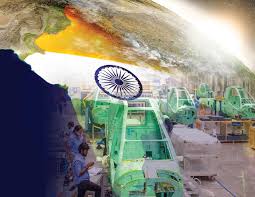
Engineering goods represent perhaps the most underexploited sector. India exports only about US$90 million worth of engineering products to Russia, while Russian imports in this segment stand at US$2.7 billion. This is not a question of capability, as India is among the world’s leading exporters of machinery, auto components, industrial equipment, and light engineering goods.
For Russia, especially amid efforts to diversify supply chains away from excessive dependence on a single source, Indian engineering firms offer a cost-competitive and technologically reliable alternative. For Indian exporters, Russia presents scale: infrastructure renewal, transport, energy equipment, and industrial modernization all require precisely the categories where India has built depth. The opportunity here is not limited to trade. Joint ventures, local assembly, and technology partnerships could anchor Indian manufacturers deeper into the Russian industrial ecosystem, reducing logistics costs and aligning with localization preferences.
Pharmaceuticals: A Strategic Direction
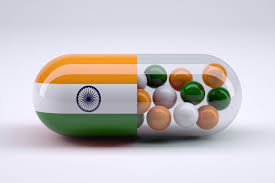
Pharmaceuticals stand out as a high-value, strategically sensitive sector. Russia’s pharma import bill is close to US$9.7 billion, while India supplies only about US$546 million. Given India’s global leadership in generic medicines and active pharmaceutical ingredients (APIs), this gap is striking. Indian generics already play a role in ensuring affordable healthcare across many emerging markets. For Russia, which has prioritized healthcare security and domestic availability of medicines, deeper integration with Indian pharma producers offers both resilience and affordability. Co-production, contract manufacturing, and regulatory alignment could accelerate volumes far beyond current levels. From an investment perspective, pharmaceuticals also provide one of the clearest cases for long-term capital flows, R&D collaboration, and localized manufacturing moving the relationship from transactional trade to strategic industrial cooperation.
Agriculture and Food: Scale Meets Demand
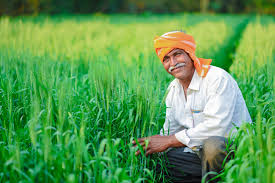
Agriculture and allied products present another compelling case. India currently exports about US$452 million in agri-products to Russia, against a global Russian import demand of US$3.9 billion. This includes cereals, processed foods, tea, coffee, spices, and other value-added farm goods. Russia’s large consumer base, combined with changing consumption patterns, creates space for competitively priced Indian food products. For India, agriculture exports are not only about foreign exchange but also rural income and employment. For Russia, they offer diversification of suppliers and greater food market stability. Processed foods and branded consumer products, in particular, remain underrepresented, suggesting scope for Indian firms to move up the value chain rather than remain commodity suppliers.
Chemicals, Plastics, and Beyond
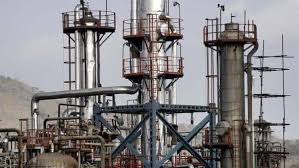
Chemicals and plastics show a similar mismatch: India exports US$135 million, while Russia imports over US$2 billion in this category. Industrial chemicals, intermediates, and specialty products are core strengths of India’s manufacturing sector. As Russian industry adapts to new sourcing realities, Indian chemical producers can step in with scale and reliability. Beyond the headline sectors, labor-intensive industries such as textiles, apparel, leather goods, handicrafts, and light manufacturing deserve attention. India’s market share in some of these categories is below 1%, despite significant Russian demand. These sectors are particularly employment-intensive, making them politically and economically important for India while offering Russian consumers affordable alternatives.
The Payments and Infrastructure Question
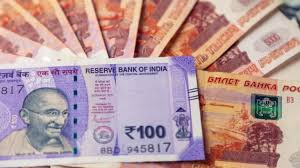
Trade potential alone does not guarantee outcomes. The biggest friction point remains payments and financial infrastructure. With many Russian banks excluded from SWIFT, transactions are often slow, costly, and uncertain. Local-currency settlement mechanisms, stronger banking linkages, and credible clearing arrangements will be essential to unlock the full potential of the 300-product strategy. Equally important are logistics, standards recognition, and distribution networks. Without consistent shipping routes, warehousing, and after-sales support, even competitive products struggle to gain market share. Regular trade missions, business-to-business forums, and institutional facilitation will be critical. The Central Bank of Russia has opened a representative office in Mumbai, aiming to strengthen financial ties and promote Russian interests in a key international market. The office will act as a bridge between regulators and market participants, facilitating mutually beneficial cooperation between Russia and India.
Meanwhile, Sberbank plans a US$100 million investment over three years, as bilateral trade increasingly settles in rubles and rupees (currently 96%), moving toward the goal of 100% local-currency settlements.
Summary
India’s identification of 300 export-ready products is more than an export promotion exercise. It is a signal that New Delhi seeks a more balanced, diversified economic relationship with Moscow, one less dominated by hydrocarbons and more anchored in manufacturing, healthcare, food, and consumer industries. For Russia, the message is equally clear: India is not just an energy buyer, but a long-term economic partner with scale, competitiveness, and investment capacity. If even a fraction of the identified export gap is closed, bilateral trade could shift structurally, reducing volatility, broadening participation, and aligning the partnership with long-term development goals on both sides. The US$100 billion trade target by 2030 is ambitious, but not unrealistic. The data shows the space exists. What remains is execution—through policy coordination, financial innovation, and private-sector engagement. If achieved, the next phase of India-Russia economic relations could be defined not by imbalance, but by complementarity and shared growth.
This article was provided by M. Jahan and was commissioned especially for Russia’s Pivot To Asia. To discuss Russia market access, please email info@russiaspivottoasia.com
Further Reading