
 Русский








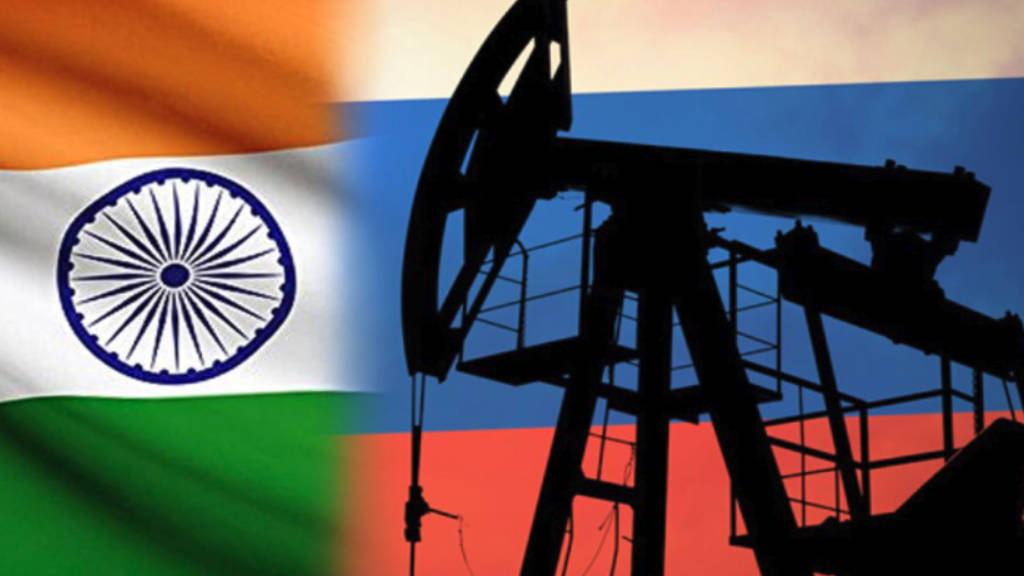

India has purchased 30 million barrels of oil from Russia following a US sanctions waiver aimed at ensuring stability in the global oil market following the US-Israeli attack on Iran.
New Delhi had been gradually reducing its purchases of Russian oil since last year under United States sanctions and trade pressures. It had been increasing supplies from Saudi Arabia and Iraq, but these were disrupted last week. As a result, Indian refiners, including the Indian Oil Corporation and Reliance, have scooped up all unsold cargoes of Russian crude from the spot market.
Contrary to some speculation, Russian President Putin was not involved in these transactions, although buying at spot prices is the most expensive way to acquire commodities. The purchase was completed as an emergency replacement for anticipated Middle Eastern supplies, which became trapped in the Persian Gulf and were subsequently undeliverable, which would have created a week-long period of no oil imports into India and created other energy supply chain problems.
Nearly 10 million barrels of Russian crude were bought by the state-backed Indian Oil Corporation, while Reliance purchased a similar quantity.
New Delhi ramped up purchases of Russian oil after the Ukraine conflict began in early 2022, buying almost 2 million barrels a day during its peak in 2024. Procurement dropped to 1.06 million barrels in February this year. This decision has reversed that 2026 trend.
In a related development, India has decided not to join the International Energy Agency’s (IEA) initiative to release strategic oil reserves. New Delhi has 5.33 million tons of underground strategic reserves. India is the third largest oil importer and consumer in the world.
India’s centrality to oil markets is no longer in question. In its Indian Oil Market Outlook to 2030, the International Energy Agency (IEA) projects that India will be the largest source of global oil demand growth this decade, adding roughly 1-1.2 million barrels per day of demand by 2030 and accounting for more than 35% of net global growth. In short, global growth depends upon India as a primary growth driver.
That trajectory is already visible in domestic consumption, where petrol, aviation turbine fuel and LPG remain key drivers of rising oil use throughout India, whose GDP growth rate for 2026 is anticipated to be about 8%.
This demand profile gives India weight, but it also magnifies vulnerability. The country depends on imported crude for the overwhelming majority of its needs, and petroleum product consumption at around 20 million tonnes a month means even modest changes in crude prices, freight rates, or insurance premiums can quickly spill over into inflation, fiscal calculations, and household budgets.
It is crucial for both India and the global economy that its growth remains balanced—and this means sustainable supplies at a predictable price point. India has been buying Russian crude for between US$55 and $60 per barrel during 2025. It can probably stomach US$80, but beyond this would create problems in terms of managing productivity. It is of note that the United States has been looking to India to replace cheap Chinese imports—Washington and Delhi signed off on a trade agreement just last month.
After the Middle East conflict began, crude prices soared to nearly US$120 per barrel, the highest in four years. The surge has forced G7 nations to schedule a discussion on releasing reserves to calm oil prices. US President Trump has also stated that the conflict with Iran is ‘nearly won,’ which has helped reduce prices to about US$85 a barrel. However, there is some skepticism about this, noting that Iran appears far from conceding defeat, with a recently elected new Ayatollah in power and significant Iranian resolve.
United States Profit Taking From European Energy Buyers?
It is also of note to understand that the oil prices have a considerable impact on the United States and European markets and finances, even more so than India.
Europe is well known to be energy depleted and has to buy supplies during rising prices—mostly from US suppliers, having become conflict-stranded from Middle Eastern supplies and politically isolated from Russian supplies. Whether this week’s price decline is to allow US sellers to take initial profits, and the price then increases again in a few days to the detriment of European buyers, is a classic Wall Street gambit—as Trump will only be too aware. Should oil prices begin to rise again, then this is illustrative of oil price/supply manipulation to allow US companies and traders to benefit from European fiscal and energy security naivety—while using the Iran conflict as a convenient excuse.
India, however, has an off-ramp with Russia, and one that appears to be protected by similar US interests in keeping the Indian economy and growth development powering ahead. Europe doesn’t possess the same capability.