 Русский




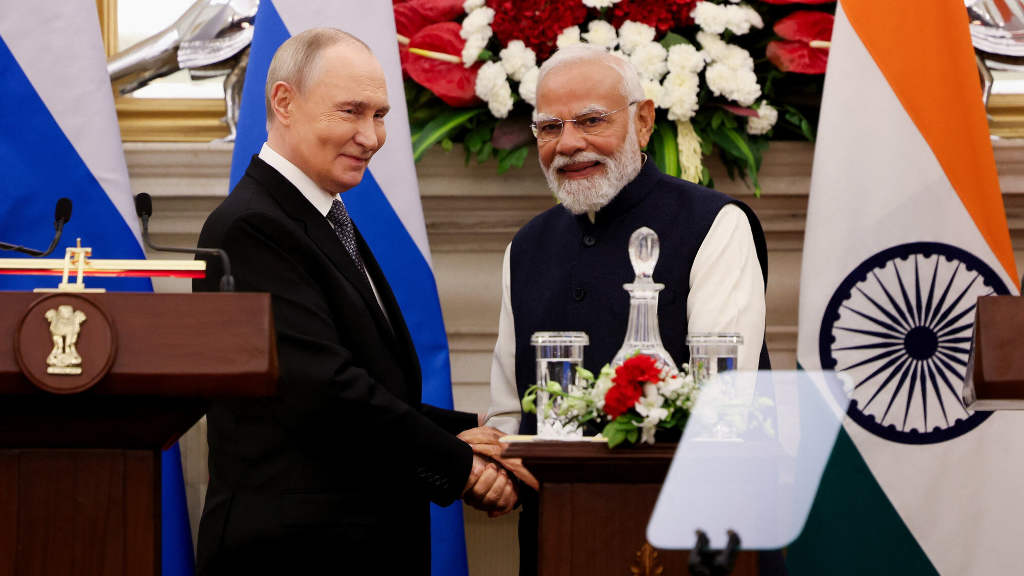

The Russian President Vladimir Putin’s historic state visit to India (December 4-5), culminating in the 23rd India-Russia Annual Summit and the Russia-India Business Forum, marked a watershed in the two countries’ economic and strategic relations. A total of 29 intergovernmental, institutional, and sector-specific pacts and cooperation documents were signed, ranging from energy, trade, connectivity, and labour mobility to high-technology cooperation and culture, underscoring the two nations’ commitment to recast their historic partnership into a modern, broad-based alliance tailored for the complexities of a multipolar world.
At the heart of the summit, both Russia and India formally adopted the “Program for the Development of Strategic Areas of India–Russia Economic Cooperation until 2030.” This road map is a blueprint for expanding, diversifying, and deepening economic ties—transforming a relationship once largely dependent on hydrocarbons and defence into a multifaceted network of trade, investment, connectivity, and technological collaboration. Under this plan, both sides aim to raise annual trade to US$100 billion by 2030, an ambitious but credible goal given the current momentum.
In a global environment shaped by sanctions, supply-chain disruptions, and shifting geopolitical alliances, the summit demonstrates that India and Russia intend not only to defend their historic closeness but also to build forward together. What emerges is not just a diplomatic reaffirmation but a comprehensive resetting of economic architecture. Putin and Modi are rebalancing trade, opening new channels for investment, diversifying beyond traditional energy and defence sectors into healthcare, critical minerals, manufacturing, connectivity, and space, and planting the seeds for deep structural integration.
Trade or Imbalance? Reality Meets The Road Map
Recent data illustrates the scale of the challenge and its potential if met. In the last Indian Fiscal Year (April 2024 – March 2025), bilateral trade peaked at US$68.7 billion. Yet the imbalance was stark: Indian exports to Russia were only about US$4.88 billion, while imports from Russia stood at US$63.8 billion. Over 80–90% of those imports consist of energy such as mineral fuels, crude oil, and oil products, underscoring India’s strong reliance on Russian fuel to meet its energy demands.
This pattern has long served both as a guarantee of energy security for India and as a stable demand base for Russia. But it has also carried structural vulnerabilities: for India, a lopsided balance of payments and dependence on a narrow import basket; for Russia, a reliance on a single export category, making the partnership less resilient to market or geopolitical shocks.
The Putin-Modi summit and the resulting Programme 2030 attempt to change this matrix shifting trade toward greater balance, diversity, and sustainable growth. This dependence underscores the urgency of diversification, which is exactly what the new 2030 Programme aims to achieve. The agreements signed included fertilizers, critical minerals, pharmaceuticals, petrochemical cooperation, manufacturing, infrastructure, and even space and nuclear cooperation, and collectively represent a strategic effort to rebalance and broaden the bilateral economic base.
For India, this creates a pathway not only to plug the trade imbalance but to transform it into a more symmetric, mutually beneficial exchange. For Russia, it opens vast new markets for its natural resources, petrochemical outputs, fertilizers, and high-technology products, as Western markets remain unstable under their sanctions measures.
Sectoral Expansion and Diversification: A New Business Ecosystem
Under the agreements signed, Indian firms (for example, a deal with Russian company URALCHEM) will participate in a urea-plant investment in Russia, signalling industrial cooperation in agriculture and fertilizers, not just oil and gas. Beyond fertilizers, the pact framework covers food safety, healthcare, shipping, maritime logistics, and consumer-goods cooperation, opening pathways for Indian pharmaceuticals, textiles, agro-products, and engineering goods to expand exports to Russia.
Further, both sides highlighted cooperation in critical minerals, clean energy infrastructure, high-tech manufacturing, the digital economy, and even space and nuclear cooperation, signalling that Russia-India economic ties are being recalibrated for the long-term, high-value era. If properly implemented, these agreements could significantly reduce the trade imbalance, enabling Indian exporters to increase their share from under US$5 billion towards potentially US$30–35 billion or more by 2030, especially in sectors such as pharmaceuticals, agro-products, engineering goods, and consumer items.
- Energy & Energy Security
One of the most tangible, immediate outcomes of the summit is in the energy domain. Russia has reaffirmed its commitment to supply fuel, including crude oil, refined products, and liquefied natural gas, to India on an uninterrupted basis. For India, with its surging demand for energy to feed an economy growing at 7% annually, this provides strategic growth insurance, especially in a volatile global energy market currently being subjected to sanctions, price fluctuations, and supply shocks.
Beyond hydrocarbons, the two sides stressed renewed cooperation in civil nuclear power, notably the ongoing project at Kudankulam Nuclear Power Plant (KKNPP) and preparation for a second Russian-assisted nuclear site in India. India’s long-term ambitions to expand its nuclear capacity as part of clean energy and energy security strategy find a dependable partner in Russia. For Russian energy and nuclear firms and for Indian infrastructure developers, this opens major business opportunities: reactor construction, fuel supply, engineering, service contracts, localization of manufacturing, and long-term cooperation.
Russia is the world’s leading exporter of nuclear technology, and India needs to boost its energy production to maintain its growth rates while moving to greener solutions. Expanded energy ties in oil, gas, coal, and nuclear, including small modular reactors and floating nuclear power plants, will give India stable base load options while enabling Russia to export advanced nuclear technologies.
- Critical Materials & Rare Earths
Cooperation on critical minerals is essential for high-tech manufacturing, batteries, nuclear and clean energy technologies, and was explicitly referenced. As global supply chain disruptions intensify and as demand for strategic minerals rises (for clean energy, renewables, and electronics), a structured India-Russia partnership helps both countries secure supply chains and reduce dependence on Western-controlled channels.
Prioritized cooperation in critical mineral exploration and processing to secure resilient supply chains was also discussed, with these products needed in new tech.
India holds significant rare earth element reserves, estimated around 6-8% of the world’s total, and ranks third globally. However, its actual mining output is very low, less than 1%, due to processing challenges, regulatory hurdles, and underdeveloped infrastructure. Joint venture investment will help India access these.
- Fertilizers, Agriculture & Industry
Russia is one of the world’s largest producers of fertilizers and will supply 5–5.5 million tons of fertilizer to India in 2025, not only boosting joint-venture and value-chain opportunities but also becoming the leading supplier in terms of the country’s share of imports of this type of product.
Russia is also one of the world’s leading grain exporters and has developed equipment and protocols to maximize efficiency. While India also produces significant amounts of grain, there is also a great deal of domestic wastage. Both sides aim to expand trade in agro-products and related manufacturing, chemicals, and industrial goods to build a more diversified, mutually beneficial economic base and assist India with its own domestic requirements and food security.
- Pharmaceuticals & Healthcare
India is a world leader in pharmaceutical manufacturing. India and Russia are advancing collaboration in Active Pharmaceutical Ingredient (API), vaccines, radiopharmaceuticals, and therapies, leveraging India’s manufacturing strength and Russia’s technical capacity. Planned joint API production includes regions such as Russia’s Kaluga and positions both countries to serve emerging markets across Eurasia and the Global South.
- High Technology, Space & Defence Manufacturing
Defence and high-tech cooperation are shifting toward joint design, co-production, and technology transfer aligned with “Make in India.” The two sides are already collaborating on the production of the SU-57 fighter and other military equipment ranging from warships to tanks.
Space collaboration, including engine technology and joint training, and broader private-sector participation aim to build a deeper, innovation-driven industrial ecosystem. The two sides have previously announced deeper collaboration in space, as well as discussing the potential for an Indian space station. With Russia’s involvement with NASA coming to an end with the now archaic ISS, Russia is also planning to start construction on its Russian Orbital Service Station in 2027.
- Connectivity & Logistics
One of the most consequential, yet underappreciated, outcomes of the summit is the renewed emphasis on connectivity and logistics integration—not just between two capitals, but across continents. Leaders pledged to deepen cooperation in major transport corridors, notably the International North-South Transport Corridor (INSTC), the Chennai–Vladivostok Maritime Corridor (CVMC), and the Northern Sea Route via Russia’s Arctic and Far East regions.
India and Russia’s connectivity push is no longer theoretical. A 56% drop in transport costs and a 70% surge in cargo volumes along the INSTC’s eastern route show a corridor coming into its own. By pairing this data-driven momentum with the Chennai-Vladivostok route and emerging Arctic passages, both countries are carving out a logistics ecosystem that rivals and even outpaces traditional Suez-centric routes. In a world of geopolitical bottlenecks, this Eurasian realignment is less an infrastructure plan than a strategic bet—the numbers suggest it is already paying off.
Of practical significance is the CVMC, which has already reduced shipping distances and transit times by a considerable margin, offering an efficient alternative to long and geopolitically sensitive routes via the Suez Canal.
Russia’s swift ratification of the RELOS pact on the eve of Putin’s New Delhi visit signals a sharper, interest-driven maritime convergence; India gains a long-sought Arctic gateway just as the region becomes geopolitically priceless. The RELOS (Reciprocal Exchange of Logistics Agreement) is a bilateral military logistics pact between India and Russia that allows their armed forces to access each other’s military facilities for refueling, repairs, supplies, berthing, and maintenance. It was signed just prior to the Modi-Putin summit and significantly strengthens India-Russia defence cooperation while expanding India’s strategic reach from the Indo-Pacific to the Arctic and Eurasian regions.
In turn, Moscow’s now reciprocal access to the Indian Ocean cements a new symmetry of dependence, reshaping the balance of power from the polar north to the Asia Pacific/Indo-Pacific.
- Financial Architecture
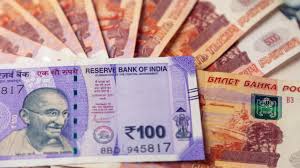
Equally important is the decision to conduct bilateral trade in national currencies (96% of India–Russia trade is now in rupees & rubles), with this now being linked with interoperable payment systems and central bank digital currency platforms. Linking the Russian and Indian national payments systems is currently being discussed, with Russia’s Central Bank having just opened an office in India to coordinate these operations with the Reserve Bank of India.
This stance not only reduces reliance on the US dollar but further mitigates exposure to external sanctions (India has been subjected to 50% import tariffs by the United States this year) as well as exchange-rate volatility, helping institutionalize a parallel economic architecture rooted in sovereign currencies and mutual trust.
For businesses in both countries, this represents a game-changer with lower transaction costs, faster settlements, greater predictability, and a stable framework for long-term investment. In the medium term, this can be expected to attract increasing small and medium-sized enterprises in both countries to participate actively in bilateral trade, rather than limiting cooperation to state-owned or large corporate players.
As noted at the Business Forum, Russian online marketplaces and e-commerce platforms already aim to bring Indian SMEs directly to Russian consumers. For investors and companies, these corridors unlock value with lower freight costs, shorter lead times, easier access to raw materials, and simplified supply-chain structures. For economies, they signal much-needed integration: Indian industrial goods can reach Russia faster, Russian energy and mineral exports can reach Indian markets more efficiently, and both sides benefit from cross-border industrial clusters, logistic hubs, and value-added trade.
- Labour Mobility
Perhaps the most socially transformative element of the summit is the agreement on labour mobility and migration. This allows for the temporary provision of labour from India (and Russia) across borders, together with cooperation in combating irregular migration. In practical terms, this creates a legal and institutional foundation for skilled Indian professionals such as engineers, IT specialists, healthcare workers, and technicians to work in Russia.
Russia currently faces demographic and labour supply challenges, with this move helping to fill employment gaps in construction, industry, and the services sector. For India, this represents an opportunity to export talent, strengthen diaspora, and earn remittances while easing domestic employment pressures. (Russia’s unemployment rate is a record low at 2.2%; India’s is 5.5%—a huge number of people from a working-age population of 1 billion.)
This agreement also helps meet Russia’s target of deploying 500,000 semi-skilled workers, strengthening labour mobility and economic cooperation. This also signals lifestyle and cultural convergence: as business, education, healthcare, and industrial linkages deepen, so too will people-to-people contacts, joint ventures, transfer of skills, and mobility of talent.
- 30-Day E-tourist Visas
Both sides also agreed to provide a 30-day, free e-tourist visa to each other’s citizens, a small policy shift with big potential to boost travel, tourism, and people-to-people ties. The launch date will be announced soon.
- Bilateral Investment
Russian investments in India currently total about US$20 billion and are concentrated in sectors like oil and gas, petrochemicals, banking, railways, and steel. Indian investments in Russia are estimated to be about US$18 billion in the energy and transport sectors as well as in the gemstone sector. These are considered relatively small for what are now, in GDP PPP terms, the world’s third and fourth largest economies.
Programme 2030 aims to change this, emphasizing not only trade but also establishing robust investment flows. Both countries have committed to encourage and protect investments, including improved facilitation of Indian companies entering Russian markets and Russian firms expanding in India. This is particularly evident in the energy, infrastructure, transport, manufacturing, pharmaceuticals, minerals, and technology sectors.
For long-term investors, this offers strategic advantages. As global supply chains reorient, early investors in the bilateral and regional logistics, manufacturing, energy, fertilizers, and high-tech ventures are likely to capture the advantages of lower costs, first-mover access, and geopolitical stability rooted in a Moscow-New Delhi axis.
Strategic Signalling: A Partnership for a Multipolar World
Beyond economics, the summit’s numerous agreements send a strategic and symbolic message – the India-Russia partnership is not just transactional but foundational in reshaping global power balances. While Western sanctions, tariff policies, and geopolitical pressures have sought to isolate Moscow, India has signified its desire to preserve strategic autonomy and diversify alliances. In doing so, India and Russia are jointly shaping a new economic architecture, one that seeks to bypass traditional Western-dominated financial, trade, and supply-chain systems.
The Programme 2030, the push for bilateral settlement in national currencies, connectivity via alternative corridors, expansion into new sectors together reflect an effort to build a parallel, resilient, sovereign economic space. For global investors, this realignment may well signal opportunity: access to untapped markets, supply chain diversification, competitive advantage through lower freight and logistics costs, and stakeholder positioning in the early stages of a redefined Eurasian economic space.
Business & Investment Opportunities
For business leaders, investors, and entrepreneurs in both India and Russia, the summit has opened multiple high-potential avenues. We highlight some of these as follows:
- Fertiliser and agro-inputs
Joint ventures for fertilizer production and supply to meet India’s huge agricultural demand and Russia’s production capacity.
- Pharmaceuticals and healthcare
API manufacturing in Russia and vaccine/radiopharma co-development and export of affordable medicines to Russia, Africa, and beyond.
- Critical minerals & clean-tech supply chains
Mining, processing, recycling of rare earths and other strategic minerals supplying Indian and Eurasian industries engaged in electronics, renewable energy and advanced manufacturing.
- Manufacturing and industrial goods
Textiles (leveraging Indian natural fibres plus Russian synthetic materials), ceramics, cement, machinery, auto components, especially for joint production or export to third countries.
- Energy & petrochemicals
Investments in refining, LNG/LPG infrastructure, oilfield services, upstream technologies, new nuclear power plants, and associated infrastructure.
- Logistics and shipping
Investors in port infrastructure, shipping lines, cold-chain logistics, rail/road links, especially along the INSTC, CVMC, and Arctic/Northern Sea Route corridors.
- Space & high-tech
Cooperation on rocket engines, satellite data, space-system manufacturing is appealing to Indian and Russian firms seeking technology-led growth.
- SME-level trade & e-commerce
With Russian marketplaces and e-commerce platforms opening to Indian SMEs, there is scope for small businesses to export goods ranging from handicrafts and textiles to processed foods and light manufacturing products. India’s online consumer market is booming and is now the world’s third-largest e-commerce market, driven by massive user growth (300 million shoppers) and rising incomes. It is expected to be worth US$170 billion by 2030, fuelled by fashion, groceries, and beauty, especially from Tier 2/3 cities. Strong fundamentals such as low data costs, high smartphone penetration, and increasing affluence promise sustained high growth, with rapid commerce and B2C exports also emerging as key areas.
- Jobs, Connectivity, Skills Transfer
There is the potential for Indian professionals to work in Russia legally under labour-mobility pacts, remittance inflows, and diaspora growth. For Russia, this means access to Indian talent; for India, increased high-tech collaboration, better energy security, and possibly lower costs for fuel, fertilizer, and technology.
There will be enhanced people-to-people exchange through trade, tourism, and cultural and educational cooperation.
The Eurasian Economic Union–India Free Trade Agreement
The business forum that accompanied the Modi-Putin discussions marked a tangible shift from a bilateral friendship anchored in defence and oil trade to a comprehensive commercial, industrial, and technological partnership.
The diversity of signed MoUs, from fertilizers and agriculture to shipping, maritime training, consumer goods, media cooperation, and space & technology, reflects both ambition and a practical road map for structural transformation. Yet, challenges remain.
The main obstacle to overcome is the structural trade imbalance. While the roadmap sets visionary targets, realization will depend on rapid removal of non-tariff barriers, standardization of regulatory frameworks, efficient logistics, and mutual market access.
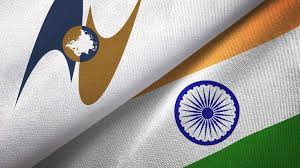
This means that the natural evolution of what appeared to be substantial development in bilateral ties needs to be formalized in the shape of the proposed India-Eurasian Economic Union Free Trade Agreement (FTA). The Eurasian Economic Union (EAEU) includes Russia as well as Armenia, Belarus, Kazakhstan, and Kyrgyzstan, and while dominated by Russia, it has a total GDP of US$5.5 trillion, a growth rate of about 6%, and a combined population of 165 million.
For investors and industry, the success of energy, infrastructure, high-tech, and industrial projects depends on clarity, meaning clear regulatory frameworks, transparent investment protection mechanisms, and consistent policy support. The proposed FTA can deliver on these points, but there is a caveat: Indian exporters and their resulting MNCs will of course be interested in these markets but are notoriously sensitive about foreign encroachment onto India’s domestic marketplace. This is a powerful group that has previously stymied attempts to pass trade agreements with China and the United Kingdom. The first round of India-EAEU negotiations began just before Putin’s visit.
Despite the overall euphoria of Putin’s visit, India’s industrialists will be looking very carefully at the wording in any proposed deal. An FTA that assists Indian expansion into new markets will be seen as positive; an FTA that allows foreign competition into the Indian market will be resisted. Moscow will need to be on its toes here as regards the sensitivities. That said, the structure of the Programme 2030 does suggest that Russia has been listening. The content appears to be complementary rather than competitive.
There are other, specific market areas that will be interested in the EAEU deal aside from the majority Russian aspect. India has long sought improved market access to Central Asia, and the EAEU in part provides this with members Kazakhstan and Kyrgyzstan and their collective population of 28 million. These are also Islamic markets and will be of interest to India’s Muslim population. The attractiveness of the EAEU would also be significantly enhanced were Uzbekistan to join – negotiations are in place with Russia and Uzbek trade and investment ties growing increasingly stronger.
The EAEU also has a positive, tangible history. After the EAEU-Iran FTA was agreed earlier this year, trade flows on both sides of the equation shot up by an immediate 35%. Of note is that the Programme 2030 agreed at the Modi-Putin summit lasts for the next 4 years. We suspect that by the time that expires, the EAEU-India Free Trade Agreement will be ready for implementation.
Risks, Challenges and What Remains to Be Done
Despite the ambitious agenda, achieving the US$ 100 billion trade target by 2030 will not be automatic. Several structural challenges remain:
- Trade imbalance
Bridging the trade gap will require not just agreements, but concrete removal of non-tariff barriers, regulatory bottlenecks, logistics upgrades, and active efforts to promote Indian goods in Russia. Recognizing this, both sides have agreed to streamline tariffs, smooth logistics, and ease payment mechanisms.
- Logistics and connectivity bottlenecks
While the instantiation of corridors like the CVMC and INSTC is promising, building and maintaining infrastructure such as ports, shipping lines, cold chains, and rail/road links will require coordinated investment, regulatory alignment, and real-time operational management. Delays, capital constraints, or regulatory lags could hinder the envisioned trade ramp-up.
- Institutional and regulatory hurdles
For new domains such as nuclear cooperation, pharmaceutical joint ventures, critical minerals, and high-tech manufacturing, successful implementation will depend on transparent regulatory frameworks, streamlined approvals, and robust legal safeguards.
- External geopolitical pressures
Though the summit projects a sovereign, multipolar cooperation model, external pressure, e.g., from Western sanctions, global trade realignments, or geopolitical shifts, could pose risks, especially for sensitive sectors like energy, defence, and critical minerals. Companies will need to tread carefully, ensure compliance with international norms, and manage reputational as well as financial risk.
Summary
The 2025 India–Russia summit and the Business Forum have done more than revive diplomatic goodwill: they have laid down a concrete and ambitious blueprint for long-term economic integration, diversification, and resilience. The shift from purely energy- or defence-based trade to a comprehensive, multi-sectoral cooperation paradigm holds substantial potential for both countries. and across the Eurasian and South Asian regions. This includes regional governments and their investors, enterprises, and employees prepared to seize the opportunity.
Realizing this promise will require more than words: it will require coordinated regulatory reforms, efficient infrastructure execution, transparent and stable investment regimes, and active engagement by private sector players on both sides. But the direction is clear: a new era of India-Russia economic partnership—purposeful, expansive, and future-oriented—has begun. As both Moscow and Delhi begin to implement Programme 2030, businesses and investors would be wise to watch closely and act early.
Md. Rana is an independent researcher, author, freelance columnist, and international affairs analyst. He can be contacted via Russia’s Pivot To Asia at info@russiaspivottoasia.com
Further Reading

Continue Reading