
 Русский




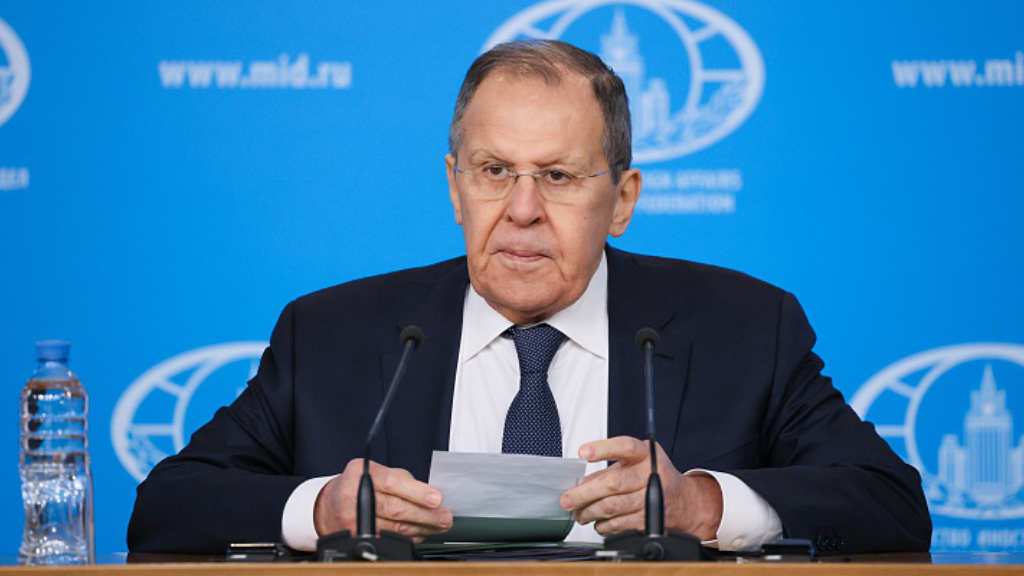

On Tuesday, January 20, Russia’s Foreign Minister Sergey Lavrov convened his traditional annual press conference in Moscow to review the performance of Russian diplomacy in 2025 and set out the foreign policy and economic agenda for 2026. At this event—attended by hundreds of journalists—Lavrov emphasized that the diplomatic focus is no longer solely about geopolitical rivalry but increasingly about pragmatic economic cooperation, strategic trade partnerships, and investment diversification, especially with non-Western nations.
Lavrov outlined a disciplined, pragmatic foreign policy explicitly designed not only to defend national sovereignty but also to expand trade, investment, and economic connectivity across multiple geoeconomic axes from the Global South and Asia to the Gulf and Africa. His remarks, interwoven with responses to media questions, framed 2025 as a year in which Russia consolidated pragmatic cooperation and economic resilience amid Western sanctions, geopolitical fragmentation, and shifting global trade patterns—a year that set the foundation for Russia’s 2026 economic outreach and sustained diversification of strategic partnerships.
With the world economy continuing to realign under pressures of sanctions, fragmenting supply chains, and geopolitical fault lines, Russia’s external economic policy in 2026 pivots toward deepening market access, strengthening investment links with BRICS, Africa, and Asia, and reaping the benefits of a multipolar economic order. This article unpacks the foresight laid out at the press conference and translates it into practical insights for investors, corporations, and policymakers navigating today’s volatile global environment.
General Themes, Economic Diplomacy, Trade Exchanges & Foreign Policy
Review of Russian diplomacy in 2025:
Lavrov held the annual press conference to sum up the main outcomes and challenges of Russian foreign policy over the past year.
Russia’s defensive stance on its rights:
He emphasized that Russia will defend its legal rights and interests, without challenging others’ rights, in line with Russia’s Foreign Policy Concept.
Trade and economy:
Lavrov emphasized global economic shifts and Russia’s positioning within them. He argued that China has surpassed Western competitors in trade, investment, and infrastructure, highlighting China’s strong economic performance and its influence on the global economic order. He pointed to the deep and unprecedented level of Russia-China relations, noting that Moscow and Beijing’s economic and political cooperation has strengthened, reflecting closer alignment in broader geopolitical and economic strategies. He also reaffirmed the “privileged strategic partnership” with India, recalling high-level visits and cooperation, implying broad economic and diplomatic engagement.
He also pointed to plans for trade and investment cooperation with Iran, including projects like the Bushehr nuclear plant and the North-South Transport Corridor, signaling continued economic linkage beyond Western markets. He underscored strengthened cooperation within the BRICS grouping, where Russia, China, India, and other partners have deepened ties, which he suggested support for broader economic engagement beyond Western-led institutions.Lavrov also reiterated Russia’s interest in expanding trade and investment cooperation with other partners such as Iran, where Russia sees no barriers to growth despite Western tariffs and sanctions pressures. Lastly, he spoke broadly about an emerging multipolar economic world, with rising influence from countries in Asia and Africa as alternative centers of growth and cooperation outside traditional Western frameworks, reflecting Russia’s emphasis on diversifying its economic engagements. Overall, Lavrov framed 2025 as a year in which non-Western economic partnerships and competitive global economic trends shaped Russia’s diplomatic priorities.
Relations with the West & Global Order
Western policies and perceptions:
Lavrov claimed that some Western leaders (especially in Europe) still aim for Russia’s strategic defeat and that NATO is in crisis, highlighted by discussions around Greenland’s status. He said Western countries sometimes speak “by their own rules,” but Russia intends to engage only on equal and principled terms.
The Western Conflict Narrative and Economic Realities:
Throughout the press conference, Lavrov reiterated Moscow’s critique of Western geopolitical tactics, from NATO tensions to alleged regime change plots. While such narratives have geopolitical resonance, their economic interpretation remains vital for business actors.
Sanctions and Counter-Sanctions:
Continued Western economic pressure has incentivized Russian firms to seek alternative markets and financial mechanisms, accelerating de-dollarization, local currency settlements, and fintech innovation.
Supply Chain Realignment:
European market disengagement in certain sectors, particularly energy, is creating gaps that Russian industries are filling through Asian, African, and Middle Eastern demand.
Energy Market Shifts:
As Western buyers reduce imports of Russian hydrocarbons, Asia, especially China and India, represents stable long-term demand, underpinning investment decisions and export planning. From a business perspective, these trends are not simply reactions to geopolitical tension; they represent structural shifts in global economic architecture—ones that Russian diplomacy is seeking to institutionalize rather than merely endure.
NATO and Greenland controversy:
He criticized U.S. President Donald Trump’s interest in Greenland, calling it indicative of deeper divisions within NATO and a symbolic crisis for the alliance, and rejected the idea that Russia plans to threaten Greenland. We previously discussed Russian attitudes towards Greenland here.
Western approach to diplomacy (“by their own rules”):
Lavrov noted that Western countries sometimes prefer informal understandings, but Russia insists on diplomacy based on equal, mutually respectful principles, not pressure or coercion. Lavrov’s overarching narrative was stark: the post-Cold War Western-led “rules-based” order is unraveling, replaced by what he described as a world where “might makes right” and where multiple centers of economic growth are emerging particularly in BRICS countries, China, India, and other Global South economies. In Moscow’s view, this ongoing multipolar transition creates both risks and strategic opportunities.
Risks stem from Western geopolitical fractures, intensified sanctions pressure, and coercive economic instruments used by the United States and EU allies. Opportunities arise from deepening cooperation with non-Western growth engines, diversification of financial and trade systems, and institutional alliances beyond traditional Western institutions. Economically, Lavrov’s strategic framing underscores that Russia’s diplomacy is not an abstraction, but it is at the core of trade expansion, investment flows, and connectivity projects that directly support national economic stability. Amid geopolitical tension with the West, Russia has leaned into pragmatic engagement rather than ideological alignment, especially where mutual economic interest exists.
Ukraine & Strategic Stability
Diplomatic approach to the Ukraine conflict:
Lavrov stated Russia remains committed to a diplomatic resolution of the Ukrainian crisis and referenced the Russian government’s history of engagement in political negotiations.
Lack of progress in Western-mediated talks documents:
He said Russia has not received any official documents as outcomes from recent meetings between the U.S., Europe, and Ukraine, hinting at a slow or stalled diplomatic process.
Other Initiatives
U.S. “Board of Peace” concept:
Lavrov commented on a new U.S. proposal for a Board of Peace initiative (related initially to Gaza), stating that Russia received a draft charter and wants to better understand the concept before engaging further.
Comments on Iran:
He condemned Western actions that he believes aim for “regime change” in Iran by supporting internal unrest, calling the behavior deeply concerning.
BRICS, The Global South, China, Middle East, Africa, Trade
Russia’s diplomacy narrative:
Overall, Lavrov reiterated that Russia is not isolated, defends its sovereignty, is open to equal dialogue, and is critical of what it sees as Western attempts to dictate terms or pursue geopolitical dominance.
A New Phase of Russian Diplomacy: Trade Pragmatism Over Ideological Posturing
Lavrov opened his remarks by reflecting on the “unprecedented density of global events at the start of 2026,” surpassing the cumulative activity of 2025—a signal that global geopolitical turbulence is driving new diplomatic and economic behavior. He argued that the old “Rules-based order,” championed by Western capitals, has effectively collapsed, replaced by a de facto system driven by power dynamics (regardless of narrative). This, he insisted, creates an opening for alternative frameworks of cooperation—not defined by ideology but by mutual economic benefit and respect for sovereignty.
In present terms, this means placing economic cooperation and trade diversification at the forefront of foreign policy. Prioritizing diplomatic engagements that promote investment, technological exchange, and supply-chain integration over purely security alliances. Reframing Russia’s global outreach as a value-based partnership with the Global South, Asia, and select developed markets, where economic returns outweigh geopolitical friction. This signal aligns with broader trends of the 2025 multilateral architecture, including the expansion of BRICS to 10 member states, strong Russia-China ties, and renewed engagement with Africa, Latin America, the Middle East, and ASEAN economies. Russia may expand cooperation mechanisms with CIS and SCO markets in 2026.
BRICS, China, and the Strategic Rebalancing of Russian Trade
A centerpiece of Lavrov’s economic diplomacy narrative was the sustained strengthening of Russia’s relations with BRICS countries. He highlighted that across 2025, bilateral trade frameworks with Brazil, India, China, South Africa, and other BRICS partners deepened significantly, with institutional groundwork laid for a comprehensive multilateral economic agenda for 2026. BRICS nations collectively represent a rising share of world GDP and are reshaping global investment flows. Integration mechanisms, such as the New Development Bank, are alternatives to Western financial institutions promoting infrastructure and industrial investment in member states.
Mutual trade agreements, increasing non-dollar settlements and local currency mechanisms, and insulating partners from unilateral sanctions and foreign exchange vulnerabilities were all mentioned as part of this trend. Lavrov also revived calls to reactivate the Russia-India-China (RIC) trialogue, stressing that this trilateral economic platform could serve as a backbone for Eurasian connectivity and trade integration. For Russian business interests, this trilateral cooperation points to expanded markets for exporters and deeper integration in sectors such as energy, defense technology, high-tech manufacturing, and logistics. India and China, as two of the world’s largest economies, are key demand centers for Russian energy, industrial equipment, and agricultural products.
China—The Cornerstone of Eurasian Economic Integration
Despite an overarching strategic alignment, Russian-Chinese trade turnover experienced a slight contraction of 6.9% in 2025, down to US$228 billion. Russia-China cooperation remains the most consequential axis of Russia’s external economic policy: The cross “Years of Culture” initiative (2024–2025) between Russia and China culminated in hundreds of cultural and economic exchanges, laying the social foundation for expanded educational and business cooperation in 2026. A mutual visa-free regime has significantly lowered barriers for business travel, facilitating direct deal-making and SME export acceleration.
Both announced 2026-2027 as Years of Education, reinforcing human capital links that undergird long-term economic cooperation. These institutional developments reinforce China as a strategic trading and investment partner—not merely in energy and resources, but in high-value sectors like technology, manufacturing, digital infrastructure, and educational services.
For Russian exporters and investors, China represents the largest stable, long-term market, where closed Western markets have made Russian goods and services increasingly competitive. Chinese outbound investment and capital flows also present opportunities for co-investment in Russian logistics, energy transformation, and agricultural value chains. Payment schemes increasingly use non-Western currencies, accelerating financial de-dollarization for Russian economic actors. This Russia-China economic view is not merely defensive against Western sanctions; it is a forward-looking orientation toward Asia’s growth nucleus, where China’s Belt and Road and domestic market expansion intersect with Russia’s industrial and natural resource strengths.
A Pragmatic Pivot to the Global South: The Gulf, and African Frontiers
While strategic ties with BRICS anchor Russia’s economic diplomacy, the axes of opportunity extend well beyond.The Gulf and Oman: Trade Balancing and Investment Gateway. Lavrov’s remarks, while not exclusively focused on the Gulf, resonate with Russia’s broader engagement strategy across the Middle East and Persian Gulf: Russia has steadily worked with Gulf Cooperation Council (GCC) states to expand energy and non-energy trade, including through hydrocarbons, petrochemicals, logistics, and sovereign wealth fund (SWF) partnerships. For instance, the UAE, the KSA, Qatar, and Oman, in particular, stand out as pragmatic trade and investment partners leveraging their neutral stance and diversified economy to bridge Russian capital with Gulf markets.
For Gulf companies and investors, Russia offers:
- A diversified export destination beyond Europe and the U.S., including high-quality energy inputs and industrial goods.
- Potential access to Eurasian supply chains via Russia’s logistics corridors is particularly critical given disruptions to traditional transit routes.
- Collaboration in technology adaptation, renewable energy, and industrial cooperation, where Russia’s engineering base complements Gulf capital.
For Russian industry, the Gulf especially presents:
- A platform for Middle Eastern market entry, particularly for fertilizers, agricultural products, machinery, and defense-related technologies.
- Investment opportunities in port infrastructure, logistics hubs, and tech parks further integrate Russia into global trade flows.
- This mutually reinforcing economic interdependence underscores a trade pragmatism that places mutual commercial benefit above geopolitical posturing.
Africa: BRICS Expansion and New Market Horizons
Lavrov also flagged preparations for the Third Russia-Africa Summit in 2026, building on the second foreign ministers’ conference in Cairo. He framed Africa not as a peripheral market but as a central pillar of Russia’s long-term economic diplomacy, with trade and investment cooperation poised to expand significantly.
Africa’s relevance is multifaceted. Enhanced trade links with African economies that are diversifying away from traditional export baskets. Opportunities for Russian investment in infrastructure, mining, energy, and agriculture—sectors that underpin future growth. Mechanisms under BRICS and bilateral frameworks to facilitate financial cooperation, including local currency settlements. For both Russian and African companies, this dynamic is not simply transactional; it is part of broader efforts to institutionally embed trade links that bypass Western financial systems and sanctions frameworks.
Geopolitical Tensions and Economic Realities
Lavrov’s press conference also underscored friction with Western powers, from NATO and European Union discontent to contentious global flashpoints like Ukraine, Venezuela, Greenland, and Iran. Yet, the recurring theme was that geo-economic engagement will not be held hostage to geopolitical conflict.Instead, Russia presents a model where economic cooperation becomes a stabilizing force. Diplomacy serves economic interests, not vice versa. Trade and investment engagement establish interdependencies that mitigate the unilateral leverage of Western sanctions. Strategic non-Western partnerships (e.g., China, India, Gulf states, Africa) create alternative nodes of economic momentum. This approach resembles multipolar commercial diplomacy, where economic integration becomes the metric of influence—not zero-sum geopolitical rivalry.
Investment and Trade Data: Indicative Trends Bolstering Integration
While exact trade figures from the press conference were limited, broader trends reinforce Russia’s economic pivot.BRICS trade, especially between Russia and China, continues to outpace bilateral growth with Western economies, driven by diversification of export baskets and removal of non-tariff barriers.Russia’s energy exports to Asian markets, particularly oil, LNG, and refined products, have gained new scale post-2022, with East Asia absorbing increasingly larger volumes.Russian agricultural exports, particularly grain, fertilizers, and livestock products, have penetrated markets in Africa and the Middle East, often replacing Western suppliers.These data points highlight a structural reorientation of Russia’s trade flows toward dynamic, high-growth regions—a trajectory that underpins Lavrov’s diplomacy.
Outlook for 2026: From Strategy to Execution

Going forward, the strategic directions implied at the press conference translate to measurable economic and corporate imperatives:
- Deepening Russia-China economic integration beyond energy to digital, industrial, and educational cooperation.
- Operationalizing BRICS economic mechanisms, including localized financial networks and trade facilitation frameworks.
- Expanding Gulf-Russia investment corridors leveraging Oman and other Gulf states as commercial bridges.
- Industrializing Africa’s trade engagement through infrastructure partnerships, joint ventures, and technology transfer.
- Embedding pragmatic diplomacy in corporate strategy, aligning business interests with Moscow’s economic foreign policy.
These actions are not abstract ideals, but they are mandatory for companies seeking resilience, growth, and competitive advantage in a world where traditional Western markets and financing remain constrained for Russia.
Summary: A New Era of Economic Statecraft
Sergey Lavrov’s 2026 outlook signals a maturing Russian diplomacy that prioritizes economic pragmatism and strategic diversification over crisis-driven geopolitics alone. By anchoring partnerships in mutual economic benefit, institutional cooperation, and diversified trade networks, Russia positions itself as a central actor in a multipolar global economy.For investors, businesses, and sovereign partners, especially from Oman, China, Africa, and across the Eurasian continent, this moment presents not only geopolitical alignment but also concrete economic opportunity. In an era of fragmentation, Russia’s strategy underscores that value-driven economic engagement remains the most sustainable foundation for international cooperation in 2026 and beyond.
This article was written by KP Mazumdar, a geostrategic and geo-economics analyst whose work has been widely published by prestigious international news organizations and publications. He may be reached at info@russiaspivottoasia.com
Further Reading
The Moscow Stock Exchange Ends The Year Where It Began: Russia 2026 Market Predictions
Continue Reading