
 Русский





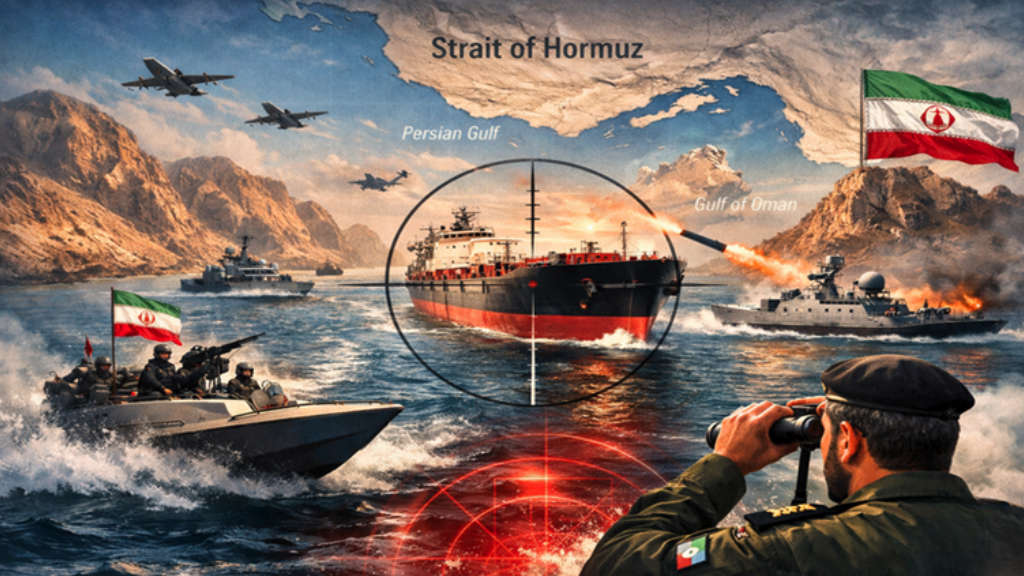

Military activity concerning Iran have escalated quickly from a regional conflict into a logistical shock for Russian imports. Two critical elements of the route came under attack at once: maritime transport through the Persian Gulf and air corridors from Iran to Israel. For the Russian market, this is especially sensitive because the UAE over recent years has become one of the key transit hubs for parallel import — from car parts and electronics to clothing, household appliances, and medical equipment. If the regional situation does not stabilise, Russian end-user consumer prices for numerous imported goods in Russia may increase by 15–25% for certain products.
The main issues lies beyond the Strait of Hormuz but in the destruction of several supply links at once. Shipping lines are avoiding Persian Gulf ports, airlines are suspending flights, insurers are raising rates, and cargo has to be carried by a roundabout way — through Oman, Turkey, India, Azerbaijan, Uzbekistan, and other intermediate hubs. This means that logistics has ceased to solely about the optimal rate and is now a question of the physical availability of the corridor. For business, this means an increase in cost, lengthening of terms, and a sharp increase in uncertainty in the supply chain routes for which a significant part of Russian imports depend.
Automotive spare car parts and mass market clothing are likely to be the most immediately impacted.
The UAE Example
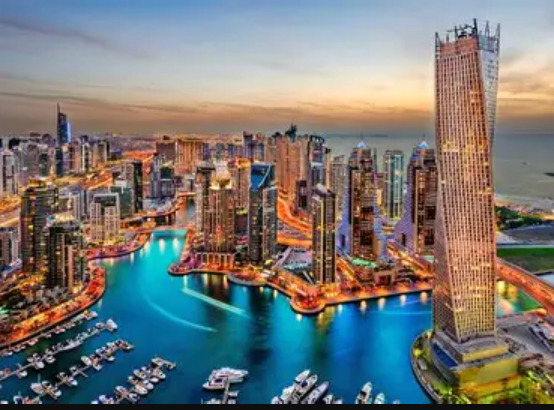
We can look at the UAE as an example. Trade turnover between Russia and the UAE in 2025 grew to US$12 billion, while the Emirates themselves are a main hub for parallel imports, with about 40–60% of alternative supplies to Russia (ie: not directly organised by the manufacturer) pass through the UAE en route to Russia.
Now, shipping lines are redirecting vessels via the Cape of Good Hope, which adds 15–20 days to the delivery time, while shipping rates have increased by about 30%. One TEU now ships for between US$2000 – US$4000 depending on the contents. Insurance coverage has tripled, while airlines are now introducing fuel surcharges.
The UAE has become not just a trade partner for Russia, but also a logistics hub with systemic importance. In 2025, trade turnover between the two countries included machinery products — car parts, electronics, industrial machines, ventilation equipment — were brought from the Emirates to Russia, as well as plastics, polymers, dyes, pharmaceuticals, food, and non-ferrous metals. The return flow included oil products, coal, fertilisers, grains, frozen fish, poultry meat, sunflower oil, metals, chemicals, machine tools, transport, and timber.
Since March 2022, a significant part of parallel imports also went directly through the Emirates, including items such as Apple products, branded clothing, car parts for brands that left the Russian market, household appliances, cosmetics, perfumes, and medical equipment. This is why the current disruption is perceived not only as a regional diminishing of oil exports from Iran, but as a blow to Russia’s parallel imports infrastructure and transit routes.
The peculiarity of the current situation is that the market is losing both maritime and air flexibility at the same time. The world’s largest shipping lines, including Maersk, Hapag-Lloyd, and CMA CGM, have suspended operations in the Persian Gulf. Instead, vessels are redirected through the Cape of Good Hope, (South Africa) which increases transit to Russia and other countries by 15–20 days.
Alternative entry points in the UAE — Fujairah and Khor Fakkan on the coast of the Gulf of Oman — work as a bypass option, but for most services, this is not a full-fledged replacement for direct calls to the Persian Gulf.
For Russia, this is important not only from the point of view of direct trade with the UAE, but because the Emirates performed the function of a transshipment centre for supplies between Russia and other regions, including Latin America and South Asia. Forty free trade economic zones and a highly developed port infrastructure are concentrated in the Emirates. Restrictions in the Persian Gulf hit not only bilateral trade turnover, but also global transit and supply chains.
Maritime
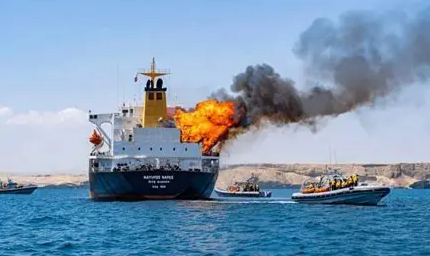
At sea, the cost increase consists of several components at once. Firstly, carriers have introduced war surcharges from US$1500 to US$4000 per container depending on the operator and type of cargo. Secondly, the long route through Africa increases fuel consumption. Thirdly, insurers, have triple their costs. For the end client, the result is the same — a sharp jump in the final cost.
According to market estimates, maritime rates over the last month grew by 35%, and the price of transport from the Middle East countries has already increased 1.7 times compared to February. In a number of cases, the dispatch of just one TEU doubled, and in others, by 20–40%. It is also important to note how quickly this happened – price increases unfolded within 48–72 hours after the start of the Iran war on 28 February. That is not a sign not of a smooth correction, but of a panic.
Aviation could become a natural replacement for the sea for part of the critical cargo. But the Russian logistics operators face a new difficulty. Russian and Belarusian airlines are not flying to the Emirates until the end of March at the earliest, and the removal of cargo is possible only by local carriers. For this, a MOFA certificate is needed — a permission from the Ministry of Foreign Affairs for the export of cargo to Russia. Obtaining it takes from 3 to 15 working days. That means that the scheme itself becomes not only more expensive, but also administratively longer. Planned exports of products such as fresh lobsters and seafood will be not just written off but could present health hazards.
Aviation
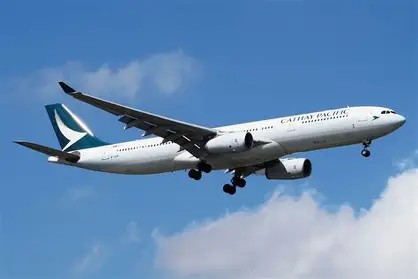
In the air, the situation is also complicated. The closure of the sky from Iran to Israel and the suspension of flights by large regional cargo players sharply reduce available capacities. International carriers such as British Airways and Cathay Pacific have suspended all services to Dubai until May, when the situation will be reviewed.
According to Freightos, in the first week of the Iran conflict, air cargo rates from Southeast Asia to Europe grew by more than 6%, from South Asia to Europe — by 3%, from South Asia to the USA — by 5%, from the Middle East to Europe — by 8%, and from China to the USA — by 15%. Against this background, forwarders are already beginning to charter direct flights from Asia to Europe to compensate for the lost capacity. This also pushes rates up.
Impact on the INSTC
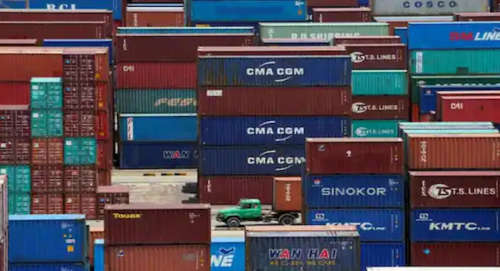
This has also impacted the International North-South Transport Corridor (INSTC) the multi-modal route between Russia and South Asia. From 28 February, the transit of goods between Russia, India, Iran, and neighbouring countries has been suspended. For logistics, this is critical: the corridor combined rail, road, sea, and river routes and was viewed as one of the key alternative channels of communication with South Asia and the Middle East.
In a normal situation, import-export markets typically compensate for the loss of one route at the expense of another. Today, this is no longer the case. The closure of the North-South corridor overlaps with the disruption in the Persian Gulf and problems with aviation. This turns the crisis from linear — when a specific route becomes more expensive — into network-based, when all bypass options are overloaded at once. For Russian importers, this means not just a rate increase, but a decrease in the manageability of the entire chain.
In response to this, logisticians use combined solutions. Cargo is collected by truck from Dubai, taken to Oman, and then sent by aircraft through third countries — for example, through Turkiye or India — with subsequent connection to Russia. Small shipments can still be carried by passenger flights, but with bulky cargo, the situation is much more complicated with having to wait for a suitable aircraft or a dispatch window. Even where the chain formally remains, it becomes slower, more complex, and more expensive.
Geographic Risk
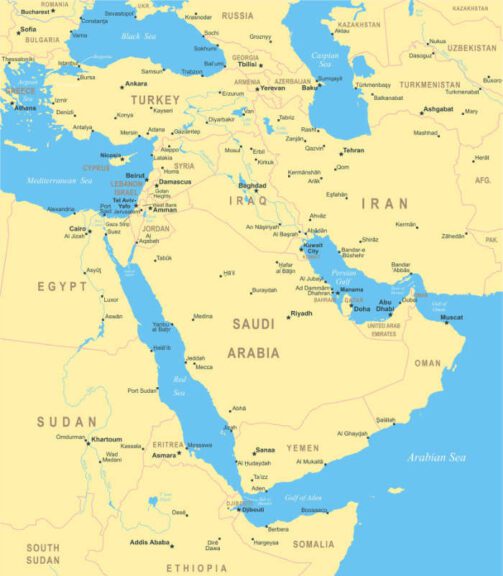
Another risk concerns geography. While the ports of Sohar and Salalah in Oman operate relatively normally, the situation is significantly worse for a number of Gulf countries. The operation of most ports in Kuwait, Bahrain, and Saudi Arabia are suspended. The most difficult position is for Iraq, Kuwait, Bahrain, and Qatar, for which the Strait of Hormuz remains effectively the only exit to the world ocean.
The current crisis overlapped with the already existing tightening of import conditions. In February 2026, the Russian import-export administrator, Rosakkreditatsiya suspended the recognition of documents from certification bodies of Kazakhstan, Armenia, and Kyrgyzstan, through which importers processed part of the declarations and certificates of conformity for supplies to Russia. For grey and parallel import, this meant additional administrative complexity.
The Iran conflict means that a physical contraction of the main logistical hub has been added to the regulatory pressure. It is this combination that makes the situation especially difficult for the mass market. When the route becomes more expensive and the certification part becomes simultaneously more complicated, the segment loses the advantage on which it rested: relative flexibility and speed. For the consumer, this will likely mean not the disappearance of the product, but noticeable price increases.
Where Will Russian Consumers Be Hit?
Russian market analysts indicate that the most sensitive categories will be car parts for brands that left the Russian market, and mass segment clothing. This is logical because both categories use parallel and alternative channels through the UAE. Secondly, price sensitivity is high, even a moderate growth of the logistical and insurance component quickly turns into a noticeable jump in the final price.
This suggests that if the conflict lasts for several months, some imported goods in Russia may rise in price by 15–25%. In a practical sense, this means that consumer pressure will be felt fastest exactly by those segments where the Russian market already partially depended on alternative supply chains, and competition within the category does not compensate for the growth of cost. Car parts are especially vulnerable here: for some brands, there are simply few alternative mass channels. If considering a car purchase, the sensible option would be to ensure parts are easily available.
Supply Chain Consequences
For importers, the main conclusion is that the UAE can no longer be considered an unconditionally reliable transit solution. Even if part of the flows is preserved through Oman or other bypass hubs, the very logic of supply changes: instead of one large centre, a more complex network of routes with a larger number of intermediate legs will have to be built, in some cases from scratch. This means an increase in requirements for planning, stocks, documentary support, and financial stability of the supply routes.
For logistical operators, the Middle East crisis is a test of their ability to quickly reassemble corridors. Manufacturers and consumers need not just alternatives, but the building of an economy of delivery in a situation where fuel, insurance, air capacity, and maritime transit are all becoming more expensive. In such a market, competitive advantage is increasingly determined not by the base rate, but by the quality of scenario management of the route.
For retail and distribution, the consequences are also direct. The growth of delivery cost and the lengthening of supply chain routes inevitably mean a revision of purchasing policy, safety stock, and assortment models. In categories with Russia’s high dependence on parallel imports, this may lead to an accelerated revision of prices and more cautious work with balances.
Market participants believe that part of the flows will be preserved through China and other channels. But goods that went through the UAE will almost certainly become more expensive. Because the crisis has affected several elements of the system at once: the Persian Gulf seaports, the aviation sector, financial costs such as insurance, and the International North-South Transport Corridor, this makes the simple replacement of one route with another practically impossible.
The Middle East crisis has become for Russian logistics an example of how quickly geopolitical risk turns into consumer inflation. The Iran conflict impacts not just one route, but the entire transit system of Russia being tied to the UAE as a hub for parallel import has come under attack. For business, this means a transition from habitual rate optimisation to management of physical availability of the corridor. For the consumer — a probable price increase for spare parts, mass market clothing, and other imported categories. And for the market as a whole — this serves as another reminder that the stability of supply in 2026 is more important than the nominal cost of transport.