 Русский






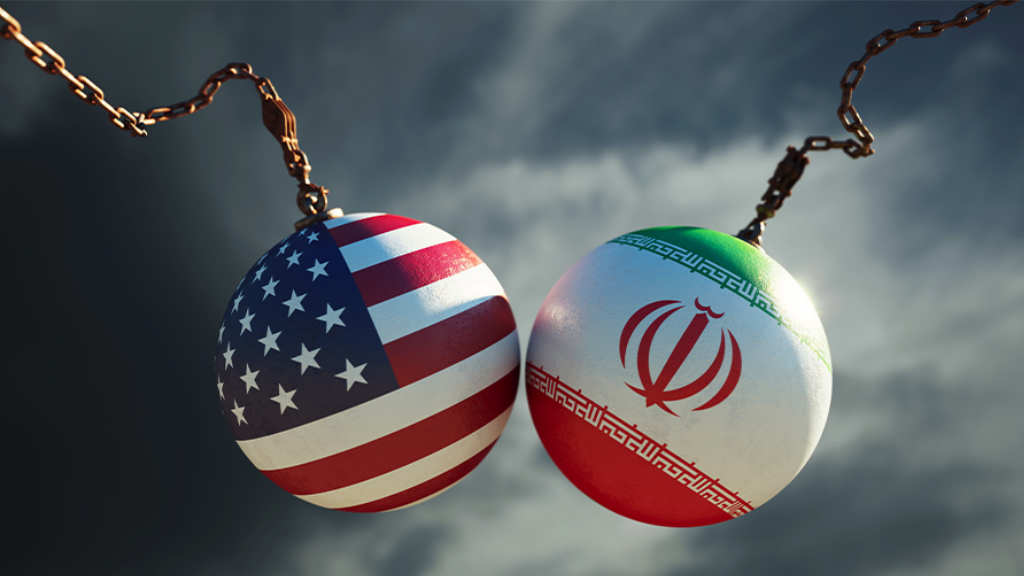

Over the past few days, the world has witnessed a fresh sequence of smoke and flames, killed and wounded, displaced families, and destroyed infrastructure, this time, though not for the first time, initiated directly by the United States. Apart from the wreckage caused by this kind of behaviour, the danger of this conflict spreading over adjacent areas is a very close reality.
The fact that it is all happening on Central Asia’s very doorstep makes it all the more urgent for Russia and the Central Asian states to seek protection. Apart from the issue of transportation, the fact that the control and sovereignty of oil and gas reserves are also at stake here provides additional reasons for regional concern.
For all those who have professed peaceful connectivity throughout the Central Asian region, stressing its strategic position between the global economic superpowers to the east and west, the new wave of violence in Iran, right on the southern doorstep of Central Asia and the southern Caucasus, serves as a regional wake-up call.
These former Soviet republics, and Kazakhstan in particular, have used Iranian supply chains and transport infrastructure to obtain open access to the Indian Ocean via the Persian Gulf. Thousands of planes, trains, and trucks are now reportedly stranded between Central Asia and Iran, looking for alternative routes as far away from the fire lines as possible.
The main routes affected lead across the Russian continent and the so-called Middle Corridor. That has suddenly changed, virtually overnight, from being an “opportunity” into a hazard. This is set to include the Trump negotiated road and rail route from Azerbaijan southwest along the Aras River, crossing Armenia and the Azeri enclave of Nakhichevan into Turkiye, right along the border with Iran.
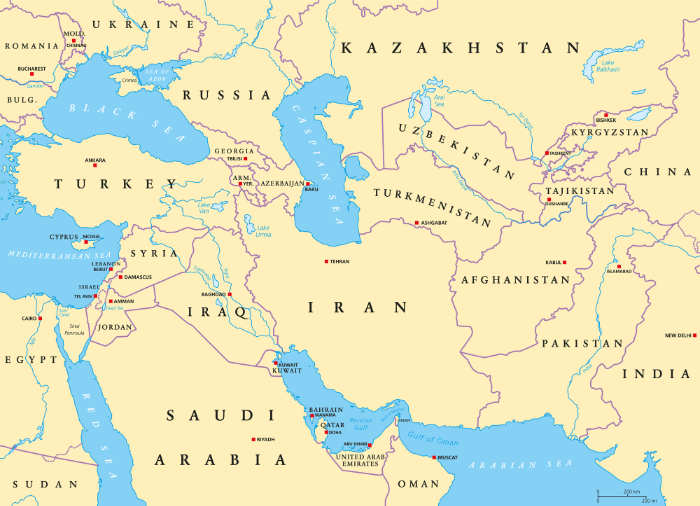
The US and Israeli tandem attacks on Iran have dashed hopes for Central Asia’s connectivity plans. A possible alternative route across Afghanistan and Pakistan to the Indian Ocean was also abruptly halted a week earlier by the two sides declaring war on each other. The two fire zones only add to the dire regional position, completing a situation in which the central parts of the Eurasian continent, if it is left up to Washington, will be dependent on locations under US influence for their direct access to the Indian Ocean.
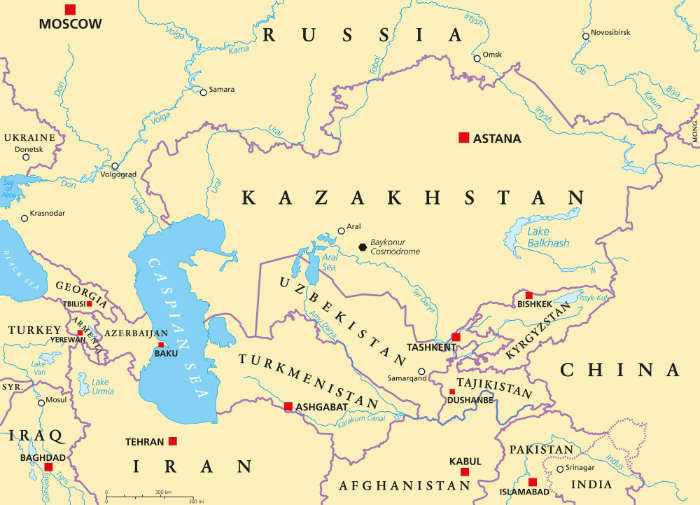
This could very well be the reason why both Russia and China are keeping a low profile. With virtually all the northern shores of the Indian Ocean turned into a conflict zone, including the passages along the Persian Gulf and the Red Sea, the overland China-Russia-Europe route and its maritime counterpart along the Arctic coastline as of now are the only conflict-free, timely options for traders and transporters—whether they carry containers, cars, grain, metals, oil, or liquid gas. The consequence is soaring transportation costs, making America’s competitors less competitive in the global marketplace.
This brings us to the very heart of the issue at stake. The move to subdue Iran, plotted in Washington for decades and now carried out together with the USA’s mercenary ally Israel, has striking similarities with the way the Americans went out to take hold of Venezuela, starting with oil boycotts, while ‘diplomatic’ talks took place to distract attention away from what was about to happen. These ‘discussions’ were followed by illegal attacks committed by the US Navy on oil, culminating in a US landing—an invasion—and the subsequent occupation of Venezuela’s energy infrastructure. The ‘Ground operation’ and the unprecedented abduction of the Venezuelan president were the final stages of the US campaign, carried out to pave the way for a more amenable local administration. Today, just a month later, similar operations are being carried out in Iran. A leader has been toppled, and the US military is now attacking the country.
There is a high risk that the United States will not stop at its control over Tehran. Iran is sitting on close to 200 billion barrels of oil, which makes it part of the world’s top three oil economies together with Saudi Arabia and Venezuela. Control over such vast reserves, totaling close to 800 billion barrels, would weaken the position of Russia and Central Asia with their combined 100 billion barrels.
Both Saudi Arabia and the Caspian states have every reason to fear that Washington wants to bring all the lands surrounding the Persian Gulf under Washington’s dominion, followed by the Caspian littoral states. Current disputes between Kazakhstan and its main American upstream investors, Chevron and Exxon, as well as Anglo-Dutch Shell and Italy’s Eni, are presently restricted to boardrooms and courtrooms, but political circles in Washington could well be tempted to use them as an excuse for more aggressive interventions.
Hydrocarbon Grabs As “Revolutions”
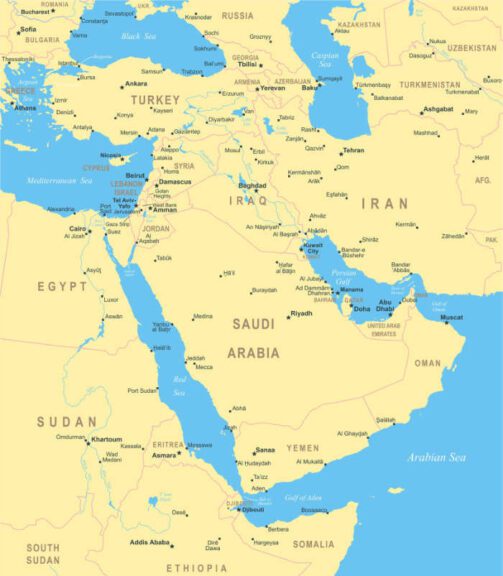
This in turn points at a possible agenda following the taming of Iran. The hydrocarbon deposits of Iran, Iraq, Kuwait, Qatar, Bahrain, Saudi Arabia, the United Arab Emirates, and Oman are part of a single geological structure comprising the Persian Gulf. Iran’s reserves are concentrated in the southwestern province of Khuzestan. That was the first area occupied by Iraq at the beginning of the Gulf War between the two countries back in 1979.
The language spoken in these regions is Arabic, not Farsi (Persian), and the predominant Islamic religion is Sunni Muslim. Iran, however, is Shi’ite Muslim—there is not a lot of love between the two factions. The Arabic nature of the Middle East means that there are plenty of politicians who seek to spread discord within Iran—even though so far attempts to do so have failed. Similar distinctions exist in the countries to Iran’s north, and the chances that they are on Washington’s midterm agenda are more than just theory, given the US-staged color revolutions elsewhere in the Caspian and Black Sea regions.
Eurasian Regional Trade & Security Pushback
This domino mechanism is meant to destabilize states around the world one by one in order to gain control on a regional level. Thus far, this has failed, but there is no guarantee that it might not succeed in the future. The only way to counter such schemes is to unite on regional and eventually global levels. It is therefore highly likely that Russia, China, and India will advance their cooperation in developing trade in addition to security ties. Much of the architecture is already in place; however, it can be expected that a reaction to the situation in Iran will accelerate progress.
It is prudent to note then that China has a non-preferential trade agreement with the Eurasian Economic Union (EAEU). This means that tariffs can be altered at will and upon necessity between China and Russia, along with Belarus, in addition to Central Asia’s Kazakhstan and Kyrgyzstan. Both India and the UAE are currently negotiating complete Free Trade Agreements with the EAEU, with progress expected later this year.
We can also expect to see the global BRICS movement make progress as countries seek to hedge their bets and secure supply chain alternatives. This tends to fly under the radar somewhat as member states loosely agree to trade with each other instead of making formal announcements, yet it should be noted that the BRICS includes Iran in addition to regional MENA powers Egypt, the UAE, and potentially Saudi Arabia once it fully commits. MENA BRICS partners include Algeria, while Central Asian partners include Kazakhstan and Uzbekistan. The 2026 BRICS annual summit will be held in India in mid-summer, where expansion is expected to include Bangladesh, while Turkiye has expressed interest along with numerous Southeast Asian countries. Turkiye in BRICS would be a significant move and has not been taken seriously in the West—yet Ankara is actively discussing the possibility and formally applied to join in 2024.
In addition to trade development, it should not be forgotten that the Shanghai Cooperation Organisation (SCO) remains a significant body and wields considerable influence. It may also be expected that activities within the SCO increase as a result of US activity in Iran. Regionally, the SCO includes China, Kazakhstan, Kyrgyzstan, Tajikistan, Uzbekistan, India, Iran, Pakistan, and Russia, while regional partner states include Afghanistan, Armenia, Azerbaijan, Bahrain, Egypt, Kuwait, Qatar, Saudi Arabia, Turkiye, and the UAE. This has the potential to be a formidable alliance. Its next annual summit is scheduled to take place in Kyrgyzstan.
All this points to a highly considered approach to regional security, contrary to what appears to be the United States’ (and increasingly Europe’s) current preference for attacking first and answering questions later. Globally, the West appears to see itself as making policy; however, this is increasingly carried out in defiance of the United Nations. US Secretary of State Rubio justified Washington not informing the UN of intended US and Israeli attacks on Iran by stating that the UN had failed to provide solutions, arguing that American leadership and partnerships were required instead to broker truces and bring parties to the table.
That is in direct contrast to the diplomatic position stated by the Russian and Chinese foreign ministers, who discussed Iran by telephone on March 1. They stated that US actions “Represent a grave violation of international law and the fundamental principles of the UN Charter,” and during the emergency UN Security Council meeting convened the previous day, stated they would coordinate their efforts within the UN Security Council, the IAEA, the SCO, and the ‘Group of Friends in Defence of the Charter of the United Nations.’
These two positions imply that the United States will not necessarily abide by the UN charter, as ‘American leadership is required,’ while Russia and China continue to abide by UN protocols and to support the organization. The United Nations includes 193 member states. How the US position regards the global community’s views as all requiring American leadership and how many of them disagree will go a long way in determining the outcome not just of the Ukrainian and Iranian conflicts, but also of how the world reorganizes itself in the face of these types of statements. Neither China nor Russia is silent or inactive on the issue; however, it remains obvious that the resulting struggle between the concept of a United States of America and its allies – and the concept of a United Nations is only just unfolding.
This article was written by Charles van der Leeuw with additional input from Russia’s Pivot To Asia.