 Русский






Mongolia wants to make the route through the Altanbulag checkpoint on the border with Russia the main export and import artery for its trade agreement with the Eurasian Economic Union (EAEU), the Mongolian Parliament Speaker, Nyam-Osor Uchral, has said.
He stated that “The implementation of this agreement will directly affect the activities of the Altanbulag Economic Free Zone. This covers 500 hectares in the Altanbulag district and needs to build a freight terminal, customs lab, internal roads, and communications infrastructure.”
He added that “The Altanbulag district economy, plus the surrounding region, is oriented toward exporting livestock products. The trade agreement with the EAEU will make it possible to diversify livestock farmers’ incomes, boost prices for livestock products, and diversify income from the country’s agriculture sector as a whole.”
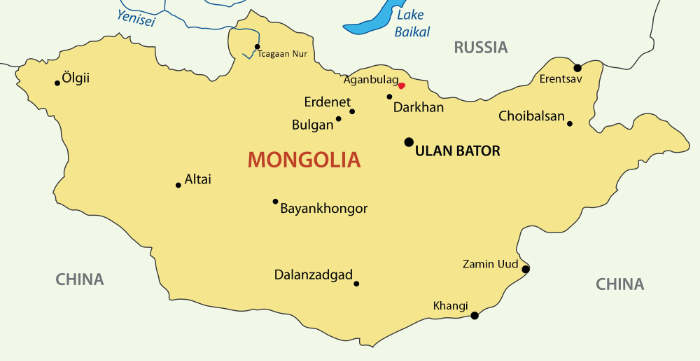
The Altanbulag border crossing in Mongolia is located on the Ulan-Ude-Ulaanbaatar highway near the Russian city of Kyakhta, 233 km from the capital of Buryatia. The border region is a free economic zone, the residents of which include companies from various regions of Russia.
In addition to Altanbulag, there are ten operating road and two railway crossings on the border between Mongolia and Russia. These include crossings into Mongolia from the Altai Republic, Tuva, Buryatia, and the Transbaikal Territory. Russia is the only EAEU country with which Mongolia shares a border.
The EAEU and Mongolia signed a free trade agreement in June 2025. The document reduces or eliminates duties on 367 commodity subitems for each party, including Mongolia as well as Armenia, Belarus, Kazakhstan, Kyrgyzstan, and Russia. These cover about US$2 billion worth, or more than 90% of EAEU exports to Mongolia, enabling EAEU companies to save up to US$100 million annually. The agreement is also expected to help Mongolia to increase exports to the EAEU market by 25%.
The agreement has an initial duration of three years with an option for subsequent extension. It has already been ratified in Mongolia, Russia, and Kazakhstan, and must still be ratified by the other EAEU countries, with this expected to be completed by mid-2026.