
 Русский






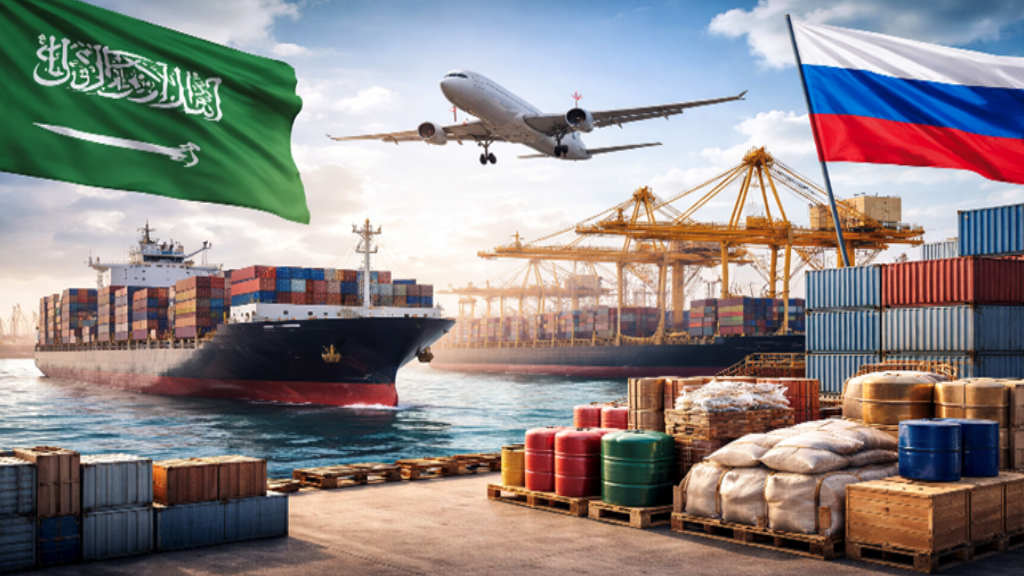

Until very recently, logistics between Russia and the Middle East has been very much a growth area, and especially Russia’s import-export trade with Saudi Arabia, which has also been expanding its presence in the industrial export segment as well. For example, Russia-Saudi bilateral trade increased by more than 60% in 2024, to exceed US$3.8 billion, and quadrupled again in Q1 2025. Estimates for current levels of trade indicate figures close to US$10 billion for 2025.
Saudi Arabia’s global exports have also risen, increasing from US$183 billion in 2020 to US$309 billion in 2024. The country is an active investor in its industrial sector, and especially in raw material processing and infrastructure development. Besides oil and petroleum products, Saudi Arabia’s share of the global chemical products, materials, and equipment markets has all increased, expanding its opportunities for international trade.
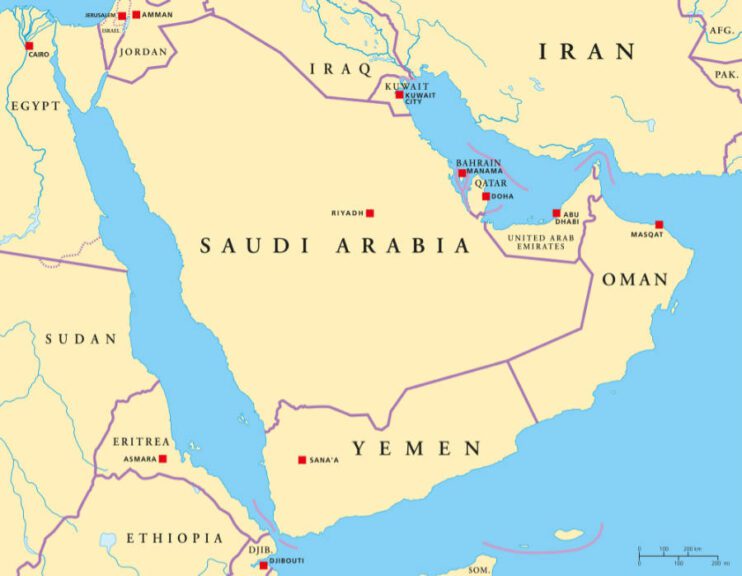
However, this development has reached a literal roadblock – the conflict in Iran. For large volumes of Saudi cargo, sea delivery is most often used. This is the main option for container transport, heavy equipment, and raw materials. Delivery routes include direct delivery or transit through intermediate ports. However, modern logistics is increasingly rarely built according to a single delivery mechanism. Companies combine different types of transport to find a balance between timeframes and cost.
In the case of Russia, cargo is partially delivered by sea but is then reloaded and delivered to Russia by land transport, typically rail and road. Such solutions allow for flexible adaptation to changes and a reduction in risks. Logistics from Saudi Arabia requires precise coordination. It is also important to consider the route, type of cargo, documents, and transit conditions.
The appearance and development of new routes also means an expansion of opportunities for business. Companies receive access to new suppliers and can build procurement more flexibly. In the case of Saudi Arabia, with the Persian Gulf currently problematic and aviation a challenge, Saudi Arabia’s extensive rail system—5,300 km of track—is now coming into its own, including various lines such as the North Train Network, East Train Network, and Haramain High-Speed Railway, serving major cities and industrial areas across the country. A primary example is the new international freight corridor linking Saudi Arabia’s eastern ports with the Al-Haditha border crossing into Jordan. This 1,700 km route allows trains to carry over 400 containers each, significantly reducing transit times and removing thousands of trucks from Saudi highways. Russian shipping companies service Jordan’s Aqaba Port.
Saudi Arabian logistics companies are increasingly coordinating with Russian operators, especially as they have developed expertise in determining new routes and taking advantage of lesser-known transport networks due to their experience of re-routing supply chains away from traditional routes and towards alternatives. While the Persian Gulf remains problematic—and has crucially exposed itself as a weak link—Saudi Arabia’s internal logistics routes have been rearranged with Russian assistance to enable its exports and imports to better utilize its north and northwestern access points.
This is now being used in Saudi-Russia bilateral trade, with Russian expertise and huge logistics and shipping capabilities enabling Saudi Arabian trade to diversify. Saudi and Russian products are now reaching their respective markets by alternative routes.
It is also likely to become a developing trend. As we noted in our article concerning Russia’s FESCO arranging the delivery of automobiles from Vietnam to Kazakhstan, Russian logistics—which has successfully manipulated the entire country into a 180-degree turn from west to east—has now become the most sophisticated and knowledge-based operator throughout Eurasia. With an expanding presence also into South Asia and Africa, Russia’s influence on Global South infrastructure development and operations is starting to wield considerable influence on countries now affected by international upheavals created by other foreign actors. Russia is assisting—often in conjunction with China’s Belt & Road Initiative—with the creation of logistics sovereignty throughout the Eurasian, Asian, and African regions. This will manifest itself in a boom in rail development, increased connectivity with other strategic, secondary ports, and a new generation of supply chain network understanding being created—with all the infrastructure development in the centre to be designed and built to secure these re-alignments.