 Русский




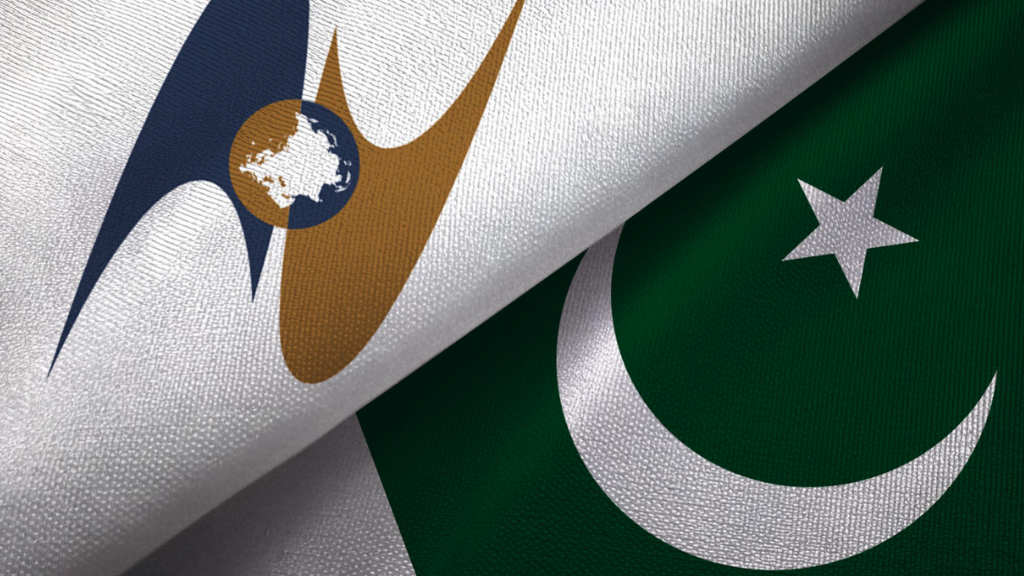

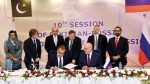
The Eurasian Economic Commission (EEC) Trade Minister Andrey Slepnev has held talks on concluding a free trade agreement with Pakistani Federal Commerce Minister Jam Kamal Khan. The EEC is the governing body for the Eurasian Economic Union.
The EEC stated that “the parties agreed to initiate a process of putting together a joint study group to examine the feasibility of concluding a free trade agreement. The Eurasian Economic Union and its member states attach special significance to developing mutually beneficial relations with South Asian countries. We view Pakistan as a promising partner in the region: trade between our countries is developing dynamically and has significant potential for growth.”
Khan stated that “for Pakistan, deeper cooperation with the EAEU means not only new trade opportunities but also strategic partnerships in areas such as logistics, energy, digital trade, industry, and integration of supply chains.”
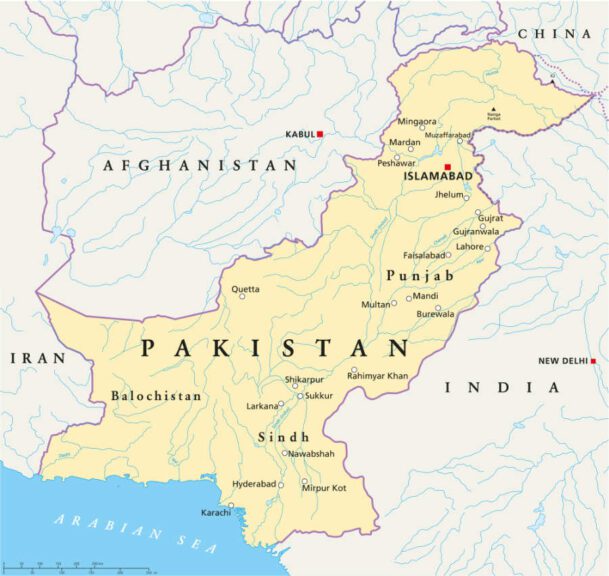
Pakistan is strategically located at the crossroads of Central Asia, the Middle East, and South Asia. It is a developing agro-industrial country that is among the countries with the greatest potential for economic growth in the 21st century.
The key industries are agriculture, textiles, chemicals, metallurgy, and engineering, as well as mining. The country is actively developing information technology, although the sector faces several challenges.
Agriculture is the backbone of the economy, employing approximately 42% of the workforce. The main crops are wheat, cotton, rice, sugar cane, and mangoes. The textile industry is a key export sector, accounting for about 60% of the country’s exports in 2023. Pakistan ranks fourth in the world in terms of cotton production. The chemical industry includes the production of fertilizers, plastics, and pharmaceuticals. The country also produces steel, aluminum, automobiles, and agricultural machinery. Pakistan has reserves of coal, natural gas, oil (about 300 million barrels), copper ore, chromium ore, marble, table salt, limestone, uranium, phosphates, barite, sulfur, and precious and semi-precious stones.
The country is also focusing on expanding its IT sector, becoming a growing center for software development and outsourcing. The government is working to diversify the economy and promote growth in sectors such as cement, steel, and chemicals. Pakistan’s automotive industry is expanding with increased investment, and its oil and gas sector remains essential for energy and industrial production.
Pakistan is part of several free trade agreements (FTAs) and regional trade groups that improve its access to international markets. These include the South Asian Free Trade Area (SAFTA) and the China-Pakistan Free Trade Agreement (CPFTA), which boosts trade with China, especially in textiles, agriculture, and chemicals. The country has been a significant recipient of China’s Belt & Road Initiative investments, which have been designed to improve Pakistan’s antiquated transport and logistics architecture and help the country to industrialize. There has been occasional resistance to these projects.
Pakistan is also a member of the regional SAARC trade agreement, which includes Afghanistan, Bangladesh, Bhutan, India, Maldives, Nepal, and Sri Lanka. Pakistan also enjoys trade preferences under agreements with the European Union and the United States. It is also a member of the Shanghai Cooperation Organisation and has expressed interest in BRICS, although India’s founding membership has blocked this route at present.
With a population of around 255 million, Pakistan’s GDP PPP in 2024 was around $1.46 trillion, with a GDP PPP per capita of $5,531. According to Trading Economics, the long-term forecast for Pakistan’s GDP PPP per capita in 2026 is around $5,810. In January 2026, the International Monetary Fund (IMF) projected a 3.6% growth in Pakistan’s real GDP for the fiscal year ending in June 2026. This forecast was based on the successful completion of IMF audits, which helped mitigate default risks and restore investor confidence.
In terms of Russia, Islamabad has been negotiating several logistics arrangements, including direct rail connectivity via Azerbaijan and Iran and the resumption of direct flights between Moscow and Islamabad. Bilateral trade between Russia and Pakistan has been growing. In 2021, trade turnover was US$696.99 million. This increased to US$705 million in 2022 and to a record US$1 billion in 2023. Pakistan’s bilateral trade with Russia reached an unprecedented $1 billion in 2023, with Pakistan importing crude oil from Russia for the first time that year.
2025 mutual trade turnover reached about US$1.3 billion, with a 13% rise in the first eight months of the year. Agricultural trade dominates, with Russia and Pakistan also engaging in direct barter for products such as oranges (Pakistan) and legumes (Russia).