
 Русский




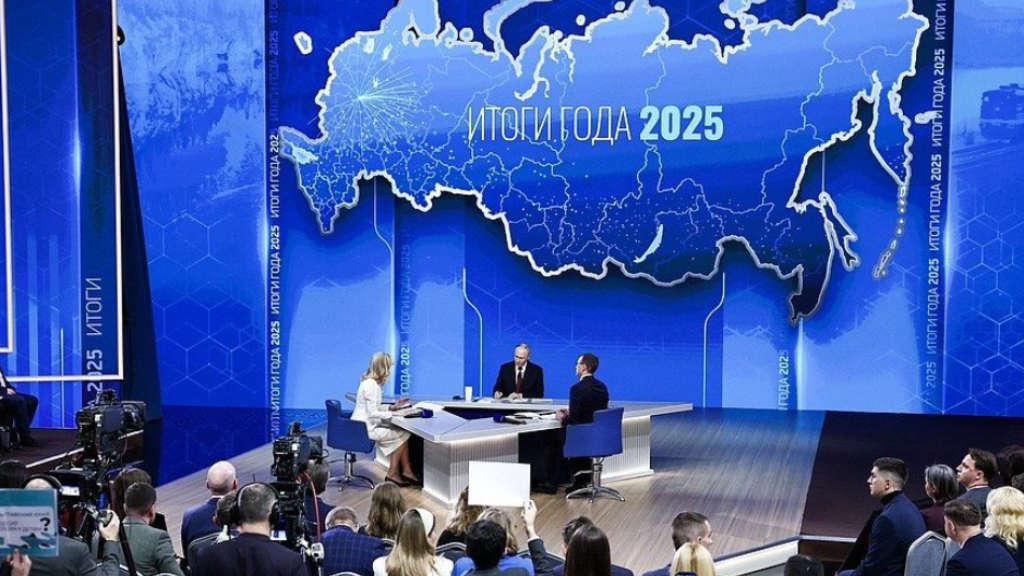

The Russian President, Vladimir Putin, gave his annual Q&A session on Friday (December 19) in which members of the public as well as Russian and international journalists ask questions. Over 2.5 million people responded, with Putin taking a cross-section of these questions during a four-hour live session. Questions ranged from the Ukraine conflict, to social issues, and regional infrastructure while in this article we examine the Q&A as pertains to the Russian economy and industrial development. Questions asked are prefixed Q, Putin’s responses as VP and our comments as RPA.
The full session can be accessed here.
The Russian Economy in 2025
Q: “Everyone here understands that the war is placing a heavy burden on the Russian economy. Yet, Europeans continue doing everything in their power to ruin the Russian economy. Under such difficult conditions, can we even speak of further economic growth? Are we seeing growth in some sectors but not others? And if so, which ones?”
VP: “You know, I usually bring a spreadsheet to every Q&A session of this type. This data is nothing confidential – it’s open data on the performance of the Russian economy over the past year. Our 2025 GDP growth is 1%; however, if we take the previous three years, Russia’s overall growth has been 9.7%. Meanwhile, the Eurozone has shown 3.1%.
As for the 1% growth this year and the economic growth rate in general, they are the result of deliberate actions by the Government, the Central Bank and the country’s leadership to target inflation. I should note that overall, we have been able to handle this task because the goal was set to lower the inflation rate to at least 6%. We can see now that by the end of the year, the inflation rate will fall even further, to around 5.7–5.8%. Slowing economic growth was a deliberate step to maintain the quality of the economy and the macroeconomic indicators.
What else is happening? Industrial production has grown by 1% while the processing industry is up 3.1%. Agricultural production has increased by 3.3%.
Housing construction is an important area. Millions of square metres have been built. Last year, the total was 107.8 million square metres. This year, output is slightly lower although still considerable, around 103˗105 million.
We have managed to maintain good real wage growth. The rates are not as high as last year, but in my opinion, they provide a solid real wage. Adjusted for inflation, real wages have increased by 4.5%.
Unfortunately, it must be admitted frankly that, over the same period, labour productivity growth has been rather modest, only 1.1%. Of course, we should make effort to improve this ratio in favour of higher labour productivity.
Last year, the unemployment rate was at a historic low of 2.5%. This year, it has fallen further to 2.2%. Overall, these are excellent indicators.
The Central Bank’s international reserves are also growing. I spoke with Ms Nabiullina (Central Bank Governor) yesterday: Russia’s reserves amounted to US$741.5 billion.
The federal budget deficit stands at 2.6%. We expect it to fall to 1.6% next year and 1.5% within the next three years. This is a good indicator, considering that the national debt remains very low, one of the lowest among developed economies. We estimated yesterday that the national debt currently stands at 17.7% (of GDP) and is not expected to rise above 20% in the next three years.
So, these are the indicators. What is the principal issue? Most importantly, we have managed to balance the budget – and credit is due to the Government for performing significant work. The quality of this balancing is at the level of 2021. This is a very important indicator of stability of the economy and the financial system of our country.
It means that we will be able to fully solve the issues regarding the social obligations towards the population, handle the development issues under our national projects, achieve technological development goals and, certainly, meet the needs of the Armed Forces. All this put together indicates that the Russian economy and the financial system are stable and fully under the control of the Government and the Central Bank.”
Q: “It has been reported that Brussels’ attempts to steal Russia’s assets have failed. Can you comment on that?”
VP: “Stealing is not the right word. Stealing is a covert theft of property. They are doing this openly. Therefore, it is robbery. Why aren’t they succeeding? Because the consequences will be grave for the robbers. What does this mean? First, it is difficult to accomplish. They have not said that they will rob and seize. One of their ideas is to issue a reparation loan secured by our assets.
What does issuing a loan mean? It means consequences for the budgets of every country involved; this will increase the budgetary debt of each country. If a country issues a loan secured by our gold and currency assets, this must be reflected in its budget. Take France, whose state debt has reached 120% of GDP. Our state debt is 17.7%, and theirs is 120%. It is true that our budget deficit is 2.6% percent, but it will go down to 1.6% next year, while France’s budget deficit is 6%. The new obligations will have to be added to the budget. I believe they are having big problems with next year’s budget. All this is the reason why it is difficult to take decisions related to the robbery of someone else’s assets.
But there will be graver consequences for those who might endeavour that. This will not just be a blow to their image, but this will subvert all the confidence in the euro area, since many countries store their foreign reserves in the eurozone. Not only Russia does that, but also those who have free reserves, primarily oil-producing countries. They will look at what is happening – they are already doing so, and they will have suspicions, doubts and fears. What if the same happens to them?
It is only difficult the first time, and then you can do the same under different pretexts. Today, they don’t like our special military operation in Ukraine. Later, they could be displeased with some country’s policy towards the LGBTQ community. There are very many strict laws in Muslim countries that protect our common traditional values. We don’t have such laws, but they do. This could be used as a pretext for seizing sovereign assets, sovereign resources and money. And why not? Or they can find some other pretext.
Apart from image-related losses, there will be direct financial losses related to the contemporary financial architecture. That is why it is so difficult to accomplish. And the main thing is no matter what they steal, sooner or later they will have to give it back.
Besides, we will protect our interests. How? Most importantly, we will go to courts to protect our interests. We will do our utmost to find a jurisdiction that will be independent from the political context.”
Q: “Good afternoon. There will be many changes in the tax sphere next year. It is clear that their goal is to generate additional revenue for the budget. What financial effect do you expect to see? And will there be any relaxations once this goal is achieved?”
VP: “Yes, this is a difficult issue. It was discussed for a long time within the Government and the Presidential Executive Office. Ultimately, as I have pointed out, it was decided that the best and most honest and transparent way to address our problems, including in the financial sphere, is to raise the VAT rate. Is this what you were referring to? The goal is simple, as I said in my opening remarks: to balance the budget. Overall, we have achieved this, as I have said, including thanks to that decision.
Of course, certain issues remain, and the Government must take them into account. We have talked about them many times. When the tax burden grows, when taxes are increased, this creates a temptation to evade taxes. Our task has been and remains to eliminate the shadow economy, to prevent businesses from going into the shadows and evading taxes. This is a challenging task. We must create conditions in which higher taxes do exist only on paper but actually translate into budget revenues.
I have taken your hint about this being permanent. No, it won’t. Our ultimate goal is to reduce the tax burden in the future, and the Government is acting with this goal in mind. I pin my hopes on this as well.”
RPA: Note a standard VAT rate of 20% applies to most goods and services in Russia. A reduced VAT rate of 10% applies to food, children’s clothes, books, medical equipment and some services. There is also a special VAT rate of 16.67% applicable to e-services. The standard VAT rate is being increased to 22% from January 1, 2026.
Q: “I’m from Kraskovo in the Lyubertsy District. We run a small family business, a bakery. For about eight years, we have been operating under the convenient patent tax system. Starting next year, however, we will be required to pay income tax and VAT. This means we will need to hire a professional accountant, which will result in additional expenses for us.
We fully understand that the country is in a difficult situation at the moment and that raising taxes is necessary. However, in my view, it would be far more effective for both the state and individual entrepreneurs if the cost of patents was simply increased – two, three, four, or even five times – depending on turnover, for example. As things stand, the situation is tough, and honestly, we don’t look to the future with much optimism. Many businesses may close or move underground.
Could you please advise us on how to navigate this situation, given the drastic changes to tax legislation?”
VP: “Regarding your question, here is the background. Initially, various measures were introduced to support individual entrepreneurs and small businesses. More recently, however, the Government has identified problems, particularly in trade, both among individual entrepreneurs and small businesses. These measures and business formats have sometimes been used for the uncontrolled import of “grey” and “black” goods. That’s where the problem arose. But this does not mean that production businesses should face difficulties. I will certainly bring this matter to the attention of the Government and the relevant agencies.
Regarding accounting, I would note that you do not necessarily need to incur significant additional expenses to set up an accounting department. Many major financial institutions now offer a range of banking and accounting services. You could, for example, consult Sberbank – they should be able to help you organise this work without seriously disrupting your business or creating a heavy financial burden.
But you are absolutely right on one point: production business must not suffer because of the transition to a new tax system. I assure you that this issue will be brought to the Government’s attention. I wish every success to you, and your bakery. Perhaps you could even send me some of your tasty buns? For my part, I will work with the Government to support your business and others like it.”
Q: “The Central Bank has revised its key interest rate down to 16%. Could you please comment?”
VP: “You know, the Central Bank, of course, is under constant pressure. The high interest rate is a very controversial matter, and the difference between this and the inflation rate. By the end of this year, as I have said, inflation will be at 5.7˗5.8%, maybe 5.6%, while the interest rate remains unchanged at 16%. Experts expected a cut of up to one percentage point.
According to the law, the Bank of Russia is an independent institution, so I try not to interfere with its decisions and to shield it from any outside influence or pressure. Overall, the Bank of Russia has succeeded in delivering on its mandate and has been quite diligent and responsible in this regard.
In late 2024 and at the beginning of this year, we had conversations with the Central Bank Governor, with senior Government officials and the cabinet’s economic block, saying that we had to make a decision on targeting inflation and to do everything to ensure that the Russian economy and the macroeconomic situation are sustainable and robust and that the national economy remains on a solid footing. The fact that there is this gap between the inflation rate and the key interest rate offers the Central Bank’s critics an angle of attack.
What is the problem here? In fact, there are quite a few challenges, and one of them, as I have already said, or as I will say, if I have not mentioned this until this point, is the slowing investment activity. It decreased by 3.1% in the first three quarters of this year. But what matters for the Central Bank is not this decline but the fact that lending remains quite high. The number of issued loans has not been decreasing all that much. They did decline, but only marginally. This compels the Bank of Russia to exercise extreme caution in order to avert any inflation spikes so that it does not have to make any moves in the opposite direction. These back-and-forth oscillations are the worst thing you can imagine. The Bank of Russia is seeking to ensure stability in this regard, which is important, of course. We cannot agree more.
Is a cut of half a percentage point enough? I will not share any assessments at this point, leaving it up to experts. We have many prominent specialists – let them draw the corresponding conclusions. There will also be a response from the real economy. I can even anticipate how they will respond.”
Q: “Mr President, official inflation is one thing, but the so-called perceived inflation is somewhat different. We do our own shopping and see how everything is getting more expensive. What can be said? You often refer to it as the “ballpark figure” – approximately 6%. Indeed, people are complaining that everything is getting more expensive, and prices are growing like mad. Why has everything become so expensive? Even the price of chicken has almost doubled. I am a father of three. I work, making ₽50,000 (US$620) each week but even so, I cannot meet their needs or feed them properly.”
VP: “I have already mentioned that when people see average indicators, these average figures often raise questions, because as a rule, they do not match what a person encounters in daily life.
For instance, we say inflation will come down. That means prices will go down, and it will be at about 5.7–5.8%. However, food inflation, especially in certain categories, may be higher – and it is higher – and this depends on the food basket a person uses. If that food basket consists largely of protein products like chicken, then this impacts the family budget. There is certainly nothing good about that.
At the same time, I would note that last year, and the year before, we were critically assessing the actions of our colleagues in the Government when the price of eggs suddenly spiked. Now, prices are not just falling – they have dropped by almost 16%. These are also important factors. Nevertheless, without any doubt, we must closely monitor the situation in every segment and across every demographic group.
As for families with children: the family must be at the centre of everything in Russia, and we are striving for that. I would like to emphasise that additional measures to support families with children will come into effect from January 1 next year. For example, out of the 13% personal income tax paid, in families with modest incomes – less than one and a half times the subsistence minimum per person – 7% will be returned to the family. I hope this will be a real way to support families with children. By the way, if a family’s income, correct me if I’m wrong, is below one and a half times the subsistence minimum, then additional support equivalent to one subsistence minimum is provided for each child.
I am not even mentioning other components of support for families with children. Naturally, this is not enough. We all realise, of course, that this is not enough. But what is to be done? First, we will continue to refine this system of family support, because state policy, both at the federal and regional levels, should revolve around this.
Second, we will increase salary levels, to ensure that incomes, especially for families with children, do not fall. When labour incomes rise, the state must under no circumstances reduce these support measures, which, unfortunately, is what happens now. This is a well-known problem: a family with children receives certain benefits and support, then their earnings rise, and the state cuts back the benefits it had been providing. Therefore, when earnings rise, the family’s total income, including benefits, must not decrease.
I will return to this issue once again and ask the Government to pay the closest attention to it. It makes no sense to do otherwise, because the budget gains nothing from it – and we discourage people from working.”
Russian 2025 Industrial Development
Q: “Everyone knows Novosibirsk for its Academic Town. In recent years, and with your support, by the way, we have been building the Siberian Circular Photon Source, or SKIF. What makes this device even more unique is that it will open new research horizons not only for our country, but for the entire world too.
The researchers managed to build it without using any foreign parts or materials, all while facing sanctions and having to navigate a very complex economic environment. This unit is expected to be launched next year. My question is what can be done to retain young researchers?”
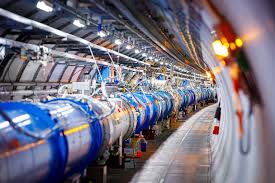
RPA: The SKIF is a synchrotron radiation source with improved parameters (energy – 3 GeV, storage perimeter – 476 meters, emittance – 75 pm. mrad, current – 400 mA) in Siberia, near Novosibirsk. It is used to study high energy particle collisions, with numerous energy and nuclear applications, and is Russia’s equivalent of the Large Hadron Collider at CERN.
VP: “This topic came up during a meeting of the Presidential Council for Science, which took place in 2018, I think, and Novosibirsk served as its venue. It was then that our colleagues from the Siberian Branch of the Academy of Sciences – the Institute of Nuclear Physics – raised this issue and talked about the need to create the SKIF, this system, an accelerator.
It is true that sanctions-related issues caused some delays, but we managed to complete the project and finish the job. This is a great achievement. I would like to congratulate everyone who was involved in this process and who will be operating and using this unit in the future. It is an unquestionable success.
We already had a similar unit here in Moscow, at the Kurchatov Institute. It is an older generation unit that requires quite a few upgrades, and there are plans to make these improvements. At the same time, similar systems with the same equipment will be installed in Vladivostok and other cities. We have them in Gatchina and other locations as well. We will work to make this happen.
As for the SKIF, this is a great success story. Why? Because it makes it possible to conduct not only basic but also applied research. This is instrumental since it offers an opportunity to work on pharmaceuticals, new materials, and so on.
How do we keep young specialists in the country? We’ve built a comprehensive system, and overall, it’s working. But what’s the key? We have to develop the laboratory infrastructure. True scientists are driven by their work; for them, that passion can be the most important thing. But other factors matter, too: salary, housing and quality of life. We’re implementing all of this step by step. That’s the purpose of our entire grant system, including the “megagrants.”
In fact, the recipients of those megagrants – top-tier scientists, both Russian and international, who have worked under these programmes – raised this very point with us at a meeting. They said it plainly: you must create the conditions for young specialists to stay. You have to offer them a clear horizon, so they can see the scope of their research, ensuring that funding isn’t just for six months or a couple of years, but for a longer cycle – five years and beyond. We’ve done that as well, and it helps retain talent.
Moreover, many are coming back. I’ve spoken with such specialists myself. Young people who used to work abroad are now returning to Russia. Ironically, our so-called Western colleagues are actively helping us with this. When asked why they returned, they say, first, because research facilities and opportunities are being created here. But one of the main reasons is: “We’re concerned for our children. The idea of sending them to the local schools (overseas) is out of the question.”
Well, thank God, the protection of traditional values is part of our agenda. People appreciate that, and together with other aspects, it leads them to come home. There are many such people, and their number is growing.”
Further Reading
Putin’s Annual “Russia Calling” Speech: The Russian Economy In 2024 – Analysis