
 Русский





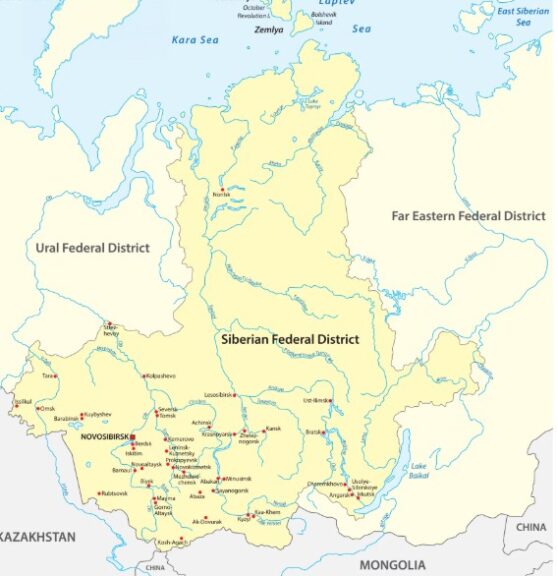
The creation of a unified Special Economic Zone (SEZ) covering the entire Siberian Federal District, with common tax and investment preferences for each region within it, could become a driver for Siberian development, according to Elena Bezdenezhnykh, the vice president of JSC Rusal Management.
She said that “We have 59 SEZs in the country. The only one among them operating as a complete territorial unit is the Kaliningrad SEZ. We propose creating the same common economic zone in the Siberian Federal District, making it like similar zones in China—the Siberia SEZ. We can then consider uniting the existing interconnected processes within it, develop production chains, and increase the level of processing. Under the current structure—operating individual SEZs in a single region, city, or company—this is impossible. ” Bezdenezhnykh was speaking at the Siberian Express 2026 scientific and practical conference in Krasnoyarsk.
The Kaliningrad SEZ is an existing special regime covering the entire territory of the Kaliningrad region, providing residents with customs preferences, tax benefits, and reduced insurance contributions. It also possesses a stock exchange and has been attracting Russian investment previously based overseas.
Currently, there are several SEZs in Siberia, in individual regions of the district. These include industrial SEZs (Krasnoyarsk Technological Valley and Avangard in Omsk), tourist SEZs (Turquoise Katun in Altai Territory and Gates of Baikal in the Irkutsk region), and innovation SEZs (Tomsk). There are numerous technical and practical issues to consider for the entire Siberian region to become a unified SEZ that would make the process rather difficult. While Kaliningrad is isolated away from the rest of Russia and therefore has well-defined borders with Lithuania and Poland, Siberia has a total perimeter length of about 15,000 km, including with other Russian Federal Districts as well as with China and Mongolia. As a unified SEZ would have a differing tax regime from the rest of the country, this would effectively create the need for the entire district to be cordoned off from the rest of Russia, which would be both impractical and create economic imbalances elsewhere.