 Русский





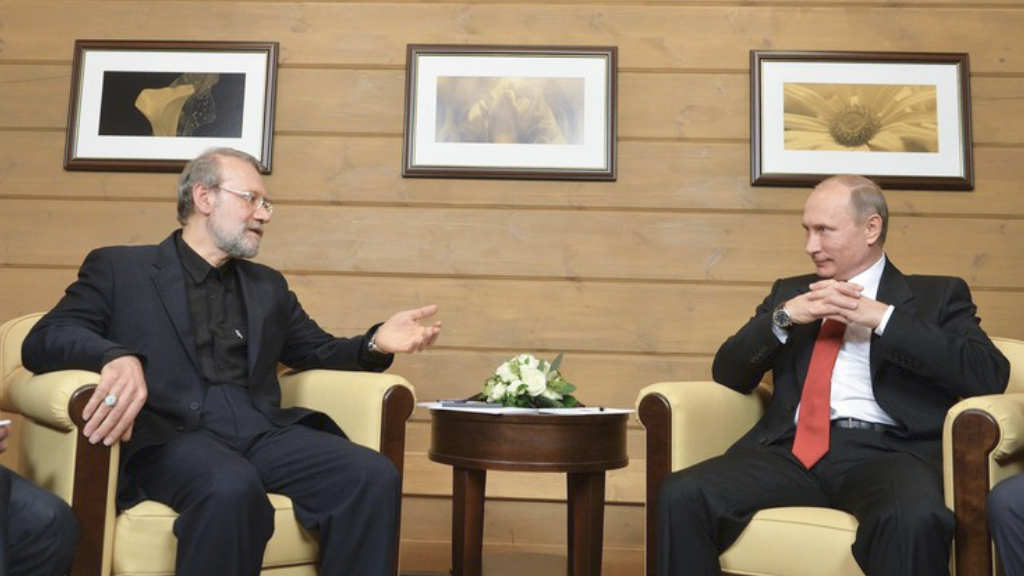

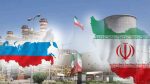
The Russian President Vladimir Putin met with Ali Larijani, the secretary of Iran’s Supreme National Security Council, at the Kremlin on Friday (January 30) in an unannounced high-level meeting. Larijani, a senior adviser to Supreme Leader Ali Khamenei, was appointed to his post last August. He previously visited Moscow in the summer following US airstrikes on Iranian nuclear facilities.
Iran’s ambassador to Russia, Kazem Jalali, later stated the meeting focused on “bilateral relations” and involved “consultations on important regional and international issues.”
The visit follows Washington’s imposition of sanctions on Larijani earlier this month over his alleged involvement in the “violent repression” of anti-government protests that have swept Iran since late December.
Tehran has framed the unrest, which began over economic grievances, as a foreign-backed insurrection, alleging that external agents armed rioters to provoke a harsh state response and justify American intervention. Putin held a phone call with his Iranian counterpart, Masoud Pezeshkian, earlier this month to discuss the unrest and reaffirm strong bilateral ties.
At the height of the protests, US President Donald Trump reportedly came close to ordering punitive strikes against Iran. While he has delayed a final decision, he has dispatched a naval “armada” to the region to pressure Tehran into accepting his demands for a new nuclear deal.
US military planning remains active. Media reports cite administration sources saying Trump is considering options ranging from strikes on Iranian security forces and nuclear sites to targeting officials – with the aim of reigniting anti-government protests. A constant issue between Iran and the United States is Tehran’s development of nuclear energy, which Tehran says is for peaceful purposes. It has signed an agreement with Russia to develop eight nuclear power plants. At present, Iran ranks second in terms of global oil reserves (after Venezuela) and fourth in terms of natural gas reserves. However, Iran is under multiple sanctions and has struggled to maintain exports. China is a major buyer, while Russia is also heavily involved in Iran’s oil and gas sector. US actions seem designed to enforce a regime change in Iran that would instigate a far more US-centric government more willing to bend to Washington’s wishes and insert American companies into Iran’s energy sector. Recent events in Venezuela are a case in point.
Following Trump’s threat of a “far worse” attack than previous US strikes, Tehran vowed to “defend itself and respond like never before.” With both sides planning military drills in the region, warnings against provocation and miscalculation continue to escalate.
Any attacks on Iran would be hugely disruptive for global supply chains as Iran would almost certainly close the Strait of Hormuz. A significant portion of Europe’s energy supply relies on the Strait of Hormuz, with approximately 10% of Europe’s LNG imports and roughly 4% of its direct tanker trade (or over 500,000 barrels per day of crude oil) passes through the strait. Germany, Italy, Belgium, and Poland are the most reliant on these shipments. A closure of the strait would have massive impacts on Europe due to the high percentage of LNG imports passing through it. While other regions such as Asia have higher direct volume, European dependence on this route for energy (specifically gas) makes it a critical vulnerability in their trade network.
With Russian supplies off-limits, Europe would be 75% dependent upon the United States for its gas supplies, which make up 25% of Europe’s total energy needs. Most of the remainder—65%—are from oil and petroleum imports, which Europe again has found problematic with Russia also barred from making supplies. The United States is also the largest oil supplier to the EU, accounting for about 20% of its crude imports, while other significant suppliers to the EU include Nigeria, Saudi Arabia, Iraq, and the UK.
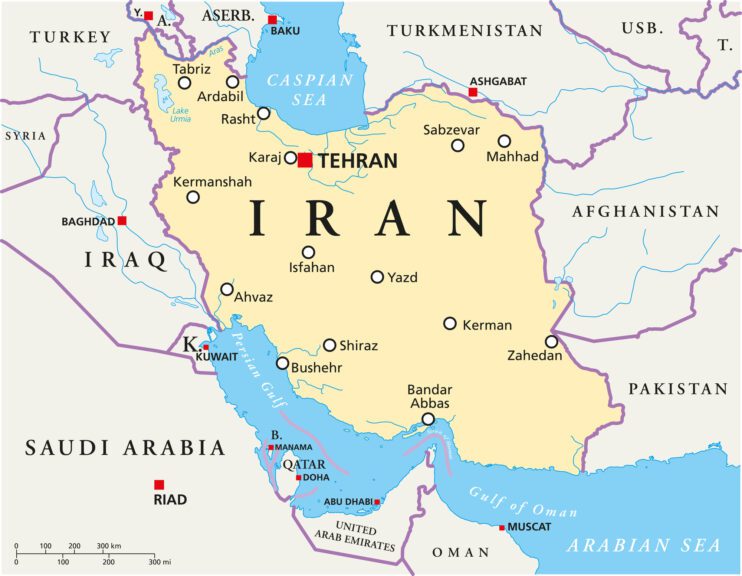
Iran has a wide-ranging Comprehensive Strategic Partnership with Russia; however, this is not believed to include military support, with previous Iranian statements suggesting that Tehran feels it can protect itself. The Iranian Navy consists of two main, distinct forces—the regular Navy (IRIN) and the Islamic Revolutionary Guard Corps (IRGC) Navy—totaling over 38,000 personnel and a large, diverse fleet focusing on coastal defense, fast attack, and regional deterrence. The forces are primarily concentrated in the Persian Gulf and the Gulf of Oman, with the IRGC specializing in asymmetrical warfare and the regular navy covering broader, blue-water operations. It should also be noted that Russia, Iran, and China agreed to a ‘Trilateral Strategic Pact’ on January 29, which, while somewhat ambiguous—details have not been made public—does raise the possibility of potential involvement in protecting their Iranian interests should Iran be attacked by the United States.