 Русский




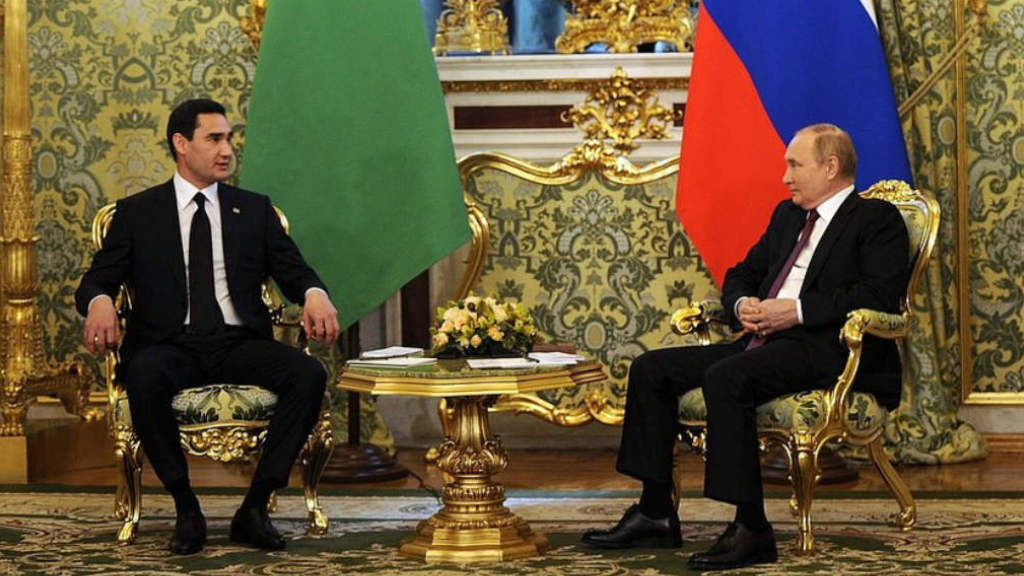

A new chapter in trade, connectivity, and strategic partnership with Turkmenistan has been marked by President Putin’s visit to Ashgabat during his meetings Gurbanguly Berdimuhamedov, the Turkmen President on December 12 and 13.
Like India’s Narendra Modi did last week, Berdimuhamedov met Putin directly off his aircraft as it landed in Ashgabat, a gesture that is beginning to become the norm when greeting the visiting Russian President, possibly in answer to the intense criticism and pressure he has been under from the West.
Berdimuhamedov said “I do not sleep when such guests arrive,” setting the tone for a visit that blended respect, pragmatism, and forward-looking economic cooperation. Putin’s two-day visit, coinciding with the celebrations of the 30th anniversary of Turkmenistan’s neutrality, brought a rare concentration of regional leaders to Ashgabat. These included Turkish President Recep Erdogan, Iranian President Masoud Pezeshkian, Pakistani Prime Minister Shehbaz Sharif, Kazakh President Kassym-Jomart Tokayev, Kyrgyz President Sadyr Japarov, Uzbek President Shavkat Mirziyoyev, Tajik President Emomali Rahmon, Georgian Prime Minister Irakli Kobakhidze, and Azerbaijani Prime Minister Ali Asadov, along with other heads of state and government.
Alongside celebrations of Turkmenistan’s continued (and rare) commitment to neutrality, the visit provided a platform for tangible progress: new discussions on transportation networks, trade corridors, and investment partnerships that promise to shape the economic geography of Eurasia for decades to come.
At the heart of the Russia-Turkmenistan talks lies a shared understanding: Russia and Turkmenistan, both strategically located at the crossroads of major Eurasian routes, have become indispensable partners in building the region’s logistics, industrial, and energy architecture. From the Caspian Sea to the Persian Gulf, from Astrakhan to Turkmenbashi port, the two countries are creating new corridors that enhance not only bilateral ties but also the economic sovereignty and resilience of the broader region.
Trade and Economic Cooperation
The economic trajectory between the two countries is impressively upward. Bilateral trade turnover in 2024 exceeded US$1.6 billion and has surged in 2025. The first quarter saw 21.4% growth, while Q2 registered more than 30% expansion over the previous period in 2024. By this year’s end, officials expect Russia-Turkmenistan turnover to surpass US$2.5 billion, a historic record illustrating the strength and sustainability of this partnership.
Russian companies are deepening their presence across Turkmenistan’s economic landscape. Today, around 40 enterprises with Russian capital operate in the country, including Gazprom, KAMAZ, Tatneft, Vozrozhdenie, and others, while 342 joint investment projects, valued at approximately US$3.5 billion, signal robust corporate confidence in Turkmenistan’s stable investment climate. Several flagship Russian companies are exploring or expanding operations in energy, transportation, logistics, and industrial construction, including INSTC-related infrastructure build.
An example of the latter is Russian Railways (RZD), which has intensified cooperation with Turkmendemiryollary (Turkmen Railways) as part of their 2023–2025 partnership program, focusing on electrification, digitalization, and specialist training.
KAMAZ continues to supply modern trucks and service centers, supporting Turkmenistan’s industrial and logistics modernization. Lukoil is expanding participation in Turkmenistan’s hydrocarbon sector, leveraging decades of experience in the Caspian region. Tatneft participates in oilfield service projects, bringing new technologies and engineering solutions. This expanding business presence mirrors the broader macroeconomic story: Russian exports to Turkmenistan are diversifying rapidly.
Russia’s steadily expanding agricultural exports to Turkmenistan underscore the deepening economic synergy driving bilateral ties to new heights. Russia exports fat and oil, meat and dairy products, fish, beverages, confectionery, and other items to the country.
In the first eleven months of 2025, Russian agricultural exports reached US$200 million, a 12% increase, with more than 243,000 tonnes of food products strengthening Turkmenistan’s market stability and Russia’s role as a key supplier. Sunflower oil led with US$37 million, followed by flour (US$26 million) and wheat, which surged from US$5 million to nearly US$16 million year-on-year. Poultry, dairy, and margarine exports also grew substantially.
These trends reflect not only rising demand but also the expanding connectivity and trust underpinning Russia-Turkmenistan economic cooperation. This expanding food trade is not merely commerce. It contributes directly to food security, supply chain stability, and affordability, priorities shared by both nations as they strengthen their internal markets against global volatility.
This trade volume is set to rise further as President Putin and leading Russian companies have already signaled readiness to unlock Turkmenistan’s rapidly developing sectors. New investments in energy, transport, and industry will deepen integration and open fresh avenues for bilateral growth.
The momentum now forming positions Russia as a key driver of Turkmenistan’s next economic chapter. Putin’s meeting with President Serdar Berdimuhamedov and his important address at the International Forum for Peace and Trust in Ashgabat on December 12 once again underscored the dynamic, forward-looking nature of Russian-Turkmen relations, which today serve as an exemplary model of partnership in a multipolar world.
With bilateral trade turnover rising by 35% in just ten months, Moscow’s commitment to launching new investment projects reflects the deepening integration of the two economies across energy, transport, industry, and a number of other sectors. Russia’s role as one of Turkmenistan’s leading economic partners is reinforced by the growing interest of major Russian companies in new joint projects.
Flagship firms such as Russian Railways, Lukoil, Tatneft, KAMAZ, and Vozrozhdenie are exploring expanded cooperation across energy, transport, and industrial development. Their engagement reflects rising confidence in Turkmenistan’s investment climate and the strategic value of deeper integration. This momentum underscores a broader trend: Russian business is poised to play a pivotal role in Turkmenistan’s next stage of modernization.
The ongoing construction of the International North–South Transportation Corridor (INSTC) supported by expanding inter-regional cooperation cements both nations’ role as key architects of Eurasia’s emerging connectivity architecture. As Turkmenistan prepares to chair the Commonwealth of Independent States in 2026, Russia has reaffirmed its readiness to provide full assistance, ensuring continuity and cohesion within the shared economic space. Putin’s words, combined with Turkmenistan’s unwavering hospitality, signal that bilateral ties are entering a new, strategically significant phase marked by trust, stability, and shared ambition.
Connectivity: The Strategic Heart of the Relationship
If trade is the bloodstream of Russia-Turkmenistan relations, infrastructure is its skeleton. And no infrastructure project today is more transformative than the International North-South Transport Corridor (INSTC). Turkmenistan’s accession to the INSTC in July 2023 formally integrated the country into a multi-modal corridor linking India, Iran, Russia, and Central Asia. Its role has since become pivotal geographically, politically, and economically.
Why Turkmenistan Matters for the INSTC
Geography
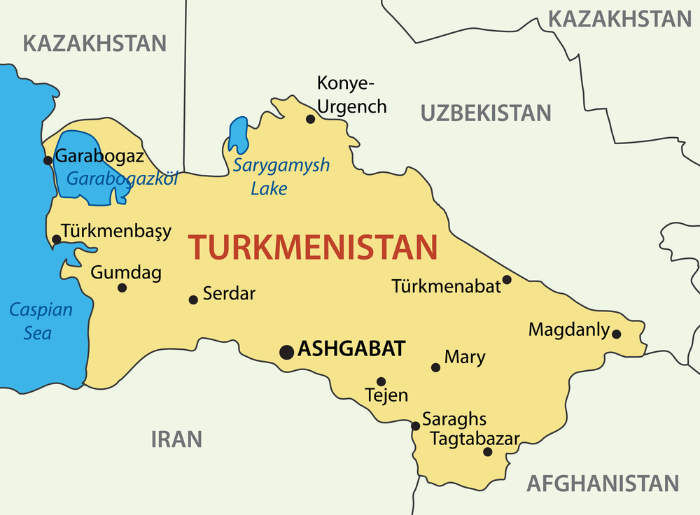
Turkmenistan forms the land bridge connecting Russia and Kazakhstan to Iran’s rail and port systems.
Ports
The modern Turkmenbashi International Seaport integrates into both East-West and North-South logistical routes.
Railways
Ashgabat, Mary, Turkmenabat, and other nodes strengthen the corridor’s eastern branch. Turkmenistan can also provide future connectivity through to Afghanistan, a key potential Central Asian node.
Regional Access
Through Iran, Turkmenistan provides Russia with streamlined access to the Middle East, as emphasized by many Eurasian geopolitical affairs experts. The eastern branch of the INSTC, which links Russia, Kazakhstan, Turkmenistan, and Iran, has swiftly matured since its activation in 2023, already moving some 2 million tonnes of cargo in 2024.
Experts note the corridor is in strong operational shape, with the capacity to expand flows to 15 million tonnes by 2030. With Turkmenistan actively modernizing rail gauge systems, electrification, and customs interoperability, these volumes are expected to expand substantially in the coming years. Russian railway companies will contribute significantly to unlock the real Eurasian regional connectivity potential.
Cooperation between Russia’s Astrakhan region (Russia’s gateway to the Caspian Sea) and Turkmenistan illustrates how sub-regional connections fuel the corridor’s growth. Trade between Astrakhan and Turkmenistan rose by 15% last year, primarily through shipments of flour, fish products, and industrial goods. The Middle Corridor, the Caspian Sea route, the revival of ancient Silk Road and the INSTC are no longer competing visions; they form a complementary network in which Turkmenistan is emerging as one of the central hubs.
Ashgabat as a Regional Dialogue Platform
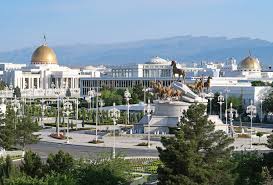
Turkmenistan’s policy of permanent neutrality, now celebrating its 30th anniversary, is more than symbolic. It has positioned Ashgabat as an ideal meeting ground for constructive dialogue among Russia, Turkey, Iran, Central Asian states, and beyond. President Putin’s participation in the neutrality anniversary events allowed for a rare high-level gathering, reinforcing Turkmenistan’s diplomatic value as a mediator and coordinator. As global geopolitics undergo structural transformations, such neutral venues are increasingly important. Bilateral consultations also touched upon issues of security, stability, and collective responsibility: combating organized crime and illicit drug trafficking, strengthening the role of the UN and international law, and avoiding politicization in global security frameworks. The friendly, trust-based dialogue praised by both sides emphasizes that Russia and Turkmenistan share common approaches to global and regional security challenges.
Russia-Turkmenistan Investment Opportunities
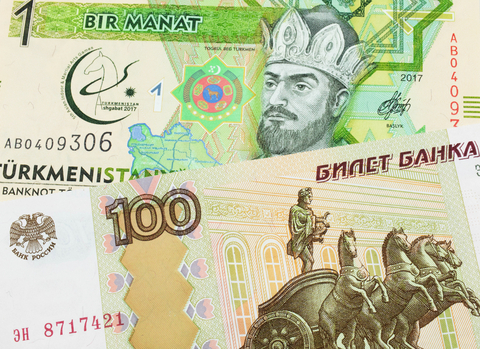
Turkmenistan’s economic strategy emphasizes modernization, diversification, and attracting foreign investment into technology-rich, high-value industries. For Russia, this opens a wide array of opportunities. Priority sectors for Russian investors include:
Energy and Petrochemicals
Upstream and downstream projects, Caspian offshore exploration, advanced gas-processing facilities, petrochemical production, and modern oilfield services and technologies are among the most noteworthy examples of expanding cooperation. Russian companies see a rare opening in Turkmenistan’s energy sector—a gas-rich market eager for modern technology, new capital, and trusted partners. Joint ventures in upstream development and cutting-edge petrochemical projects can further strengthen Russia’s long-term role in the region. Turkmenistan now stands ready to shape its next energy chapter, and the recent high-level visit paves the way for accelerating this growing investment momentum. Turkmenistan’s vast gas reserves—13.4 trillion cubic meters—underscore its ambition to triple output by 2030, transforming itself into a heavyweight supplier. This surge in production targets creates fertile ground for Russian companies to expand investment in upstream development, gas processing, and petrochemicals. For Moscow, deepening its energy footprint in Turkmenistan is not just a commercial opportunity; it’s a strategic alignment in the heart of Central Asia. For Turkmenistan, it’s about truly unlocking the full potential of its energy sector, turning vast reserves into long-term economic strength and strategic leverage.
Green and Renewables
Russia’s Astrakhan region sees promising potential for cooperation with Turkmenistan in renewable energy, leveraging shared Caspian climate conditions and proven technological experience. With Astrakhan already generating about 50% of its electricity from renewables, regional officials note that this model can be effectively replicated across the Caspian Basin, including in Turkmenistan. As Ashgabat launched a 10 MW wind-solar power plant in 2024; both sides view green energy as an emerging pillar of bilateral cooperation, reinforcing sustainability and technological partnership.
Transport and Logistics
Rail electrification and modernization, port development at Turkmenbashi, digital logistics systems, and multi-modal freight hubs. Turkmenistan is rapidly transforming its strategic geography into a powerful lever for East–West and North–South connectivity, positioning itself as a central logistics hub for the wider Eurasian space. Massive modernization of roads, railways, the Turkmenbashi seaport, airports, and digital systems remains essential to overcoming landlocked constraints and unlocking new transit potential. The further development of the Astrakhan region and Turkmenistan is being driven by the North-South transport corridor, with plans for a regular shipping line to Turkmenbashi and a Turkmen logistics center in Astrakhan.
The new logistics center in Astrakhan’s port SEZ and the shipping line to Turkmenbashi are set to boost cargo efficiency, deepen economic ties, and increase trade volume between Russia and Turkmenistan. Now, a priority task is the simplification of customs procedures and the full-scale adoption of digital logistics solutions to ensure seamless multimodal flows across Central Asia. Equally important is the country’s push to deepen international cooperation on key corridors linking Europe, Asia, and the Persian Gulf. In this context, Russia’s investment agenda aligns with the “Program Of Turkmenistan for the Development of Transport Diplomacy for 2022–2025” which stands as a strategic blueprint strengthening the legal, institutional, and diplomatic foundations of Turkmenistan’s expanding transport role.
Agriculture and Food Processing
Grain export hubs, dairy and meat supply chains, and joint production facilities are rapidly shaping Turkmenistan’s agricultural landscape. As both nations advance trade and technical collaboration in crop production and processing, agriculture is emerging as a key pillar of their economic partnership beyond energy. Building on this momentum, Russian companies can invest in modern farm machinery, cold-chain storage, and value-added food processing plants to boost yields and extend product shelf life. Joint ventures with Turkmen partners in grain handling, meat and dairy processing, and vegetable value chains would enhance food security and open export corridors via the North-South transport link. By combining technology transfer with financing and logistics expertise, Russian firms can help transform Turkmenistan’s agriculture from raw supply into diversified processed goods—further strengthening economic ties beyond energy cooperation.
Mechanical Engineering and Manufacturing
Turkmenistan’s demand for heavy vehicles and industrial equipment, evidenced by 2014 contracts to buy nearly 1,500 Russian-made KAMAZ trucks worth about $125 million, highlights a strong market for Russian engineering exports. Russian manufacturers like KAMAZ, which leads Russia’s heavy truck segment, can expand deliveries of heavy vehicles, construction machinery, and spare parts while establishing local dealerships, service centers, and training networks to support long-term fleet operations. Joint ventures in industrial equipment assembly and maintenance facilities would not only transfer technology but also improve Turkmenistan’s manufacturing capabilities and supply chains. By coupling financing, after-sales services, and localized production with existing trade ties, Russian firms can turn mechanical engineering cooperation into a strategic pillar of broader economic partnership.
Digital Technologies and Telecommunications
Turkmenistan has made digital transformation a strategic national priority, launching its “Digital Economy Development Concept 2026–2028” focuses on e-government, AI, expanded data networks, and modernizing telecom infrastructure. Russian ICT firms can bring e-government solutions, cyber infrastructure, and secure cloud platforms to support Ashgabat’s push for efficient online public services and digital economy growth. Joint ventures in cross-border e-commerce platforms and digital payment systems would tap into rising demand for integrated trade and financial technologies across Eurasia. By combining Russia’s telecommunications expertise with Turkmen needs for modern broadband, 5G expansion, and smart city systems, investors can help build a resilient digital ecosystem and deepen economic ties beyond traditional energy cooperation.
Construction and Urban Development
Turkmenistan’s ambitious urban and infrastructure plans, including road networks, industrial parks, housing, and municipal projects, offer fertile ground for Russian investment. Turkmenistan is implementing large-scale urban development programs to ensure all city residents have access to safe and high-quality housing. This year, the country plans to construct and commission residential buildings totaling approximately 500,000 square meters and to develop several new industrial parks along key transport corridors.
Russian companies can contribute through engineering services, construction technology, and project financing, leveraging decades of experience in large-scale infrastructure. Joint ventures in road construction and municipal utilities could modernize urban mobility, while participation in industrial parks and housing projects could provide turnkey solutions from design to completion. By combining investment capital with advanced construction technologies, prefabrication methods, and smart city solutions, Russian firms can not only gain lucrative contracts but also strengthen long-term economic and strategic ties with Turkmenistan, turning infrastructure development into a cornerstone of bilateral cooperation.
These fields reflect not only areas of Russian expertise but also sectors in which Turkmenistan seeks technology transfer, job creation, and modernization.
Tourism and People-to-People Cooperation
Economic relations are strongest when supported by cultural and humanitarian foundations. Both countries recognize this, and recent years have seen growth in educational exchanges, joint cultural programs, scientific cooperation, language and academic partnerships, and professional training in engineering, transport, and energy sectors. Russian universities remain attractive to Turkmen students, while Russian specialists contribute to training programs within Turkmenistan’s industrial enterprises. Such cooperation builds a generation of professionals who understand both countries, ensuring continuity and stability. More than 54,000 Turkmen students now study in Russia, a quiet demographic shift with loud geopolitical implications. Their presence is reshaping not just campuses but also the future ties between Moscow and Central Asia.
Turkmenistan is emerging as a top source of visitors to Russia, with summer travel surging 68% in Q3 2025 (total 24,100 trips), highlighting a growing appetite for cross-border experiences. Russian and Turkmen tourism companies can capitalize on this trend through joint packages, direct flights, and cultural tours, boosting both business and connectivity.
Such collaboration in hospitality, travel services, and events strengthens people-to-people ties while turning rising tourist flows into a durable pillar of bilateral cooperation.
Neutrality, Stability, and a Shared Vision for Eurasia
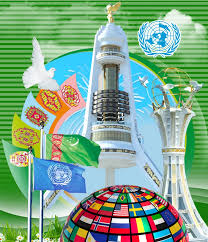
In a world characterized by unpredictable shocks, the Russia-Turkmenistan partnership stands out for its stability, pragmatism, and long-term orientation. Turkmenistan’s neutral status provides a unique diplomatic environment, allowing the country to maintain constructive ties with all major regional players while facilitating multilateral cooperation. Russia, for its part, values Turkmenistan not only as a neighbour and friend but also as a strategic anchor in Central Asia, a region of growing economic and geopolitical importance. Both sides understand that connectivity is the currency of the 21st century: states that can move goods, energy, and ideas efficiently will shape the new Eurasian economic order. In this order, the Ashgabat-Moscow partnership is becoming a regional central pillar.
Summary
President Putin’s visit to Ashgabat was not an isolated diplomatic episode. It consolidated years of work, opened new avenues for cooperation, and reaffirmed the political will on both sides to elevate relations to a comprehensive, future-oriented strategic partnership. The outcomes of the visit and the broader economic significance for the upcoming years of 2026 and 2027 demonstrate a clear message: Russia and Turkmenistan are not merely maintaining their traditional ties; they are creating new ones, deeper, more diversified, and more aligned with the needs of a rapidly changing world. From expanded trade to more integrated logistics, from energy cooperation to shared security frameworks, and from industrial investment to humanitarian ties, the partnership is entering a phase defined not by formality, but by practical achievements and mutually beneficial opportunities. In the shifting landscape of Eurasia, where new corridors are being built and new alliances formed, Russia and Turkmenistan stand together constructively, confidently, and with a clear vision of shared prosperity.
This article was written by MD Rana, an independent researcher, author, freelance columnist, and international affairs analyst. He may be reached via info@russiaspivottoasia.com
Further Reading