
 Русский








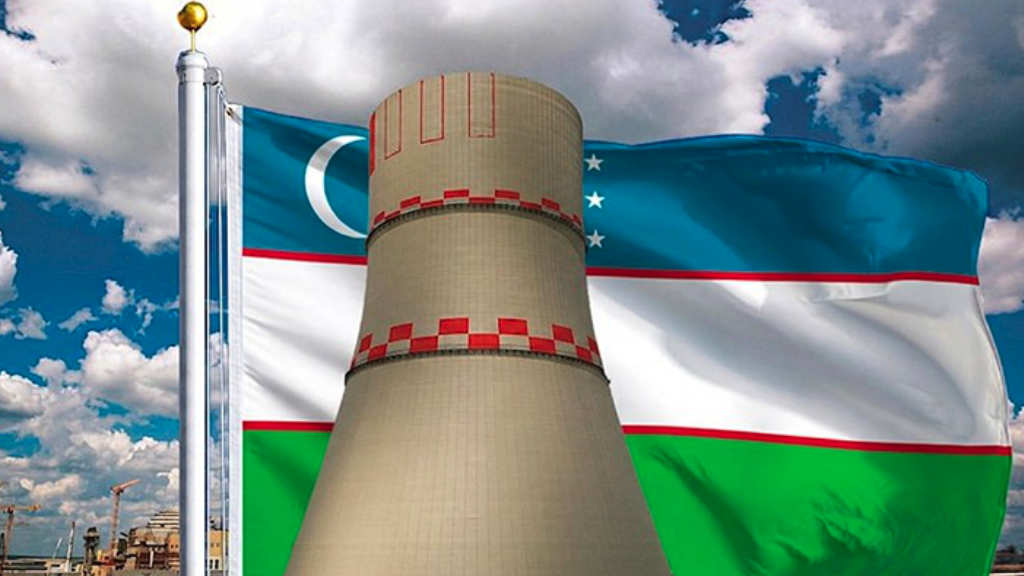

Russia’s Rosatom has said that the initial concrete pouring work has begun at the construction site of Uzbekistan’s nuclear power plant. The plant, Uzbekistan’s first, is sited in the Farish district of Uzbekistan’s Jizzakh region as part of the construction of a small nuclear power plant unit with an RITM-200N reactor.
The start of the work was undertaken by representatives of Atomstroyexport (the engineering division of Rosatom) and Uzbekistan’s department for constructing nuclear power plants.
During this stage, around 900 cubic meters of concrete mixture will be poured to prepare the foundation for the reactor building. The completion of the work is scheduled for April 2026. The next stage will be the pouring of the first concrete for the foundation slab of the reactor building.
Rosatom and Uzbekistan’s state-owned Atomic Energy Agency (Uzatom) also signed a cooperation agreement in the nuclear and related sectors, as well as an additional agreement to the contract for constructing a nuclear power plant, on Tuesday (March 24) in Tashkent. The document was signed by Rosatom CEO Alexei Likhachev and the director of Uzatom, Azim Akhmedkhadjaev.
Likhachev said that “the signing of the documents and the start of construction work mark Uzbekistan’s emergence into the forefront of global nuclear energy and create the foundation for the country’s long-term socio-economic development and technological sovereignty.”
The agreement covers all the main areas of interaction for the NPP construction project, including personnel training, informing the population about modern nuclear technologies, and the creation of a future ‘nuclear’ city at the plant.
It also provides for the implementation of an integrated configuration of the NPP. This includes two large-capacity power units with Generation “3+” VVER-1000 reactors and two small-capacity power units with RITM-200N reactors with a capacity of 55 MW each. After reaching full capacity, the plant will be able to generate around 17.2 billion kWh of electricity per year, providing up to 14% of Uzbekistan’s energy consumption.
The integrated plant project involves combining large and small generation, which will make it possible to provide baseload and flexibly cover peak demands, as well as optimize costs through the use of shared infrastructure.