Русский





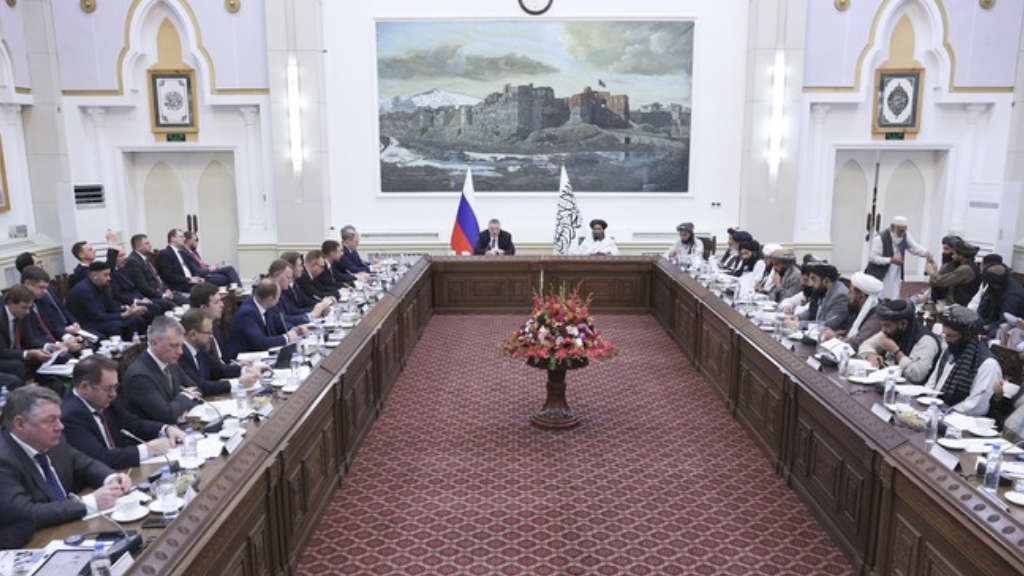
The Russia-Afghanistan Forum held in Kabul on November 12 has produced tangible results, with the signing of 15 trade deals, 11 Memorandums Of Intent and a protocol in Kabul alongside participation of a Russian business delegation comprising more than 70 representatives who attended.
Russia-Afghanistan bilateral trade has exceeded US$349 million in 8M 2026, finally signaling a widening commercial partnership with new opportunities in mining, oil processing, agricultural exports and Eurasian transport connectivity.
A US$103 Million Trade Package Opens A New Phase Of Commercial Cooperation
Russian and Afghan companies signed 15 MoU worth approximately US$103 million in Kabul, establishing a new framework for reciprocal commodity supplies, agricultural exports and industrial cooperation. The agreements cover Russian deliveries of medicines, wheat, flour and cooking oil to Afghanistan, alongside Afghan exports of fresh agricultural products, particularly pomegranates, to the Russian market.
Energy products, non-alcoholic beverages and other consumer commodities also feature in the wider commercial programme. The package was signed during a concentrated business programme that bringing together dozens of Russian and Afghan companies. The Russian delegation included businesses operating in agriculture, pharmaceuticals, medical equipment, transport, logistics, construction, mining, oil production and refining.
About half of the Russian companies are engaged in agricultural activities, underlining the importance of food commodities in the emerging trade relationship. The US$103 million package is significant because it combines two complementary trade requirements. Russia is positioning itself as a supplier of essential food products, industrial equipment and pharmaceutical goods, while Afghanistan is seeking to expand exports of agricultural produce into a large consumer market. This creates opportunities for more regular shipments rather than isolated transactions, particularly if they can improve transport arrangements, customs procedures, product certification and payment mechanisms.
The event took place in the presence of Russian Deputy Prime Minister Alexei Overchuk and Afghanistan’s Deputy Prime Minister for Economic Affairs, Mullah Abdul Ghani Baradar Akhund. The commercial programme also involved the Afghanistan Chamber of Commerce and Investment (ACCI), headed by Sayed Karim Hashemi, and the Russian Chamber of Commerce and Industry’s Business Council for Cooperation with Afghanistan, headed by Dmitry Antonov. The two chambers have been working to connect private companies, identify joint investment opportunities and develop practical cooperation.
Fifteen Memorandums And A Wider Package Of Commercial Commitments
The 15 memorandums cover several interconnected commodity categories. Russian wheat, flour, edible oil and sunflower oil are among the principal agricultural products intended for Afghanistan. Pharmaceutical products, medicines and medical equipment constitute another important category, reflecting Afghanistan’s interest in improving supplies of essential healthcare products. Power and energy equipment, non-alcoholic beverages and other manufactured goods broaden the scope beyond agricultural trade.
On the Afghan export side, fresh pomegranates are particularly prominent. The commercial agenda also encompasses fresh fruits, dried fruits, vegetables and other agricultural products. Afghan exporters are seeking to establish a more consistent presence in Russia, where the expansion of refrigerated transport and improved product handling could support larger shipments.
Separate Russian reporting on the Kabul signing programme also identified 11 memorandums of intent valued at about US$170 million. These covered prospective Russian deliveries of wheat, food products, solar panels, household chemicals, energy equipment, non-alcoholic beverages, medicines and medical devices, alongside Afghan fruit and dried-fruit exports, including a substantial pomegranate supply arrangement.
The product-level breakdown illustrates the commercial structure of the partnership. Wheat, flour and edible oils address immediate consumer and food-processing demand in Afghanistan. Pharmaceuticals and medical devices create opportunities for higher-value imports and potentially local manufacturing. Energy equipment supports the modernization of existing installations, while solar equipment and other industrial products offer opportunities to diversify Russian exports. For Afghan exporters, pomegranates, grapes, figs, saffron, pine nuts, raisins, apricots, vegetables and other horticultural products provide the basis for a broader export portfolio. The principal commercial objective is to move from occasional shipments to repeat supply contracts supported by distribution networks and predictable transportation.
Russia And Afghanistan Formalise Trade And Economic Cooperation Mechanism
Russia and Afghanistan signed the minutes of the first meeting of their joint working group on trade and economic cooperation in Kabul, establishing a formal mechanism for following up on commercial agreements and coordinating the expansion of bilateral trade. The protocol was signed by Alexei Gruzdev, Russia’s Deputy Minister of Industry and Trade, and Deputy Minister of Finance of Afghanistan Sultan Gul Muhammad.
The actual meeting focused on practical measures to increase two-way trade, develop business contacts, improve transport and logistics links, and advance cooperation in agriculture, pharmaceuticals, energy and industrial supplies. The arrangement gives the two sides an institutional channel to monitor agreed priorities and address commercial obstacles, complementing the business forum and the package of private-sector memorandums signed during Russian Deputy Prime Minister Alexei Overchuk’s Kabul visit.
It is an important step in moving the relationship beyond individual transactions towards a more coordinated trade and investment programme. The commission is intended to provide a channel for coordinating trade and investment priorities and following up on practical cooperation. This institutional framework is particularly significant as the US$349 million bilateral trade figure for January-August 2026 is more than twice the level in the same period of 2025.
The US$349 Million Bilateral Trade Figure: Analysis
The new agreements coincide with a sharp expansion in bilateral trade. According to Overchuk, the US$349 million in trade involved Russian exports to Afghanistan increasing 2.1 times, while imports from Afghanistan rose 2.2 times. This expansion is important not only because of the increase in aggregate turnover but also because the composition of Afghan exports is beginning to diversify.
Traditionally, dried fruits represented a substantial part of Afghan agricultural shipments. Fresh fruits, vegetables and berries have now started entering the Russian market as well. Russian imports from Afghanistan were reported at approximately US$12.8 million during the first eight months of 2026. Although this remains considerably smaller than Russia’s exports, this growth indicates a developing export channel for Afghan producers.
The trade trajectory had already accelerated earlier in the year. On October 6, 2026, Russian Deputy Prime Minister Overchuk and Afghan Foreign Minister Amir Khan Muttaqi discussed bilateral trade, energy cooperation, investment and transport connectivity in Moscow. At that meeting, Russian reporting indicated that trade during the first seven months had increased 2.5 times year-on-year. In May, Overchuk had also reported a 2.6-fold increase during January-February. The commercial imbalance remains clear: Russian exports substantially exceed Afghan exports. The November agreements therefore have a dual purpose: maintaining Russia’s growing supply position while increasing the value and diversity of Afghan products entering Russia.
Grain, Flour And Sunflower Oil: Agricultural Trade Takes Priority
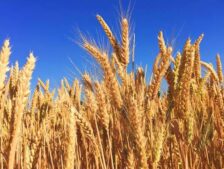
Agriculture is the most immediately actionable area of cooperation. Dmitry Antonov, head of the Russian Business Council for Cooperation with Afghanistan, said Russian companies expected a significant increase in deliveries of grain, flour and sunflower oil during the 2026 calendar and agricultural years.
Russia’s agricultural export capacity provides a strong foundation for these supplies. Wheat and flour are particularly important for Afghanistan’s domestic consumption, while sunflower oil serves household demand and the food-processing industry. The possibility of regular deliveries also creates opportunities for Russian agricultural traders, storage operators, railway companies and freight-forwarding businesses.
Antonov emphasized that agricultural logistics has become a specialized component of international agricultural trade. Grain and flour require reliable bulk transportation, while oil and other food products need appropriate storage and distribution arrangements. Russian companies involved in railway, road and multimodal logistics are therefore expected to play a significant role in supporting the expansion.
Barter arrangements have also emerged. One commercial example discussed during the Kabul visit involved Afghan pomegranates being exchanged for Russian sunflower oil. Such arrangements can help traders overcome difficulties associated with international banking and settlement, although larger and more regular transactions will require reliable payment channels. In addition, Russian manufacturers are exploring access to the Afghan market: for example, the Chernogolovka Group is studying the possibility of supplying confectionery products, primarily biscuits, with plans to enter the market in 2027. This could widen the export basket beyond basic agricultural commodities and create opportunities for Russian food manufacturers and distributors.
Pharmaceuticals, Medical Equipment and Industrial Supplies

Healthcare represents another important commercial sector. The November agreements include Russian medicines, pharmaceutical products and medical equipment. Overchuk identified medical supplies as an area of substantial Afghan interest following the meetings in Kabul.
The commercial agenda extends beyond immediate imports. Afghan representatives have discussed the rehabilitation and expansion of existing hospitals, construction of specialized medical facilities and the establishment of pharmaceutical manufacturing capacity inside Afghanistan. This creates several possible areas of cooperation: finished medicine supplies, medical equipment procurement, pharmaceutical production facilities, technical services and professional training. Russian manufacturers can explore longer-term distribution partnerships with Afghan importers and healthcare institutions.
Energy equipment forms another important category. Russian companies concluded contracts for power equipment, while discussions addressed modernization of Afghanistan’s existing energy infrastructure. Afghanistan’s interest in Russian vehicles, industrial machinery and equipment further broadens the potential market. The industrial dimension is particularly important because it provides a route from commodity imports towards productive investment. Establishing local manufacturing and maintenance facilities would generate demand for engineering services, equipment installation, spare parts and technical personnel.
Fertilizer Plants, Oil Refineries And Mining Investment
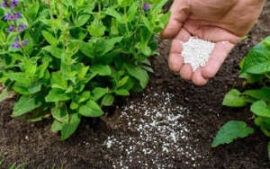
Fertilizer production has emerged as one of the most promising industrial opportunities. Overchuk said Afghanistan was interested not only in purchasing Russian fertilizers but also in establishing fertilizer manufacturing enterprises inside the country. Local production would reduce dependence on imported finished products, support agricultural productivity and create industrial employment. Russian participation could involve plant design, equipment, technology, technical supervision and supply of industrial inputs.
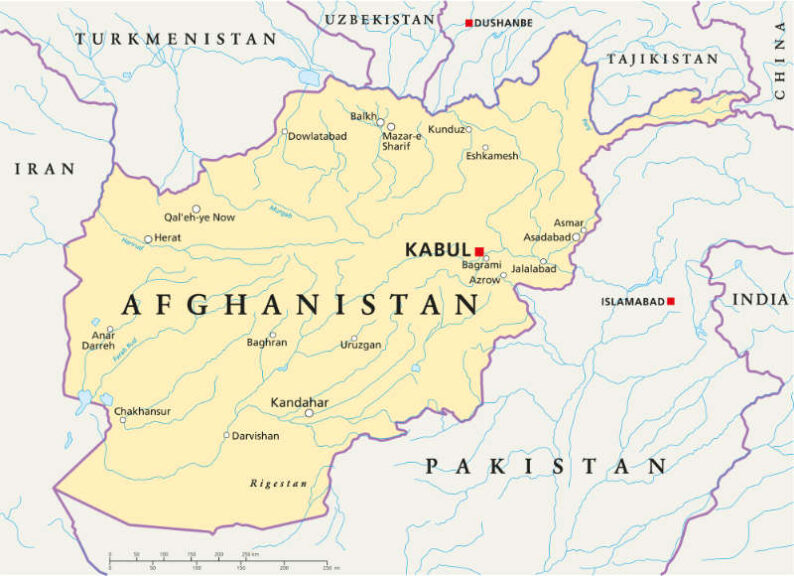
Oil processing is another priority. Dmitry Antonov said Afghanistan was interested in Russian petroleum-product supplies and cooperation in constructing small oil refineries. He also encouraged Russian companies to enter Afghanistan’s mining sector. The mining opportunity encompasses copper, zinc, chromite and other mineral resources. During the discussions, Baradar invited Russian companies to work with Afghan partners on mineral extraction, processing facilities and industrial projects. The emphasis was on developing resources within Afghanistan rather than limiting cooperation to the export of unprocessed commodities.
Two earlier corporate projects provide concrete examples of Russian involvement. In May 2025, at the Afghanistan-Russia Business Forum in Kazan, Russian company Inteco Group signed an agreement on oil extraction and refining cooperation with Afghanistan’s Central Green Power Company. The Russian side was represented by Inteco Group board chairman Sabir Babaev, while Musa Azizi represented the Central Green Power Company.
Geological exploration had been undertaken in several Afghan provinces, including Balkh, Faryab and Herat. These envisage the rehabilitation of existing wells, additional drilling and refinery development.
In September 2026, TNG‑Group (Tatarstan) and the Ministry of Mines and Petroleum of Afghanistan signed a package of documents. According to the Afghan ministry, these documents formalize two contracts with a total value of $13.8 million. The $2.8 million contract provides for a one‑year cycle of work involving monitoring, supervision, and consulting support in the Amu Darya oil basin. The documents were signed by Minister Hedayatullah Badri and TNG‑Group CEO Yan Sharipov.
According to the Afghan ministry’s release, $11 million is planned to be allocated for the design and installation of the first phase of a flexible production facility (FPF) at the Zamrad Say block in Jowzjan province. The project envisages an eight‑month implementation period and an estimated capacity of up to 2,000 tons of oil per day.
These projects demonstrate that Russian-Afghan cooperation already extends into oil-field services, geological work, extraction support and processing infrastructure. They also provide a corporate foundation for further discussions on refinery construction and mineral development.
Railway, River Ports And the Trans-Afghan Connectivity Programme
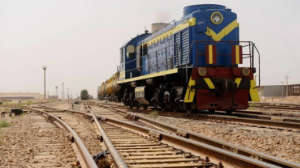
Transport infrastructure is emerging as the second major pillar of Russian-Afghan economic cooperation. Afghanistan’s geographical position between Central Asia, South Asia, the Middle East and China gives it potential to connect northern and southern Eurasian trade routes. For Russian companies, the opportunity involves not only access to the Afghan market but also the possibility of developing alternative overland routes towards Pakistan and Indian Ocean ports.
On October 7, 2026, Russian Deputy Transport Minister Dmitry Zverev met Fateh Abdul Karim, director-general of Afghanistan’s railway authority. Their discussions covered Russian participation in railway and river-port infrastructure development, including the Khairaton port, the Trans-Afghan Railway project and expansion of freight movements along the eastern corridor of the International North-South Transport Corridor (INSTC). The meeting also addressed the development of a transit framework and Afghanistan’s cooperation with the CIS Coordinating Transport Council.
These discussions are relevant to Russian railway construction companies, freight operators, engineering businesses and logistics providers. The proposed Trans-Afghan Railway is particularly important. The planned 573-kilometre connection would link Uzbekistan with Pakistan through Afghanistan, with an estimated potential capacity of up to 20 million tonnes of cargo annually. Russian cargo could account for an estimated 8-15 million tonnes under previously discussed participation scenarios. The project would connect Central Asian railway networks with Pakistani ports, including Karachi and Gwadar, creating another potential route for Russian and regional cargo.
The discussions also focused on the second tunnel on the Salang route. Improving this strategically important mountain crossing would strengthen road transportation between northern and southern Afghanistan and improve the movement of agricultural products, construction materials and industrial supplies. For Afghan exporters, transport improvements are especially important for fresh fruit. Refrigerated trucks, cold-storage facilities, railway connections and coordinated customs handling are essential for moving pomegranates, grapes and other perishable products into Russian distribution networks without excessive losses.
Afghan Fruit Exports: Pomegranates Establish A Russian Market Entry Point
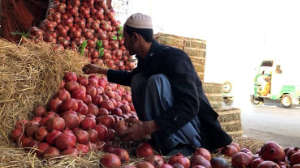
The pomegranate trade provides an example of how the proposed commercial relationship is developing through actual shipments. On October 27-28, 2025, the first reported commercial shipment of Kandahar pomegranates to Russia moved through the Torghundi crossing in Herat province and onward through Turkmenistan. The initial shipment was reported at approximately 22-25 tonnes, valued at around US$25,000, with Afghanistan’s Kanda Fruit organizing the shipment.
The initial commercial plan envisaged subsequent exports of up to 250 tonnes during the harvest season. Kandahar’s agricultural production offers considerable scope for expansion. The province is a major pomegranate-growing region, with harvest projections exceeding 270,000 tonnes in strong seasons. Traders have also identified Russia, Kazakhstan, Uzbekistan, Japan and South Korea as potential destinations for larger export programmes.
In October 2026, a Russian trader visiting Kandahar discussed a potential export programme of up to 5,000 tonnes of pomegranates for several international markets. Packaging standards, grading and transport costs were identified as practical requirements for expansion. Afghanistan’s broader agricultural export basket includes raisins, dried apricots, figs, pistachios, almonds, pine nuts, walnuts, grapes, apples, saffron, cotton and medicinal plants. Increasing the share of these products sold in Russia would provide Afghan exporters with opportunities to diversify destination markets and reduce dependence on traditional trade routes.
The commercial significance extends beyond the fruit itself. Increased exports would create demand for packaging, sorting, refrigerated warehouses, agricultural processing, quality-control laboratories and transport services. These activities could generate employment across producing provinces and strengthen the role of private exporters.
Eurasian Economic Commission: Opening A Regulatory Channel

Another important outcome of the November visit was Overchuk’s proposal that Afghanistan establish contacts with the Eurasian Economic Commission (EEC), the regulatory body of the Eurasian Economic Union (EAEU). The EAEU comprises Russia, Belarus, Kazakhstan, Armenia and Kyrgyzstan. Its combined consumer market is approximately 185 million people. Overchuk raised the proposal during his November 12 meeting with Afghan Prime Minister Mohammad Hassan Akhund. He highlighted the importance of technical regulation and product standards, areas coordinated at the supranational level within the EAEU.
For Afghan exporters, technical dialogue could help address certification and phytosanitary requirements affecting fresh fruit, vegetables, dried fruits and other agricultural goods. For Russian companies, it could facilitate more predictable procedures for exporting pharmaceuticals, fertilizers, industrial machinery, energy equipment and food products to Afghanistan. The immediate commercial value lies in creating a channel for regulatory discussion and reducing practical barriers to trade.
Political And Diplomatic Engagement Supports The Commercial Programme
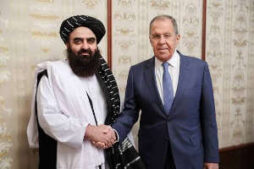
The Kabul event followed several months of intensified diplomatic engagement. On October 5, 2026, Russian Foreign Minister Sergey Lavrov met Afghan Foreign Minister Mawlawi Amir Khan Muttaqi in Moscow during the eighth Moscow Format Consultations on Afghanistan. Their discussions covered bilateral relations, economic and trade cooperation, transit, regional affairs and political consultations. The eighth Moscow Format meeting brought together representatives of Afghanistan, Russia, China, India, Iran, Pakistan, Kazakhstan, Kyrgyzstan, Tajikistan, Turkmenistan and Uzbekistan, with Belarus and Egypt participating as invited guests. This regional format provided a wider framework for discussing Afghanistan’s economic integration, transport connections and counter-narcotics cooperation.
On October 6, Overchuk and Muttaqi separately discussed trade, energy, investment and transport links, including cooperation connected with the North-South corridor. The October engagements helped prepare the commercial agenda that was subsequently taken forward in Kabul.
On November 10, Russian presidential special representative for Afghanistan Zamir Kabulov met Muttaqi in Kabul. Their discussions focused on bilateral trade, economic cooperation, counter-narcotics efforts and regional developments. Kabulov also met Afghanistan’s acting Interior Minister Sirajuddin Haqqani to discuss security cooperation and drug trafficking. The November 12 visit therefore brought together three related dimensions: private-sector contracts, institutional economic coordination and regional connectivity. Russia formally recognized the Islamic Emirate of Afghanistan in July 2025, becoming the first country to do so. This political development has provided a framework for expanding practical bilateral engagement.
First Meeting of the Russian-Afghan Economic Commission
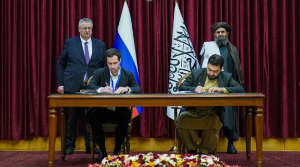
An important institutional outcome of the Kabul event was the first meeting of the Russian-Afghan commission on trade and economic cooperation. The Afghan side was represented by Deputy Finance Minister Muhammad Zubair, while Russia was represented by Deputy Minister of Industry and Trade Alexei Gruzdev. The protocol provides a formal channel for following up on trade expansion, commercial cooperation and implementation of joint economic projects.
A separate signing involved the first meeting of the Russian-Afghan working group on trade and economic cooperation. Together, these mechanisms are intended to maintain communication between the two sides after the business delegation’s departure. The commission framework is particularly relevant to the implementation of the US$103 million private-sector package. Regular follow-up can help identify shipment requirements, address customs and certification issues, coordinate sectoral priorities and encourage companies to turn memorandums into recurring commercial contracts.
Investment Opportunities Across Russian And Afghan Regions

The commercial programme also creates opportunities for Russian regional businesses, particularly companies from Tatarstan and other industrial regions with experience in energy, engineering, oil services, agricultural processing and transport infrastructure. Tatarstan has an established corporate connection through TNG Tatarstan and the earlier Inteco Group agreement. Its engineering and oilfield-service capabilities provide a potential foundation for further cooperation in geological exploration, field development, drilling services and refinery equipment.
For Afghanistan, the priority investment areas include industrial parks, special economic zones, mineral processing facilities, fertilizer production, agricultural storage and pharmaceutical manufacturing. Baradar specifically invited Russian companies to work with Afghan partners in mineral extraction, industrial production, infrastructure and livestock farming. The Afghan side also highlighted opportunities to establish dry ports, joint industrial parks and specialized production facilities. Such projects would allow commercial cooperation to extend into construction contracts, engineering services, equipment supplies and local employment.
Trade Payments, Market Access And Implementation Priorities
The next stage of cooperation will depend on practical arrangements for financing and transporting goods. Afghan businesses have called for lower transit costs, better access to Russian distribution channels and simplified commercial procedures. The proposed development of multiple-entry business visas and regular exhibitions and trade conferences would also facilitate direct contacts between companies.
The barter arrangement involving pomegranates and sunflower oil illustrates one possible settlement mechanism. However, sustained growth will require more systematic banking connections, trade finance, insurance and settlement facilities capable of supporting larger transactions.
The proposed EEC contacts could also help address certification and technical-standard requirements. For pharmaceutical supplies, this means establishing reliable registration and quality-control procedures. For agricultural products, phytosanitary certification, grading, packaging and cold-chain standards will be essential. Russia’s commercial opportunity is therefore broader than the immediate US$103 million package. Grain and oil exports can establish regular cargo volumes, while Afghan agricultural exports can create return freight and improve the commercial viability of transport routes. Industrial equipment, fertilizers, medicines and energy supplies can then expand the relationship into longer-term procurement and investment.
Summary: From Commodity Contracts to a Wider Eurasian Economic Partnership
The November agreements represent a significant expansion of Russia-Afghanistan commercial engagement. The 15 memorandums worth US$103 million, the additional reported commercial intentions, the first meeting of the bilateral economic commission and the participation of more than 70 Russian business representatives have created several channels for cooperation. These immediate results are concentrated in agricultural commodities, pharmaceuticals, medical products, energy equipment and consumer goods.
The next stage involves converting these commitments into regular deliveries and developing the industrial infrastructure needed to support larger commercial flows. The oil-sector projects involving Inteco Group and TNG Tatarstan demonstrate that Russian companies are already exploring opportunities beyond merchandise trade. Fertilizer manufacturing, small refineries, mineral extraction, power infrastructure and pharmaceutical production could provide further investment opportunities.
Transport connectivity will determine how far these opportunities can develop. Khairaton port, the Trans-Afghan Railway, the Salang route, refrigerated transportation and the eastern corridor of the North-South transport network are therefore central to the long-term commercial agenda.
With bilateral trade exceeding US$349 million in the first eight months of 2026, the commercial relationship has established a substantially larger base than in the preceding year. The November agreements provide a new pipeline of transactions, while the business councils and economic commission offer institutional mechanisms for following them through.
The emerging structure is increasingly reciprocal: Russian agricultural, pharmaceutical, energy and industrial suppliers gain access to Afghan demand, while Afghan agricultural exporters gain additional opportunities in the Russian market. If supported by investment in processing, logistics, certification and transport infrastructure, this relationship could develop from a predominantly import-oriented trading arrangement into a wider production, investment and Eurasian connectivity partnership.
This analytical report was written by PC Majumdar, a geostrategic and geo-economics analyst based in South Asia whose work has been widely published by international news media and publications. He may be reached at info@russiaspivottoasia.com