Русский








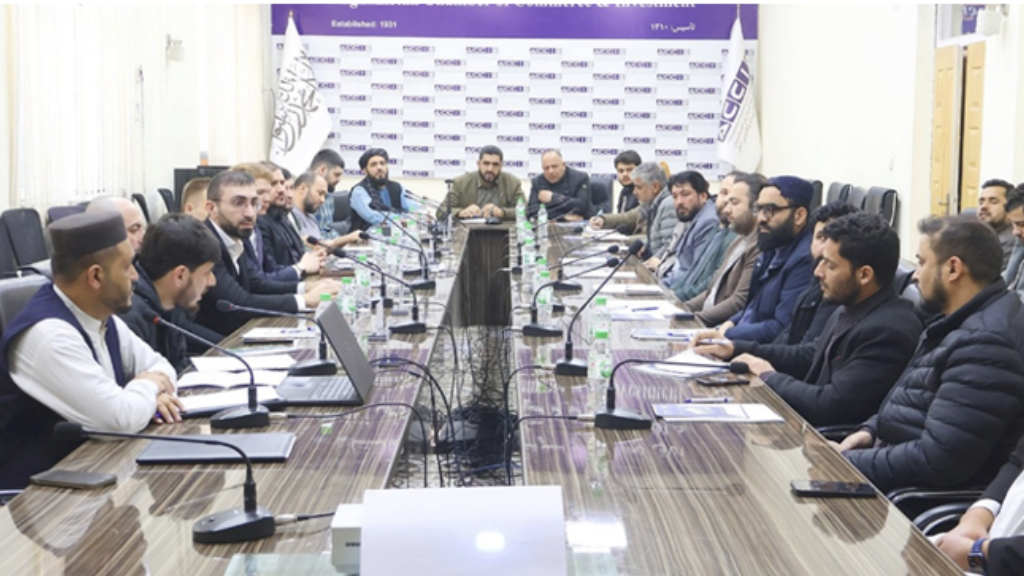

The Afghanistan Chamber of Commerce and Investment (ACCI) has held meetings with a Russian trade delegation from Dagestan to discuss strengthening bilateral trade and economic cooperation.
This follows reports from several media outlets that on February 14, the Afghanistan Chamber of Commerce and Industries (ACCI) announced the signing of five commercial agreements worth a total of US$1.5 million between Afghan traders and representatives of the Republic of Dagestan, a constituent republic of the Russian Federation. Dagestan is a largely Islamic republic.
In a statement issued by the Chamber, the agreements focused primarily on cooperation in the transportation and food products sectors. Discussions focused particularly on the transport and food sectors, reflecting shared interest in strengthening supply chains and improving logistical connectivity between the two sides. The five MoUs aim to boost the export and import of food products, enhance transport coordination, and promote direct business-to-business engagement.
Officials described the agreements as an important move toward creating sustainable trade channels between Afghan enterprises and Russian regional markets. The ACCI noted that the signing of the documents reflects the steady expansion of economic engagement between Afghanistan’s private sector and regional partners within Russia. Afghan traders view the partnership as a potential gateway to broader access within the Russian market and neighboring regions. Trade links between Dagestan and Afghanistan require multimodal logistics using the Caspian Sea and transit via Turkmenistan.
Dagestan has in recent years developed extensive trade relations with Afghanistan, with bilateral commercial exchanges showing continued growth. Representatives from both sides have underscored their readiness to further strengthen direct business ties, expand trade volumes, and create favorable conditions for sustained economic cooperation.
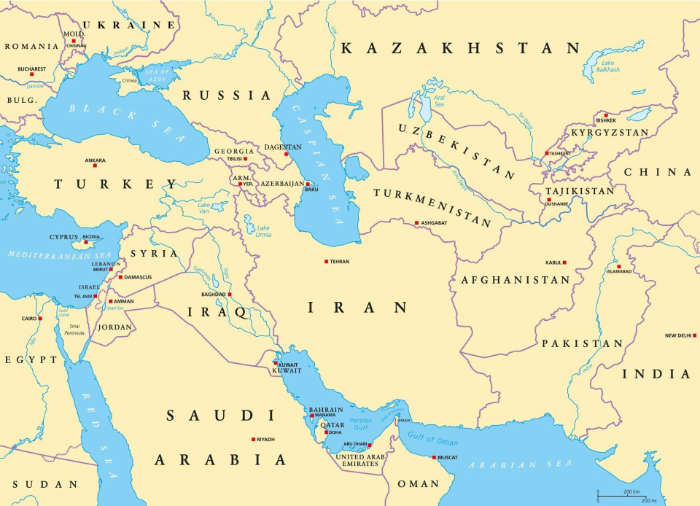
Dagestan, positioned along the western shore of the Caspian Sea and serving as a logistical corridor between the North Caucasus and broader Eurasian routes, has in recent years intensified commercial outreach to Afghanistan.
The timing of the agreements is notable. Afghan exporters have faced mounting disruptions along traditional southern transit corridors, particularly those dependent on border crossings with Pakistan. Logistical bottlenecks and increased transaction costs have incentivized Kabul’s business community to diversify routes and cultivate alternative northern and western trade pathways. Expanding economic ties with Russia and its constituent regions is widely interpreted as part of this structural recalibration.
Diplomatic signals further reinforce this trajectory. Afghan officials in Moscow have publicly stated that both capitals aim to expand bilateral trade. Russia remains the only country to have formally recognized the current Afghan authorities, creating a distinct diplomatic and economic framework for cooperation. This recognition has lowered political risk for Russian regional actors and state-affiliated enterprises exploring Afghan partnerships.
In parallel, Afghan commercial authorities have engaged with Iranian counterparts regarding potential cooperation in oil refining and energy supply chains. The confluence of northern engagement with Russia and western energy dialogue with Iran reflects Kabul’s broader strategy of regional economic integration amid evolving geopolitical realities. While the US$1.5 million figure is modest in macroeconomic terms, the Dagestan agreements signal the operationalization of a deeper strategic shift: embedding Afghanistan within Russia-centered Eurasian trade networks and reinforcing Moscow’s role as a pivotal economic partner in Central and South Asia.
Afghanistan: Geographic Leverage and Economic Fundamentals
Afghanistan occupies one of the most strategic land corridors in Eurasia. Bordered by Central Asian republics to the north, Iran to the west, Pakistan to the south and east, and China via a narrow Wakhan corridor, the country is a potential junction of north-south and east-west connectivity routes. The country’s population exceeds 45 million, characterized by a young demographic profile. Afghanistan’s GDP (PPP) is estimated to be about US$177 billion in 2026, with real growth recovering modestly after contraction during the political transition period. The economy remains heavily informal, but agriculture, mining, transport services, and cross-border trade dominate formal activity.
Agriculture accounts for a substantial share of employment and around a quarter of GDP. Key products include fruits, nuts, saffron, and livestock. Meanwhile, Afghanistan’s untapped mineral reserves in lithium, copper, rare earths, and iron ore represent one of the largest undeveloped extractive potentials in the region, with theoretical valuations running into hundreds of billions of dollars. However, structural bottlenecks remain. Landlocked geography necessitates reliance on transit states. Disruptions along Pakistani crossings have exposed vulnerabilities in trade dependency patterns. Consequently, diversification toward northern corridors through Central Asia and the Caspian basin aligns with Afghanistan’s strategic economic imperatives.
Several Russian companies and business groups are actively exploring opportunities in Afghanistan’s agricultural and mining sectors as economic engagement between Moscow and Kabul expands. Russian investors have shown particular interest in large-scale agricultural development projects, including land cultivation initiatives linked to irrigation systems in northern Afghanistan, as well as fertilizer production and broader agribusiness cooperation. Business representatives associated with the Russian Chamber of Commerce and Industry have highlighted Afghanistan’s agricultural potential as a promising area for joint ventures and long-term investment.
In the mining and energy sectors, Russian firms have expressed readiness to participate in oil exploration and drilling projects, along with the development of iron ore and other mineral deposits. Companies such as Inteco Group have been involved in geological surveys and preliminary extraction planning. Discussions have also covered potential cooperation in the exploration of copper, chromite, and other base metals, in addition to investment in technical equipment and supporting infrastructure. While many of these initiatives remain at the negotiation or early implementation stage, they reflect growing Russian interest in facilitating and capitalizing on opportunities within Afghanistan’s resource and agricultural economy.
Trade Complementarity: Food, Energy, Infrastructure
Economic complementarity between Russia and Afghanistan is structurally evident. Russia is among the world’s largest grain exporters. Afghanistan is a net food importer, particularly of wheat and flour. Stable grain supply agreements could mitigate price volatility in Afghan markets while ensuring reliable demand for Russian producers.
Energy presents another convergence point. Afghanistan suffers from chronic electricity shortages and relies heavily on imported power. In terms of energy supplies, Afghanistan’s energy infrastructure relies heavily on importing up to 80% of its electricity from neighboring Uzbekistan, Tajikistan, Turkmenistan, and Iran. While domestic generation (approx. 600 MW) is largely hydropower-based, it is insufficient to meet demand, leaving only 30–35% of the population with grid access. The country is currently expanding solar, wind, and the CASA-1000 regional transmission project to increase energy security. Russian companies with expertise in thermal generation, hydroelectric engineering, and grid modernization could participate in capacity-building initiatives. Collaboration in oil refining potentially triangulated with Iran could enhance Afghanistan’s domestic value addition and reduce refined fuel import dependence. Transport infrastructure is a further domain. Afghanistan’s ambition to integrate into Eurasian corridors requires rail extensions, dry ports, warehousing, and customs modernization. Russian engineering firms and logistics operators possess relevant experience in harsh-terrain construction and cross-border rail systems.
Russian Corporate Opportunities
Several major Russian corporations are structurally positioned to explore Afghan engagement, directly or via regional subsidiaries. Gazprom, with its expertise in gas exploration and pipeline engineering, could evaluate upstream potential or gas-fired generation partnerships. Rosneft may assess refined product supply agreements or joint storage facilities, leveraging Caspian logistics. Russian Railways could provide technical consultancy for rail connectivity projects linking Afghanistan to Central Asian networks. Rostec, encompassing industrial manufacturing and engineering subsidiaries, could support machinery exports, aviation maintenance, or industrial zone development. PhosAgro may identify fertilizer supply opportunities to enhance Afghan agricultural productivity, aligning with food security objectives. Such engagement would likely proceed incrementally, structured around pilot projects, regional agreements, and phased risk assessment. Financial settlement mechanisms may rely on national currencies or alternative clearing arrangements, reflecting the broader de-dollarization trend in Russia’s external trade.
Connectivity Architecture: North-South Integration
Afghanistan’s integration into the International North–South Transport Corridor (INSTC), even indirectly, could reshape regional trade geometry. Goods moving from Russia through the Caspian Sea to Iran and onward via land routes could connect with Afghan markets. Conversely, Afghan agricultural exports could access Russian and Eurasian Economic Union markets via northern corridors. Dagestan’s Caspian access is central in this equation. The republic’s ports and proximity to Astrakhan create maritime gateways. As infrastructure modernizes, throughput capacity can scale beyond symbolic agreements to meaningful trade volumes.
Bilateral Political Economy: Mutual Strategic Value
Russia’s importance for Afghanistan lies in diplomatic legitimacy, food and energy security, and integration into a major Eurasian economy. Moscow offers technological capacity, industrial capital, and access to a consumer market exceeding 140 million people. For Russia, Afghanistan represents both a security and economic frontier. Stability in Afghanistan reduces transnational security risks in Central Asia, a region of strategic importance to Moscow. Economically, Afghanistan provides a southern extension of Russia’s trade map, complementing partnerships with Iran, India, and Central Asian states. Moreover, engaging Afghanistan aligns with Russia’s doctrine of multipolarity, expanding partnerships beyond Western-centric institutions and reinforcing sovereign economic linkages.
Risk Matrix and Mitigation
Despite opportunity, risks persist. Afghanistan’s banking sector remains constrained. Infrastructure deficits elevate transaction costs. Security considerations affect insurance premiums and capital deployment decisions. Risk mitigation may involve sovereign-backed export credit arrangements, phased project structuring, and regional co-financing mechanisms involving Central Asian intermediaries. Incremental scaling starting with food commodities and transport services before advancing to capital-intensive sectors reduces exposure.
Currently, Ariana Afghan Airlines, Afghanistan’s flagship carrier, operates one weekly direct flight between Kabul and Moscow. This service has been in place for several years and has proven essential for Afghan citizens who seek to travel to Russia for work, study, or leisure. The Russian market has also become increasingly important for Afghan nationals, as many seek employment opportunities in the country’s growing economy. With the launch of Kam Air’s new flights and Ariana Afghan Airlines’ expanded services, these enhanced travel links are expected to play a pivotal role in strengthening bilateral relations and supporting Afghanistan’s economic recovery.
Direct flights between Moscow and Kabul could significantly enhance direct air connectivity and facilitate the expansion of bilateral trade and economic cooperation. Officials and business representatives on both sides are reportedly working toward enhancing regular air links, which would streamline the movement of business delegations, cargo shipments, and commercial goods. Improved aviation connectivity is viewed as an important step in strengthening Russia-Afghanistan trade relations, reducing transit times, and creating more efficient logistical channels for exporters and investors.
Forward Outlook: Scaling Beyond Symbolism
The Dagestan agreements should be interpreted as a pilot platform. If successfully implemented, annual bilateral trade could scale significantly, particularly in grain, petroleum products, fertilizers, and construction materials. A realistic medium-term target could involve expanding bilateral turnover into the hundreds of millions of dollars, contingent on logistics reliability and payment system stabilization. Long-term potential, particularly in mining and transit infrastructure, is materially larger. For Afghanistan, embedding within Eurasian supply chains may catalyze gradual formalization of its economy. For Russia, cultivating southern corridors enhances resilience amid geopolitical flux.
Summary: Strategic Patience, Economic Depth
The emerging Russia-Afghanistan trade architecture is not an overnight transformation but a gradual construction of economic interdependence. Dagestan’s engagement illustrates how Russian regions can function as agile actors within a federal foreign economic strategy. In an era defined by supply chain fragmentation and geopolitical competition, pragmatic trade agreements in food and transport sectors acquire strategic weight. Data-driven complementarity, Russia’s export capacity, and Afghanistan’s demand and geographic leverage create a rational foundation. If managed with strategic patience, institutional coordination, and infrastructure investment, Russia–Afghanistan economic relations could evolve from symbolic memorandums into a structurally significant Eurasian partnership, reshaping trade flows across the Caspian, Central Asia, and South Asia for decades to come.
This article was written by Ms. Khatun, an expert in Central Asian affairs. She may be reached at info@russiaspivottoasia.com