 Русский





Although the recent Modi-Putin India-Russia summit has grabbed all the headlines, it should not be forgotten that Russia also has significant diplomatic and trade relations with Pakistan. The coming years are poised to become a defining chapter in Pakistan–Russia relations, with a similar transition from episodic engagement to a structured, forward-looking partnership anchored in connectivity, regional stability, and shared economic ambitions.
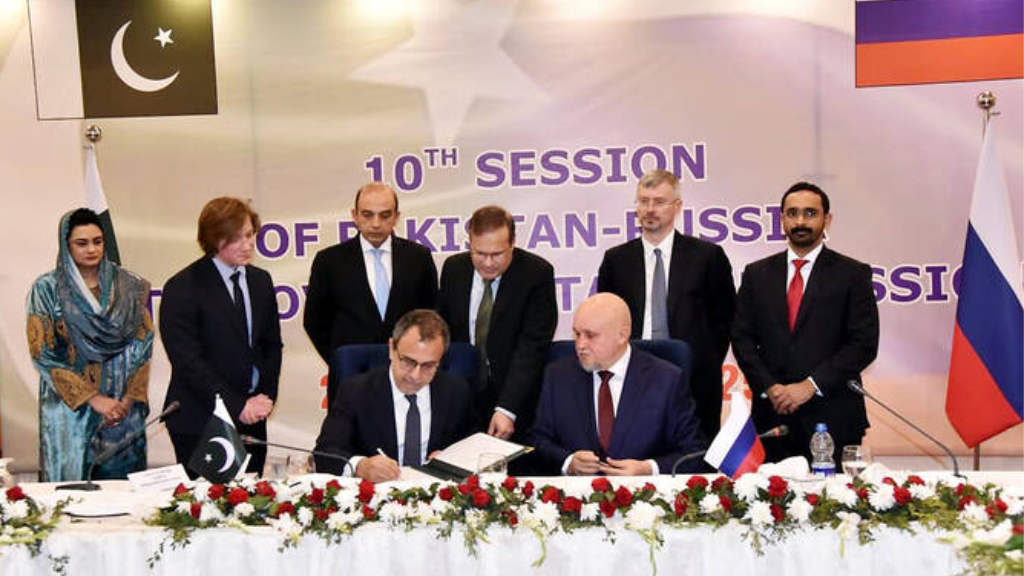
While all eyes were on Delhi, the convening of the 10th Intergovernmental Commission (IGC) in Islamabad, also signals a maturing partnership that increasingly aligns with the realities of a rapidly reconfigured Eurasian geopolitical and economic landscape.
At a time when global supply chains are being reordered and emerging powers are investing in new overland and maritime routes, Pakistan and Russia have begun to identify and develop what has been the missing link between their economies – reliable, multimodal connectivity and pragmatic solutions to financial and infrastructure problems.
Pakistan has a population of about 250 million and a middle-class consumer base of about 100 million. Pakistan’s middle class is a substantial and growing segment, characterised by urban dwellers with rising education, consumption, and income, although recent economic pressures (inflation and currency devaluation) are straining their finances. Nonetheless, this population is driving significant economic demand.
Pakistan has a GDP (PPP) of about US$1.7 trillion and a GDP per capita (PPP) of about US$7,000, with the latter more than doubling over the past 5 years. Current GDP growth is 3%, hampered by antiquated infrastructure and security problems, as well as recent natural disasters such as floods and desertification. Nonetheless, if these problems can be overcome, Pakistan can become a bright Asian spot in its drive towards industrialisation and modernisation. China certainly seems to think so – Beijing has invested an estimated US$90 billion into what it terms the “China-Pakistan Economic Corridor” and also aims to improve infrastructure and trade. Beijing essentially sees Pakistan as a vital supply chain match for its own growing economy.
Pakistan is also a full member (along with Russia, China and India, amongst others) of the Shanghai Cooperation and has expressed interest in BRICS, although full membership prospects have been dampened by India for now.
In terms of infrastructure, the International North–South Transport Corridor (INSTC), along with complementary routes through Iran, the Middle East, Central Asia, and Western China, stands at the core of this transformation. For example, Pakistan and Russia’s decision to advance test cargo movements along the eastern route of the North–South Transport Corridor marks a strategic push toward deeper Eurasian connectivity from the near-West.
For Islamabad, the INSTC opens an overland gateway to Russian and near-Western markets such as Turkiye, the Levant, and the Caucasus, many of which are also Muslim markets (Azerbaijan, Jordan, Lebanon, and Syria, in addition to Turkiye itself and Russia’s own Muslim diaspora extant in entire regions such as the North Caucasus and Tatarstan). For Pakistan, that equates to a potential Islamic product market of about 154 million people.
For Moscow, it secures faster access to warm-water ports and the Persian Gulf, with direct access to the wider Indian Ocean. Coming on the heels of expanding energy cooperation and diplomatic outreach, this signals a maturing partnership aligned with shifting regional trade dynamics.
Connectivity and Shared Opportunity
The Russia-Pakistan International Eurasian Forum will be held in Moscow on December 16-17. Establishing ties and strengthening partnerships in the field of public diplomacy at the turn of a new era.” The forum is organized by the State University of Pakistan (Federal Urdu University of Arts, Science & Technology – FUUAST), the V. V. Zhirinovsky University of World Civilisations and the Consortium of Asia-Pacific and Eurasian Studies (CAPES, Islamabad), which confirms the growing synergy between the two countries. The forum will bring together scientists, politicians, business leaders and other delegates. This demonstrates that bilateral relations are no longer limited to state institutions and diplomacy of the first track (regional peace agreements) but are increasingly integrated into the academic environment, civil society, diplomacy of the second track and the private sector.
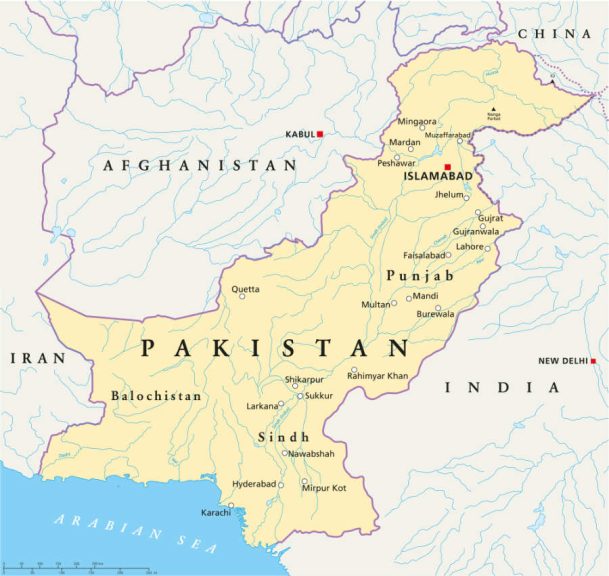
The initiatives of the diplomacy of the second track are able to bring results and attract investments when the issues of the first track produce fruitful results. Although problems remain in the region and sporadic clashes on the borders continue, the problems with Afghanistan are beginning to decrease. However, the Pakistani region of Balochistan on the western border with Iran still requires military intervention due to the separatists. Military assistance is usually provided by China, which also does not want to see outbreaks of unrest—it borders both Pakistan and Afghanistan, which could potentially cause instability in its western (Muslim) province of Xinjiang.
From Pakistan’s point of view, the priority development of Eurasian connectivity from the West (Russia, Turkey and the Levant) to the East (China) highlights a deeper shift towards people-centred cooperation. This new engagement highlights how Pakistan’s broader public interest coincides with the opportunities offered by the connectivity fostered by the North–South ITC.
The main purpose of the Forum is to strengthen bilateral Pakistani-Russian relations through academic exchanges, youth interaction, scientific cooperation, business partnership and cultural diplomacy. The emphasis on people-to-people ties reflects the view, widespread in Russian and Pakistani policy circles, that strong strategic partnerships should be based on Pakistan’s human capital.
The Forum highlights a simple but significant point: today, Pakistan and Russia are partners of choice, driven not by historical alliances but by modern interests in energy security, diversified markets, regional stability, and economic integration within Greater Eurasia.
Macroeconomic Synergies
Pakistan and Russia’s economic complementarities are clearer than ever. Pakistan is projected to become the world’s 20th largest economy (PPP) by 2030, growing into a key demand center for energy, food commodities, agricultural technology, and industrial inputs. A recent Goldman Sachs study estimates that, with the right policies and institutions, Pakistan could emerge as the world’s sixth-largest economy by 2075.
With a rapidly digitalizing economy and a strategic location linking South Asia, Central Asia, and the Middle East, Pakistan is positioning itself as one of the region’s most dynamic emerging markets. Despite global volatility, its expanding manufacturing, IT, renewable energy, and agribusiness sectors, backed by a vast consumer base and competitive labor, continue to draw growing investor interest from China, the Gulf, Europe, and beyond. Russia, a US$6.92 trillion economy with over US$720 billion in reserves, remains a global powerhouse in energy, minerals, metals, machinery, and advanced technical skills.
The trade potential between Pakistan and Russia remains significantly underutilized, with current bilateral trade hovering just above US$1 billion in 2023 and 2024, well below what their vast consumer markets and strategic connectivity are capable of supporting.
Russian exports to Pakistan stood at US$782 million, while imports from Pakistan were US$289 million in 2023, highlighting an imbalanced and modest trade relationship, not dissimilar to Russia’s recent (but now rapidly changing) experience with India.
The underutilized Russia-Pakistan trade potential could realistically reach US$5 billion by 2035, reflecting the untapped opportunities in sectors like agriculture, energy, logistics, textiles, defense, IT goods, machinery, pharmaceuticals, and industrial goods to narrow the trade gap and boost its volumes.
This suggests not a lack of interest, but the absence of enabling logistics, payments infrastructure, and trade agreements. Given Pakistan’s growing consumer base of over 100 million, its current population of 250 million, and Russia’s diversified industrial economy, there is ample scope to deepen commercial ties.
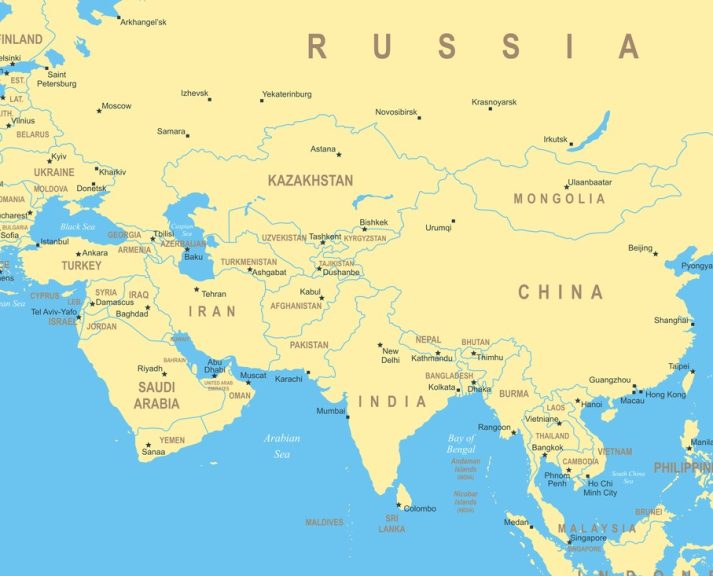
Enhanced transport corridors such as the INSTC, the creation and development of the Belarus-Russia-Kazakhstan-Uzbekistan-Afghanistan-Pakistan international transport corridor, and cementing Pakistan’s links with the INSTC and improved logistics infrastructure can further accelerate trade flows. Extending the INSTC Pakistan—and onto Afghanistan, as is being discussed with both Tehran and Kabul – will strengthen Moscow’s economic influence in Eurasia, ranging from the MENA to South and Southeast Asia.
This expansion promises new trade opportunities and deeper regional integration. It will enhance Pakistan’s position as a Central Asian trade hub, not least as it has several Persian Gulf ports and a developing railway network that can deliver products to landlocked Central Asia. That region can be considered within reach and includes Kazakhstan, Kyrgyzstan, Tajikistan, Turkmenistan, and Uzbekistan, along with China’s Xinjiang Province. That is a collective market of 100 million. If one were to include Afghanistan, this adds a further 44 million. The potential dynamics of the proposed Trans-Afghan railways, which would bisect the country south-north between Pakistan and Uzbekistan and west-east from Iran to China, would radically alter both South Asian and Central Asian economies, with Pakistan a vital nexus point in between. These may take some time off, but the implications as and when this infrastructure emerges will be a substantial, regional game-changer.
To unlock this potential, both sides must prioritize removing structural barriers, institutionalizing trade frameworks, and fostering business-to-business linkages. Doing so will ensure that economic cooperation matches the strategic importance of the Russia-Pakistan partnership in the evolving Eurasian landscape.
Islamabad’s purchase of discounted Russian crude and LPG in 2023 marked a turning point in bilateral energy cooperation, signaling Pakistan’s drive for diversified, affordable supplies. Russia and Pakistan’s agreement to build the 1,100-kilometer Pakistan Stream natural gas pipeline, capable of transporting 12.4 billion cubic meters annually, marks a landmark step in deepening their energy partnership. Renamed and restructured to navigate geopolitical risks, this pipeline promises to significantly enhance Pakistan’s energy security and regional connectivity, and both countries are committed to its successful completion. Now, Moscow’s plan to revive a Soviet-era steel mill PSM (Pakistan Steel Mill) in Karachi underscores a broader shift toward long-term industrial partnership between the two countries. PSM stands as the nation’s largest industrial giant, with a massive steel and iron production capacity of 1.1 to 5.0 million tonnes. Upgrading just this one plant requires an investment of about US$2 billion. This signifies that Russia is prepared to commit significant investments worth billions of dollars into Pakistan. To compare, the United States has invested just US$1.5 billion into the country, and the United Kingdom, its former colonial-era ruler, just US$3.3 billion. Russia is likely very soon to overtake both and become Pakistan’s leading investor after China and Saudi Arabia.
Agriculture
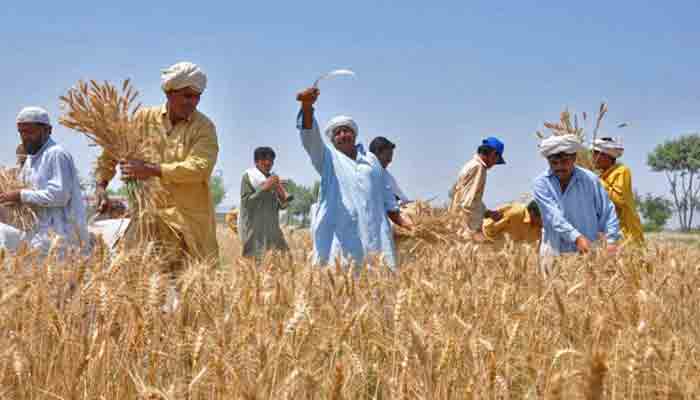
Inefficiencies, drought, flooding, and climate change have all contributed to Pakistan’s shrinking wheat output, projected to fall to 27.5 million tons in 2025/26, and underscore an urgent need for reliable external partners as climate pressures intensify.
With edible oil demand at four million tons against a meagre domestic supply of 0.5 million, Pakistan’s import burden continues to swell. Global markets remain dominated by major players, and Russia, holding 22% of world wheat exports, stands central in stabilising grain flows worldwide. As the world’s second-largest producer of sunflower oil, Russia is steadily expanding its role in moderating volatility in edible-oil markets. These structural strengths align closely with Pakistan’s acute food-security vulnerabilities.
To further provide for a more stable market for Pakistani crop growers, Pakistani investors are also now involved in agricultural commodities futures trading on the St. Petersburg exchange.
There have also been agricultural swaps. with Russian exporters providing pulses in return for Pakistani citrus fruit, such as oranges.
Energy
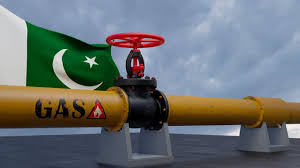
Pakistan’s soaring energy crisis, with tariffs doubling electricity prices and an 850% surge in gas prices, has strained both households and industries alike. Russia, among the largest exporters of natural gas and major crude suppliers, occupies a strategic position in global energy supply chains. In this landscape, pragmatic economic engagement—not geopolitics—may offer Pakistan a pathway to food and energy stability.
Pakistan is also impacted by the US stance on Iran’s nuclear programme, as Tehran has indicated its wish to develop its own NPP and commence electricity exports to Pakistan. US harassment against Iran also creates energy shortages in Pakistan. At present the overall security situation remains problematic, but if that were to change, Russia would be quick to offer NPP solutions to Pakistan’s energy needs.
That said, there are practical steps being taken, with the Pakistan Stream Gas Pipeline (PSGP), a Russian-proposed pipeline reaching from Pakistan’s Karachi port to Lahore. It is a 1,100 km long project which is contracted by the Pakistani government to be built by Russia. The project will cost an estimated US$2 billion and take 42 months to complete and includes the construction of liquefied natural gas terminals as well as the actual 683-mile pipeline. The project will be implemented by RT Global Resources, a subsidiary of Rostec Technologies Corporation, from the Russian side and the Inter State Gas Systems (ISGS) from the Pakistani side. The pipeline is expected to have an annual capacity of up to 12.4 billion cubic metres of gas and should be online by 2028.
Sergei Tsivilev, the co-chair of the Russian-Pakistani Intergovernmental Commission, has been talking up the potential for Russia-Pakistani trade and investment relations in several industrial sectors, saying that Russian oil and gas companies remain highly interested in developing business in Pakistan.
Tsivilev stated at last week’s commission meetings that “We continue to collaborate in hydrocarbon exploration and development. We are working together in evaluating projects for joint implementation.” He also said potential Russian LNG supplies were being explored. “This is a matter for commercial negotiations, and specific volumes and the terms of any deal will be determined once the parties reach an agreement.”
The possibility of Russian companies participating in an oil refinery modernization project in Pakistan is also under discussion. “We’re talking about comprehensive modernization to enhance existing production efficiency—increasing refining depth, reducing energy consumption, and lessening the environmental impact.”
The Russia-Pakistan 2030 Cooperation Programme
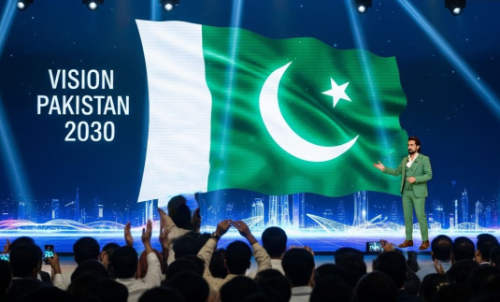
Just as Russia announced with India and the bilateral “Programme 2030,” Russia and Pakistan are also finalizing a 2030 Economic Cooperation Program aimed at transforming their partnership from ad hoc engagement into a structured, long-term framework. According to Russian Energy Minister Sergey Tsivilev, the plan identifies priority sectors in the fields of trade, finance, energy, industry and agriculture, transport and infrastructure, business and finance, and science and technology and concrete goals to guide bilateral trade, energy collaboration, and industrial partnerships. Once completed, it is expected to serve as the most comprehensive road map yet for elevating Russia-Pakistan economic ties over the next decade. This document also aligns with Pakistan’s own Vision 2030.
Moscow’s involvement can enhance agricultural and industrial trade with Pakistan, offering machinery, fertilizers, oil, gas, and grains, while Pakistan exports textiles, surgical instruments, sports goods, pharmaceuticals, and its renowned citrus fruits. Russian officials stress building a durable trade “bridge” that transcends political challenges, insisting that business cooperation is essential for lasting success. Additionally, Russia’s expertise in information security, smart cities, and e-government offers promising avenues to support Pakistan’s digital transformation.
INSTC: From Geopolitical Vision to a Practical Economic Corridor
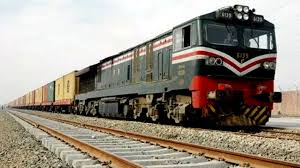
The most consequential development is the renewed commitment to test cargo shipments via the eastern route of the International North–South Transport Corridor (INSTC). With Iran expressing readiness to integrate Pakistan into the INSTC, the corridor may soon provide Pakistan with a structured overland connection to Russia, the Caucasus, Central Asia, and Europe.
By combining INSTC with CPEC (the China-Pakistan Economic Corridor) routes to Western China, Pakistan’s ports in Karachi and Gwadar, and Iran’s east-west rail arteries, a truly Eurasian logistics chain becomes possible. This architecture would cut Russian-South Asian freight time by 40%, reduce shipping costs by up to 30%, offer Russia direct access to the Arabian Sea, and provide Pakistan access to EAEU markets and Central Asia without maritime chokepoints.
In line with this vision, Pakistan and Russia have already begun to run pilot test trains along the INSTC, develop joint projects in the area of multimodal transport routes, accelerate multimodal integration, and expand freight forwarding cooperation. The proposed Belarus–Russia–Kazakhstan–Uzbekistan–Afghanistan–Pakistan transport corridor holds transformative economic value, potentially cutting freight time between Eurasia and South Asia by nearly 40-50% compared to traditional maritime routes.
By linking Pakistan directly with major industrial hubs across Central Asia and Russia, the corridor could unlock billions of dollars in annual trade potential, particularly for textiles, agriculture, minerals, and machinery. For landlocked Central Asian states, it offers long-sought access to warm-water ports, while for Pakistan, it provides a strategic overland gateway to Eurasian markets. In an increasingly polarised global economy, such connectivity becomes a stabilising force—turning geography into shared prosperity rather than shared vulnerability.
Structural Bilateral Reforms
At the 10th IGC session in Islamabad, both sides signed three MoUs in standards regulation, competition law, and media cooperation. These agreements strengthen the institutional infrastructure required for long-term commercial expansion. The APP-SPUTNIK MoU enhances bilateral media cooperation, enabling fact-based reporting and professional exchanges that improve information flows for both countries. The PSQCA-Rosstandart MoU strengthens collaboration in standardisation and metrology, helping align technical regulations and easing trade between Pakistan and Russia. Through the CCP-FAS MoU, both sides gain access to competition-law expertise, boosting regulatory capacity and fostering healthier market practices. Together, these agreements deepen institutional links, reduce barriers, and create a more predictable environment for economic and strategic cooperation.
Many Russian and Pakistani affairs experts and specialists frame policy priorities in the following manner. Some priority areas must stand out:
- Payment Systems Integration
To reduce vulnerability to sanctions-related disruptions in global financial messaging, Pakistan has expressed interest in exploring connectivity with Russia’s SPFS and China’s CIPS services. With the necessary regulatory and technical preparations, bilateral currency settlements between Pakistan and Russia could become more feasible. Pakistan’s gradual adoption of alternative payment mechanisms would then be driven not by circumvention, but by a broader strategy to diversify financial risks and enhance transactional resilience.
- Fast-tracking the Pakistan Stream Gas Pipeline
Completing this long-awaited project is crucial for Pakistan’s energy diversification and Russia’s market expansion.
- Industrial and Technological Cooperation
Expanding cooperation in metallurgy and steel (including modernisation of Pakistan Steel Mills), pharmaceuticals and insulin localisation, heavy machinery and mining, hydropower and water technologies and flood resilience and emergency response systems aligns with Pakistan’s industrial modernisation agenda and Russia’s advanced manufacturing capabilities.
- Education, Science and Space Collaboration
Agreements on mutual degree recognition, joint research, and Russian-language centres complement cooperation in engineering, IT, medical sciences, and even emerging space technologies. These are areas where both countries see mutual benefit. Pakistan would benefit, for example, with better satellite crop-monitoring and security management systems.
Eurasian Integration: The Broader Picture
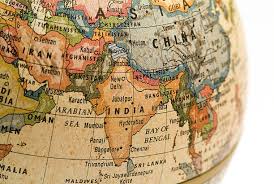
Pakistan’s geographic centrality makes it a natural candidate for integration with the Eurasian Economic Union (EAEU)—a multilateral economic framework where Russia plays an active role. Enhanced trade facilitation between the EAEU and the Economic Cooperation Organisation (ECO) could reshape regional markets by connecting Russia, Central Asia, Pakistan, Turkey, West Asia, and Western China in a seamless trading ecosystem. As Chittagong–Karachi maritime links evolve and South Asian multimodal corridors mature, expanded connectivity could eventually integrate Bangladesh, Nepal, and Bhutan, enhancing Pakistan’s role as a regional logistics crossroads and Russia’s smooth and quality entrance into the South Asian market. Linking Thailand’s Ranong Port’s Andaman gateway with the INSTC
through Pakistan’s Karachi port, Sri Lanka’s Colombo port and Bangladesh’s Chittagong port, regional trade dynamics could be redefined. Such connectivity promises to boost commerce and strategic integration across BIMSTEC, ASEAN, and Eurasia.
The Path Ahead: From Symbolism to Structural Development
Pakistan and Russia have now laid the groundwork for a modern, diversified, and mutually beneficial relationship. To move from symbolic cooperation to structural partnership, it is crucial to finalise trade frameworks linking the Eurasian Economic Union and the Shanghai Cooperation Organisation, expand banking channels and local-currency settlements, accelerate energy, logistics, and industrial projects, institutionalise business-to-business engagement, invest in youth, education, and research exchanges, and develop resilient transport infrastructure for INSTC and regional corridors.
A new era of Eurasian connectivity is emerging, and Pakistan and Russia are increasingly positioning themselves not on the margins of this transformation, but at its center. As global economic gravity shifts eastward and northward, the Pakistan-Russia partnership, rooted in shared opportunity, mutual respect, and practical connectivity, offers a blueprint for the future of regional integration.
In a re-globalising world, where supply chains are being recalibrated and transport corridors reimagined, the Pakistan-Russia relationship is not merely adjusting to change – it is helping shape the new economic geography of Eurasia.
This article was written by Ms Khatun, an international affairs analyst specialising in the South Asia region, and was specifically commissioned by Russia’s Pivot To Asia.
To contact us, please email: info@russiaspivottoasia.com To obtain a complimentary subscription to our weekly update, please click here.
Further Reading
Russia and Pakistan: Eying Energy, Agricultural, Industrial & Pharmaceutical Trade and Development
Continue Reading