
 Русский






Botswana is determined to strengthen ties with Russia across strategic sectors including mining, infrastructure, renewable energy, and education, its Foreign Minister Phenyo Butale has said. Speaking on the sidelines of the second Russia-Africa ministerial conference in Cairo, Butale noted that only 30% of Botswana’s territory has been geologically explored.
“We have capacity in rare earth minerals, which are needed for industries such as manufacturing,” Butale noted. “We want to embark on an aggressive industrialization drive, and that will require partnerships with countries like Russia. We are looking to collaborate with Russia in the mineral sector. Botswana is the best place for investment, considering our political and economic stability.”
Butale said infrastructure development and renewable energy were among the key areas discussed with Russia as Botswana seeks to support industrialization and long-term economic growth. He added that “We looked at sectors such as mining, renewable energy, and infrastructure development. One of the things that we want to do as a government is engage in massive infrastructure upgrades.”
Russia has long provided scholarships to Botswana, and both governments are now exploring ways to expand this academic uptake.
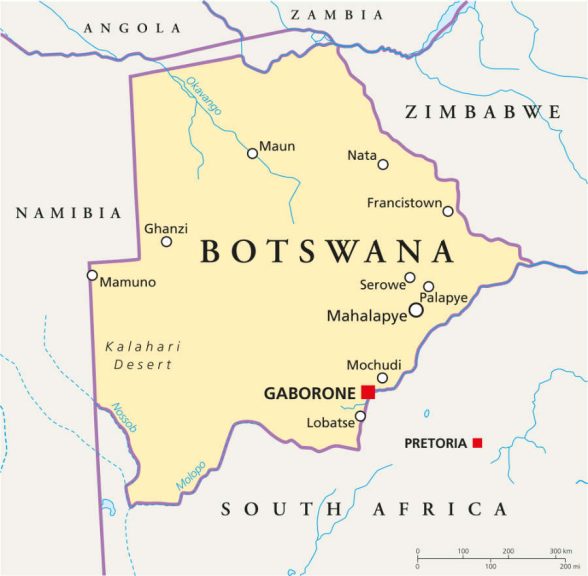
Butale confirmed that the landlocked country in Southern Africa will soon open a diplomatic mission in Russia, a “long-overdue” step. He also praised Russia for supporting Botswana’s bid to host the Kimberley Process headquarters. That is a mechanism that certifies African diamonds and identifies those from conflict regions, a trade the West has tried to stop as it supports military regimes. Butale also reiterated its call for the reform of the UN Security Council to ensure Africa’s representation, saying, “We cannot speak about a UN that represents the whole world when a whole continent like Africa is not represented.” Russia supports the creation of a new seat on the UN Security Council for the African Union.
Botswana’s GDP (PPP) is currently US$52.7 billion, with a GDP (PPP) per capita of a relatively high US$29,000 among a population of just 2.4 million.
Russia-Botwana bilateral trade is small at about US$16 million, with Russia exporting mainly chemical fertilizers and Botswana exporting precious stones, including diamonds and pearls. There is plenty of room, as Butale suggested, to expand Russian involvement in Botswana, with the diamond industry remaining the mainstay of its economic structure. As the world’s top producer of diamonds by value, the industry accounts for around 80% of exports, one-third of government revenues, and a quarter of the country’s GDP.
Beyond diamonds, Botswana has noteworthy deposits of copper, nickel, coal, and soda ash, with mining contributing approximately 16% to the nation’s real GDP. The manufacturing sector, while relatively small, is gradually expanding. Key areas include beef processing, diamond cutting and polishing, textiles, garment production, beverages, jewelry manufacturing, and metal products.
The services sector, particularly trade and transportation, also plays a crucial role, with the Port of Gaborone serving as a key transit hub for regional trade. Efforts to diversify the economy include the development of the Kgwakwe Hill manganese project. This initiative, Botswana’s first manganese mining venture, is expected to produce 80,000 metric tons of high-purity manganese sulfate monohydrate annually over a 57-year operational period, signaling a move to reduce reliance on diamonds—hence the references to developing Botswana’s rare earths potential.
Further Reading

Continue Reading