 Русский




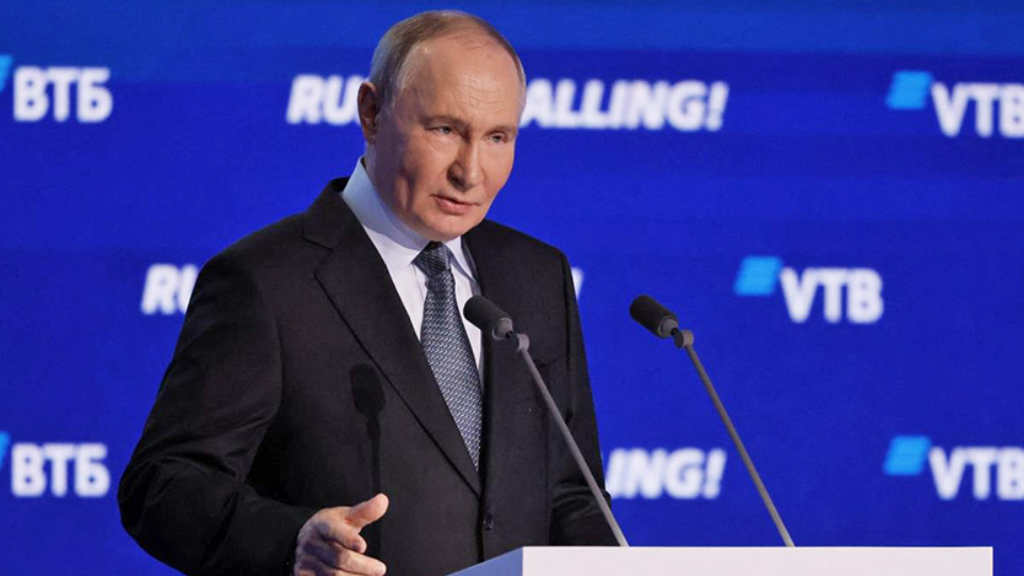

The 16th “Russia Calling!” Investment Forum has been taking place in Moscow, with the event participants including the Russian President and other high-ranking Russian officials, foreign delegates, along with domestic and international business leaders. The event is often considered a benchmark analysis of the current state of the Russia economy and has the intellectual capability to shape not only the future of Russia’s financial system but also its engagement with the evolving global economic order.
With the theme “Reaching Higher: Bold Choices for the New Economy” this year’s forum arrives as Russia transitions from a period of external turbulence to one defined by internal modernization, technological sovereignty, and a renewed integration with the dynamic markets of the Global South. Far from being a defensive gathering, the forum stands as an affirmative statement: Russia is not merely adapting to new geopolitical and economic realities, it is shaping them.
The Russia Calling! Intent
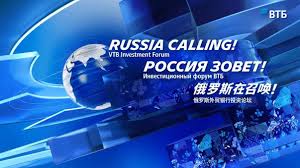
The “Russia Calling!” forum is aimed at introducing entrepreneurs and investors from dozens of countries around the world towards a shared vision for rebuilding trade and investment bridges. In an era when global markets wobble and traditional supply chains fracture, this forum stands as Russia’s considered response: a platform for substantive dialogue on the opportunities and challenges that will define international commerce in the coming decade. By convening decision makers, financiers and innovators, the forum signals Moscow’s intent to shape rather than passively accept the evolving global order and to forge robust economic partnerships beyond old alignments. If successful, the forum marks not just another annual meeting, but a defining moment – a chance for Russia to reassert its economic relevance and to chart a course for sustainable cooperation in a world increasingly marked by uncertainty.
The list of speakers attests to the depth of discussions ahead. President Vladimir Putin, as is tradition, anchored the plenary session. But beyond its high-profile roster, the real significance of the forum lies in its role as a platform for setting policy direction, investment priorities, and the long-term vision of Russia’s economic development. Putin emphasized Russia’s strategic vision for sustainable economic development and international cooperation.
This vision underscores the importance of global competition while stressing that Russia must operate in a cohesive and effective manner to advance key projects across industry, agriculture, infrastructure, technology, tourism, and the services sector. Putin highlighted the Russia’s investment growth into its industries over recent years: 6.7% in 2022, 9.8% in 2023, and 7.4% in 2024, noting that while growth in 2025 is more modest, it remains positive despite rising costs of borrowed funds and challenges to corporate profitability.
Generating Funds
Acknowledging the pressures from monopolistic practices and unilateral restrictions – sanctions imposed by Western states – Putin reaffirmed Russia’s commitment to strengthening partnerships with nations seeking mutually beneficial engagement, including China and India. He proposed the creation of a unified investment support ecosystem within the VEB Corporation (Russia’s state development fund), in cooperation with the Ministry of Economic Development, to assist entrepreneurs throughout the lifecycle of their projects.
Emphasizing the role of the stock market, he noted that its capitalization currently stands at approximately 23% of GDP, highlighting the need to attract equity capital, promote transparency, and improve corporate governance. This compares with a Western average of 75% – meaning Russia’s companies have not exploited a key resource, although this sentiment is now changing as IPOs in 2024 and 2025 were significantly oversubscribed. The Russian public and institutional appetite is there. Moscow also intends to incentivize this to attract more Russian investment capital into Russian projects.
Key initiatives include programs for initial and secondary public offerings of state-owned companies, enhanced reporting of corporate indicators, and incentives for businesses participating in long-term savings programs for individuals and co-financed employee investments, which will become effective from September 1, 2026. This means we are likely to see a very hot Russian IPO market from 2027 onwards.
Key Russian Economic Policy Solutions

Putin made several statements as concerns Russian economic development as follows:
- Strengthening Sovereign Economic Policy
Russia will continue building an independent economic strategy, focusing on national interests, supporting domestic businesses, and countering external pressure from non-competitive practices of some Western states. - Strategic International Partnerships
Expanding trade and technological cooperation with key partners, especially China and India, through joint projects in energy, manufacturing, space, and agriculture, to boost investment and economic growth. - Open to Foreign Investment
Russia remains fully open to collaboration with foreign businesses across trade, industry, and the stock market, leveraging stable macroeconomic indicators to ensure safe, long-term investment. - Maintaining Low Unemployment
Record-low unemployment at 2.2%, reflecting a strong labor market, supports internal economic stability and investor confidence. - Prudent Fiscal Policy
Public finances remain stable, with full funding of social commitments, defense, and national development goals. The budget for 2026–2028 plans moderate deficits (1.6%, 1.3%, 1.2% of GDP) and increased non-oil-and-gas revenue. - Inflation Control
Inflation has been reduced from double digits to below 7%, with expectations to reach 6% by this year-end, demonstrating effective monetary and fiscal policy coordination. - Investment Growth
Emphasis on accelerating investments in industry, services, infrastructure, agriculture, high technology, and tourism, despite rising corporate borrowing costs. - Financial Sector Reform
Russian banks have replaced unreliable external financing with domestic sources, halving external debt in the real sector, generating profits of ₽3.8 trillion (US$43.9 billion), and strengthening the banking system. - Stock Market and Equity Capital
Plans to increase stock market capitalization, attract equity capital via IPOs, enhance transparency in corporate governance, and implement the shareholder value program for state-owned companies. - Long-Term Savings and Investment Ecosystem
Expansion of long-term savings programs (over ₽560 billion or the equivalent of US$7.2 billion) and the creation of a unified investment support ecosystem under VEB to guide and potentially finance domestic and foreign investors through project lifecycles.
Putin stressed that continuous dialogue with domestic and foreign investors, combined with targeted policy measures, to ensure Russia remains a stable, attractive, and reliable partner in a rapidly changing global economic environment.
Russia’s Policy Road Map: The Russian Belt & Road Initiative

Putin also outlined a clear policy roadmap to navigate Russia’s current economic challenges and strengthen investor confidence. Emphasizing balanced growth, he called for higher investment in industry, technology, infrastructure, and services, alongside structural reforms to enhance transparency, corporate governance, and equity financing.
At the event, Russian economic leaders also supported a resilient strategy for growth and stability. Policymakers outlined the dual imperative of sustaining high demand for investment while maintaining macro-discipline, a combination that Russia has historically managed with notable success. The ruble now accounts for 57% of export payments, while trade in national currencies with key partners nears 100%, reinforcing financial sovereignty.
The effectiveness of Russia’s economic policies and prudent monetary policy has ensured market stability and controlled inflation. A major achievement this year has been the sharp decline in inflation, from 13.75% in March to below 7% year-on-year, with expectations to reach around 6% by December, surpassing forecasts.
Strategic debt placements, including planning to raise US$2.59 billion in yuan-denominated OFZ bonds, alongside expanded long-term savings programs exceeding ₽560 billion (US$7.2 billion) will be specifically assisted by the government in attracting domestic and international capital, in much the same way that China did when developing its own domestic infrastructure. That ultimately proved to be so successful that it raised the income levels of millions of Chinese nationals and resulted in China becoming a major infrastructure exporter – its Belt & Road Initiative. Russia is following the same path.
Coupled with regulated cryptocurrency integration and robust banking oversight, these measures strengthen investor confidence and Russia’s position as a reliable global economic partner. The federal budget for the next three years is designed to mitigate external risks and boost non-oil-and-gas revenues. Russia’s public debt remains below 20% of GDP, one of the lowest levels globally (see here for comparisons).
Putin additionally emphasized that Russia aims to elevate cooperation with China and India to an unprecedented level, expanding its technological dimension. Numerous joint projects in energy, manufacturing, space exploration, and agriculture exemplify this strategic vision. These initiatives unlock new avenues for Russia’s economic potential in what is being seen in Moscow, Beijing ad Delhi as a new global economy. By deepening partnerships with major international players, Russia is strengthening its innovation, investment, and global influence. This collaborative approach marks a decisive step in shaping this and, like China has, ensuring its long-term prosperity and stability.
Foreign Investment
Russia remains fully open to cooperation with foreign businesses across trade, industry, and the stock market, and offers substantial opportunities for entrepreneurs and investors seeking long-term engagement. Stable macroeconomic indicators provide a reliable foundation for investment. Strategic reforms and transparent governance further strengthen confidence. However, due to the political attitudes in the West, the target investments have changed. Russia is now courting – successfully – investments from new markets such as China, India and Saudi Arabia amongst many others. European investors, while welcome in Russia, risk being left behind due to the dire political climate emanating from Brussels and London.
The Pivot To Asia: A Results Overview
Over the past three years, Russia has undergone a stress test unprecedented in scale and intensity. Entire logistics chains were disrupted, Western countries revealed their fears towards Russia, and attempts were made, openly and repeatedly, to inflict “strategic defeat” upon the Russian economy. But these attempts failed. Not symbolically, not rhetorically, but mathematically, structurally, and empirically.
The Russian economy not only absorbed the shock; it reconfigured itself, accelerated import substitution, rooted itself more deeply in its industrial capacity, and redirected its trade flows toward growing markets such as China, India, Iran, the UAE, Türkiye, Vietnam, and the vast arc of Eurasia and Africa.
This has meant that instead of rolling over, Russia has been able to maintain small, but steady economic growth, with GDP projected to rise by 1.3% in 2026. However, over the next three years, the changes that Russia has made to its economy, and the investments it has made into infrastructure, mean that the Russian economy is expected to expand nearly 7%, reaching around ₽ 276 trillion (US$3.56 trillion) in nominal terms. That will result in Russia’s economy being worth well over US$10 trillion in PPP terms by 2028, solidifying its status as the world’s fourth largest economy and with possibly some of the highest growth rates in Eurasia – including Europe.
Interestingly, despite the imposition of 19 rounds of sanctions since 2022, Russia’s GDP has grown 1.1% thus far in 2025 – outpacing several countries that continue to impose sanctions. Russia’s economy continues to show positive growth, with acceleration expected in 2027–2028, driven primarily by strong domestic and consumer demand. Growth in real wages and household incomes has underpinned this trend, ensuring stable expansion over the forecast horizon.
While GDP growth is expected to moderate in 2025–2026 after a 4% plus expansion in 2023–2024, this reflects a deliberate easing of inflation to achieve balanced, sustainable growth. This shift did not emerge from improvisation, it emerged from strategy that suggests Moscow is balancing strong growth, rising employment, investment expansion, and inflation control.
Internal Challenges

Russia’s internal economic pressures do not represent a crisis, but they are the logical outcome of rapid structural growth mixed with the imposition of sanctions to inhibit this. Russia’s immediate economic challenges are as follows:
- Labor shortages in key sectors
Record-low unemployment (new all-time low level of 2.2% of the workforce in May), a rare achievement globally, has created the challenge of labor scarcity, especially in high-tech, manufacturing, logistics, and construction. Forum participants highlight solutions: targeted labor mobility programs, productivity-enhancing technologies, vocational modernization, automation and AI integration for routine operations and incentives for corporate investment in upskilling. - Reindustrialization and technological sovereignty
The external pressures during 2022–2024 period forced Russia to rebuild technological competencies long outsourced abroad. Today, this rebuilding is not reactive, it is strategic. Russia is pursuing sovereignty in microelectronics, aviation, shipbuilding, mechanical engineering, pharmaceuticals, and digital platforms. These sectors are ripe for investment, and the forum spotlights them explicitly. - External Challenges: Sanctions, Logistics, and Global Fragmentation
Sanction’s pressure continues, but its impact diminishes as Russia’s new trade geography becomes the norm rather than an emergency alternative. - Logistics diversification
The emergence of new corridors like North–South with Iran and India, the Northern Sea Route, the Trans-Caspian routes, and expanded Eurasian railway networks ensures long-term stability. International partners, from Chinese corporations to Middle Eastern sovereign funds, increasingly view Russia’s transport architecture as a core component of Eurasian connectivity. - Financial reorientation
VTB Group’s extensive international network through branches and subsidiaries in China, India, Vietnam, Iran, Kazakhstan, Armenia, Azerbaijan, and Belarus has enabled Russia to build an alternative payments ecosystem protected from geopolitical manipulation. The bank’s proprietary closed-loop payment infrastructure is becoming a model for the emerging multipolar financial system. - Global fragmentation as opportunity
Where others see fragmentation, Russia sees the rise of a diversified world economy where the Global South, home to 80 percent of the world’s population, sets the pace. It is in these markets that Russia’s value proposition is strongest: energy security, food security, transport infrastructure, industrial cooperation, and advanced military-technical expertise.
Opportunities for Foreign Investors

Against this backdrop, the 16th Russia Calling! forum serves as an invitation. Foreign investors from China, India, Iran, the Gulf, Southeast Asia, Africa, and even Europe are responding. Russia’s new economy signals a strategic path toward internal stability and sustained foreign investment. Russia is prioritizing investment across industry, technology, infrastructure, agriculture, and services. Structural reforms, enhanced corporate governance, and a unified investment support ecosystem within VEB are designed to attract long-term capital. By expanding equity financing, promoting public offerings of state-owned companies, prioritizing social funding and ensuring transparent governance, Russia is reinforcing investor confidence, strengthening its domestic markets, and positioning itself as a reliable, forward-looking partner in the global economic arena.
Why?

- Macroeconomic stability
Unlike several Western economies now wrestling with high public debt and stagnation, Russia maintains a sustainable budget policy, low public debt, stable employment levels, and strong export revenues. - High yield on financial instruments
The combination of Russia’s continuous opening up to the world, BRICS’ alternative financial system, growing bilateral financial system, government’s policy support and growing corporate profits has made Russian bonds, blue-chip equities, infrastructure instruments, and private placements attractive for foreign investors seeking reliable returns in a turbulent global landscape. Russia is also strengthening its financial sovereignty, with trade in national currencies with key partners approaching 100% and the ruble now accounting for 57% of export payments. These measures enhance economic stability, reduce dependency on foreign currencies, and reinforce Russia’s position as a reliable and independent global economic actor. - A rapidly expanding retail investor base
Retail investors are now a driving force in the Russian stock market. VTB’s meetups across St. Petersburg, Yekaterinburg, Kazan, and Krasnodar reflect a broader trend, with hundreds of thousands of Russians now entering capital markets, driving liquidity and creating long-term demand for high-quality issuances. This matters for foreign investors, who benefit from deeper liquidity, more stable market dynamics, and diversified investor structures. - New instruments and digital platforms
The second day of the forum explored AI-driven investment strategies, tokenized financial instruments, digital ruble infrastructure, and new mechanisms for long-horizon savings, including the government-initiated family savings tool. Russia is not merely catching up technologically but it is setting global benchmarks in digital finance, an area where Western regulatory inertia has created stagnation.
High-Growth Sectors for Foreign Capital
While Russia’s investment landscape is broad, several sectors stand out:
- Industrial Machinery & Engineering
Massive state and private investments in modernizing manufacturing lines offer strong returns and stable demand. - Transport & Logistics
The International North–South Transportation Corridor, Arctic routes, and Caspian Sea hubs represent multi-decade opportunities for foreign shipping, port operators, and infrastructure investors. - Energy & Petrochemicals
Despite Western pressure, global demand for Russian hydrocarbons and petrochemicals remains robust, particularly in Asia. Joint projects, LNG facilities, and pipeline expansions are on the table. Russia is also the world’s largest exporter of nuclear energy, with Rosatom involved in multiple investment projects throughout the global south to increase their domestic electricity output and help these emerging economies develop. Russia also exports green tech such as solar, hydro and wind technologies. - Agriculture & Food Processing
Russia has become a global agricultural power. Foreign investment can help expand processing capacity and export logistics. - Information Technology & AI
With global firms withdrawing, space has opened for Asian and Middle Eastern investors to partner with Russian IT firms developing AI, cybersecurity, and industrial automation solutions. - High-Tech Manufacturing
Domestic demand for electronics, components, and specialized machinery is growing exponentially, with significant state support and guaranteed consumption.
…..Yet Clear Policy Trajectories Need To Be Maintained

However, Russia still has a lot to do. Areas that need attention are as follows:
- Strengthening market based economic policy and national investment instruments
Expansion of long-term savings programs, incentives for IPOs, and mechanisms to mobilize domestic capital.
- Boosting productivity through innovation
Accelerated implementation of AI and automation across manufacturing, logistics, and services.
- Deepening Eurasian financial integration
Further development of ruble-denominated settlements, cross-border clearing systems, and harmonized regulatory standards with partner nations.
- Enhancing labor market flexibility
Programs to stimulate internal mobility, expand vocational training, and integrate technology into workforce management. - Supporting export-oriented industries
Tax incentives and infrastructure programs are targeting sectors poised for growth in Asia, MENA, and Sub-Saharan Africa. These include economies such as India’s proposed Free Trade Agreement with the Eurasian Economic Union, and the UAE double tax treaty. There are many such agreements in the pipeline, most of which can be expected to come into effect within the next two-three years.
Summary: A New Vision of Economic Sovereignty
The tone of this year’s Russia Calling! forum is notably different from past ones. It is neither defensive nor reactive. It is strategic, confident, and forward-looking, with Russia now entering a phase where foreign investors see long-term stability, domestic investors are maturing rapidly, international trade routes are shifting in its favor, and technological sovereignty is no longer an aspiration but a policy reality.
In this context, Russia Calling! is more than an investment forum. It is an annual checkpoint where the country assesses its progress, sets new benchmarks, and invites global partners to participate in building the next chapter of economic development. The world economy today is fragmented, uncertain, and restless. Amid this turbulence, Russia is offering something rare: scale, stability, growth, and openness on its own terms. As the forum’s title suggests, the time has come for bold choices. It increasingly appears that Russia is ready to make them.
This article was written by I.K. Hasan, a Dhaka-based independent columnist and freelance journalist on contemporary international issues whose work has been published in many local and international publications. It was especially commissioned by Russia’s Pivot To Asia.
To subscribe to the Russia’s Pivot to Asia weekly newsletter, please click here
For advice and intelligence concerning the Russian market, please email info@russiaspivottoasia.com
Further Reading To Compare:
Putin’s Annual “Russia Calling” Speech: The Russian Economy In 2024 – Analysis