
 Русский




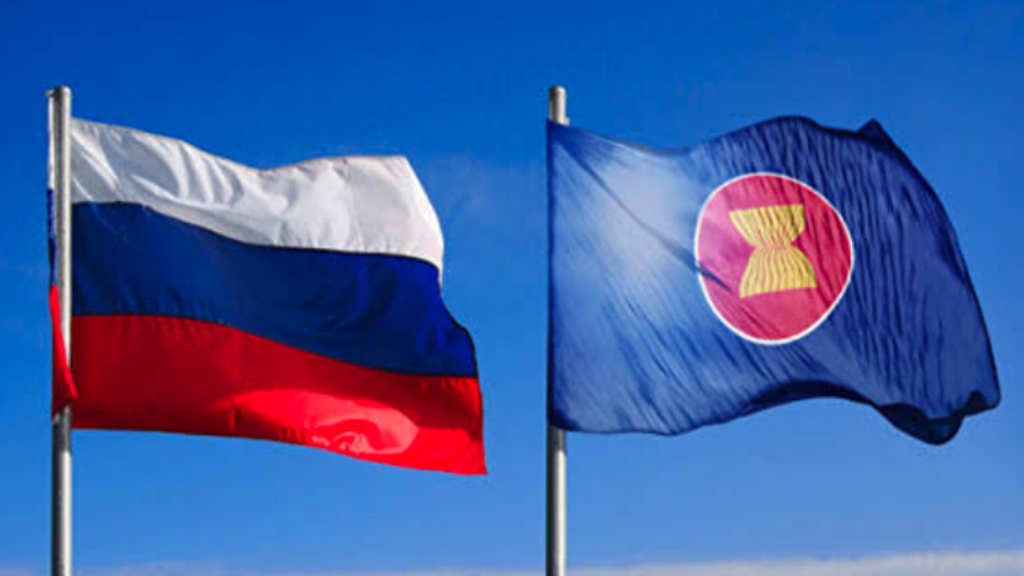

Russian Foreign Ministry’s Foreign Policy Planning Department Director, Alexey Drobinin and Deputy Director Maria Khodynskaya-Golenishcheva have released a lengthy article concerning Russia’s position as regards Southeast Asia and ASEAN, explaining Russia’s views of the region, its geopolitical and trade dynamics, as well as its position within a new multipolar world order. Also discussed are ASEAN’s relations with the Shanghai Cooperation Organisation, Eurasian Economic Union, and BRICS. It is intense interest to all those involved or anticipating Russia’s moves east.
We re-produce the article in its entirety here:
“Some experts writing about international developments come to the conclusion that multipolarity has emerged sooner than many were ready for it. The speed of change is so high that even the boldest forecasts often materialise in real time.
President Vladimir Putin said at the plenary session of the 22nd annual meeting of the Valdai International Discussion Club in October 2025 that “multipolarity has in fact already emerged.” The pillars of a polycentric world are already in place, but the structure itself remains flexible. There are several independent centres where systemically significant decisions are made. The most important of these are the United States, China and Russia. India is developing its overall capacity. Brazil, Indonesia, Türkiye, Saudi Arabia and several other major countries are strengthening their international standing, and their influence is acquiring a transregional scope. Continental Europe has placed its bets on fighting Russia, and as a result, it is losing its chance to be independent in global affairs.”
“European values are European values. Asian values are universal values.”
Mahathir Mohamad, Malaysian statesman, Prime Minister of Malaysia (1981−2003, 2018−2020)
“A multipolar world is rising from the old system, often on its ruins. The fundamentals of international relations are being put to the test. Those that fail to meet the requirements of the new age are mercilessly cast aside. There are serious grounds to assume that not all of the “poles” mentioned above will weather the nascent geopolitical storm, and that new centres of power and influence will emerge as a result.
The new element at this stage is that all “living” civilisations have moved to the centre of world politics for the first time. The “new rules” are being shaped “on the ground” by a large number of widely different players. As President Putin forecast at a meeting of the Valdai Club, “we will not see a clash of ideologies or states due to ideological differences but rather a clash of states and coalescence based on civilisational features.”
On the other hand, a civilisational approach does not necessarily imply a confrontation. The problem is not in civilisational differences but in the fact that one civilisation – the Western one – has grown used to living off others during the centuries of colonialism. As they say, “old habits die hard,” which is a perfect illustration of the current developments. As we wrote before, the Western elites “attempt to restore the ‘unipolar moment’ of the early 1990s by force. To get there, they are pushing to dismember civilisational commonwealths into segments, suitable to be absorbed, in line with the ‘divide and rule’ maxim.
Foreign Minister Sergey Lavrov specified when speaking about the Western attempt to set the Arab Gulf monarchies against Iran during the US-Israeli treacherous attack on the Islamic Republic in March 2026, “divide, pit against each other, and conquer.”
The increasing Western pressure has faced all independent states with a choice between staying on course towards sovereignty and consolidation and becoming the territory of the external forces’ “game” and settlement of scores. The unique geopolitical community of Southeast Asian nations is facing this dilemma as well.”
“A lonely soul has a terrifying future lying ahead in the faraway land, in the deserted wilderness. An orphan soul wandering in the world of midnight shadows with no fragrance lamps or torches to light its path.“
Nguyen Du, Vietnamese Poet
Southeast Asia

“Southeast Asia reflects present-day global contradictions. The centre of gravity in the world economy is shifting from the Euro Atlantic to Asia-Pacific as a major trend in today’s world.
Southeast Asia is one of the most rapidly growing parts of the Pacific region, and it has considerable potential. Today, it is hard to imagine that not so long ago, at least from a historical perspective, this territory was viewed as suffering from political instability and socioeconomic backwardness.
Southeast Asia is a diverse region with a complex cultural and religious landscape. There are four major language families and three world religions in the region. Ancestral religious practices, such as the cult of ancestors, spirits defending communities, and animism, intertwined and became woven into the fabric of external religious systems and other cultures, including the Chinese Confucian, Indian Buddhist, and Arab Muslim cultures. This offered people a broader vision and promoted tolerance towards people of other faiths and persuasions. A distinct identity gradually took shape. Instead of replacing and erasing the traditional views people held there, it supplemented and enriched them.
Southeast Asia presents a patchwork of state systems, including elective and hereditary monarchies.
During the colonial period, five powers carved up Southeast Asia, preventing it from developing a common identity across this space and a feeling of belonging together. Located in the British sphere of influence, Malaysia, Brunei, Myanmar and Singapore achieved their independence in what can be described as quite a soft way. Meanwhile, Vietnam, Laos and Cambodia under French colonial rule, and Indonesia under Dutch rule had to wage national liberation wars to achieve independence. Spain and Portugal lost their territories as a result of their conquest by other countries. As for Thailand, it has never lost its sovereignty.
At first sight, bringing all these different states within a single community should have been a major challenge. However, as aptly noted by Russian scholars, ‘despite all the differences setting Southeast Asian countries apart from one another, anyone travelling there cannot fail to notice their common denominator, which includes their everyday lives, their social networks, including patron-client relationships, the role of the family, mutual assistance within groups, and collective decision-making, as well as art and behavioural culture.’ Recognising a Southeast Asian in a crowd of foreigners is just as easy as spotting a Russian.”
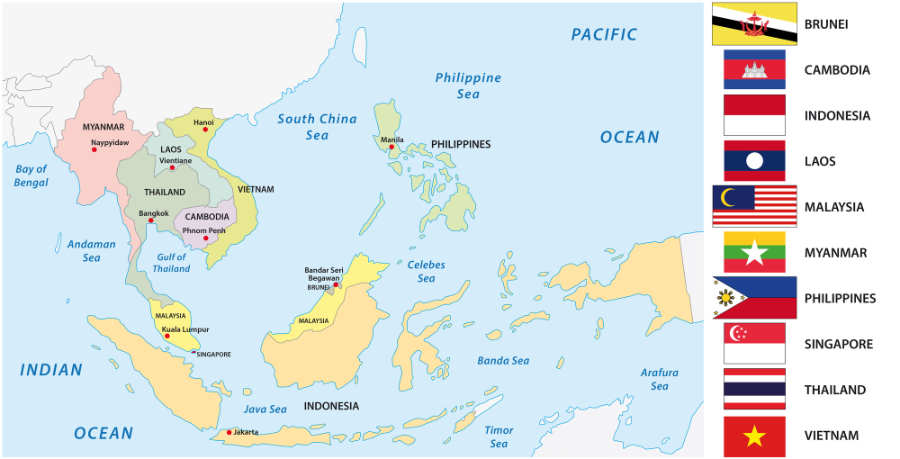
ASEAN as the Political and Economic Linchpin of Southeast Asia
“The ASEAN region’s intellectual elites constructed a pan-regional identity consciously, taking into account existing differences and aiming to create a foundation for joint development and resistance to external challenges.
This latter aspect resonates with the thesis of Arnold Toynbee, a pioneer of the civilisational approach to historical study, who posited that civilisations emerge in response to historical challenges. Indeed, the events of the Cold War provided impetus for the political and economic consolidation of Southeast Asia. Unwilling to be drawn into the rivalry of superpowers, Indonesia and Burma (now Myanmar) were among the initiators of the 1955 Bandung Conference, which paved the way for the Non-Aligned Movement. The necessity of survival in a bipolar confrontation spurred the realisation of the importance of pooling resources within a regional framework. Thus, the idea of establishing the Association of Southeast Asian Nations (ASEAN), founded in 1967, was born.”
“Reading my message line by line, you will uncover my foremost decree: To share a common fate with your land divine, remember, no homeland is better than the one bestowed upon thee.”
Tariganu, Indonesian Poet
“The philosophical foundation of cooperation within the Association was the concept of Asian values. These values include the rejection of extreme individualism, respect for leadership, the elevated role of the family, thrift, diligence, and teamwork. The state’s key function is to ensure stability, while the primary goal of economic modernisation is to improve the welfare of the population. These non-confrontational approaches align closely with Russian political and societal mentality.
After the Cold War, the ruling circles of ASEAN nations faced the challenge of preserving their geopolitical identity. This served as a catalyst for enhancing the community’s resilience, which was impossible without establishing common principles of interaction within ASEAN. Over time, the Association’s hallmark became its rules of coexistence, which include decision-making by consensus, non-interference in each other’s internal affairs, the use of informal dialogue channels to resolve disputes, and shared responsibility for regional issues. A distinctive format of discussions emerged – the ASEAN Way – devoid of protocol formalities and binding decisions, instead fostering gradual alignment on a wide range of developmental and security issues. Terms such as the “ASEAN Spirit” and the “ASEAN Path” entered the lexicon. Local experts argue that this pragmatic approach has been instrumental in overcoming challenges and achieving solidarity.
In 2027, ASEAN will celebrate its 60th anniversary. A review reveals it as a political phenomenon, an established international player with a unique decision-making philosophy, its own vision of the future, and a distinct understanding of global processes.
The Association’s institutional progress has laid a solid foundation for the future. It has expanded its activities to include the ASEAN Regional Forum (a multilateral platform for regional political dialogue, which includes our country), the ASEAN Defence Ministers’ Meeting Plus (ADMM-Plus – a forum for defence and security cooperation involving ASEAN nations, Russia, China, India, the United States, and others), and the mechanisms of the East Asia Summit (also involving Russia, China, the United States, India, and other states). Abstracting somewhat from regional specifics, one might say that this trajectory of developing alternative platforms with elements of universal legitimacy could serve as a model for other geopolitical communities seeking optimal paths for self-organisation and advancing collective interests in a multipolar world.
In their strategic planning, ASEAN leaders prioritise the consolidation of the Association and the enhancement of its political clout. In their May 2025 statement on bolstering the bloc’s role amid global instability, ASEAN leaders underscored the importance of strengthening the Association’s unity as the key to regional peace and stability. At the same time, ASEAN Secretary-General Kao Kim Hourn of Cambodia highlighted the indispensable role of the organisation in fostering regional cooperation and ensuring shared economic resilience against rising geopolitical tensions. Despite the nuances in expert assessments following the 47th ASEAN Summit in Kuala Lumpur in October 2025, local analysts unanimously agreed that the Association must remain the master of its own destiny, actively shaping its future while steadily amplifying its role on the global stage.
It is pertinent to address the related question of how regional strategists envision the emerging world order. Looking ahead, some Southeast Asian experts lean towards a triumvirate model – a tri-polar construct where Russia, China, and the United States would serve as the central powers. This scenario is met with apprehension by regional political analysts, who warn that such an arrangement of interstate relations could be inherently confrontational, potentially spurring the formation of competing alliances.
Expanding on this theme, analysts conclude that in a context where major powers fail to agree on how to uphold the stability of the international system, “middle powers – those with sufficient economic and financial firepower – may be candidates to take over the role of great powers. And middle powers that are not on the front lines of great rivalries.” It is posited that these middle states will create a safety net of cooperation to shield the world from geopolitical upheavals. This thesis resonates at the official level as well. Reflecting on the transition to a “post-American multipolar world order,” Singaporean Prime Minister Lawrence Wong emphasised the growing significance of small and medium-sized states and implied that the aggressive tariff policies of the United States under Donald Trump had spurred ASEAN leaders to reinforce the Association’s unity more vigorously.
In a multipolar world, the most effective way for small and medium-sized states to advance their external interests is through a unified centre of power. In this regard, Southeast Asian nations can rely on ASEAN. The Association exemplifies a geopolitical community of countries and peoples coexisting in a shared space and united by developmental interests. Despite the inevitable disagreements within this “big family,” it strives to act as a subject of world politics on the international stage, recognising the imperative of consolidation to counter both external and internal challenges.”
From Past Problems to New Challenges

“ASEAN is once again facing serious challenges, many of which stem from long-term trends that were consistently forecast. The multipolar world order that is now taking shape is being rejected by countries accustomed to thinking in terms of global dominance and neocolonialism, and they are making deliberate attempts to contain their geopolitical competitors and limit their growth opportunities by pushing them out of global and regional markets and exerting pressure on them.
Such behaviour has become systemic and echoes in developments across the world, including Southeast Asia. We can see how certain external forces are now trying to reshape the region to serve their own interests, with the aim of weakening China and sideline Russia.
In practice, this policy is being implemented through attempts to divide ASEAN and fragment it militarily and politically. Efforts are being made to draw some member states into limited-format arrangements to work on the agenda of deterrence rather than regional security. In place of ASEAN’s established inclusive mechanisms, selective alliances such as AUKUS, the Quad, and various groups of three or four countries are being promoted. All of this creates risks for ASEAN’s role as the geopolitical backbone of the region and, in the longer term and under unfavourable developments, could even threaten the emergence of Southeast Asia as a centre of power in the new global system.
The deployment of US intermediate-range missile systems and large-scale military exercises in the region are a serious destabilising factor. Additional tensions are fuelled by NATO’s claims to a leading role far beyond its area of responsibility. The NATO summit in Madrid in 2022 declared “cooperative security” in the Euro-Atlantic and in what they refer to as the Indo-Pacific region. The alliance is using this disingenuous slogan to expand into Southeast and Northeast Asia thus increasing the potential for conflict in the South China Sea, the Taiwan Strait, and the East China Sea, as well as on the Korean Peninsula.
ASEAN also remains under significant political pressure from the West over the Ukraine crisis. Since 2022, persistent efforts have been made to persuade it to take a side on this issue. The West has only partially succeeded, however, with Singapore, which, in an effort to maintain its alignment with the broader Anglo-Saxon network, has provided political and diplomatic support to the hostile actions of the United States and Europe against Russia. Most ASEAN members, however, have maintained friendly or neutral positions and do not participate in anti-Russia geopolitical gamesmanship.
Unscrupulous external actors view Southeast Asia as a strategic region that, if properly controlled, could provide significant advantages amid intensifying competition for global economic and technological leadership. Instead, all parties should be working to build equal and mutually beneficial partnerships with ASEAN countries, which is precisely the approach pursued by Russian diplomacy.
After all, Southeast Asia represents not only a vast common market but also a space of dynamic economic growth, technological development, and demographic potential. In 2024, the combined GDP of ASEAN countries amounted to US$3.95 trillion, making the bloc the world’s fifth largest economy and the third largest in Greater Asia after China and India.
Annual growth rates over the past 15 years have been strong, averaging 5 to 6 percent. As an integration bloc, ASEAN’s external trade exceeds US$3.5 trillion, with a stable positive balance of around US$100 billion per year. The region also boasts a vast and deep labour market, and it is therefore not surprising that Western multinational corporations and governments seek to secure privileged access to Southeast Asia’s resources and large consumer markets, as well as to obtain leverage over its transport and logistics routes, which are used by up to a quarter of global maritime trade.
In addition to external challenges, ASEAN faces internal ones as well. The domestic political situation in Myanmar is one such challenge. The Association has established the position of Special Envoy for Myanmar. There is also ASEAN’s Five-Point Consensus of 2021. Much has been done to address the issue during Malaysia’s 2025 ASEAN chairmanship. Some local analysts caution against excessive reliance on the region’s own efforts to resolve conflicts, suggesting instead that such matters be referred to the United Nations.
We do not agree with such an approach, because the role of the UN in addressing domestic political issues is, at the very least, highly questionable. Moreover, the posts of the relevant UN Secretary-General’s special representatives are, as a rule, taken by Western nationals or individuals with dual citizenship (one of which is Western). In an era of regionalisation of world politics, civilisational communities must be capable of independently finding workable solutions to conflicts within their respective spheres. In this regard, we can only welcome ASEAN’s desire to address the crisis around Myanmar without external diktat on the basis of constructive dialogue with that country’s authorities.
Another necessary attribute of a civilisation aspiring to the status of a pole in a multipolar world is the ability to maintain inter-civilisational contacts. ASEAN has mastered this instrument well. A system of dialogue formats has formed around the Association, with the East Asia summits serving as its core. Direct contacts with influential regional organisations are expanding. Relations have been established with the Shanghai Cooperation Organisation, the Eurasian Economic Union, and the Gulf Cooperation Council. For us, it is important that ASEAN-SCO cooperation is viewed by Southeast Asian experts through the prism of building bridges between ASEAN and the integration associations from continental Eurasia.
ASEAN places great emphasis on strengthening ties with BRICS. One member of the Association − Indonesia − is a full participant, while Vietnam, Thailand, and Malaysia hold partner status. Analysts in Southeast Asia note that, as intensifying US-China differences narrow ASEAN’s room for neutrality, BRICS helps it avoid being caught between a rock and a hard place. Strengthening the fabric of inter-civilisational contacts is undoubtedly a key element in the process of building a polycentric world.
Russia and Southeast Asia
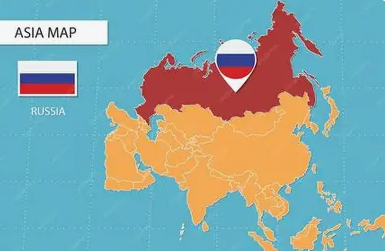
Our country and the states of Southeast Asia share a rich history of bilateral cooperation. This includes the visit of the King of Siam to St Petersburg in the late 19th century, the Soviet Union’s large-scale assistance to the national liberation movements of Vietnam, Laos, and Indonesia in the second half of the 20th century, the construction of major industrial facilities across Southeast Asia, and the creation of entirely new economic sectors in some of its states.
“When Napoleon’s empire collapsed after the war of 1812 and French influence overseas waned, Siam drew closer to St Petersburg.In the royal palace in Thailand, I saw portraits of Russian princesses who had married into the Siamese nobility, and picturesque scenes of snow-covered St Petersburg.”
Alexei Adzhubei, Soviet journalist
In 2005, over 20 years ago, the first Russia-ASEAN summit was held in Kuala Lumpur, elevating our dialogue to a fundamentally new level and cementing its comprehensive nature. In 2018, the partnership was officially granted strategic status.
Today, Russia remains a reliable friend to the countries of Southeast Asia. Our relations are unburdened by either a colonial past or long-standing disagreements. Our country is perceived not only as a centre of power but also as a time-tested provider of security: energy security through projects in the hydrocarbon, hydropower, and nuclear sectors; food security through agricultural supplies; information security through the provision of information and communications technology solutions; and physical security through military-technical cooperation. This list, of course, is far from exhaustive.
Russia, in turn, views ASEAN as a like-minded partner, united by a shared commitment to broad international cooperation grounded in the UN Charter in its entirety and interrelated integrity.
We share with our ASEAN friends a similar approach to conceptualising international processes and a common vision of the future – a more equitable, multipolar world order. We are united in our commitment to upholding national sovereignty – yet there is a nuance. As Russian scholars aptly note, “Russia has developed a rigorous understanding of sovereignty – an uncompromising attitude toward any external influence. This is a rare quality.”
Southeast Asian countries on the other hand are drawn to the idea “of strategic autonomy, but they prefer to formulate it in neutral terms – equality, inclusiveness, and open regionalism. They prefer integrationist, rather than confrontational, rhetoric, emphasising interconnectedness, sovereignty, and the right to a diversity of development paths.” Reconciling these two worldviews is not, however, a difficult task.
The participation of the region’s states in Russian integration projects will help unlock Southeast Asia’s potential. This primarily involves aligning ASEAN’s capabilities with those of the EAEU by deepening and expanding sectoral cooperation between member countries. Cooperation between the Union and the Association, as well as the harmonisation of socioeconomic development processes within this framework, represents, in our view, one of the pillars of the Greater Eurasian Partnership initiative, first proposed by Vladimir Putin – specifically at the Russia-ASEAN summit in Sochi in 2016. We are working to expand and diversify trade and economic cooperation. In the financial sector, we are moving towards settlements in national currencies. These measures, along with integration with Asian platforms, are not abstract plans for us but a new geoeconomic reality.
Alongside the economic dimension of cooperation, we prioritise deepening ties with the Association and its individual members in the sphere of security. ASEAN countries share our view that regional security is indivisible and comprehensive, and that the security of one state cannot be ensured at the expense of another.
For our part, we are committed to preserving an ASEAN-centric security architecture in Southeast Asia. In this context, we view the Association as a partner in implementing the initiative to create a Eurasian security architecture, put forward by the Russian President in 2024. A constructive bilateral political dialogue on this topic has been established with virtually all ASEAN countries, and representatives of individual member states participated in the 3rd Minsk International Conference on Eurasian Security (October 28−29, 2025), organised by our Belarusian friends.
Viewing the Association as an integral part of Greater Eurasia, Russia is open to cooperation with ASEAN in the interests of resolving and preventing regional conflicts and ensuring comprehensive protection of national and regional security.
Southeast Asia not only exists on the geopolitical map but is actively asserting itself as a promising centre of a multipolar world. It is a region raising its voice in global affairs.
The leaders of the ASEAN member states have repeatedly stated that ASEAN’s interests are served by the establishment of a multipolar world order in which the Association would play a significant role. This assessment commands broad agreement.
Achieving this goal will be facilitated by the ability of the Association and its dialogue mechanisms to maintain a pragmatic position and retain a decisive voice in determining the architecture and formats of cooperation in Southeast Asia. It appears that this approach best serves the interests of the countries in the region. However, the sovereign choice lies with the political will of ASEAN’s leadership.
The development of multipolarity is a complex process. To quote Vladimir Putin once more, he has emphasised that “the opportunities and dangers of a multipolar world are inseparable from one another. Naturally, the weakening of the dictate that characterised the previous period and the expansion of freedom for all is undeniably a positive development. At the same time, under such conditions, it is much more difficult to find and establish this very solid balance.” Establishing such a balance, in our view, will depend largely on the position of the global majority groupings, their consistency in upholding sovereignty and independent policies. This is precisely why Russia sees an undeniable benefit in ASEAN establishing itself as a key player in the emerging multipolar system of international relations.”