 Русский




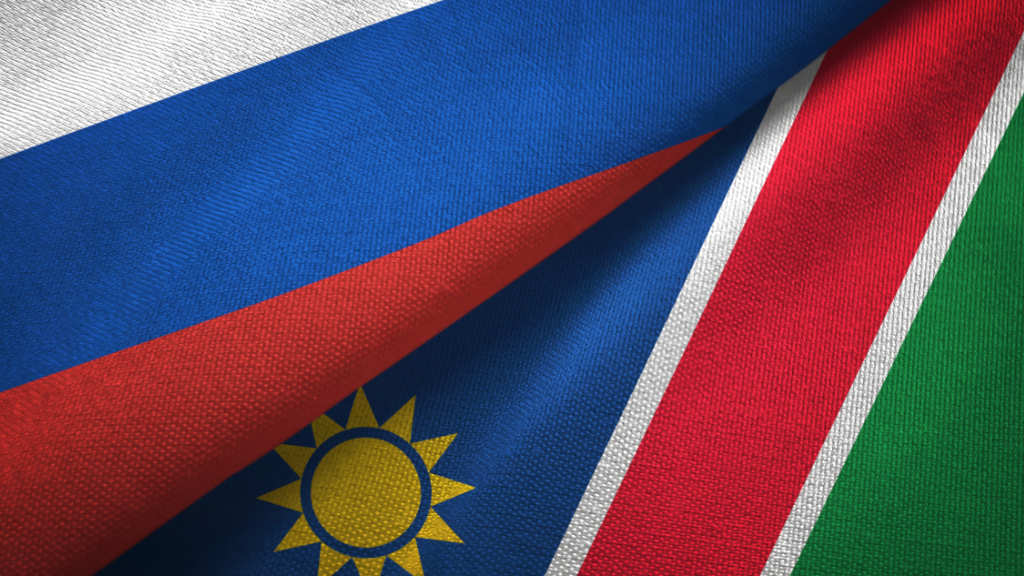

Namibia’s Foreign Minister, Selma Ashipala-Musavyi visited Moscow from January 12 to 14), with the symbolism important but the trade, economics and investment dialogues more vital.
Three decades after Namibia’s independence and more than sixty years after the Soviet Union first backed the South West Africa People’s Organisation (SWAPO) during the liberation struggle, Windhoek and Moscow are now engaged in a quieter, more consequential task: translating political goodwill into commercially scalable trade, investment, and industrial cooperation.
The meetings held with Deputy Prime Minister Yuri Trutnev, Foreign Minister Sergei Lavrov, and Rosatom’s international leadership were negotiations about structure: how two mid-sized economies, operating under very different geopolitical pressures, can design a mutually beneficial economic corridor anchored in resources, energy, food, logistics, and technology largely insulated from ideological turbulence.
Overall, this engagement at the start of the new year 2026 gives a strong boost to Namibia-Russia cooperation across geology and mining, energy, transport infrastructure, agriculture, fisheries, healthcare, education, culture, and tourism. Selma Ashipala-Musavyi’s visit has paved the way for further high-level exchanges in 2026, including the proposed visit of Foreign Minister Sergey Lavrov to Namibia and a planned visit to the Kremlin by Namibian President Netumbo Nandi-Ndaitwah at the invitation of President Vladimir Putin.
With a population of about 3 million, Namibia shows how a disciplined resource strategy can translate into a GDP (PPP) of US$30 billion and rising confidence in the Global South. A GDP per capita (PPP) of roughly US$11,000 underscores a society that is steadily converting natural wealth into measurable living standards. Economic growth of 4.2% in 2023, driven by mining and bold investments in oil exploration, reflects a pragmatic, sovereignty-focused development model. The expected moderation to around 3.1% in 2024 appears less a slowdown than a pause for consolidation amid volatile global markets.
With growth projected to accelerate again to 3.8% in 2025-26, Namibia is positioning itself as a resilient, resource-anchored economy in an emerging multipolar world. At present, Russia-Namibia trade volumes remain modest. In 2024, bilateral turnover almost doubled to US$11.7 million. By January-October 2025, it had already reached US$17.3 million. These numbers are small in absolute terms, but they matter because they sit so far below potential. As Yuri Trutnev acknowledged, the figures “fully reflect the potential for increasing bilateral contacts in various sectors of the economy.” The visit was about defining how that potential becomes bankable reality.
Yuri Trutnev and Selma Ashipala-Musavii co-Chaired the 10th Namibia/Russia Intergovernmental Commission on Trade and Economic Cooperation on January 13. The Commission serves as a vital platform for reviewing existing joint projects and exploring new opportunities for industrial and economic growth. Russia and Namibia are preparing for the 11th Intergovernmental Commission on Trade and Economic Cooperation to be held in Windhoek in 2026, underscoring institutional continuity in bilateral ties. Besides her high-level meeting with Foreign Minister Sergey Lavrov on January 14, Ashipala-Musavyi also engaged with Russian business leaders to encourage investment and promote trade flows between Namibia and Russia. During the meeting, the foreign ministers discussed expanding Russia-Namibia cooperation across trade, investment, and strategic sectors. They also reviewed coordination at multilateral platforms, including interaction within the Southern African Development Community (SADC). Both sides aim to shift cooperation from political symbolism toward concrete trade, investment, and industrial outcomes. Geology, mining, education, and subsoil use were identified as priority sectors for expanding economic cooperation. A Russia-Namibia business forum was also held alongside the commission meeting to mobilize private-sector participation. Moscow reaffirmed its long-term strategic partnership and historical solidarity with Namibia, reinforcing political trust. The talks highlighted trade pragmatism and mutual economic benefit as guiding principles over geopolitical considerations.
Namibia’s foreign and trade policy blueprint for 2025-2030 explicitly merges diplomacy with investment promotion, economic diversification, and value addition. Russia, under sanctions pressure and reorienting toward the Global South, is seeking precisely such partners. This convergence explains the focus of the Moscow talks. The agenda was based on specific areas of cooperation: uranium, nuclear energy, fertilisers, mining services, logistics, agri-exports, education, and settlement infrastructure.
These are areas where Russian comparative advantages and Namibian development priorities overlap with minimal friction. Unlike many Africa-external partner relationships, this one is not asymmetrical in ambition. Namibia is not merely seeking capital; it wants technology transfer, skills, and downstream processing. Russia, for its part, is not looking for extractive shortcuts but for long-term access to resources, markets, and logistics hubs in southern Africa.
Nuclear Energy
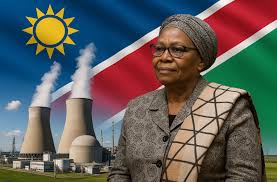
The most strategically significant outcome of the visit was the acceleration of talks on peaceful nuclear cooperation, including joint work on uranium mining. Russia and Namibia are in advanced negotiations on an agreement to cooperate in the development of peaceful nuclear energy, marking a new stage in bilateral economic relations. Russia’s Rosatom plans to complete uranium exploration in Namibia by 2026, with commercial mining targeted to begin in 2029. The initiative positions Namibia as a strategic partner in global nuclear supply chains and strengthens Russia’s role in long-term energy cooperation in Africa.
Namibia is already the world’s third-largest producer of uranium oxide, according to the World Nuclear Association. Its reserves are globally competitive in scale, quality, and extraction cost. Namibia’s uranium mines have the potential to provide up to 10% of the world’s nuclear fuel supply, according to the World Nuclear Association. Yet historically, Namibia has captured only a fraction of the value chain. Ore is extracted, processed minimally, and exported, while enrichment, fuel fabrication, and reactor services take place elsewhere.
For Russia, this is a familiar equation. Rosatom controls one of the world’s most integrated nuclear value chains, from mining and enrichment to reactor construction and fuel recycling. Cooperation with Namibia offers Moscow supply diversification at a time when nuclear fuel markets are becoming more fragmented, while offering Windhoek precisely what it seeks: predictable demand, technology transfer, and a stable legal framework. Crucially, this cooperation is framed explicitly within international norms. Namibian officials have emphasized that full-scale Rosatom operations would follow IAEA examinations and compliance. This positioning matters. It reduces political risk for Namibia and shields the partnership from reputational spillover effects often associated with geopolitical narratives around Russia’s nuclear sector.
Beyond mining, the nuclear dialogue intersects with Namibia’s energy security challenge. The country has historically imported more than half of its electricity from South Africa, Zambia, Zimbabwe and neighboring states. Regional shortages and rising demand have forced Windhoek to invest in new generation capacity. Russian expertise in nuclear power particularly small and medium-scale reactors offers a long-term solution that complements Namibia’s solar and wind ambitions rather than replacing them.
Rare Earths & Minerals
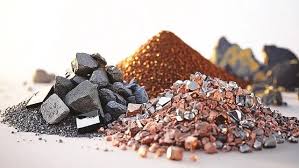
Uranium is only one layer of Namibia’s resource base. The country holds significant deposits of diamonds, gold, zinc, lithium, cobalt, copper, and rare earth elements. In 2022, Namibia announced its largest-ever discovery of rare earth elements, with a proven ore body of 579 million tons and a cut-off grade of 0.02 to 1.00 percent of REE-bearing materials. These materials are critical for clean energy technologies, aerospace, and advanced manufacturing – sectors where Russia retains strong industrial capabilities despite sanctions.
The 2022 discovery of 579 million tons of rare earth ore reinforces Namibia’s role as a supplier of inputs essential to the industries of the future. The ban on unprocessed lithium exports signals a clear shift toward value addition and industrial development, opening space for long-term investors rather than speculative capital.
Equally significant are offshore oil and gas discoveries in the Orange Basin. With potential reserves of 11 billion barrels of oil and 2.2 trillion cubic feet of gas, Namibia could become a top global producer by 2035, generating more than US$3.5 billion annually in state revenues at peak production. This creates opportunities across infrastructure, services, logistics, and skills development.
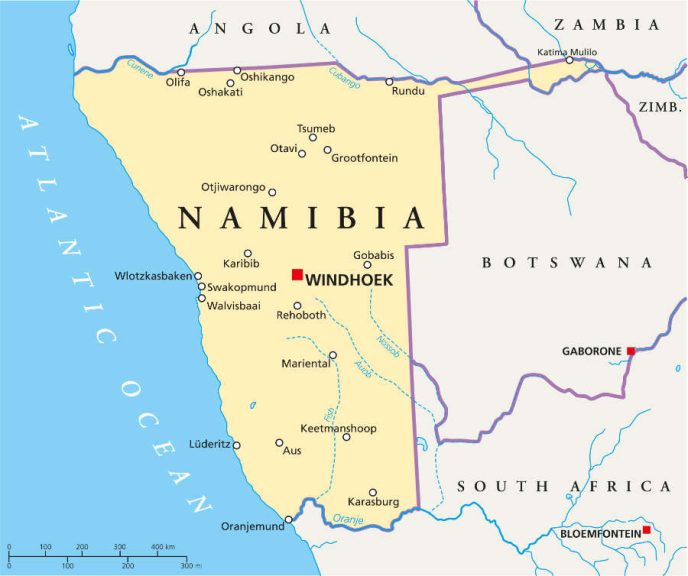
Trade and logistics form the third pillar of Namibia’s strategy. The expanded Walvis Bay port and regional corridors linking Zambia, Zimbabwe, Botswana, and the Democratic Republic of Congo position the country as a gateway to a market of 345 million people. For investors seeking access to Southern Africa, Namibia offers stability, predictability, and strategic geography. Challenges remain – drought, skills shortages, and fiscal constraints but Namibia’s direction is clear. In a multipolar world, it represents a pragmatic, resource-backed platform for trade, business, and long-term investment aligned with real economic value rather than financial speculation.
Agriculture
If uranium is the strategic anchor, fertilizers are the quiet workhorse of bilateral trade. Russia already supplies Namibia with fertilizers critical for agriculture in an arid climate. As global fertilizer markets remain volatile, Russian producers benefit from long-term African contracts, while Namibia secures stable inputs for food production.
Namibia’s ambassador to Russia openly floated exports of beer, beef, biltong, oysters, asparagus, and fruit to the Russian market, reflecting a deliberate strategy to enter Russia’s consumer market with branded, value-added products. Russia, with a population of roughly 146 million, remains one of the world’s largest food and beverage markets. Beer consumption demand for differentiated and premium products continues to grow. Namibia Breweries Limited, producer of Windhoek Lager, operates under the German Reinheitsgebot tradition, an authenticity narrative that resonates strongly with Russian consumers.
Beef offers a similar logic. Namibia is a recognized exporter to markets with strict sanitary standards, including the EU. Its flagship processor, Meatco, already operates under internationally compliant systems. For Russia, diversifying beef imports aligns with food security policy and reduces dependence on a narrow supplier base. For Namibia, even niche penetration into Russia’s beverage consumption sector and premium retail segments could translate into meaningful volumes. Biltong, while unfamiliar, fits neatly into Russia’s fast-growing protein snack market. With targeted marketing and e-commerce distribution, it could move from novelty to category within a few years.
Tourism
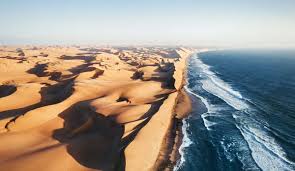
Russia-Namibia tourism cooperation with easier access for travellers, potential growth in tourism infrastructure, and new opportunities for cultural exchange signals a strategic opening of new travel corridors between Eurasia and Southern Africa.
Currently, flights between Russia and Namibia are limited, requiring travellers to rely on indirect connections through third countries. The new partnership could introduce direct routes, enhancing connectivity while reducing travel time and costs for tourists visiting either nation. With closer Russia-Namibia cooperation, Russian tourists gain easier access to Namibia’s iconic landscapes and wildlife, experiencing Africa’s unique beauty and culture. By easing access, encouraging cultural exchange, and supporting tourism infrastructure, both countries aim to diversify visitor flows and promote sustainable, long-term people-to-people ties in a changing global travel landscape. If Russia and Namibia establish a visa-free regime for ordinary passport holders, it would mark a milestone not only in tourism but also in trade and business cooperation.
Logistics
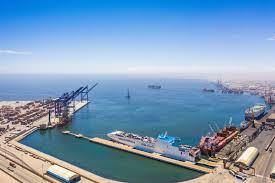
Infrastructure is the often-ignored multiplier. Namibia’s port of Walvis Bay has quietly become one of southern Africa’s most efficient logistics hubs. Its expanded container terminal, now capable of handling 750,000 TEUs annually, is less congested than Durban or Cape Town and closer to key inland markets in Zambia, Botswana, Zimbabwe, and Angola. For Russian exporters and investors, Walvis Bay offers something rare: a politically stable, well-managed port with multimodal connectivity and proximity to Atlantic shipping lanes.
This makes Namibia not just a destination but a gateway – both for Russian connectivity project like the INSTC and goods entering southern Africa and for African exports moving northward. The logistics logic extends to energy and mining equipment, fertilizers, grain, and even consumer goods. As Russia recalibrates its trade routes away from traditional European corridors, southern African ports gain strategic relevance.
Settlements & Finance
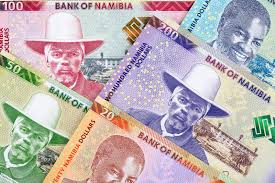
One of the less visible but critical topics discussed in Moscow was settlement infrastructure. As sanctions reshape global finance, Russia has accelerated the development of alternative payment mechanisms, including national currencies and non-Western clearing systems. For Namibia, this offers an opportunity rather than a constraint. Bilateral trade conducted in rubles or third-party currencies reduces exposure to dollar volatility and external financial pressure. Over time, such mechanisms can support larger volumes and more complex projects, particularly in capital-intensive sectors like mining and energy.
Geopolitics as Background Noise, Not Strategy
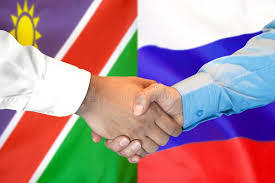
Perhaps the most notable feature of the Russia-Namibia engagement is what it does not emphasize. There is no overt anti-Western rhetoric, no ideological framing, and no attempt to instrumentalize the relationship against third parties. Both sides consistently stress pragmatism, mutual benefit, and non-interference. For Russia, this is a deliberate recalibration. African partnerships are no longer framed as symbolic counters to Western pressure but as autonomous economic relationships.
For Namibia, engaging Russia does not preclude cooperation with the EU, China, or the United States. It is a diversification strategy rooted in sovereignty. This approach explains why discussions ranged seamlessly from uranium to beef, from nuclear law to beer branding. Trade pragmatism, not geopolitical theater, defined the visit.
Summary
Selma Ashipala-Musavyi’s Moscow visit marked a transition point. Russia-Namibia relations are no longer defined primarily by history or rhetoric but by spreadsheets, feasibility studies, and legal frameworks. The numbers are still small, but the architecture is being laid.
In an international system increasingly fragmented by sanctions, trade wars, and political alignment tests, the Namibia–Russia engagement offers a different model. It is quiet, pragmatic, and sector-driven. It prioritizes value addition over extraction, diversification over dependency, and economics over ideology.
For Russian state business circles, Namibia represents more than a distant African partner. It is a resource-rich, policy-coherent, strategically located economy open to long-term cooperation. For Namibia, Russia is not a patron but a partner, one with technology, markets, and a willingness to operate outside traditional hierarchies. If executed with discipline, this partnership will not make headlines overnight. But over the next decade, it may quietly prove that in a polarized world, trade pragmatism remains one of the most powerful instruments of sovereignty.
This article was written by MD Masud Rana, a geopolitical analyst focusing in Asia-Africa affairs. She may be reached at info@russiaspivottoasia.com
Further Reading
Russia-Namibia Bilateral Relations: October 2025 Update
Continue Reading