
 Русский





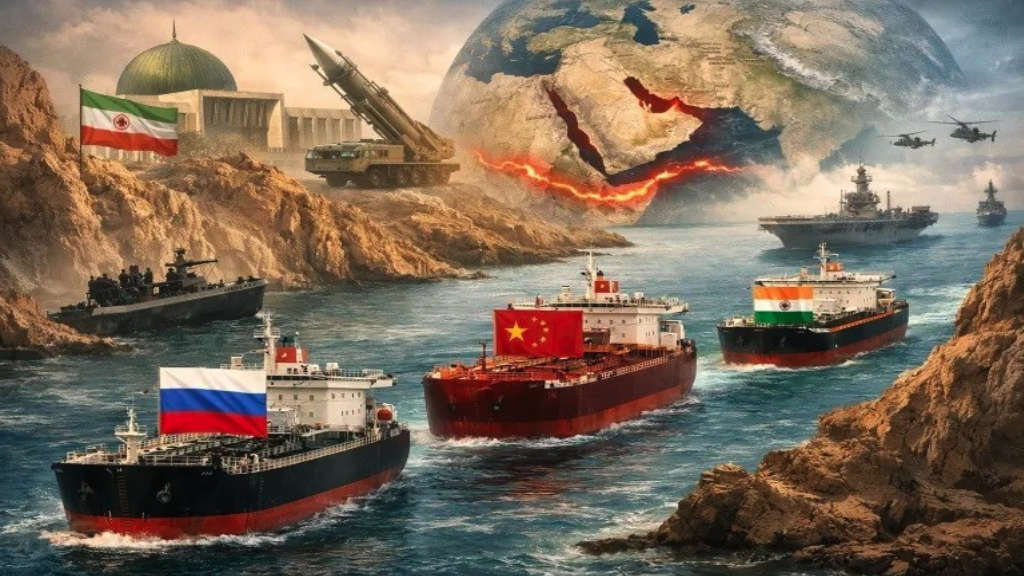

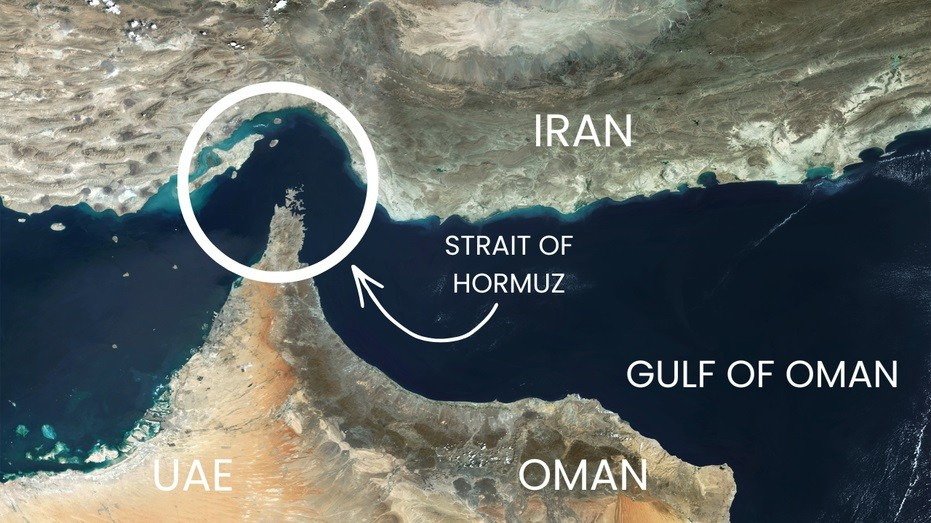
In a major development that has implications for global energy security, Iran has officially announced that five countries—India, China, Russia, Iraq, and Pakistan—will continue to receive safe passage through the Strait of Hormuz amid the ongoing conflict.
The announcement was made by Iranian Foreign Minister Seyed Abbas Araghchi in an interview with Iranian state television on March 25. While Iran has effectively restricted access to the strategic waterway for its adversaries, it has carved out an exemption for what it calls “friendly nations.”
Araghchi stated that “we have permitted certain countries that we consider friendly to pass through (Strait of Hormuz). These are China, Russia, India, Iraq, and Pakistan.”
While the five nations have been granted access, Araghchi made it clear that ships linked to Iran’s adversaries will not be permitted to transit through the strait. He added, “We are in a state of war. The region is a war zone, and there is no reason to allow the ships of our enemies and their allies to pass through.”
According to reports, vessels from the United States, Israel, and certain Gulf nations involved in the ongoing conflict are among those blocked from using the vital waterway.
Iran is not imposing a complete blockade, but it has tightened its grip on the choke point. The Islamic Revolutionary Guard Corps (IRGC) is reportedly overseeing traffic, requiring ships to submit documents, obtain clearance codes, and move through designated corridors under escort.
A report by shipping publication Lloyd’s List indicated that since mid-March, vessels have largely avoided traditional routes and are instead following pre-approved paths cleared by Iranian authorities.
The Iranian mission to the United Nations in New York also clarified the conditions on March 25, stating, “Non-hostile vessels, including those belonging to or associated with other states, may—provided that they neither participate in nor support acts of aggression against Iran and fully comply with the declared safety and security regulations—benefit from safe passage through the Strait of Hormuz in coordination with the competent Iranian authorities.”
For India, the announcement represents a significant diplomatic achievement. New Delhi has been engaged in intensive diplomatic efforts focused on ensuring the unimpeded flow of energy through the strait. The confirmation comes at a critical time when global oil and gas prices have surged following Iran’s partial closure of the strait. The Strait of Hormuz handles roughly 20% of global oil and LNG supplies, making it the world’s most important energy transit chokepoint.
At least five ships bound for India, including the LPG tankers Jag Vasant and Pine Gas, have already successfully crossed the strait in recent days under the new arrangement.
Amid reports suggesting Iran was charging vessels a “toll” for passage, Rajesh Kumar Sinha, special secretary in the Ministry of Shipping, clarified that the Strait of Hormuz is governed by international law, saying that “this is an international strait, and as per international convention, it has the right of freedom of navigation, and no levy fee can be imposed on it as per international regulation.” Therefore, any fact presented by anyone, any argument made by anyone, has no basis. It is baseless.”
The Iranian position clarifies a great deal of misinformation concerning the Strait of Hormuz, although it should be noted that insurance costs for shipping through the Strait are also expensive and will contribute to higher consumer costs for Middle Eastern-sourced oil and gas.
There are also several conflicting statements between Iran and the United States. The main points appear to be:
- US President Trump has stated that the Iranian leadership has been ‘decapitated,’ whereas statements from Iran suggest this is not so and that the government continues to operate.
- Trump has stated that the Strait of Hormuz is ‘open’ to anyone who wants to use it and ‘take oil.’ but at the same time has threatened military action if it is not reopened. Iran does appear to be in the position of enforcing a closure, as was demonstrated by an attack on a Kuwaiti tanker earlier this week.
- Global insurance companies—mainly Western-financed—are also highly reluctant to carry the financial risks, meaning that the effective closure is also a Western-imposed financial risk issue as well as a conflict risk issue.
The overriding evidence suggests that this conflict is far from over and timelines for its resolution are overly optimistic.
Impact on Russia & Asia
There is limited domestic impact on Russia as it has plenty of its own oil and gas reserves and export capabilities, with these specifically being directed to Asia. This has meant that supply chains, as we noted here and here, are being increasingly directed to the East, while Russia and China in particular already have substantial supply chain pipeline infrastructure—which is also being increased.
India has been caught a little unawares and has numerous vessels still stuck around the Persian Gulf unable to transit the Strait of Hormuz, although Iran’s announcement this week may alleviate this. As we also pointed out, this is also an issue for insurance risk assessment. Not all insurers will be willing to provide cover for shipping considering the risks. However, while there has been some short-term impact this is now easing, with Russia also stepping up oil and gas shipments to India. New Delhi has also prepared and stated it possesses reserves equivalent to 60 days. It is interesting to note that India is not participating in the recent coordinated release of oil reserves. It is a similar situation with Pakistan.
Impact on Europe
The situation in Europe could become highly problematic. Russia has already stated it will not supply oil to any countries that impose a price cap—which essentially means the G7, including the European Union—and Australia. US President Trump has also stated that the United States will not provide escort or security services around the Strait of Hormuz to allied shipping, as none of the NATO bloc provided assistance to US actions against Iran.
EU member states released over 400 million barrels of emergency oil reserves in March, from a total emergency reserve of about 730 million barrels. This means the EU has about 4-6 weeks of energy supplies left and implies rationing may soon need to be introduced. This also effectively squeezes Europe into buying energy supplies exclusively from the United States—and at premium rates. Should the Iran conflict spread into May, then the situation for Europe will become increasingly problematic.
Impact on The United States
The US consumer market will only be marginally affected, as they have plenty of energy production to satisfy their own demands. However, there are increasing issues that are showing signs of becoming problematic, even embarrassing, and especially in the political arena. These include:
- European unease in becoming involved in the Middle East. Several European nations have denied the US military access to their airbases, leading to predictable angry responses from Trump. These include Italy, Spain, France, and Switzerland, while the UK has dithered. For example, the HMS Dragon left British waters three weeks ago but has not arrived near the Strait of Hormuz, suggesting deliberate reticence.
- The USS George Washington, the United States Navy nuclear-powered aircraft carrier, has had to return for repairs that are set to last over 12 months due to problems with sewage and an onboard fire. What was intended to be a show of strength has instead been a thoroughly inglorious, literally ‘shitty’ retreat.
- The upcoming FIFA World Cup finals. Huge uncertainty surrounds this event, with the United States apparently unprepared for mass inbound soccer tourists in the midst of a difficult campaign to remove illegal migrants, including multiple cases of wrongful imprisonment and abuse of individuals. Iran has also qualified, creating security headaches and the prospect of unwanted sporting direct competition. The United States team has not performed well in the buildup, losing their last two games by a total of 7 goals against and only scoring 2. (Iran won their final buildup game 5-0). The tournament, which should showcase American hospitality, appears to be in danger of becoming an event to forget and could possibly alienate certain foreign supporters—and their governments—still further.
England, France, Spain, and Switzerland have all also qualified at a time when Trump has recently insulted their national political leaders. In addition, the United States has placed substantial tariffs on numerous participating nations—including football giants Brazil (50%), as well as South Africa (30%) and Switzerland (39%), and has heavily sanctioned others, such as Iran and the DR Congo. Even co-hosts Canada (35%) and Mexico (25%) have been subjected to higher-than-normal tariffs by the United States on certain products. The atmosphere in some matches is likely to be partisan. Trump, meanwhile, has already been awarded the ludicrous ‘FIFA Peace Prize’ and thinks the United States will win the tournament, although he does want to rebrand the sport. The buildup to the event appears to be politically chaotic in terms of fostering a welcoming attitude. The potential for unseemly American and anti-American behaviour and even violence during the world’s most watched competition is substantial.
Summary
It is of note that the Strait of Hormuz issue is not purely a military conflict; it has also morphed, very rapidly, into a Western financial risk conflict, as about 90% of the world’s ocean-going shipping tonnage is insured for third-party liability (Protection and Indemnity, or P&I). This is carried out by the 12 major mutual clubs that make up the International Group of P&I Clubs (IG Clubs). Because the majority of these clubs are based in Europe and the United States, this means roughly 90% of global maritime shipping relies on Western-headquartered insurers.
As these are highly reluctant to provide coverage for Western shipping in the Middle East (Russia, China, and India have their own insurance companies), this signifies that a major Western split is appearing between the West’s political wants and the West’s financial providers. This is, of course, an unsustainable situation, and something will ultimately have to give.
The same situation is also playing out as concerns Ukraine, with EU politicians wanting to make an unrecoverable ‘loan’ of €90 billion to Kiev to support the country in its conflict with Russia, but the actual financiers not allowing this to happen. The stress lines here all converge over Europe, both in terms of Ukraine and in terms of energy supplies. What happens over the course of the coming summer period will determine the outlook for Europe for decades to come – hence the reason for current European resistance. However, it appears that—and especially if the Iran conflict continues—this pressure may ultimately lead to a European climb-down. In which case, Europe’s sovereignty essentially passes to Washington.