Русский









Russia is expanding the range of vegetable oil exports is ready to provide to export markets with a new variety – flaxseed oil, according Ilya Ilyushin, the head of Russia’s Agroexport Federal Center. He was speaking at an oil and fat conference taking place as part of the Global Grain and Pulses Forum 2026 in Dubai on Monday (January 26).
Ilyushin said that “We are expanding the range of vegetable oils supplied for export. A new area will be supplies of flaxseed oil. Two new flax processing plants have been established in Russia. Exports of flaxseed oil in 2026 may amount to 120,000 tonnes, worth US$120 million. Promising markets for these supplies are China and South American countries, and Chile in particular.”
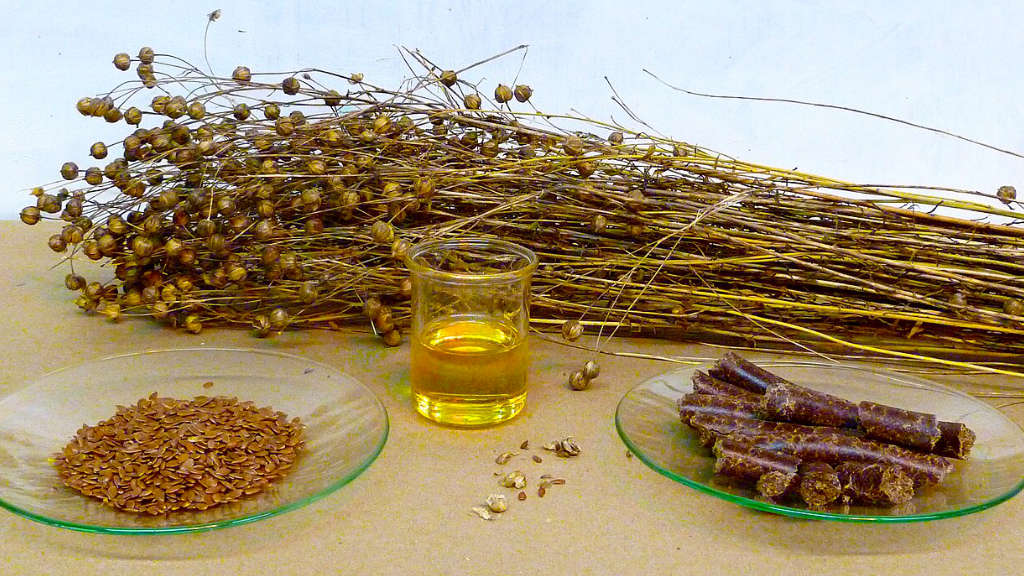
Flaxseed oil, also known as linseed oil or flax oil (in its edible form), is a colorless to yellowish oil obtained from the dried, ripened seeds of the flax plant (Linum usitatissimum). The oil is obtained by pressing, sometimes followed by solvent extraction. Owing to its polymer-forming properties, linseed oil is often blended with combinations of other oils, resins, or solvents as an impregnator, drying oil finish, or varnish in wood finishing; as a pigment binder in oil paints; as a plasticizer and hardener in putty; and in the manufacture of linoleum.
Flaxseed oil is used for heart disease, high blood pressure, high levels of cholesterol or other fats (lipids) in the blood (hyperlipidemia), and many other conditions The alpha-linolenic acid and other chemicals in flaxseed oil seem to decrease swelling, which is why some people use it for conditions that involve inflammation, such as rheumatoid arthritis.
Concerning Russia’s exports of other types of vegetable oils, Ilyushin said that Russia is in first place in the world in sunflower oil supplies; last season the Russian share was 36% and in the current season it may exceed 40% of global exports. Russia is the largest supplier of this oil to India (55% of imports), China (78%), Egypt (42%), Iran (92%) and Turkiye (68%).
In the sunflower meal market, Russian’s share is a quarter of the total amount. The main buyers are Turkey (37%) and Belarus (29%). Russia ranks second in the world in rapeseed oil supplies with a 22% share.
Ilyushin said “In recent years, we have been forced to completely redirect export flows. As a result, almost 90% of rapeseed oil exports go to China. Given that we already account for more than half of Chinese imports, further increasing supplies there may be difficult. In rapeseed meal exports, China also dominates. Such a situation of dependence on a single market is not sufficiently stable. As for new markets for Russian exports, we need to take a closer look at the African market. Sunflower oil is actively imported by North African countries. At the same time, Africa south of the Sahara, with the exception of South Africa, doesn’t consume sunflower oil, using palm oil instead. Africa imports over 5 million tonnes of palm oil annually. By substituting 15% of this amount, Russia could increase exports by 800,000 tonnes.”
Russia’s share in the soybean oil market at the end of last season was 7%. More than half of the supplies went to India and Algeria. Soybean meal supplies are small at 0.6 million tonnes, and are mainly concentrated in the markets of neighboring countries. Rapeseed and soybean meal are in greater demand on the domestic market. Overall, Russia exports up to 69% of produced vegetable oils and 25% of meals.