
 Русский





The Russian President, Vladimir Putin, has spoken by phone with the Hungarian Prime Minister, Victor Orban, and met with the Foreign Minister, Peter Szijjarto, in Moscow. Szijjarto also met with the Russian Foreign Minister, Sergey Lavrov.
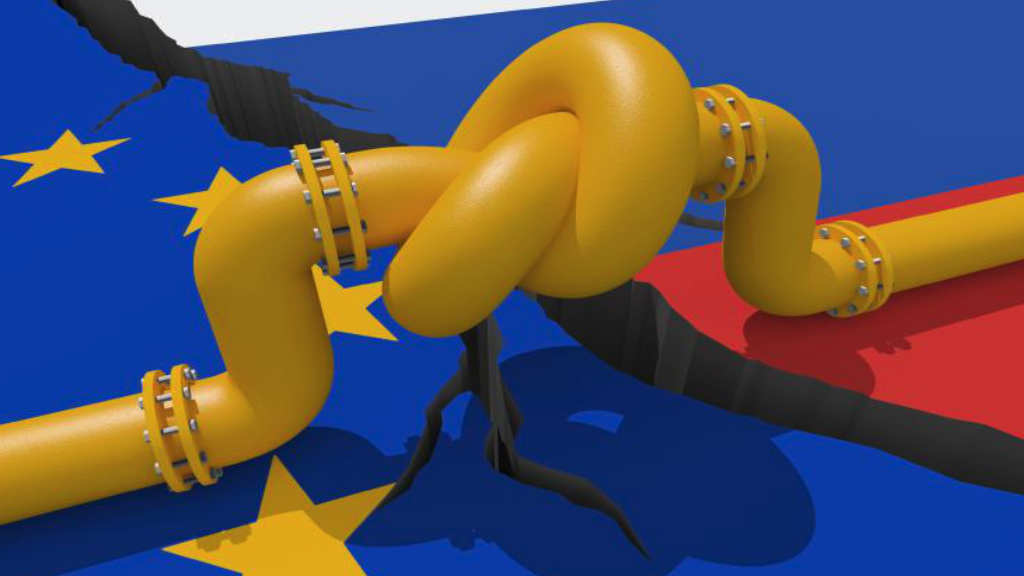
Much of the discussion was focused on Russian energy supplies to Hungary, with Budapest keen to maintain these but facing supply chain difficulties from Ukraine and substantial pressure from the European Union to stop these imports. Hungarian LNG household consumer costs are amongst the lowest in the EU, while Ukraine is keen to position itself as a key supply chain to Europe and does not want Hungarian supplies coming directly from Russia and has closed pipelines running across its territory.
Putin said to Szijjarto that “Russia has always fulfilled our obligations, and, of course, we intend and are ready to continue doing so. Not everything depends on us, but I repeat, we have always been reliable suppliers of energy resources.”
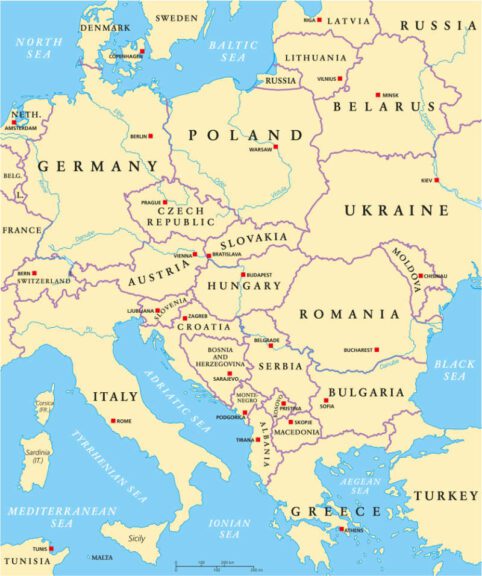
Hungary faces supply chain challenges in receiving Russian energy, as it is landlocked and has no direct border with Russia, meaning it must rely on neighbouring countries to continue to receive such imports. Slovakia, which also wishes to receive Russian gas, is in the same predicament. Ukraine terminated all Russian gas transit through its territory after the contract between Gazprom and Naftohaz expired in 2025.
Both countries have negotiated some supplies with Ukraine; however, Kiev has recently stated that its pipeline is inoperable after it was damaged in explosions (believed to have been caused by Ukraine). Both countries have agreed on supplies with Ukraine, but Kiev recently claimed that its gas pipeline had been disabled as a result of “Russian attacks.” Hungarian Prime Minister Viktor Orban stated that Budapest had satellite images that proved the Druzhba pipeline was operational. Peter Szijjarto directly accused Vladimir Zelensky of lying, emphasizing that there were no technical or engineering reasons for blocking supplies and that Kiev was acting solely for political reasons. In response to Kiev’s actions, Hungary and Slovakia have halted the supply of electricity from their networks to Ukraine.
The European Union’s Energy Conundrum
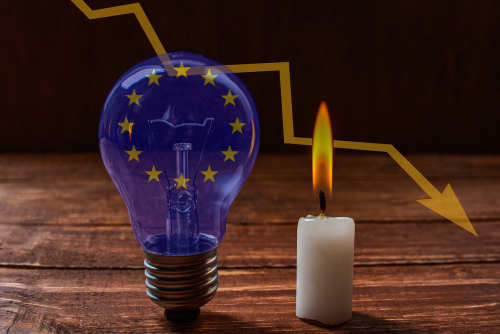
Meanwhile, the European Union, despite the sanctions, remains the largest buyer of natural gas and LNG from Russia.
Russian pipeline gas enters Turkey through the Turkish Stream and Blue Stream pipelines, which run along the bottom of the Black Sea. The Balkan Stream branches off from the Turkish Stream, carrying gas from Turkey to Bulgaria, Hungary, Greece, Serbia, and beyond.
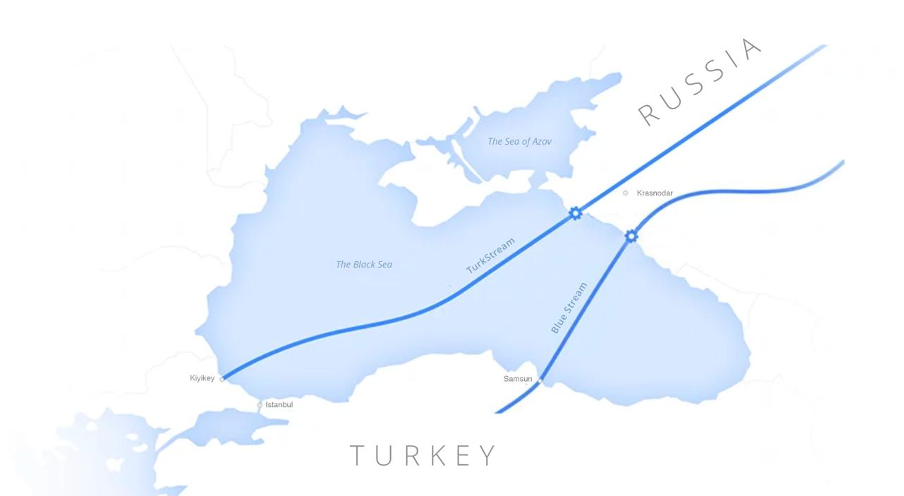
LNG tankers are also constantly moving between Russia and the EU. The tankers bring LNG to LNG terminals in Dunkirk (France), Zeebrugge (Belgium), and Bilbao (Spain). This gas is then transported to the European gas distribution network via pipelines from the port terminals.
However, the EU has enacted legislation to stop importing Russian pipeline gas and LNG via a phased, full ban taking effect by autumn 2027, or at the latest, 1 November 2027. Short-term contracts are prohibited from April 2026, while a complete phase-out of Russian LNG will occur from 1 January 2027.
Further complicating the European energy supply chain issues are three additional factors:
- President Putin has also stated that he informed the Turkish government of intelligence suggesting that Ukraine has plans to attack the Blue Stream and TurkStream pipelines. If this happened and was successful, this would disconnect the EU from Russian gas supplies and place Ukraine in the position of dictating to Brussels where and how it obtains Eurasian-sourced pipeline gas supplies.
- The war in Iran has additionally impacted EU LNG supplies, as the Strait of Hormuz has been closed and cut off EU energy supplies from the entire Middle East region. The EU has enough reserves to last an estimated 1 month, after which supplies will either need to be rationed or increased from Russia.
- President Putin has addressed the European situation by stating that Russia may preempt the European ban by ceasing energy supplies earlier. He said that Russia, as the supplier, was more interested in developing new international markets than continuing to serve markets that would be terminated in any event.
This means that if Russia does cease supplies to Europe, and the Iran conflict continues into April, the EU will have just the United States as a primary supplier and no other significant fallback plan in place.
A Diminished Europe In Russian Eyes
It should also be noted that the European Union, in placing sanctions on Russia, pressuring European investors to leave the Russian market, and cutting off imports from Russia and reducing exports from Russia, has reduced its economic relevance to Moscow from trade valued at about €174 billion in 2020 to about €58 billion in 2025, with this expected to drop substantially further when the EU stops buying Russian LNG (valued at €7.4 billion last year). This suggests that non-energy EU-Russia bilateral trade is worth about €50 billion. Given the current political environment, Brussels will also want to look at ways to reduce that still further—such as Russian fertilizer imports, worth another €1.74 billion last year, in addition to other reductions.
This means that the European Union’s total bilateral trade with Russia would be worth somewhere in the region of about €45-50 billion, which is roughly the same level as Russia’s bilateral trade with Belarus—which is also a growth market for Russia. Belarus has a population of just over 9 million as opposed to the EU’s 450.5 million.
Other developing bilateral trade relations that Russia has that are growing and by 2030 will be in excess of its bilateral trade exposure to the EU include:
- Continental Africa–Russia trade grew by 13% in 2025
- Eurasian Economic Union – Russia trade grew by 17% in 2025
- Gulf Cooperation Council–Russia trade grew by 15% in 2025
- ASEAN–Russia trade grew by 32% in 2025
- Latin America–Russia trade grew by 6.3% in 2025
- BRICS–Russia trade grew by 33% (both growth and BRICS enlargement).
This means that the European Union has financially diminished its relations and standing with Moscow and has given away its diplomatic and trade influence. With the EU politically difficult to deal with (Brussels versus 27 sovereign governments) plus the overall negative attitudes, Moscow—as can be seen in Putin’s recent comments—is additionally reluctant to deal with Europe. It makes far more sense for Moscow; it is less time-consuming and more likely to be productive in dealing with leaders from countries in Africa, Asia, and even Latin America than with the Europeans.
Although there is a caveat to this—as Hungary has just shown—keeping a door open to Moscow is probably a good idea when wanting to maintain issues such as energy security.