Русский









Russia is preparing to send a shipment of oil and petroleum products to Cuba, Moscow’s embassy in Havana has announced. The island is facing its worst energy crisis in years after the US doubled down on its campaign to cut off its energy supplies.
The fuel crisis intensified dramatically after US forces kidnapped Venezuelan President Nicolas Maduro in early January, severing oil supplies from Caracas, which had been one of Cuba’s main suppliers.
Washington subsequently threatened to impose tariffs on any country providing oil to Cuba, with Mexico later suspending crude shipments to the island. The US itself has maintained an economic embargo on the island since the 1960s.
The Russian Embassy in Cuba confirmed that the Caribbean island is facing “an acute shortage of oil and petroleum products,” adding that while the crisis has lasted for more than a year, the stop of supplies from Venezuela “has aggravated this situation.” The embassy said it is planning to send oil and petroleum products to Cuba in the near future as “humanitarian aid,” though without specifying the timeframe or volumes. Cuba is believed to be down to just three months’ reserves of oil supplies—while shipping from Novorossiysk, Russia, to Cuba generally takes approximately 40–50 days for sea freight (ocean cargo), including loading and unloading times.
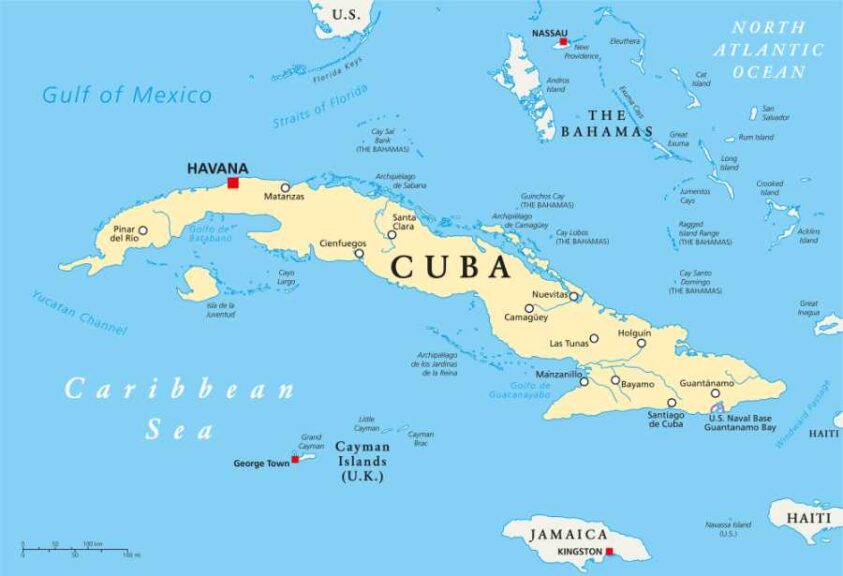
The last major Russian oil delivery to Cuba occurred in February 2025, when Moscow sent 100,000 tons through a state credit worth US$60 million approved by President Vladimir Putin. Cuba is estimated to consume 500 to 600 tons of fuel per day for its most critical needs and requires over 8 million tons of fuel per year to function normally. In addition, Russian officials reported that Moscow is assisting Cuba in developing its domestic oil reserves. While the island’s proven crude oil reserves are officially around 120 million barrels, the offshore zone of the North Cuba Basin is estimated to hold up to 20 billion barrels, or the equivalent of about 146.6 billion tonnes—enough to satisfy Cuba’s domestic needs based on existing usage for 650 years.
China is also assisting by installing extensive solar power projects, aiming to build 92 solar parks by 2028 and add 2,000 megawatts to the grid. This initiative, largely financed via Chinese development credits, features “Yangtze Ecology and Energy Development Co.” (YEED) building infrastructure, with the first major projects already connected to the grid in early 2025, thus reducing Cuba’s dependence on US-controlled oil supplies.
Moscow has condemned the US pressure campaign on Cuba as economic “strangulation” and “neocolonial practice” while reaffirming solidarity with the island. Mexico has also defied Washington by sending oil supplies to Cuba. Further to reports last week that Russia would continue its civilian flights to Cuba regardless, a decision has been made to curtail these for the time being. The most recent Russian tourists to Cuba have now returned home. Humanitarian flights between Russia and Cuba, however, are continuing.
US President Donald Trump said last month that the pressure campaign would force the Cuban leadership to “come to us and want to make a deal,” claiming that the island “would be free again.” However, humanitarian concerns are rising globally as Cuban hospitals are now having to close. water supplies are turned off due to a lack of fuel for pumping both fresh and sewage water, and the threat of a major pandemic such as cholera increases—with Washington likely to be seen as culpable if this does happen. Cuba is a partner nation to the BRICS and has a trade agreement with the CARICOM trade bloc and Mexico. It has a population of about 11 million.