
 Русский




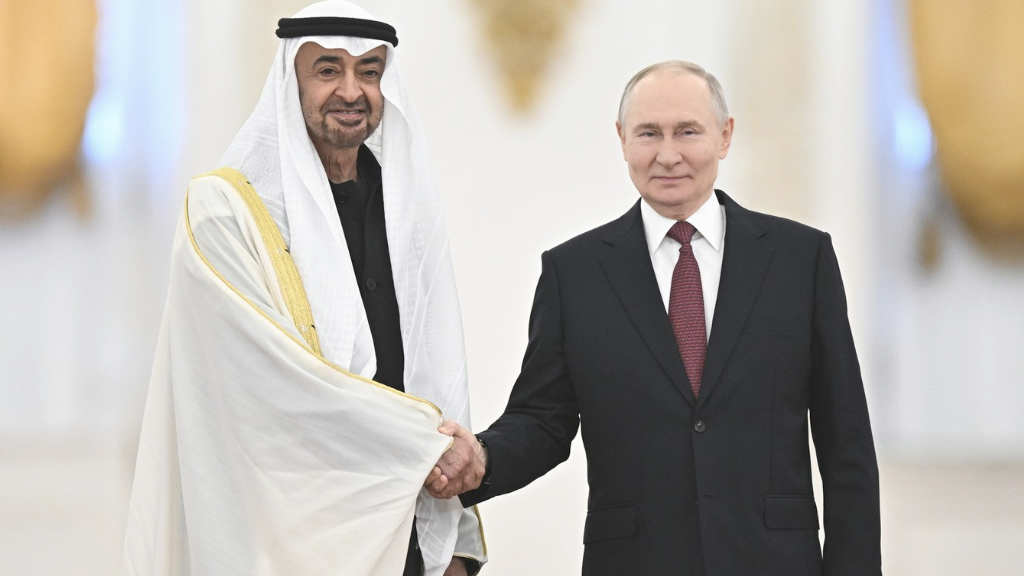

On January 29, 2026, the Kremlin once again became a focal point of global diplomacy as President Vladimir Putin held extensive talks with President of the United Arab Emirates (UAE) Sheikh Mohamed bin Zayed Al Nahyan. The geopolitical and economic substance of the meeting reflected the consolidation of a Russia-UAE strategic partnership at a moment of profound global uncertainty and regional complexities in the Eurasian region.
The timing of the visit coincided with the 55th anniversary of diplomatic relations between Moscow and Abu Dhabi, and unfolded amid heightened tensions around Iran, taking place against the backdrop of continued Russia-Ukraine-US trilateral diplomatic maneuvering, much of which has increasingly passed through neutral platforms in the Gulf, particularly the UAE. Yet beyond symbolism, the January 29 talks revealed a deeper reality: Russia and the UAE are no longer merely “partners of convenience.” They are increasingly becoming structural economic stakeholders in each other’s long-term development strategies.
Key Highlights of the Russia-UAE Talks
Historic Partnership: President Putin emphasized the milestone of 55 years of Russia-UAE diplomatic ties, praising Sheikh Mohamed bin Zayed for his personal contribution to the “multifaceted, mutually beneficial, and dynamically growing strategic partnership.” Active political dialogue exists at all levels, including governments, parliaments, ministries, and business communities, as well as cooperation in multilateral forums from the UN to regional platforms.
Economic and Trade Cooperation: Bilateral trade has been consistently growing, with the UAE recognized as Russia’s key trade partner in the Arab world. The Intergovernmental Commission, which last met in Dubai a month ago alongside the first Russia-Emirates Business Forum, has contributed to investment growth. Over 60 joint projects have been implemented through the Russian Direct Investment Fund and the UAE’s Mubadala Foundation. Sheikh Mohamed bin Zayed emphasized that the Trade in Services and Investment Agreement (August 2025) and the Comprehensive Economic Partnership Agreement with the Eurasian Economic Union will further strengthen commercial ties.
Technology and Industry Cooperation: Russia’s high-tech companies, including Yandex, are expanding in the UAE. Both leaders discussed initiatives in energy, industry, and innovation, reflecting growing technological and industrial collaboration.
Humanitarian, Educational, and Cultural Exchanges: Cultural ties continue to strengthen. In November 2025, the UAE hosted Days of Russian Culture. Russian tourism to the Emirates reached 1.5 million visitors in the first nine months of 2025, an 18% increase over the previous year. Educational cooperation includes the Russia-UAE Cooperation Centre at the Primakov Gymnasium, branches of the Plekhanov Russian University of Economics, and plans to open a Russian university and a youth science park under the Sirius Centre in the UAE.
Sports and Youth Engagement: Both leaders praised the UAE’s successful hosting of the second “Games of the Future” international multisport tournament in Abu Dhabi in December 2025. These events symbolize growing bilateral cooperation in sports and youth development.
Middle East and Regional Security Dialogue: The presidents discussed the Palestinian-Israeli conflict, humanitarian conditions in Gaza, and developments on the Iranian track. Putin highlighted the UAE’s support in facilitating prisoner exchanges in the Ukraine conflict and hosting trilateral security working group talks in Abu Dhabi last week.
Shared Strategic Vision for 2026: Sheikh Mohamed bin Zayed stressed the UAE’s commitment to political and diplomatic solutions to conflicts, stating: “It is my sincere hope that 2026 will be a year of progress and growth for Russia, and a year of shared prosperity in our bilateral relations.” Both leaders reaffirmed their commitment to strengthening bilateral cooperation across trade, investment, technology, culture, education, humanitarian initiatives, and regional security, underscoring a shared vision for long-term stability, prosperity, and peace. The UAE President said via his official account on X: “I discussed today in Moscow with President Putin, the long-standing strategic partnership relations between the UAE and Russia and joint work to strengthen them, especially in areas that support joint development, foremost of which is innovation, energy, sustainability, space, and culture.”
The talks concluded with mutual appreciation and a commitment to continue deepening the Russia-UAE partnership in all strategic areas, particularity trade, technology, humanitarian cooperation, and regional diplomacy.
The Business Delegations
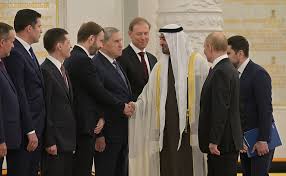
One of the most telling aspects of Sheikh Mohamed bin Zayed’s visit was not only who attended but how many sectors were represented. The Emirati delegation included leadership from the Abu Dhabi Investment Authority, Mubadala (the UAE sovereign wealth fund), the Central Bank of the UAE, the Ministry of Foreign Trade, advanced technology authorities, and senior national security officials.
Such a composition goes well beyond diplomatic courtesy. It signals that Abu Dhabi views relations with Russia not as episodic diplomacy, but as portfolio-level strategic engagement. This was not a political visit accompanied by business observers. It was a business-driven visit accompanied by politics.
From the Russian side, participation by the heads of Rosatom, Rostec, Sberbank, VTB, the Russian Direct Investment Fund (RDIF), the Russian Export Center, and key economic ministries underscored Moscow’s readiness to deepen institutional economic integration with the Gulf’s most capital-rich economy. The message was clear: Russia-UAE relations have entered a phase where capital, logistics, technology, and geopolitical trust intersect.
The Russian-Emirati talks brought together an unusually broad spectrum of state power: foreign policy and diplomacy, central government administration, economic planning, finance and banking, sovereign investment, industry and trade, energy and natural resources, nuclear and advanced technologies, high-tech manufacturing, international business coordination, and parliamentary politics. Alongside these civilian portfolios stood the hard-power pillars of national security, intelligence, military command, defense industry, and military-technical cooperation. From central banks and sovereign wealth funds to energy ministries, industrial giants, export agencies, and armed forces leadership, the delegations reflected a deliberate fusion of economic strategy and security policy signaling that cooperation is being framed not sector by sector, but system by system.
Sectoral Representation
Russia: 11 sectors represented (Foreign policy & diplomacy, government leadership & administration, economic policy & development, finance & banking, industry & trade, energy & natural resources, investment & sovereign funds, defense & security, high-tech & industrial manufacturing, international business & BRICS cooperation and political parties & parliament
UAE: 9 sectors represented (Presidential administration & governance, investment & sovereign wealth funds, foreign trade & economic diplomacy, industry & advanced technologies, finance & central banking, national security & intelligence, defense & armed forces, strategic studies & innovation policy and energy & industrial transformation.
Shared core focus: finance, investment, industry, energy, security, and strategic governance.
| Sector Category | Russian Side | Emirati Side |
| Foreign policy & diplomacy | Ministry of Foreign Affairs, ambassadors, presidential assistants | Foreign trade & economic diplomacy, ambassadors |
| Government leadership & administration | Deputy prime ministers, presidential administration, regional leadership | Presidential administration & governance |
| Economic policy & development | Ministry of Economic Development, presidential economic advisers | Strategic studies & innovation policy |
| Finance & banking | Central Bank of Russia, Sberbank, VTB | Central Bank of the UAE |
| Investment & sovereign funds | Russian Direct Investment Fund, business councils | Abu Dhabi Investment Authority |
| Industry & trade | Ministry of Industry and Trade, export agencies | Ministry of Industry and Advanced Technologies |
| Energy & natural resources | Ministry of Energy, Rosatom (nuclear energy) | Energy & industrial transformation |
| High-tech & advanced manufacturing | Rostec, high-tech industrial production | Advanced technologies & innovation policy |
| International business cooperation | BRICS Business Council, Russian-Emirati Business Council | – |
| Defense & security | General Staff, military-technical cooperation, security leadership | National security & intelligence |
| Defense & armed forces | Armed Forces senior command | Armed Forces command office |
| Political system & parliament | State Duma, international affairs leadership | – |
Russia – UAE Trade Growth
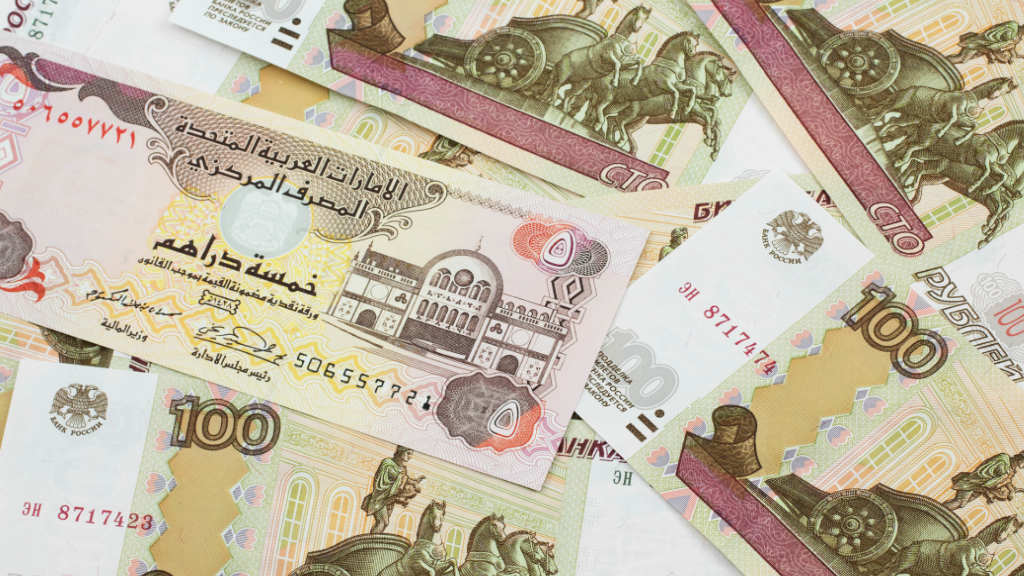
Over the past three years, bilateral trade between Russia and the UAE has transformed in both scale and structure. The UAE has firmly established itself as Russia’s largest trading partner in the Arab world, with trade volumes continuing to expand despite global turbulence.
According to official figures discussed during the talks, bilateral trade turnover exceeded US$11 billion in 2025, with steady growth momentum continuing into 2025-2026.
In the first half of 2025, trade turnover between Russia and the UAE reached US$6.6 billion, nearly double the previous year. In the first nine months, this figure had climbed to US$8.9 billion, with projections suggesting that 2025’s full-year trade has surpassed US$11 billion.
More importantly, the composition of trade has evolved. The volume of non-oil trade between the UAE and Russia over 5 years has grown four-fold. Russia’s exports to the UAE now include grain and agricultural products (wheat, barley, pulses), mineral fertilizers (fivefold growth in recent years), vegetable oils (exports rose 3.5 times in 2025 alone), metals and petrochemical products and civilian nuclear and energy-related technologies.
The United Arab Emirates has emerged as one of the most remarkable growth stories of 2026, 2027 & 2028. Russia’s trade with the UAE has expanded not only through direct transactions but also as a hub for settlements and re-exports.
Beyond the raw trade numbers, the broader business infrastructure played a crucial role. This is no longer transactional trade. It is trade embedded in geopolitical adaptation. For example, Russia increased vegetable oil exports to the UAE 3.5-fold in 2025 to US$26.5 million. In addition, The UAE imported 7,200 tonnes of chicken eggs worth US$8.6 million from Russia in 2025, becoming the leader in purchasing this Russian product in value terms. The company Logika Moloka, one of the leading producers of dairy products, baby food and plant-based beverages in Russia, exported products worth US$46.5 million in 2025, up 14% from the previous year.
Agricultural trade is showing steady growth and is expected to continue expanding in 2026, despite price fluctuations and ongoing payment-related challenges. This data highlights the tremendous cooperation potential in the UAE market for Russian agribusiness companies, which should be prioritized as a key direction for export expansion and long-term partnership.
Investment Cooperation: The Quiet Backbone of the Partnership
Perhaps the most structurally significant element of Russia-UAE relations lies in investment cooperation. Bilateral investments have grown significantly: Russian capital in the UAE exceeded US$30 billion in 2024, while Emirati investment in Russia reached US$16.8 billion.
Around 4,000 Russian companies are registered in the UAE. Estimates indicated that Russian business assets in the UAE had exceeded 1 trillion rubles (over US$12 billion) in 2025, underscoring why the Emirates was increasingly becoming one of Russia’s key economic footholds in the region.
At the same time, the UAE has emerged as a logistics gateway for Russian goods to Asia, Africa, and the Global South, a financial and re-export hub under conditions of fragmented global trade and an investment bridge connecting Russian enterprises with non-Western markets. The Russian Direct Investment Fund and Mubadala (the UAE sovereign wealth fund) have already implemented more than 60 joint projects, spanning infrastructure, healthcare, logistics, energy, and high technology. This partnership has become one of the most stable investment mechanisms Russia maintains with any foreign sovereign fund.
Unlike speculative capital, Emirati investment in Russia has followed three consistent principles: long-term horizon rather than short-term yield, asset-backed projects in infrastructure and production and political neutrality combined with economic pragmatism.
For Russia, this has strategic importance. At a time when Western capital markets remain closed, Gulf sovereign capital – particularly from Abu Dhabi – represents patient capital, capable of supporting industrial modernization rather than merely financial liquidity.
For the UAE, Russia offers access to: large-scale industrial assets, energy and nuclear technology, agricultural security, Arctic and northern logistics corridors, and Eurasian market depth via the EAEU. These discussions signal a shift towards institutionalized investment corridors, not ad hoc deals.
Energy: Beyond Oil Toward Strategic Energy Architecture
Energy cooperation remains key, however is no longer confined to hydrocarbons. While Russia and the UAE continue coordination within OPEC+ frameworks, the dialogue has expanded decisively into nuclear energy cooperation, advanced energy technologies, hydrogen development, grid infrastructure and energy storage.
Rosatom’s readiness to construct both large-scale and small modular nuclear power plants in the UAE reflects a strategic convergence. The UAE has expressed interest in participating as an investor in Rosatom’s international nuclear energy projects, including Turkiye’s Akkuyu Nuclear Power Plant and projects in Central Asia, reflecting the growing role of Emirati capital in Russia’s global energy, infrastructure, and logistics initiatives, as well as expanding financial cooperation through mechanisms such as Islamic Sukuk denominated bonds.
For Abu Dhabi, nuclear energy is about long-term energy security and technological sovereignty. For Russia, it reinforces its position as a global supplier of civilian nuclear solutions. This cooperation is not ideological. It is technical, pragmatic, and economically rational and precisely why it has endured geopolitical turbulence.
Technology and Industry: From Transactions to Ecosystems
One of the most underestimated aspects of Russia-UAE relations is technological cooperation. Russian high-tech firms including digital platforms and industrial technology providers have increasingly found receptive markets in the Emirates. The UAE, positioning itself as a global innovation hub, views technological diversification as essential to its post-oil strategy. The presence of the UAE Minister of Industry and Advanced Technologies at the Kremlin talks was not incidental. Industrial cooperation now includes smart logistics systems, artificial intelligence applications, industrial automation, aerospace and advanced manufacturing and digital public services. This dimension transforms the relationship from trade-based to ecosystem-based cooperation.
Why the Visit Was Economically Significant
The Putin-Sheikh Mohamed summit mattered because it reinforced three economic realities:
First, the UAE is becoming Russia’s primary economic gateway to the Global South, not merely as a trade hub, but as a capital allocator and logistics orchestrator.
Second, Russia offers the UAE strategic depth in food security, energy stability, and Eurasian connectivity at a time of global fragmentation.
Third, both countries recognize that economic resilience today depends on diversified partnerships rather than exclusive dependence on any single pole.
This mutual understanding explains the durability of the partnership. This was Sheikh Mohamed’s third consecutive visit – the first to join the Kazan BRICS summit in October 2024, the second the UAE-Russia Business Forum in December 2025, collectively marking a milestone in Eurasian economic connectivity, showcasing record trade growth and expanding investment flows.
The UAE and the Eurasian Economic Union (EAEU) signed a Comprehensive Economic Partnership Agreement (CEPA) on June 27, 2025, cutting tariffs on most goods to boost bilateral trade to over US$20 billion across key sectors.
Bilateral trade is estimated to surpass US$11.2 billion in 2025 and USS$12-14 billion in 2026 respectively, with both nations targeting US$20 billion by 2030. Strategic agreements, including the UAE-EAEU EPA and the Trade in Services and Investment Agreement, are driving diversification beyond hydrocarbons into technology, finance, logistics, AI, and agritech. With 4,000 Russian companies operating in the UAE and ₽1 trillion invested, Dubai has emerged as a key hub for Russian capital, innovation, and services, reinforcing a pragmatic, multipolar economic partnership.
The Geopolitical Layer: Iran & Ukraine
While economic discussions dominated the agenda, geopolitics formed the strategic backdrop. Three interconnected issues elevated the importance of the visit:
Iran Tensions
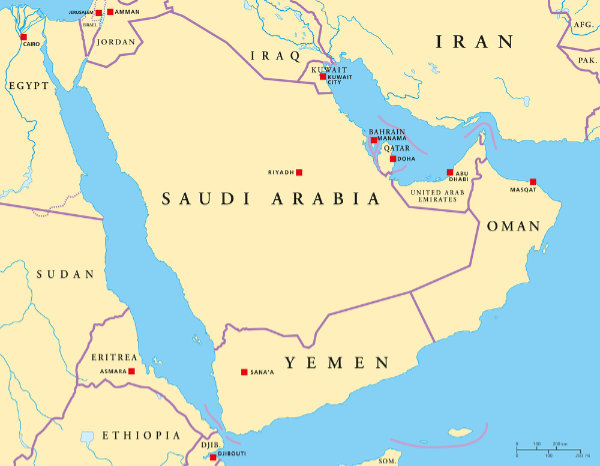
As tensions surrounding Iran intensified following renewed rhetoric from Washington, Moscow made clear its concern that any use of force could destabilize the entire region. The UAE’s role here is unique. Abu Dhabi maintains open channels with Tehran and Washington, Moscow and regional Gulf actors. This makes the UAE one of the few actors capable of facilitating de-escalation dialogue. President Putin’s explicit desire to discuss the Iranian track with Sheikh Mohamed bin Zayed underscores Russia’s recognition of the UAE as a regional stabilizer rather than a bloc actor.
Should an all-out escalation occur in the region, spillover effects are likely, with significant implications for the Gulf Cooperation Council (GCC) countries. If the United States targets Iran, it is likely that Iran would retaliate against U.S. military bases in the Middle East and GCC states. Further escalation could put major cities such as Dubai, Abu Dhabi and Doha at risk.
Russia has substantial strategic investments in the UAE, as well as key connectivity projects through the International North-South Transport Corridor (INSTC) that transit via Iran’s territory and UAE ports. Both Russia and the UAE therefore have a shared interest in de-escalating tensions and preventing any military escalation. It is essential for Russia, the UAE, and all GCC countries to prioritize de-escalation, dialogue, and diplomacy, while reassessing the strategic importance of the INSTC corridor under current regional conditions. Given the UAE’s positive relations with both Israel and the United States under the Abraham Accords, it is well-positioned to play a high-level diplomatic role in reducing tensions and facilitating regional stability. The UAE can serve as a bridge between conflicting parties, helping to manage risks to both strategic investments and regional security.
Ukraine-Russia-US Triangle
The UAE has quietly emerged as one of the most functional neutral platforms for humanitarian and technical dialogue related to the Ukraine crisis. From prisoner exchanges to behind-the-scenes contacts, Abu Dhabi has provided a politically neutral environment acceptable to multiple sides. This role was explicitly acknowledged by the Russian leadership during the talks. In an era when formal multilateral institutions are often paralyzed, such neutral platforms gain outsized importance.
Multipolar Alignment Without West-like Alliances
Crucially, Russia-UAE cooperation does not take the form of military or ideological alignment. Instead, it reflects a multipolar logic: states with differing political systems cooperating on the basis of sovereignty, economic interests, and strategic autonomy. This model, and not Western alliance politics nor rigid bloc confrontation defines the emerging global order.
Russia – UAE Eurasian Connectivity
Although not formally branded during the talks, connectivity remains a silent pillar of cooperation. The International North–South Transport Corridor (INSTC), linking Russia with the Middle East, South Asia, and beyond, aligns directly with Emirati logistics ambitions. For Russia, the INSTC represents diversification away from vulnerable routes, protection of strategic logistics assets, and long-term trade security. For the UAE, participation in Eurasian corridors enhances its role as a global logistics integrator, connecting maritime, rail, and land-based trade flows. Connectivity, in this sense, is not infrastructure but strategic trade insurance.
Summary
The Moscow summit produced no dramatic declarations, but instead confirmed the maturity of Russia-UAE relations, the institutional depth of economic cooperation, the strategic trust between leaderships, the role of the UAE as Russia’s key Arab economic partner and the shared interest in stability amid regional volatility. In modern geopolitics, continuity is often more powerful than spectacle. It is a partnership that is designed for navigating uncertainty.
The Putin-Mohammed bin Zayed talks also demonstrated that Russia and the UAE are constructing a relationship designed not for ideal conditions but for uncertainty. It is a relationship built on capital rather than ideology, logistics rather than rhetoric, sovereignty rather than alignment and pragmatism rather than pressure.
In a world increasingly defined by fragmentation, sanctions regimes, supply-chain insecurity, and geopolitical polarization, such partnerships are not secondary and they are foundational. January 29, 2026, did not mark a turning point through dramatic announcements. It marked something more durable: the normalization of strategic economic cooperation between Russia and the Gulf as a pillar of the emerging multipolar order. In today’s global environment, that may be the most significant development of all.
This article was written by MD Rana, a security, strategic and geopolitical affairs analyst focusing in Eurasian affairs. She may be reached at info@russiaspivottoasia.com