Русский








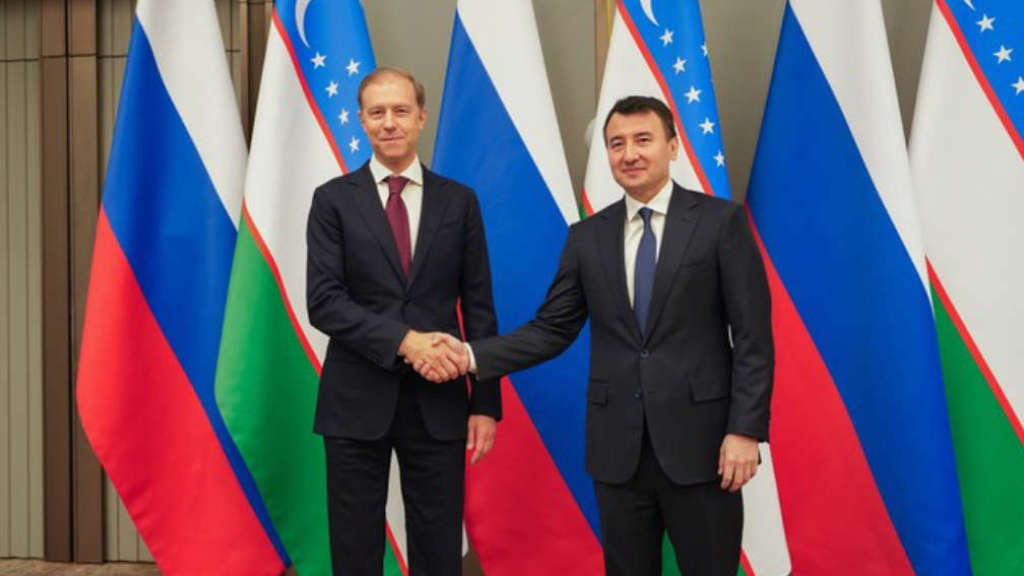

Russia’s First Deputy Prime Minister Denis Manturov has discussed with Uzbek President Shavkat Mirziyoyev the implementation of joint projects in priority sectors of the economy during a Russian business delegation and working visit to Tashkent.
Manturov said that “the key subjects of the discussion were the implementation of joint projects in priority economy sectors, interaction in education, science, and development of regional cooperation.”
Manturov also discussed “a wide range of issues of the development of bilateral ties” at a meeting with Uzbek Prime Minister Abdulla Aripov and additionally co-chaired the 26th meeting of the Russian-Uzbek Intergovernmental Commission for Economic Cooperation. Uzbek Deputy Prime Minister Zhamshid Khodzhayev was the co-chair.
In a busy schedule, Manturov took part in the plenary session of the Russian-Uzbek Business Forum held on the sidelines of the intergovernmental commission’s meeting.
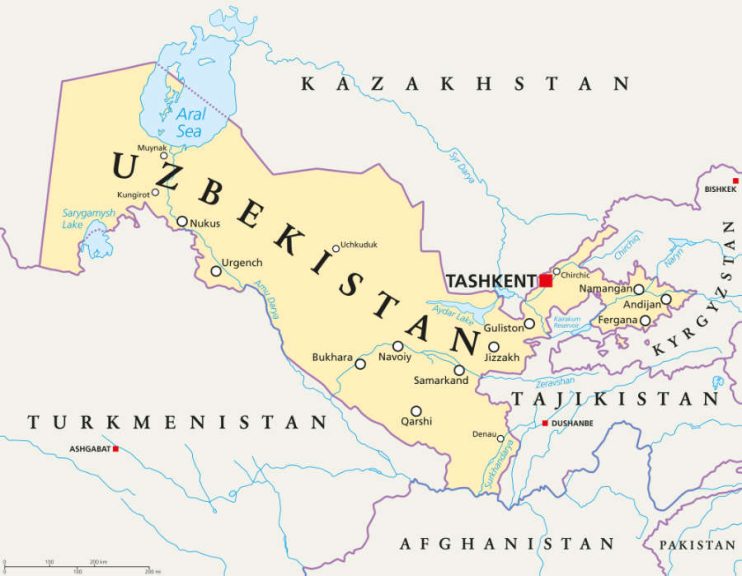
Russia and Uzbekistan are both members of the Commonwealth of Independent States, as well as the Shanghai Cooperation Organisation. Moscow is also keen for Tashkent to join the Eurasian Economic Union (EAEU) and further cement trade ties within the Eurasian region. That is still under discussion; however, there are positive signs— Uzbekistan joined the Eurasian Development Bank, the financial wing of the EAEU, earlier this year.
Uzbekistan also has a lucrative trade agreement with the European Union and is wary of shifting trade alliances until it is certain that what it may lose in European benefits will be replaced by Eurasian trade and profits. At present, Tashkent seems content to sit on the fence and use that deal and Russia’s wooing of it to extract improved concessions on both sides.
However, for practical purposes, Russia is the nearer partner, with Uzbekistan also fulfilling a role as a transit hub for Russian LNG.
Uzbekistan is also partially reliant on Russian agricultural imports, while the two sides are also discussing nuclear power investment agreements.
Uzbekistan’s economy will also change when the China-Kyrgyzstan-Uzbekistan (CKU) railway is completed, giving it direct rail access to markets in China—and vice versa. That also opens up new transit routes for Russia, meaning that Uzbekistan can also develop as a Russia-China transit hub—especially useful for trade consolidation, adding value, and other manufacturing and services functions between the two countries.
Manturov noted that the current portfolio of bilateral investment projects totals about US$55 billion and is in the process of being fully implemented. He said that over 3,000 Russian businesses had invested in Uzbekistan, representing about 20% of all foreign-owned companies in Uzbekistan.
Russian investment capital is certainly pouring in. According to Manturov, between January and October 2025, Russian investment into Uzbekistan reached US$4 billion.
He also noted the development of online trade, again underlining the concept of Uzbekistan as a regional trade hub. Manturov stated that “Russian electronic trading platforms are making a significant contribution to our trade and economic cooperation. During 2024, the volume of Uzbek-made products sold through the Wildberries platform amounted to US$605 million. Our marketplace has now become the largest distribution channel for Uzbek goods. Russia’s Wildberries (Ed: the Russian version of Amazon) also plans to build Uzbekistan’s largest logistics center with a total area of 100,000 square meters with investments exceeding ₽11 billion (US$143 million), creating 7,500 new local jobs. The phased commissioning of the warehouse complex is scheduled for the end of next year.”
Russia exports machinery and equipment, metallurgical industry products, lumber and building materials, chemical products, and agricultural products to Uzbekistan. Uzbekistan exports knitwear, cotton fabrics and yarn, textile products, fruits and vegetables, copper, zinc, inorganic chemical products, electronics, and electrical equipment to Russia.
Further Reading
Russia-Uzbekistan Trade & Investment Relations: November 2025 Update