
 Русский








Zambia views its relations with Russia as a “strategic partnership,” with cooperation already advancing in education, energy, and trade, Foreign Minister Mulambo Haimbe has said. He was speaking on the sidelines of the second Russia-Africa Ministerial Conference in Cairo.
Haimbe also said that more than 600 Zambian students are currently studying in Russia, many of them in high-demand technical fields, including nuclear energy. He welcomed Russia’s role in providing not just academic training but also infrastructure support in sectors such as energy.
In terms of trade development, Haimbe stated that although bilateral trade between Russia and Zambia currently totals only US$39 million, “the potential for that to grow is significant.” He pointed to Zambia’s young population, abundant mineral wealth, and strategic location as key assets. “Russia has got the technological know-how, they’ve got the advancement, and Zambia has got the young people, the mineral resource. It’s a partnership waiting to happen.”
Zambia imports mainly grains and fertilizers from Russia and exports tobacco and coffee.
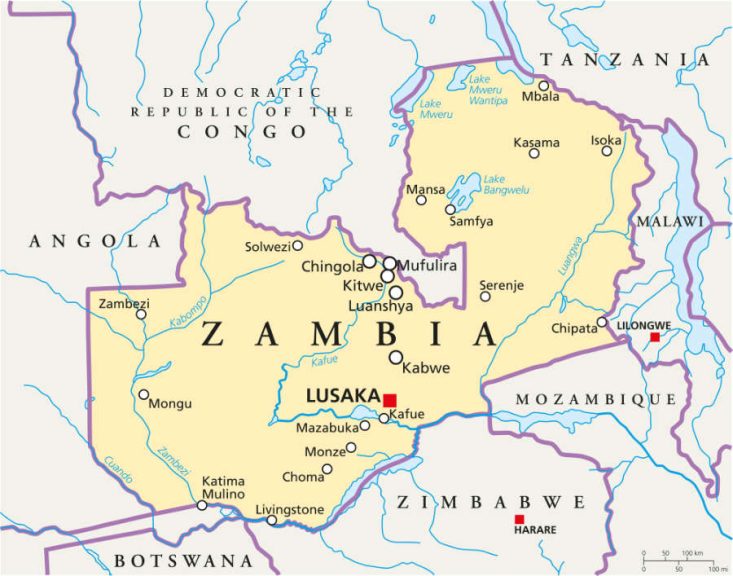
Haimbe highlighted Zambia’s central position in Southern Africa, noting that the country borders eight neighbors by land and one by water, creating access to a regional market of more than 500 million people. He expressed hope that technology transfer and trade cooperation with Russia could eventually scale across the wider African continent.
Haimbe also pointed to the long-standing historical ties between the two countries connected by more than 60 years of diplomatic relations, dating back to Zambia’s independence. “From the birth of our country, we have had all-weather friends in Russia.”
The potential for bilateral trade growth is certainly there. Zambia’s population is 21 million with a GDP (PPP) of US$143 billion, while GDP per capita (PPP) equals about US$4,000. Zambia is one of the largest copper producers globally. Zambia also has significant deposits of cobalt, zinc, lead, and gemstones, contributing to its mining sector.
Agriculture is another important sector, with maize, tobacco, cotton, sugar, and horticultural products being key exports. Livestock farming, particularly cattle and poultry, is also vital to the economy. The manufacturing sector, though still largely reliant on mining, focuses on food processing, beverages, cement production, textiles, and mineral processing.
Energy production in Zambia is predominantly based on hydropower, with the country leveraging its significant hydroelectric potential. The construction industry has seen steady growth, driven by investments in infrastructure projects like roads, housing, and commercial buildings. Tourism is emerging as a key sector, with Zambia’s rich wildlife, national parks, and the renowned Victoria Falls attracting visitors from around the world. The country is focusing on ecotourism to diversify and promote sustainable growth in this area.
Further Reading

Continue Reading