
 Русский





There has been a lot of noise about the Russian economy ‘collapsing’, and especially in speeches made last week by several European politicians. But is it? Here are nine Russian January 2026 economic indicators:
- The Bank of Russia reduced the interest rate for the sixth month in a row;
- Inflation has reduced to 6% – still high but on target to meet the desired 4% figure, and much lower than the 13% this time last year;
- Russia added US$216 billion to its sovereign wealth as a result of recent gold price rises;
- Oil revenues are down but were offset by increased gas sales (up 10%) last month;
- Non-energy exports were up 20% on the same time last year;
- January economic growth was 0.8%, not great, but better many European countries;
- The Russian PMI index rose to 52.1, also indicating an expansion of the economy;
- The Ruble rose in value against the US dollar to 75.5;
- Russia’s foreign trade rose from US$6.8 billion in November to US$10 billion in December 2025;
Other Dubious Statements About Russia
There were also several dubious statements made by European leaders in terms of describing the Russian economy. For example, German Chancellor Merz described the European Union economy as ‘being ten times the size of Russia’s’. However, this is incorrect. In Purchasing Power Parity (PPP) terms – which are used when comparing different economies and is the standard engaged by the World Bank and IMF, while the EU economy is larger than Russia’s – it is not ten times so. The actual 2025 performance data is as follows:
- European Union 2025 GDP (PPP): International dollars 30.18 trillion
- Russia 2025 GDP (PPP): International dollars: 7.6 trillion
The discrepancy with Merz’s statements about the respective economic size has arisen because Merz used the wrong comparison model when comparing economies. Yet this is the Chancellor of Germany! This means Merz is either incompetent or has made a deliberate attempt to deceive.
Why Do The Europeans Get It So Wrong?

There are several reasons why the European Union consistently under-estimates the size and strength of the Russian economy. They can be pin-pointed as follows:
Analytical Economic Disengagement

In 2022, major Western economic ratings institutions exited the Russian market, including Fitch, Standard and Poors, Moodys amongst others. The idea behind this was to prevent Russian companies from having risk assessments placed upon them by Western analysts, and thus cause problems for them in raising capital. While this had some initial effect, these rating agencies have now been replaced by Russian, Chinese and Indian ratings agencies, while the depth of professional analytical knowledge about Russian companies in the West has reduced to near zero.
This attitude has also been reflected at the diplomatic level. With sanctions and other unfriendly actions, many Western Embassies have downgraded their operations in Russia and sent commercial consuls to new postings elsewhere. Very few Western Embassies in Russia now have any trained commercial staff able to provide Russian economic or commercial activity overviews.
Automatic Acceptance Of Ukrainian Economic Intelligence
Much of the economic intelligence that the EU obtains about Russia comes from Russia’s adversary – Ukraine, with the Kyiv School of Economics (KSE) being a primary source. Although Moscow has its own, perfectly functional Higher School of Economics as well as numerous other resources such as the Russian Institute of Economics, the EU and UK have sanctioned the Principals of these facilities and has essentially ceased communications with them. Quite how wise it is to base economic intelligence from just one conflict participant but not the other seems to have resulted in high levels of bias.
The issue with the KSE, as we previously discussed here, is two fold. Firstly that is clearly cannot provide accurate data about the Russian economy – it has no resources in the country and has no connectivity with the Russian economic agencies – and that its controlling board of directors have their own vested commercial interests, most notably in Ukraine property development and weapons manufacturing. Yet what the KSE states about Ukraine and Russia is taken at face value and apparently, without questioning, as being 100% accurate.
Over-Reliance On The Energy Sector As Russia’s Main Strength
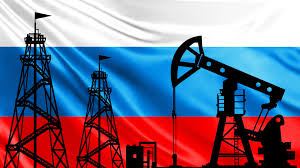
The intense targeting of Russian oil exports as an assumed vital key to damaging the Russian economy has also played a factor. Yet this is a flawed strategy – the Russian energy (oil and gas) revenue sector contributes about 20% of the country’s GDP, with crude oil making up about 15% of this total (gas makes up the rest).
This has lead to an over-reliance of Western data as concerns Russia’s oil exports in terms of providing analysis of its economy. It has meant that the likes of Moodys and S&P have instead been replaced by data provided by Brent Oil and similar crude oil global analysts, and the focus has subsequently been intensified onto this sector alone. This has manifested itself in an acute assessment of the price of crude oil and the impact of sanctions (such as on India) being vastly overstated when the Russian economy is considered. Just a drop on Russian oil flows then leads to statements of economic collapse.
While oil revenues is an important part of the Russian economy, it is resilient and has powerful clients. China for example needs to sustain – and increase its supply of oil from Russia in order to maintain its own economic growth and 5% annual targets. If it does not, it creates social order issues for Beijing. Attempts to disrupt that have very serious consequences and China will resist attempts to do so. It will not be persuaded by Europe that Ukraine matters more than the Chinese economy.
Other Russian Economic Strengths
Meanwhile, Russia has another 80% of GDP resources to develop, quite apart from its energy sector. It is, for example, the world’s largest exporter of grain, and fertilizer. New markets throughout the Middle East, Africa and Asia are all rapidly developing – both products reached record export volumes during 2025. Neither can they be easily sanctioned (although the EU has tried) in third party exports due to humanitarian concerns and general political outrage. As the developing world continues to grow – consumption is increasing.
With that goes increased supplies of higher value chain products, such as dairy, poultry, meats, and even veterinary pharmaceutical products. While Agriculture currently represents about 5% of the Russian economy – its share as a percentage of its GDP is growing. It should be noted that during the Soviet era, agriculture represented nearly 17% of the USSR’s total gross produce.
Other Russian GDP Fundamentals
A ‘War’ Economy
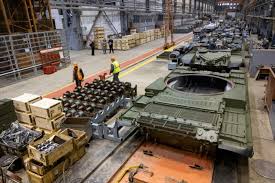
The Russian manufacturing sector represents about 12% of Russian GDP, and it is this particular sector that the West typically describes as being the Russian ‘War Economy’. That is partially true – the manufacturing sector in Russia has shown substantial growth – an estimated 8% per annum. This is one reason the Purchasing Managers Index (PMI) is positive, showing an expansion of the manufacturing economy. In the European Union, the average PMI indexes show a slight negative – or an overall contraction of the economy, although there are regional differences – Germany is currently in positive PMI territory while France is negative.
How much of Russia’s growth performance in its manufacturing sector is down to increased production of weapons and related military equipment, and how much of it is down to an increasingly assertive manufacturing export push and increased government spending on domestic infrastructure development is hard to say. Our own back of the envelope calculations would suggest 30% in all three segments. It is well known that Russia has increased its military budget for 2026, however it is also scheduled to decline thereafter. But suggesting all of Russia’s manufacturing sector is geared towards the military is incorrect. Nor is all of Russia’s military production destined for the front lines with Ukraine. For example, Russia is exporting SU-57 fighter jets to Algeria, Iran, and India, with orders also being negotiated with Vietnam, Kazakhstan, and North Korea.
In addition, Russia is the world’s fourth largest weapons exporter, a position it has both maintained and grown – global security concerns have meant an increased Russian order book for a huge range of equipment.
Russia’s Infrastructure Build
There are two other main reasons for Russia’s manufacturing boom: the Pivot to Asia (actually a Pivot to the Global South) has meant that Russia has become highly effective in reaching out to new markets on an international basis, and this had had an impact on manufacturing demand. These include items such as key, high-value, goods such as iron/steel products, aluminum, chemical products, and specialized machinery.
On top of this, Russian domestic demand has also increased, mainly due to a need to develop Russia’s export-driven infrastructure, meaning that road, rail, ports and aviation infrastructure and their component parts are all being put into place. For example, Russia is enlarging and upgrading 16 major seaports, has a national shipbuilding plan to construct 1,600 ships by 2035 and 4,000 ships by 2050 – mainly icebreakers, tankers and other maritime vessels to support its export agenda.
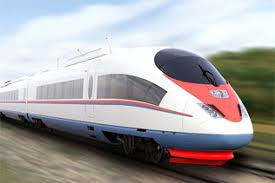
In addition, Russia is currently engaged in a massive, multi-year road construction and modernization program. The government has set a target of over 4,000 km of new road construction in addition to expanding, repairing, and upgrading tens of thousands of kilometers of existing roads under its current five-year plan. Russia is also in the process of building several major railway construction and expansion projects, with a primary focus on high-speed rail and increasing capacity on eastern routes. These include:
- The Moscow–St. Petersburg High-Speed Railway: Ground was broken in March 2024 for this 679 km line, which is designed for speeds of 360-400 km/h and is scheduled for completion in 2028.
- Trans-Siberian and BAM Expansion: Russian Railways is building over 2,000 km of extra track along the Trans-Siberian and Baikal-Amur Mainline (BAM) routes to boost capacity towards Asia.
- Regional Expansion Goals: The Russian government has set a target from 2027 for the annual launch of at least 700 km of new, upgraded railway sections per annum. Last year, Russia added 450km of new track.
- In aviation, Russia has plans to produce over 1,000 commercial aircraft to replace Western built planes, although it is true that this sector has been delayed due to the Ukraine conflict. Last year, 21 new Russian-built civil airliners entered service. In the meantime, Russia has signed contracts with Hindustan Aerospace to build 200 Sukhoi Superjets in India.
Made In Russia
The sanctions imposed by the West, and especially the withdrawal of Western products from Russia have fundamentally altered Russian consumer tastes. They have also fostered a new patriotism for Russian-made goods, which includes increased production of good quality consumables such as wines and cheese, as well as domestic high fashion brands including names such as Valentin Yudashkin, Ulyana Sergeenko, and Gosha Rubchinskiy amongst several others. This has also spread into cosmetics, with Natura Siberica now a significant Eurasian brand. Even McDonalds has been localised and is now under Russian management and ownership.
This is additionally underlined by the ‘Made In Russia’ campaign which at state level means to replace all aspects of foreign made products with Russian ones. At the most important end, this seeks to isolate Russia for any potential supply chain problems in all critical materials. This extends from the humble potato to semi-conductors, where the government is spending billions of dollars to develop its own self-contained industry. It is aiming towards 28nm by 2027-2030, and is developing local DUV/EUV lithography tools.
Russia has also introduced its own national software to replace Microsoft, with programmes such as MyOffice, Astra Linux and eXpress all now in substantial use. Another pointer is that Russia launched its first all-Russian component made Sukhoi Superjet last year. In terms of social media and similar apps, we recently discussed the new Russia equivalents here.
Referring back to the oft derided ‘War Economy’, Russia had planned for such eventualities many years earlier. One aspect that the West has unwittingly introduced into Russia as a result of its actions has been the fast-tracking of Russian national attitudes and energy to help offset this. The result, while still being impacted by sanctions and tariffs, has been that the entire Russian economy has been restructured away from the West, and especially from Europe. Every day that passes, the Russian economy disengages further, and the West’s latent inability to apparently accept that increases.
Summary
While it is true that the Russian economy is changing – it is not collapsing. What the Europeans are seeing as disengagement from Russia is automatically being assumed as bad for the Russian economy, almost a type of built-in assumption that without Europe, Russia cannot survive. In fact, quite apart from all the European misinformation, this is not true, and was proven as being so during the Cold War years. Even so, Europe in particular continues to overstate its importance to the Russian economy when plans have already been put into place to quite deliberately, relocate it. Europe’s ‘victory’ in disengaging from Russia in European eyes auto-equates to a destroyed Russian economy. But this is not the case.
In fact, the ‘war’ aspect to the Russian economy will, when the conflict is finally over, be likely to supercharge Russia’s economic development even further – with those military manufacturing resources to be put instead into further enhancing its domestic infrastructure and export development.