Русский









Russian pork producers, who have gained the right to export their products to the Philippines, expect to capture 10%-15% of that country’s imported pork market in the future.
Sergei Yushin, the head of Russia’s National Meat Association has stated that “Currently, only seven Russian enterprises are certified to supply pork to the Philippines. We are not setting the task of exporting large amounts immediately. First, we need to work out all issues of logistics, payments, customs, and veterinary documentation. But we would like to capture at least 10%-15% of the Philippines’ imported pork market over time. And I think that is achievable.”
He was commenting on a report from the Federal Service for Veterinary and Phytosanitary Surveillance (Rosselkhoznadzor) that the Philippines has permitted imports of Russian pork.
Russian pork producers have been actively studying the Philippine market since 2023, Yushin said. This year, leading Russian meat producers presented their products for the first time at the largest international exhibition in Manila. One of the heads of the Philippine Association of Meat Processors (PAMPI) visited Russia on two occasions. Yushin added, “It can be said that a lot of work was done long before the market’s opening. I hope the established contacts will help launch supplies in the shortest possible time.”
Speaking about factors that could restrain supplies, Yushin said that the main barrier to agricultural exports is the ongoing strengthening of the Russian ruble. “It must be understood that many other countries—our long-standing competitors—are present on the Philippine market. The currencies of a number of countries have depreciated significantly in recent years, which of course gives certain advantages. The second factor is the cost of credit resources. High interest rates do not allow us to offer our buyers more favorable payment terms. And this is one of the factors in the decision to purchase. But I hope we will gradually sort out these problems. We look at our future trade cooperation with the Philippines with great hope.”
The ruble has risen 45% against the US dollar this year, making it more expensive than US dollar-linked currencies, such as the Chinese RMB. Additionally, interest rates in Russia have been high, dealing with the consequences of inflation, and are currently at 16%, making it expensive to finance exports. There are expectations the situation will improve during 2026.
Yushin links the prospects for increasing supplies to the fact that the population of the Philippines is growing rapidly, by almost 2 million people per year. “GDP growth rates are significantly above world levels—approximately 5%-7% per year. The average age of the population is 25. Moreover, pork is the favourite type of meat among Filipinos. A few years ago, annual pork imports were approximately 350,000-400,000 tonnes. But due to numerous outbreaks of African swine fever, domestic production suffered greatly, so this year supplies of this meat from abroad may exceed 1 million tonnes. There is every reason to assume that in the coming years, purchases will remain at this high level.”
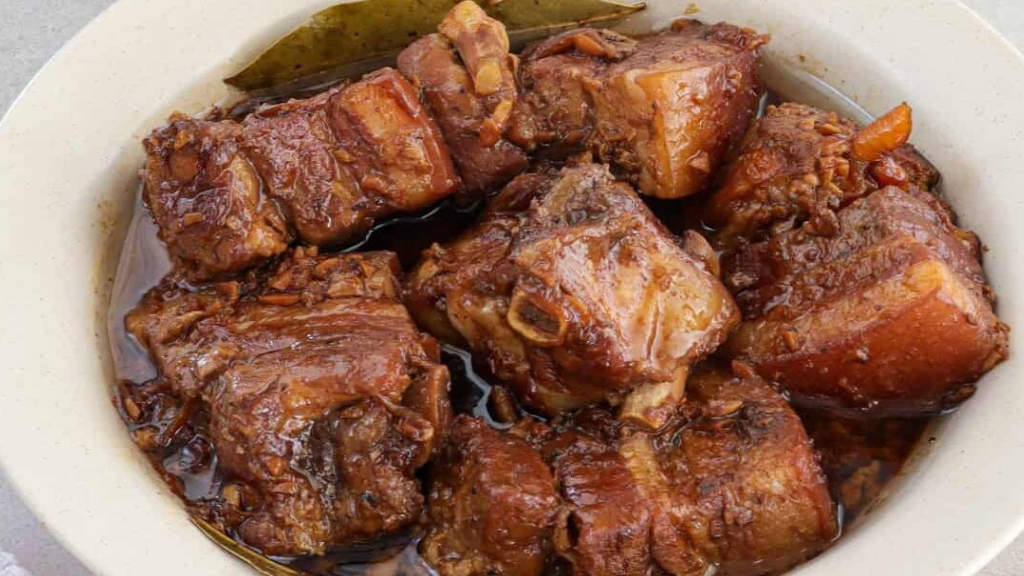
The peculiarities of the local cuisine are such that for some bone-in cuts, Filipinos are willing to pay more than for boneless meat. Someone might say this is a paradox, but this is often how it is in world trade. There is a belief that the bone adds flavour to local stews and related dishes such as Pork Adobo.
Yushin said that “From an economic point of view, this is a new incentive for investment in pig farming and increasing production levels. Russia this year will supply about 400,000 tonnes of live pigs, pork, and pork by-products to international markets, worth approximately US$1 billion, meaning we are entering the top five largest global exporters. Imports of this meat into Russia are practically zero; consumption has already reached a high level—almost 31 kg per person per year, so the only real direction for development is export.”
Pork consumption per capita in the Philippines is about 14 kg per person, with a population of 117.26 million and an annual population growth rate of 1.58%.
Further Reading
Philippines Resumes Russian Poultry Imports