 Русский




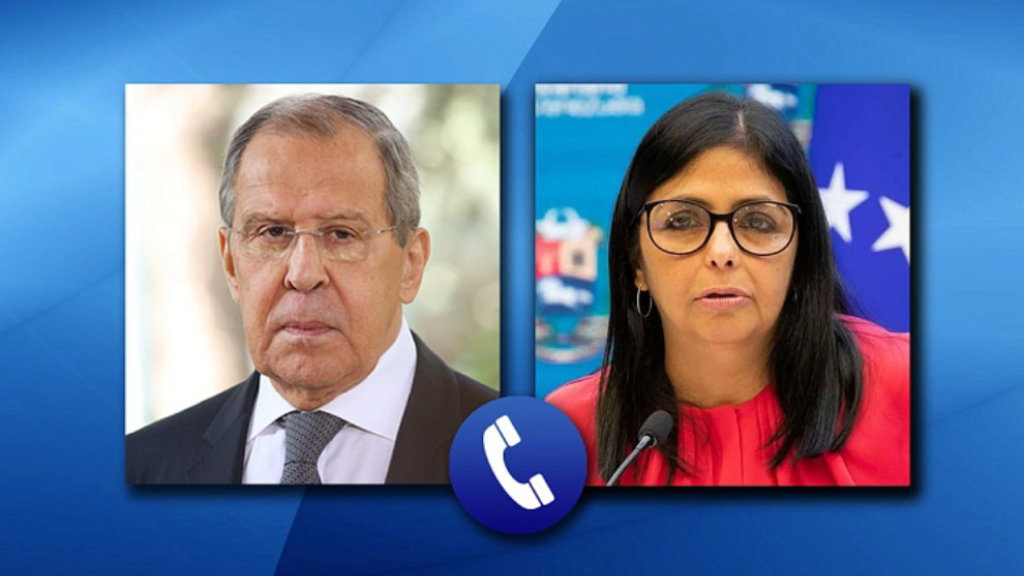

Russia’s Foreign Minister, Sergey Lavrov, has held a phone call with Venezuelan Executive Vice President Delcy Rodriguez, shortly after US President Donald Trump announced that following attacks on Venezuela, American special forces had captured and taken the nation’s leader, Nicolas Maduro, out of the country and forcibly taken him prisoner to the United States.
“Lavrov expressed firm solidarity with the Venezuelan people in the face of armed aggression,” the Foreign Ministry said in a statement, adding that Moscow will continue to support Venezuela’s policy of defending the country’s sovereignty and national interests. Both Lavrov and Rodriguez “expressed their support for preventing further escalation and for finding a way out of the situation through dialogue.” the ministry said. Both sides also voiced commitment to furthering the Russia-Venezuela Strategic Partnership Agreement.
Under the Venezuelan Constitution, Rodriguez is next in line of succession if the president is no longer capable of fulfilling his duties. However, Trump has stressed that the US will be involved in deciding who rules in Venezuela. He has said that “We can’t take a chance on letting somebody else run and just take over where Maduro left off. We’re making that decision now. The United States will run Venezuela.” Trump has also stated that the exiled opposition leader, and recent Nobel peace prize winner, Maria Corina Machado is not fit for office and has ‘no support or respect.’
Trump has stated that Maduro was being held captive in New York and would face US charges concerning drug trafficking, weapons possession and membership of a criminal organisation. It remains unclear on what grounds the United States can press charges against Maduro if these alleged offenses were not committed in the United States itself. If these offenses are alleged to have taken place in Venezuela, but are punishable in the United States, this means that the US is enforcing legal sovereignty over Venezuela. This has significant implications for the rest of Central and South America. Trump has also warned the Presidents of Mexico, Colombia and Cuba against criticising US actions in Venezuela and implied further action may be taken by the United States against these countries. In terms of his Presidency, Trump has substantial political and financial support from the US energy sector.
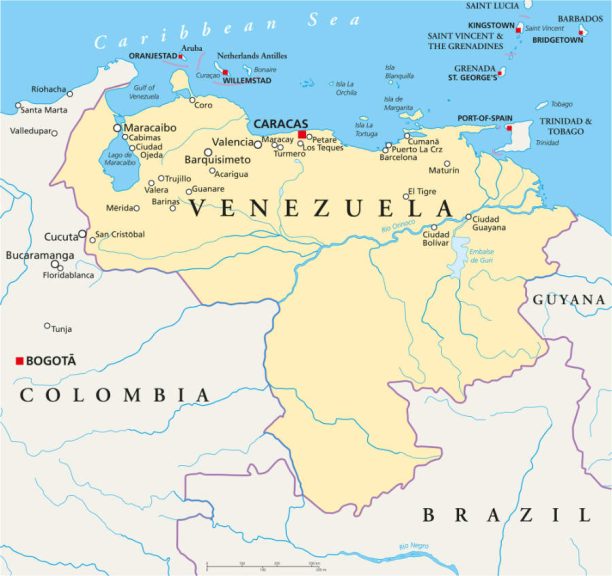
Moscow has urged Washington to release the captured president and his wife.
“We emphasize the need to create conditions for resolving any existing issues between the United States and Venezuela through dialogue.” the Foreign Ministry said in a statement.
The situation remains highly fluid amid uncertainty as to whether the current Maduro administration will remain in power, whether further US attacks on Caracas and the incumbent government are imminent, and if not, who will effectively run Venezuela. There is also the new possibility of US attacks against other LatAm countries it feels are unfriendly towards it – and the international reaction.
Venezuela has the world’s highest oil reserves at 18.17% of the global total, and the world’s eighth largest gas reserves at 2.91%. The United States has 2.13% of global oil reserves and 4.65% of global gas reserves. Russia has 4.85% of global oil reserves and 24.39% of global gas reserves.
Further Reading
Venezuela Extends Russian Oil Joint Venture Agreements By 15 Years