 Русский





The increasingly confident moves by Russian exporters to seek out new markets has gained another pioneer with Russian milk producer EkoNiva Group, which began exporting dried fat-free milk to non-CIS countries in autumn last year, shipping its first batch of the product to Algeria.
The company said that the batch was designated for a local Algerian producer of ready-to-eat dairy products, is preparing another larger batch for export to the same buyer and intends to regularly export to the country.
In other markets, this February, EkoNiva shipped its second batch of dried fat-free milk to the UAE, to which it first began exports in October last year with a 50-tonne batch of the product. The company stated that “Our task for the coming months is to arrange regular exports and grow export volumes. We are also in discussions with our partner company on opportunities for exporting dried milk to Qatar and Saudi Arabia.”
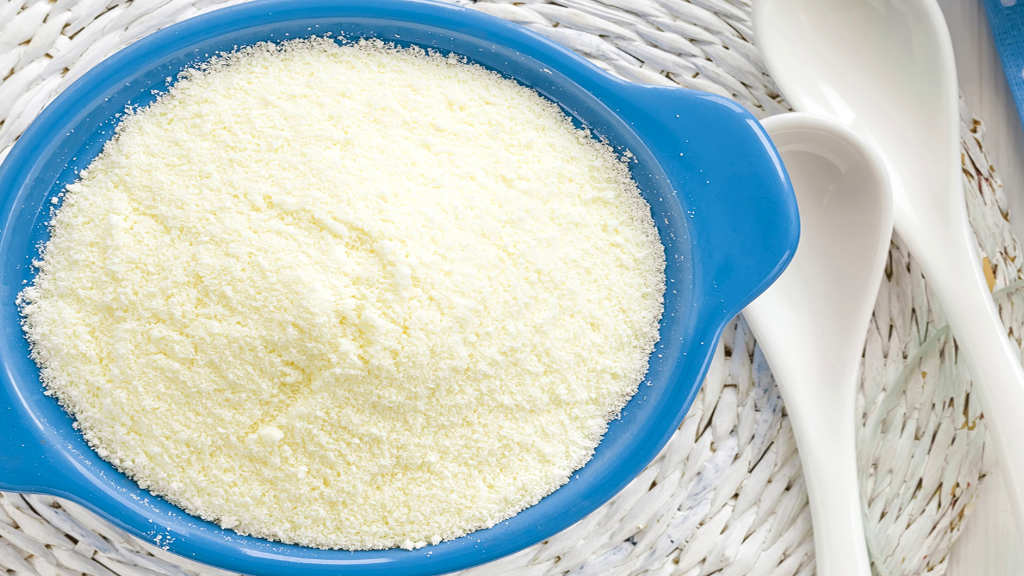
Dried fat-free milk is used to produce ice cream, sour cream, curd cheese and yoghurts. It is also one of the basic components in baby foods.
EkoNiva began testing out dried fat-free milk exports in 2023, sending its first batch to Kazakhstan. In 2024, it launched regular exports to Georgia and Armenia. From 2025 onwards, EkoNiva has been working to arrange dried fat-free milk exports to non-CIS countries and intends to open up new supply routes.
Non-fat dry milk (NFDM) is a versatile, long-lasting pantry staple used to fortify nutrition, enhance texture, and extend shelf life in cooking and baking. It acts as a direct substitute for fluid milk in recipes, a creamy addition to soups, smoothies, and coffee, and a stabilizer in dairy products, desserts, and bakery goods.
The company has farms and processing plants in 13 Russian regions, including the Voronezh, Kaluga, Kursk, Leningrad, Moscow, Novosibirsk, Orenburg, Ryazan, Samara, and Tyumen regions, as well as in the Altai territory, Bashkortostan and Tatarstan. Its main dairy division unites 42 modern livestock complexes, including those under construction. It has over 250,000 head of cattle on average, of which half are forage-fed cows. In 2025, the group produced 1.45 million tonnes of raw milk in physical weight, up 7% from 1.35 million tonnes in 2024. In standard weight, for milk with 3.7% fat and 3.2% protein, the figure grew 11% from 1.44 million tonnes in 2024 to 1.6 million tonnes in 2025. EkoNiva has also been developing milk processing since 2013, with five processing plants under its management.
The holding also operates in breeding, beef cattle, seed production, crop farming and organic agriculture. It owns 632,400 hectares of farmland, making it one of the largest agricultural landowners in Russia.