 Русский





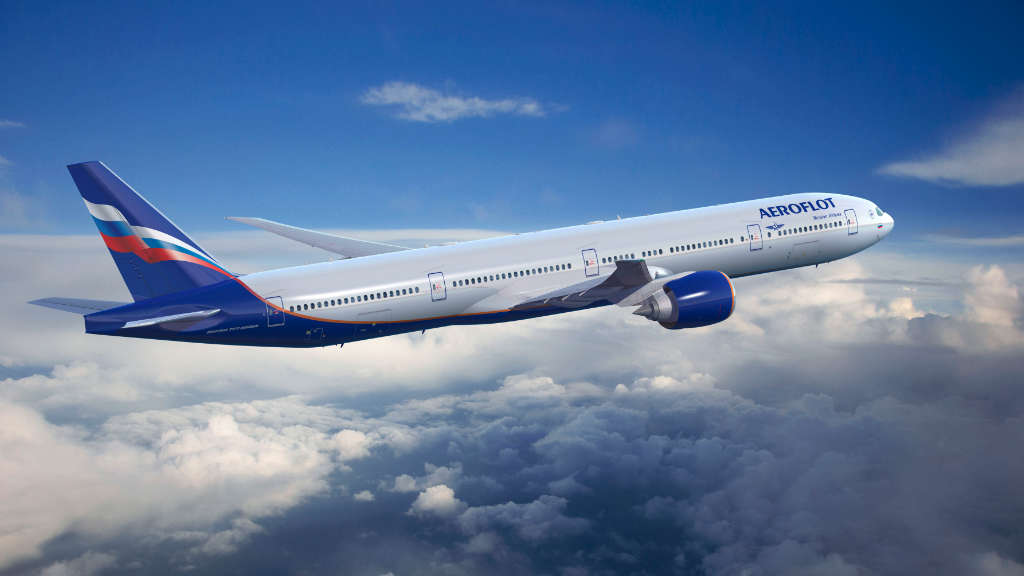

Russia’s relations with several countries part of the Shanghai Cooperation Organisation, Commonwealth of Independent States and part of Moscow’s on-going Asian diplomatic strategy are paying dividends. Thousands of Russians are able to take to the skies to Southeast Asia while thousands of Europeans are disconnected due to conflict in the Middle East.
The difference adequately illustrates Russia’s alternatives when compared to Europe, which has a collective 2,630km border with Russia and Belarus to the east – that it no longer uses due to sanctions and closures. European routes to Southeast Asia are also hugely curtailed due to military operations in the entire gulf region. Tens of thousands of European passengers have been stranded and thousands of commercial flights cancelled. This is not the case for Russian travellers.
With the Russian overseas winter vacation holiday season now in full swing – especially after what has been a substantial 2025/26 winter in Russia – aviation routes that used to pass through the Middle East region have now shifted to the east, bypassing Gulf airspace and using Eurasian corridors instead. There is negligible difference in the flying times.
As can be seen in the map below, the entire southern route for European-Asian aviation connectivity has been effectively cancelled due to conflict across the Middle East. The only currently viable route is the northern route.
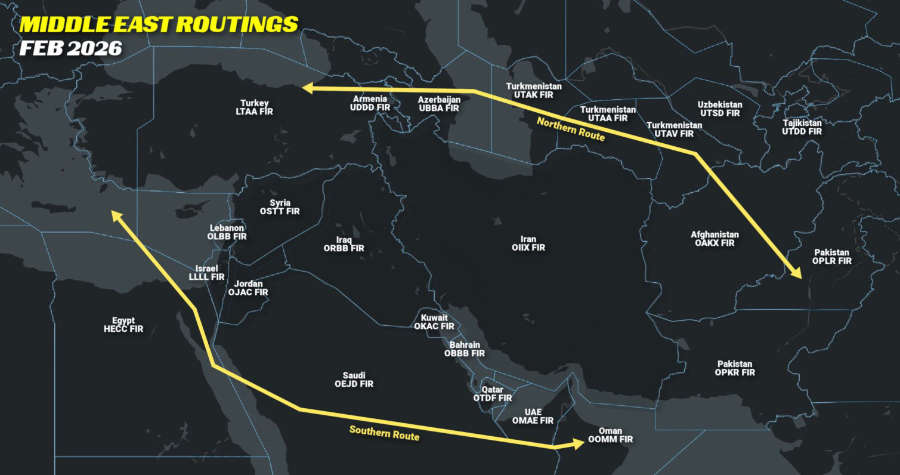
This means that Russian carriers can utilise alternative Eurasian aviation corridors to Southeast Asian destinations such as the Maldives, Sri Lanka, Thailand, Malaysia, Indonesia and Vietnam by using the Northern routes. These head east across Russia either into Western Kazakhstan and Uzbekistan, (or via the Caspian Sea to Turkmenistan), head across Afghanistan and Pakistan, then transit India to access other regional destinations to the south and east.
Russia, Kazakhstan and Uzbekistan are all part of the Commonwealth of Independent States, with Turkmenistan a partner nation. India is part of BRICS, and along with Pakistan and the three mentioned countries are also full members of the Shanghai Cooperation Organisation, which also includes Afghanistan as a partner. Moscow also has full diplomatic relations with Kabul.
The only downside to this route is that there is no commercial Air Traffic Control (ATC) in Afghanistan, meaning pilots must operate on a self-separating basis using “see and avoid” (VFR), radio position reports on the published FIR frequency, standard altitude rules, and TCAS anti-collision radar. Airlines must also confirm their flight paths with the Taliban 72 hours before transiting the country, however only Russia maintains full diplomatic relations with Afghanistan. In contrast, the European Union has imposed sanctions on the Taliban – effectively cutting off cooperation.
These routes, if the Middle East conflict continues, could mean the development of alternative regional transit hot spots for refuelling and local market development. These could include Mary in Turkmenistan, which already services flights to Bangkok, as well as Bukhara in Uzbekistan, which offers services to Istanbul.