Русский








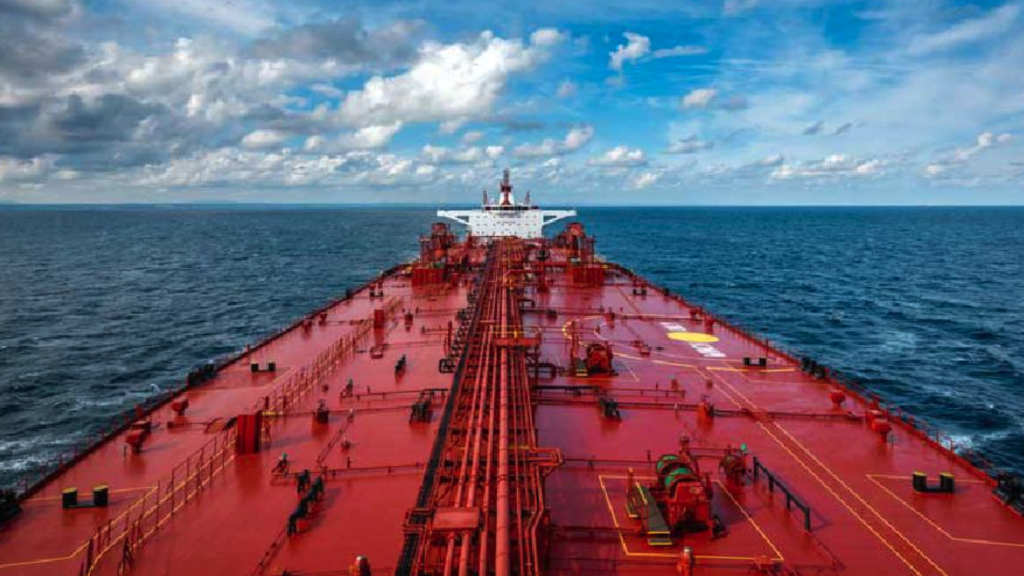

A structural shift is unfolding across South Asia’s energy and geopolitical landscape. What began as a crisis response to disruptions in West Asia – particularly instability surrounding Iran and the Strait of Hormuz – has evolved into a deeper realignment of trade flows, diplomatic priorities, and strategic partnerships. At the center of this transformation is Russia, leveraging its resource base, pricing flexibility, and geopolitical positioning to re-anchor itself as a key energy and economic partner for India, Pakistan, Bangladesh, and Sri Lanka.
Recent high-level diplomatic engagements led by Deputy Foreign Minister Andrey Rudenko, spanning New Delhi and Colombo, are not isolated events. Rather, they form part of a coordinated, multi-layered Russian strategy aimed at embedding itself within South Asia’s energy security frameworks. As global markets fragment under sanctions pressure and supply disruptions, Moscow is repositioning from a constrained exporter to a strategic systems-builder in the Global South.
India: The Strategic Core of Russia’s Asian Energy Pivot
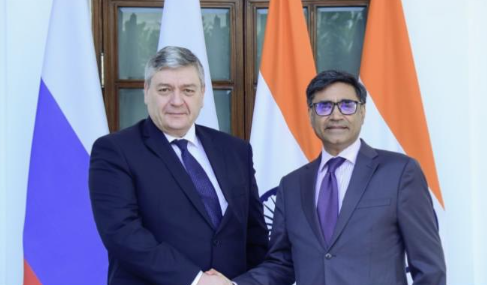
India’s Foreign Secretary Vikram Misri held Foreign Office Consultations with Russian Deputy Foreign Minister Andrey Rudenko in New Delhi on Mrach 30.
India remains the anchor of Russia’s South Asia strategy, both in scale and in structural significance. The data underscores this reality. In March 2026, India’s imports of Russian crude surged to approximately 2.06 million barrels per day, nearly doubling month-on-month and approaching historical highs. This expansion occurred despite a broader decline in India’s total crude imports, highlighting a deliberate substitution effect driven by supply shocks in the Middle East.
The disruption of oil flows via the Strait of Hormuz – which carries nearly half of India’s oil imports transit – has forced New Delhi to rapidly recalibrate. Iraq, previously supplying around 1 million b/d, became inaccessible, while Saudi and Kuwaiti volumes declined sharply. Russian Urals crude, compatible with Indian refinery configurations, emerged as the most efficient replacement. More telling is the shift in pricing dynamics. Russian Urals crude, once discounted, has recently traded at a premium of up to US$8 per barrel over Brent, signalling tightening supply in medium-sour crude markets. This reversal reflects not only constrained availability but also the strategic value of Russian barrels in a disrupted market.
Beyond crude, discussions to resume direct LNG exports from Russia to India indicate a deepening of energy interdependence. According to Reuters, Russia may soon resume direct LNG deliveries to India, with an agreement expected within weeks pending final approval. India is in talks with Russia to resume direct liquefied natural gas (LNG) imports for the first time since the Ukraine conflict.
Talks on this took place between Pavel Sorokin, Russia’s First Deputy Minister of Energy, and Hardeep Singh Puri, the Indian the Minister of Petroleum and Natural Gas, during a March 19 meeting in New Delhi. India, which imports 85% of its oil and nearly half its natural gas, is seeking to diversify supply sources amid persistent volatility. Russian LNG, if secured under long-term contracts, could significantly reshape India’s gas supply architecture, particularly for industrial and fertilizer sectors. Russian companies have opportunities for the steady increase of oil and liquefied natural gas (LNG) supplies to India, the Russian government said, referring to First Deputy Prime Minister Denis Manturov in conclusion of his visit to India.
“Particular attention was paid to cooperation in the oil and gas sphere. Denis Manturov confirmed that Russian companies have opportunities for consistent increase of supplies of oil and liquefied natural gas to the Indian market,” the Russian government said. Russia increased supplies of highly sought-after mineral fertilizers to India by 40% as of the end of 2025 and is ready to continue meeting its needs for such products. Amid rising global fertilizer supply risks, a joint urea production project is also being explored, which could serve as a lifeline for Indian agricultural production.
Denis Manturov met Indian Prime Minister Narendra Modi in New Delhi for high-level discussions covering defence, energy, trade, and other bilateral areas. The talks focused on strengthening the India–Russia strategic partnership, with Modi noting progress since Vladimir Putin’s December 2025 visit. Manturov also held meetings with Nirmala Sitharaman, India’s Finance Minister, and S. Jaishankar, the Foreign Affairs Minister, to further deepen bilateral trade cooperation. At the institutional level, both countries are moving toward US$100 billion in bilateral trade by 2030, up from approximately US$69 billion. Notably, nearly 96% of this trade is already conducted in national currencies, reflecting a systemic shift toward de-dollarized financial mechanisms.
High-Level Diplomacy: Building a Structured Strategic Corridor
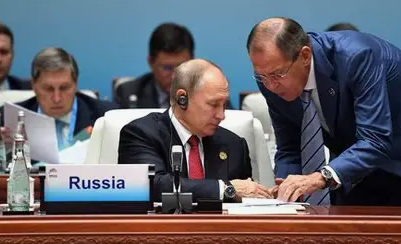
What distinguishes Russia’s current engagement with India is the density and synchronization of high-level political coordination underpinning economic ties. The early April 2026 visit of First Deputy Prime Minister Denis Manturov to New Delhi underscores this trajectory. His discussions focused on expanding trade, strengthening logistics resilience, and improving financial settlement systems, key pillars for sustaining long-term energy flows under sanctions constraints. This signals a transition from opportunistic trade to institutionalized economic integration.
Diplomatic continuity further reinforces this shift. Russian Foreign Minister Sergey Lavrov is scheduled to visit India on May 14-15, 2026, on the sidelines of the BRICS Foreign Ministers’ Meeting, with dedicated bilateral engagements planned. This will be followed, potentially, by a summit-level visit by Prime Minister Narendra Modi to Russia later in 2026, consolidating strategic alignment at the highest political level.
Together, these engagements point to the emergence of a Russia-India strategic corridor, integrating energy trade with transport connectivity (notably the Northern Sea Route, the Chennai-Vladivostok maritime corridor, the International North-South Transport Corridor), financial innovation, and multilateral coordination within BRICS and other Global South platforms. President Vladimir Putin is expected to participate in the BRICS summit scheduled in September in India, Andrey Rudenko, Russia’s Deputy Foreign Minister, said in Colombo on April 1. He added that Moscow would support New Delhi’s efforts to forge a consensus among members. Further, Russia will honour all existing contracts on oil, he said, following Russia’s decision to ban export of gasoline with effect from April 1, 2026, owing to price fluctuations.
Sri Lanka: From Energy Crisis to Strategic Opportunity
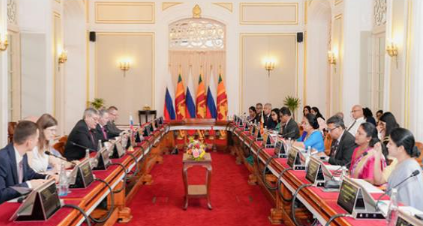
Sri Lanka and Russia convened the 11th Round of Bilateral Political Consultations on April 2 at the Sri Lankan Ministry of Foreign Affairs in Colombo
Sri Lanka represents a different but equally significant dimension of Russia’s South Asia engagement, shaped by acute vulnerability and long-term opportunity. The 11th round of bilateral political consultations in Colombo, co-chaired by Andrey Rudenko, placed energy cooperation at the center of discussions. Petroleum, coal, fertilizer, and broader trade integration were identified as priority areas. Importantly, both sides agreed to establish benchmarks for expanding bilateral trade, signaling intent to move beyond ad hoc transactions.
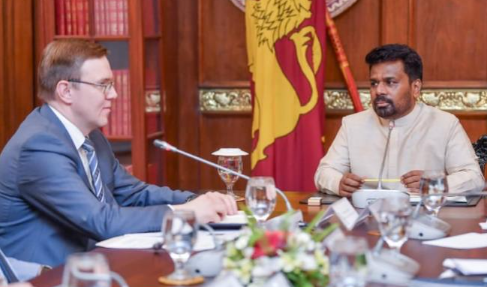
Operationally, the groundwork had already been laid by the visit of Russian Deputy Energy Minister Roman Marshavin, whose discussions focused on immediate fuel supply arrangements and logistical coordination. Russia’s willingness to supply fuel, gas, and coal regardless of crisis conditions positions it as a reliable supplier amid market volatility.
The Sri Lanka’s President’s press service said that “Russia is prepared to support Sri Lanka in any form not only in the energy sector but also through technical, machinery and other means.” Concrete developments are already visible. The Ceylon Petroleum Corporation has confirmed arrangements to import Russian fuel, with shipments of diesel and jet fuel scheduled for April and May 2026.
However, logistical constraints, including congestion at unloading terminals, continue to affect delivery timelines. At the same time, geopolitical constraints remain significant. Sanctions-related uncertainties particularly around U.S. policy timelines complicate procurement efforts. Sri Lankan policymakers have acknowledged that accessing Russian crude depends on navigating a narrow and evolving regulatory window. Officials said that payment mechanisms remain under discussion due to Moscow’s preference for transactions in roubles or yuan.
Sri Lanka meanwhile could expand trade with Russia via Vladivostok using existing aviation and maritime routes, Transport Minister Bimal Rathnayake said, highlighting the island’s strategic location along major Indian Ocean shipping lanes. He noted that well-established air connections could enable immediate cargo operations, while maritime links and Hambantota Port’s growing capacity support broader Eurasian trade expansion.
Yet, Russia’s engagement goes beyond hydrocarbons. Proposals to deploy floating small modular nuclear power plants (SMRs) introduce a high-value technological dimension to the partnership. Such projects, if realized, would provide stable baseload power while embedding long-term Russian technological presence in Sri Lanka’s energy infrastructure. In 2025, Sri Lanka had a GDP (PPP) of US$422 billion, a population of 23 million, and bilateral trade with Russia of US$700 million in 2024. With the 70th anniversary of diplomatic relations in 2027 approaching, both sides are aligning toward a multi-year roadmap that integrates energy, trade, and technological cooperation.
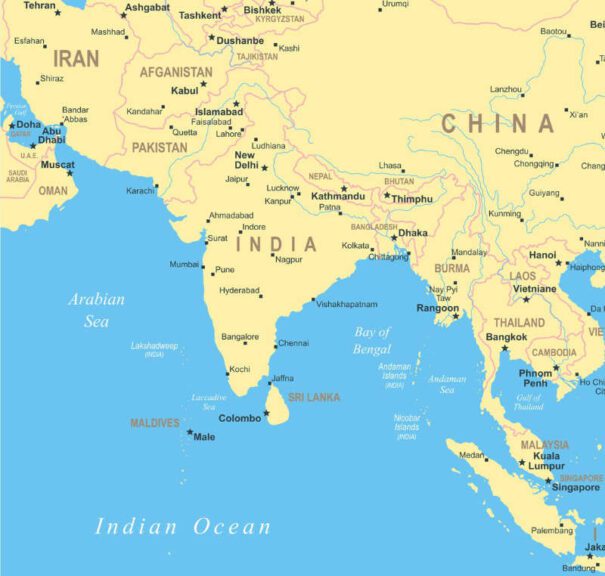
Bangladesh: Between Urgency and Strategic Alignment
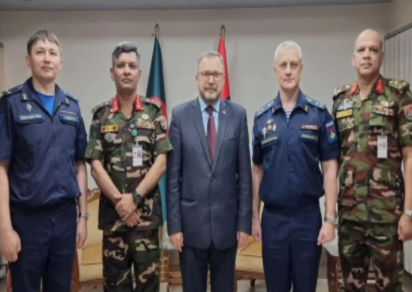
Russian Ambassador Alexander Khozin and Military, Air, and Naval Attaché Colonel Pavel Ivashinnikov held talks on 31 March with Lieutenant General Mir Mushfiqur Rahman, principal staff officer of Bangladesh’s Armed Forces Division, to enhance military and technical cooperation.
The British ‘Independent’ newspaper has also reported that Bangladesh could be the first country to run out of fuel due to US-Iran war. Against this backdrop, Bangladesh’s present engagement with Russia reflects a dual dynamic: immediate energy needs and long-term structural alignment. Faced with rising fuel costs and supply disruptions, Dhaka has sought a U.S. waiver to import up to 600,000 tonnes of Russian diesel. Encouragingly, Washington has indicated openness to this request, acknowledging the exceptional pressures on Bangladesh’s energy system.
Russia’s Ambassador to Bangladesh, Alexander Khozin, met with the Food, Fisheries and Livestock, and Agriculture Minister Mohammad Amin Ur Rashid at the Bangladesh Agricultural Ministry on March 25
Russian diplomatic engagement in Dhaka has expanded discussions into agriculture, gas supply, nuclear energy, and infrastructure cooperation. These talks signal a shift from transactional energy trade toward comprehensive partnership-building. The cornerstone of this relationship remains the Rooppur Nuclear Power Plant, a US$12.65 billion project financed largely by Russia and constructed by Rosatom. Despite delays in fuel loading due to regulatory and safety compliance issues, the project is expected to add 2,400 MW of capacity upon completion, significantly enhancing Bangladesh’s energy security.
Russia’s involvement also extends into workforce training, digitalization, and cybersecurity in the energy sector, indicating a full-spectrum engagement model. In 2025, Bangladesh had a GDP (PPP) of US$2.1 trillion, a population of 175 million, and bilateral trade with Russia of over US$2 billion in 2024.
Russia As Pakistan’s Energy Backstop
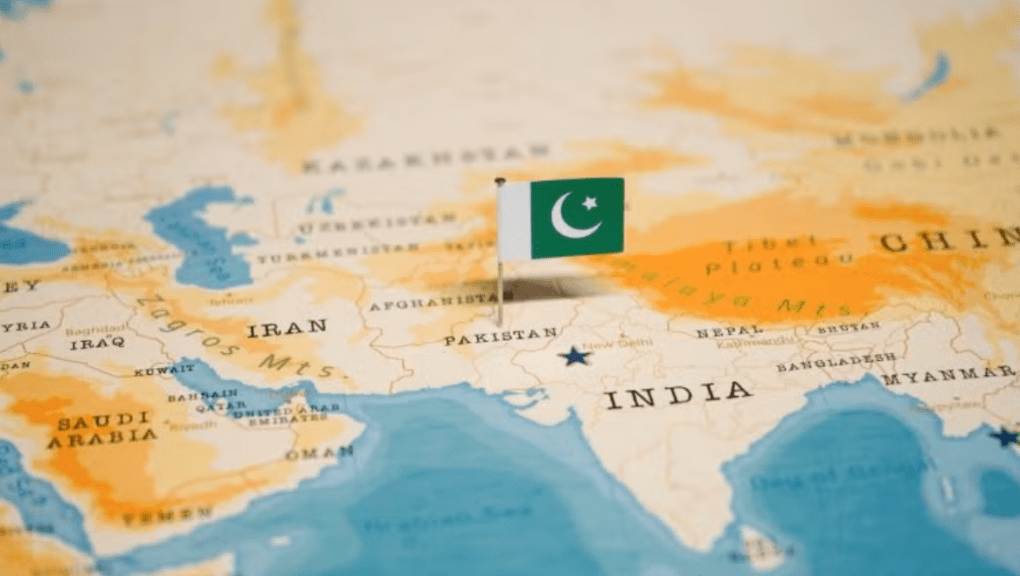
Pakistan and Russia have recently deepened cooperation across energy, steel, transport, and disaster response, following protocols signed by Pakistan’s Energy Minister Sardar Awais Ahmad Khan Leghari and Russian Energy Minister Sergei Tsivilev at the 10th Pakistan-Russia Intergovernmental Commission on November 28 in Islamabad.
A final deal was slated for Prime Minister Shehbaz Sharif’s planned March visit to Moscow but was postponed amid the escalating Middle East crisis. Russia’s energy engagement with Pakistan has evolved from incremental cooperation into a structurally opportunistic, crisis-driven strategy, increasingly system-oriented and responsive to global supply shocks and Pakistan’s acute domestic shortages.
The urgency is clear: Pakistan’s crude reserves have fallen to roughly 11 days, LNG cargo disruptions have cut expected deliveries by more than half, and fuel prices have nearly doubled, with diesel rising from US$88 to US$187 per barrel equivalent. With 70% of Pakistan’s oil imports reliant on Gulf shipping through the Strait of Hormuz, these shocks have triggered austerity measures, including university closures, curtailed office hours, and emergency transport subsidies affecting 30 million users. Within this context, Russia’s offer, articulated by Ambassador Albert Khorev, to supply discounted and potentially uninterrupted crude is less a bilateral gesture than a systemic insertion into Pakistan’s energy architecture. He added that if Pakistan initiates talks, Russia is willing to provide oil at a lower price. Russia can position itself as a swing supplier in a market consuming 500,000-600,000 barrels per day. Pakistan has been importing crude oil from Russia since 2023, but in limited quantities.
2026 report suggest Pakistan has bought over 733,000 barrels of Russian crude oil, with a large shipment of the same expected in March 2026. Recent developments indicate Pakistan may now consider Russia as an alternative source, while the pending visit by PM Sharif could take place at any time, depending on mutually convenient opportunities for both sides, and may further strengthen energy ties between Russia and Pakistan.
Former Pakistani diplomat and ex-High Commissioner to India, Abdul Basit, said that Pakistan can rely on Russia to deal with the ongoing energy shortages. This builds on the 2023 pilot cargo but now bundles crude supply with infrastructure, refining upgrades, and upstream cooperation. The 1,100 km Pakistan Stream Gas Pipeline (12.4 bcm capacity) is central, linking Karachi LNG terminals to Punjab’s industrial belt. Constraints remain: Pakistani refineries are poorly configured for Russian Urals crude, port infrastructure requires ship-to-ship transfers, and yuan-denominated settlements strain foreign exchange. Still, Russia’s advantage lies in pricing flexibility under sanctions and willingness to integrate vertically through firms like Gazprom International. Strategically, Russia’s play prioritizes optionality over immediate scale, potentially embedding Pakistan into wider Eurasian energy frameworks linking Central Asia, Russian supply, and Arabian Sea outlets.
Afghanistan
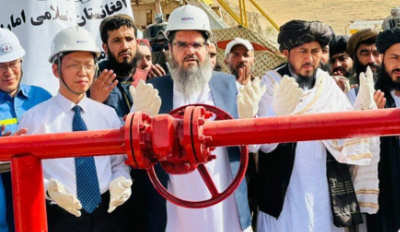
In Afghanistan, Russia’s approach is infrastructural pre-positioning rather than immediate investment. Since recognizing the Taliban in 2025, engagement has been diplomatic, targeting Afghanistan as a transit hinge in a reconfigured Eurasian energy map. Corridors like CASA-1000 and TAPI, though not Russian-built, align with Moscow’s long-term interest in shaping regional flows. Afghanistan’s US$10 billion Central Asia–South Asia trade and transit push strengthens its role as a bridge connecting Turkmenistan, Uzbekistan, and potentially Russia to Pakistani ports.
The emerging Russia-Turkmenistan-Afghanistan corridor, expected to be formalized around the Kazan Forum 2026, is particularly significant as an alternative to the International North-South Transport Corridor, which has faced disruptions tied to West Asia-Middle East-related instability. Russia’s strategy prioritizes influence over resources, reinforced by quiet alignment with China to mediate Afghanistan-Pakistan tensions. If stabilized, the result could be a contiguous energy and trade arc linking Russia, Central Asia, Afghanistan, Pakistan, and India, integrating Russian hydrocarbons, Central Asian electricity, and South Asian demand. If instability persists, Russia’s exposure remains limited by design. In short, Russia in Pakistan is an immediate energy backstop, while in Afghanistan it is an architect-in-waiting, shaping corridors for broader Eurasian integration.
A Fragmenting Global Market: Russia’s Strategic Opening
These regional developments are inseparable from broader global dynamics. The ongoing conflict involving Iran has disrupted one of the world’s most critical energy corridors, amplifying volatility across oil markets. Brent crude prices have surged toward US$120 per barrel, intensifying the urgency for alternative supply sources.
Simultaneously, Western sanctions have reshaped but not reduced Russian energy exports. Instead, Moscow has redirected flows toward Asia. China continues to import approximately 1.85 million b/d of Russian crude, while new buyers across Southeast Asia are entering the market. In this context, South Asia’s turn toward Russian energy reflects not political alignment but market rationality. Russian barrels offer compatibility, availability, and, in many cases, competitive pricing even as discounts narrow.
Financial Realignment: The Quiet Rise of De-Dollarized Trade
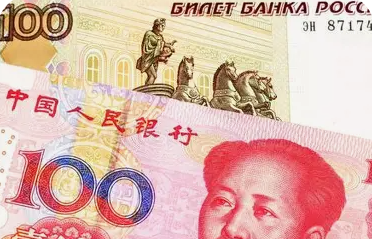
A critical but underexplored dimension of this shift is financial architecture. With traditional dollar-based systems constrained by sanctions, Russia and its South Asian partners are increasingly adopting national currency settlements and alternative payment mechanisms. India leads this transition, but similar frameworks are under discussion with Bangladesh and Sri Lanka. This evolution is not merely tactical. It represents a gradual move toward a multipolar financial order, reducing dependency on Western-controlled systems and enhancing resilience against external shocks.
Opportunities and Risks for Business and Investors
For regional businesses, the implications are profound. Access to stable energy supplies particularly under long-term contracts can lower production costs and enhance competitiveness. Infrastructure investments in refining, LNG, and nuclear energy offer additional growth avenues. However, risks remain. Sanctions compliance, payment uncertainties, and logistical bottlenecks pose operational challenges. Moreover, geopolitical volatility continues to shape market conditions in unpredictable ways. Investors must therefore navigate a complex landscape where opportunity and risk are closely intertwined. Russian policymakers and diplomats must strengthen their diplomatic engagement to bolster ties during this geopolitical crossroads and sustain them with renewed momentum. This can turn potential risks into a tremendous opportunity for Russian businesses and investors in South Asia, as Russia’s pivot to Asia continues.
What ultimately distinguishes Russia’s current approach is its transition from transactional energy trade to systemic engagement. The synchronization of Deputy minister-level operational visits, cabinet-level economic coordination, ambassadorial and technical engagement, upcoming foreign minister diplomacy and expected summit-level consolidation reveals a deliberate strategy to build long-term, high-dependency partnerships across South Asia. Energy serves as the entry point but the endgame is broader: integration across finance, infrastructure, technology, and geopolitics. Russia’s expanding engagement in South Asia is not a temporary response to crisis conditions. It is a calculated, multi-dimensional strategy aimed at reshaping its global economic footprint. For India, Bangladesh, and Sri Lanka, the shift reflects pragmatic adaptation to a volatile energy environment.
For Russia, it represents an opportunity to transform constraints into leverage. The result is the emergence of a new energy architecture, characterized by diversified supply chains, alternative financial systems, and deeper strategic interdependence. In this evolving landscape, South Asia is no longer a peripheral market. It is becoming a central arena where the future of global energy geopolitics is being actively negotiated.
This article was written exclusively for Russia’s Pivot To Asia by M Jahan, an independent researcher, security and strategic affairs commentator and geopolitical analyst based in Dhaka. To subscribe to Russia’s Pivot To Asia please click here.