
 Русский







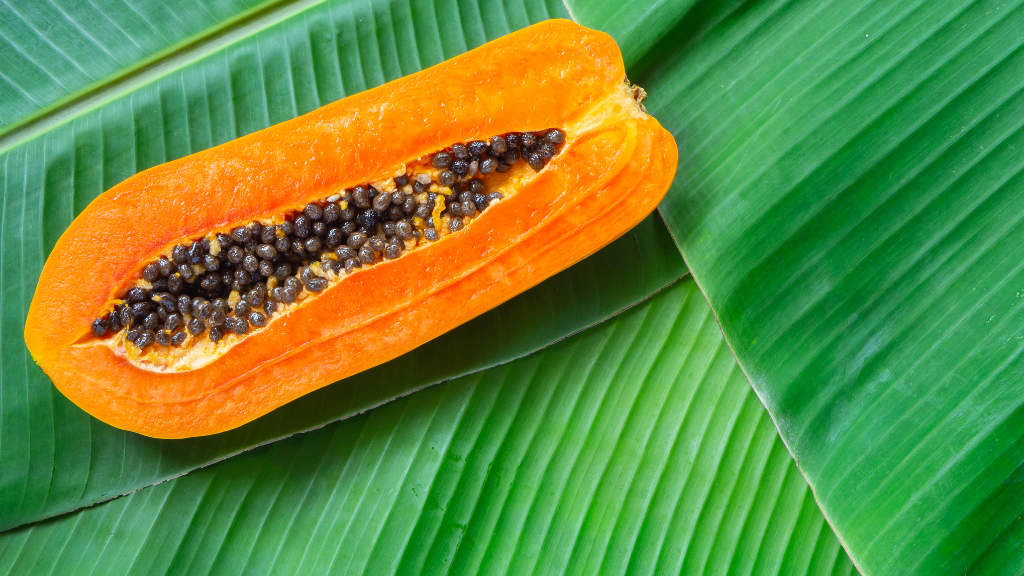

The Russian Academy for the Development of Subtropical Agriculture has produced its first crop of papaya fruits from its experimental greenhouses, according to Andrei Platonov, the academy’s general director.
Platonov said that “in the academy’s first greenhouse, in Abkhazia, active papaya fruiting is currently taking place. As part of an international project, the academy has created three greenhouses where 14 varieties of bananas, four varieties of papayas, and a tropical plant greenhouse for agrotourism development are being cultivated.”
The Academy has one greenhouse located in Abkhazia and two more farm-based greenhouses situated in Sochi. Each greenhouse covers 600 square meters. Tropical fruit experiments are being conducted in all three greenhouses, where technology for cultivating tropical crops and temperature and humidity are maintained, and plant development is monitored.

Platonov said that “in the Sochi greenhouse, active banana flowering has begun. Fruit is expected in six months.” The project is overseen by the Russian Scientific Research Institute of Agriculture and the Abkhazian Academy of Sciences.
The Academy for the Development of Subtropical Agriculture was established on the initiative of the public Russian Subtropics movement, the Russian Academy of Sciences, and the Russian Chamber of Commerce and Industry. Its mission is to ensure the introduction of innovative technologies in subtropical agriculture, provide practical assistance to farmers, and facilitate the process of import substitution of subtropical crops in order to enhance food security conditions in Russia.
It is planned to introduce 40 subtropical fruit and industrial crops, including olives, feijoas, and figs. Their range of growth will be expanded across southern Russia to the Luhansk and Donetsk regions, and to the Dagestan and Adygea republics. In the future, work will begin on tea breeding and autochthonous viticulture in order to produce unique varieties of wines.
The average per capita consumption of selected tropical fruits (calculated on the basis of import volumes and total population statistics) in Russia is considered low, at only 27.8 grams of pineapple, 5.3 grams of avocado, 2.7 grams of mango, and less than 1 gram of all other tropical fruits, meaning there could be dynamic market growth potential for commercially grown crops.
Since the effective divorce from European travel, Russian holidaymakers have been discovering Asia, bringing demand for a greater variety of tropical fruit consumption back home with them. Destinations such as Thailand and Vietnam have replaced previous favourites such as Italy and Greece, with the resulting difference in cuisine being reflected in a growing Russian domestic appetite for more exotic consumables.
Further Reading
Russia’s Uralchem Targets Vietnamese Agricultural Sector