
 Русский





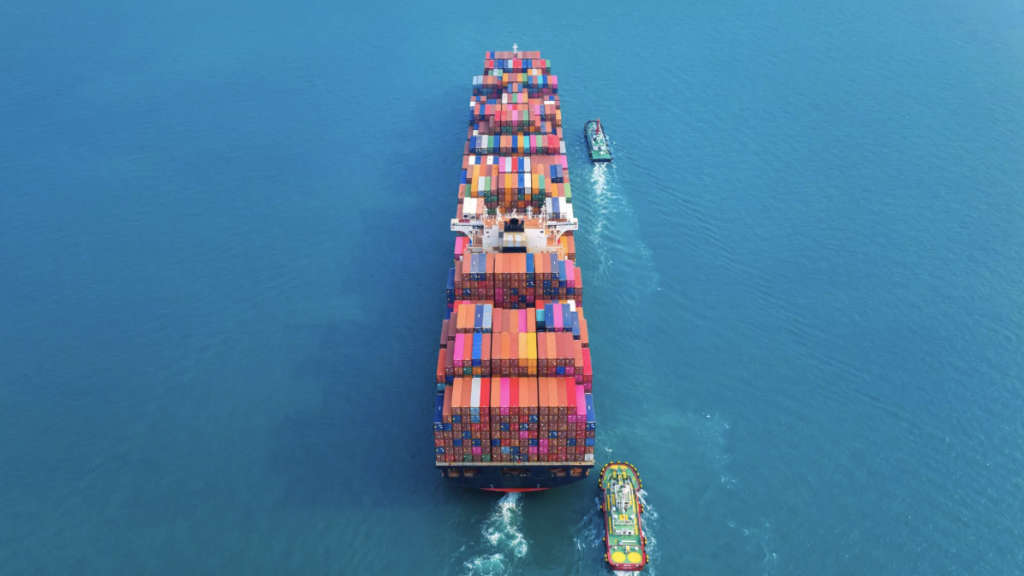

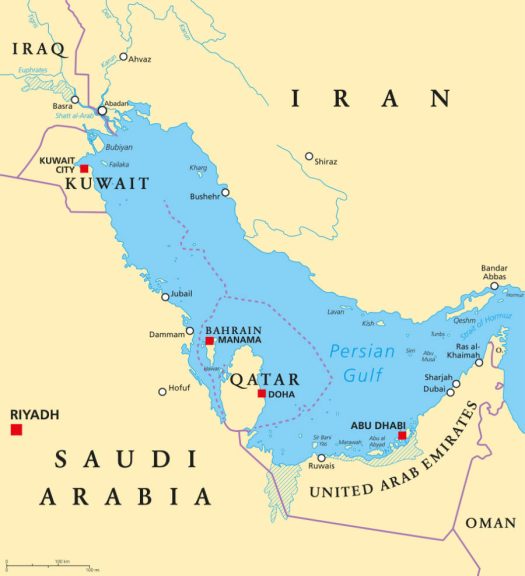
As global trade and supply chain routes face tectonic shifts driven by sanctions, war games, war threats, geopolitical realignments, and the fracturing of traditional maritime routes, Russia has embarked on an ambitious recalibration of its external connectivity architecture. This strategy extends beyond the historic east-west axes to embrace the Middle East’s Gulf ports as critical hubs in a reimagined International North-South Transport Corridor (INSTC). Through integrating Oman, the United Arab Emirates, Bahrain, Qatar, and Saudi Arabia, Moscow is cultivating a multi-vector logistics network that transcends Iran, hedges against geopolitical risk, and opens new conduits to East Africa, South Asia, and global markets.
Our analysis examines the trade, infrastructure, and strategic underpinnings of this shift; analyzes data on corridor capacities and partnerships; and interprets Russia’s strategic intent against the backdrop of renewed U.S.-Iran tensions and the emerging multipolar world order.
Beyond Sanctions and Through Geopolitical Crosswinds

Since 2022, Russia’s trade flows with the Gulf Cooperation Council (GCC) have surged, with bilateral trade exceeding US$15-16 billion and projected robust growth over the next decade. This expansion is not incidental but reflects a deliberate strategic alignment across logistics, investment, and industrial exchanges spanning energy, technology, and tourism. High-level visits, including Omani Sultan Haitham bin Tarik’s visit to Moscow in 2025, Qatari Amir Sheikh Tamim bin Hamad Al Thani’s visit the same year, and UAE President Sheikh Mohamed bin Zayed Al Nahyan’s late-January 2026 trip, underscore the deepening institutional maturity of Russia-GCC relations. Against the backdrop of global trade fragmentation and mounting protectionism, Gulf leaders increasingly recognize that economic diversification is unattainable without structured engagement with Russia. This strategic realism has translated into action. Saudi Arabia, Oman and the UAE recently convened their high-level Russia-Gulf business and investment summits, signaling a shift from transactional ties to long-term economic alignment. These platforms reflect a shared understanding that logistics connectivity, supply chain route stability, capital flows, and industrial cooperation with Russia are no longer optional hedges but core pillars of Gulf economic resilience in a multipolar global order.
This pivot is occurring amidst a profound restructuring of Eurasian transport corridors. The INSTC, originally designed in 2000 as a Russia-Iran-India multimodal corridor, seeks to cut transit times to Europe and South Asia by nearly half and reduce costs by roughly 20-30% compared to the Suez Canal route. However, geopolitical volatility, particularly around Iran, poses operational and geopolitical risks. Renewed U.S. military posturing toward Tehran, war threats, and the intensification of sanctions and strategic competition could disrupt Iranian transit points, such as Chabahar, which recently suffered setbacks amid U.S. sanctions pressure. Iran’s case is very critical and crucial in this regard. For regional stability and sustainable growth, all regional actors must ensure that Iran remains secure and its internal stability is not disrupted. Gulf Cooperation Council countries, in particular, must avoid falling into any U.S. and Israeli traps that could provoke instability, as a destabilized Iran would threaten connectivity, trade, and broader regional prosperity.
For Moscow, this calculus has some essential imperatives: Bolstering diplomatic means in the region, cementing more comprehensive strategic partnerships and connectivity between Iran and GCC countries as integrated transit hubs within the INSTC, while simultaneously diversifying transport and logistics nodes to include non-Iranian gateways across the Gulf, is emerging as a central pillar of Russia’s long-term Eurasian connectivity strategy. Diversifying logistics nodes through Gulf gateways is no longer a technical choice but a strategic necessity. A Gulf-Iran-GCC connectivity framework would anchor the corridor in collective stability rather than unilateral exposure. As China facilitates diplomatic normalization between Tehran and Riyadh, Russia is uniquely positioned to institutionalize strategic trust between Iran and Gulf states, leveraging its deep political, military, economic, trade, and investment ties with all parties. Moscow’s role should be to neutralize external attempts to trigger supply-chain disruption across Eurasia and East Asia. By bringing Iran and the GCC to the same connectivity table, the INSTC can evolve into a shared platform for growth, not a fault line for rivalry. This is Russia’s opportunity to translate shared infrastructure into shared prosperity, reinforcing its role as a central stabilizing power linking Eurasia, the Middle East, and Africa.
Oman: Gateway to Africa and Asia
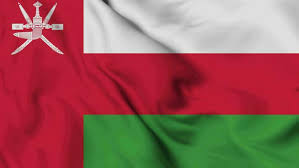
Oman’s strategic integration into the INSTC marks the most tangible example of corridor diversification. In a landmark Memorandum of Understanding between Russia and Oman’s transport authorities, the Sultanate’s port infrastructure has been validated as a critical southern gateway for traffic between Russia, the Arabian Sea, Africa, and South Asia. Oman’s Vision 2040 prioritizes the development of world-class ports and logistics ecosystems, complementary to Russia’s industrial and agricultural export capabilities. Bilateral trade reached roughly US$340 million in 2024, up over 60% since 2020, and the number of Russian-invested firms in Oman has doubled. Crucially, Russia’s companies are relocating maritime assets, with over 30 formerly Russian-flagged ships re-registering in Oman to leverage Muscat’s ship registry as a neutral base amid heightened compliance scrutiny in Dubai. Omani ports such as Salalah, Duqm, Sohar, and Muscat are evolving into re-export hubs, not just for domestic consumption, but as transshipment bridges to East Africa (e.g., Djibouti, Mombasa, and Dar es Salaam), amplifying the INSTC’s southern reach.
United Arab Emirates: Anchoring Russian Trade and Connectivity
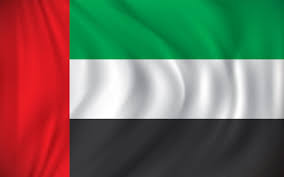
The UAE occupies a distinctive role in this strategic ecosystem. Its global logistics footprint anchored by ports like Jebel Ali and Fujairah and its robust financial networks make it a preferred Russian trade and investment destination. Emirati sovereign wealth funds have made multi-billion-dollar commitments in Russian technology and infrastructure sectors, while the UAE serves as a launchpad for Russian expansion into Africa and South Asia. Yet, the UAE’s calculus is multifaceted. President Sheikh Mohamed bin Zayed’s engagements with President Putin signal that Abu Dhabi is positioning itself as a regional broker capable of bridging Moscow, Washington, and Tehran, rather than a bloc actor tied exclusively to Western or GCC security architectures. This diplomatic latitude enhances the UAE’s capacity to sustain trade infrastructure cooperation even as geopolitical tensions escalate around Iran. Furthermore, the UAE’s domestic infrastructure, such as the ongoing rollout of Etihad Rail, designed to integrate freight across emirates and connect with Saudi Arabia, augments its potential as a continental logistics backbone.
Saudi Arabia: Energy, Logistics and Strategic Balancing
Saudi-Russian relations, underpinned by energy cooperation, have also deepened. While total trade volumes remain lower than with the UAE, they are expanding at around 60% annually, underwritten by joint industrial and technology projects. Riyadh’s interest in corridor linkages such as potential integration with INSTC or the alternative India-Middle East-Europe Corridor (IMEC) exemplifies its strategic balancing among U.S., Russian, and Indian interests. However, unlike IMEC, which seeks a U.S.-backed India-Europe route via Saudi territory, Moscow’s corridor model emphasizes multipolar connectivity and reduced reliance on singular geostrategic chokepoints. However, Israel’s current geopolitical gamble in the Middle East has injected a high degree of strategic uncertainty into emerging connectivity projects, raising serious questions over the long-term feasibility and reliability of alternative corridor initiatives. In contrast, Russia’s INSTC framework has already demonstrated operational effectiveness and strategic resilience, offering predictable logistics, cost efficiency, and geopolitical neutrality. For Saudi Arabia, the INSTC represents not a competing vision but a vital, stabilizing trade artery—one that anchors the Kingdom’s diversification ambitions within a tested Eurasian supply-chain system insulated from escalating regional shocks.
Bahrain: A Modest but Strategic Node

Though currently small, Bahrain’s bilateral trade with Russia remains in the low tens of millions, and its advanced financial services and regulatory environment present opportunities for deeper integration with Russian finance, LNG markets, and digital services. Strategic naval and logistics cooperation could further underpin Bahrain’s role in broader Gulf-centric supply chains.
Economic Impact: Trade Flows and Freight Dynamics
To understand the material impact of these strategic initiatives, Russia’s approach centers on building redundant, resilient corridors that can withstand geopolitical shocks and sanction pressures. This is reflected in a multi-pronged logistics strategy:
Cargo volume growth on INSTC routes: Between 2023 and 2024, Eastern INSTC freight volumes tripled to roughly 1.8-2 million tonnes, demonstrating rising utilization despite developmental gaps in central and western segments.
Projected capacity expansion: A roadmap agreed upon by Kazakhstan, Russia, Iran, and Turkmenistan anticipates boosting corridor capacity to around 15 million tonnes annually by 2027 and 20 million by 2030.
Diversified exports: Russia’s fertilizer exports via INSTC are rapidly expanding—India’s imports of Russian fertilizers soared to 2.5 million tonnes in the first half of 2025, representing a 20% usage increase through corridor routes.
These figures reflect not just incremental growth in existing modalities but also the breadth of economic integration enabled by evolving corridor infrastructure.
Geopolitical Nuances: Risk Diversification and Strategic Redundancy

The deeper Moscow’s logistical entanglement with Gulf states becomes, the more its strategy focuses on integrating Iran’s ports and China’s Belt and Road Initiative with Russia’s own connectivity projects, creating a cohesive Eurasian trade and transport network. While Iran remains central to the INSTC’s current backbone, any political or security instability in Tehran could threaten the continuity of corridor flows, highlighting the strategic need for diversified transit nodes and strengthened partnerships with Gulf states. The combination of U.S. strategic pressure and renewed military rhetoric elevates the risk profile for Iranian transit routes, prompting Russian policymakers to prioritize the prevention of regional escalation while simultaneously developing alternative routes and mechanisms to mitigate chokepoint vulnerabilities within the INSTC and broader Eurasian logistics network. Gulf ports offer alternative maritime exit points that can funnel goods toward East Africa and South Asia, thus distributing risk across multiple nodes. This not only protects Russian trade against isolated disruptions but also aligns with the interests of Gulf states seeking diversification from Western-dominated logistics systems. Furthermore, Russia’s strategic horizon anticipates broader BRICS momentum: the corridor now symbolically connects BRICS members like Russia, India, Iran, and the UAE (and the KSA?), solidifying its role within an expanding multipolar transport framework.
Toward a Eurasian-African Logistics Archipelago

Where Russia’s strategy intersects with Gulf logistics, South Asian corridors (India) and African outreach is in forging transcontinental supply chains. Gulf states maintain deep commercial ties with the Horn of Africa and Red Sea trade nodes such as Djibouti, Port Sudan, Mombasa, and Dar es Salaam, all of which complement Russian efforts to integrate the INSTC with broader maritime linkages. Such linkages are not merely theoretical. They reflect a growing prioritization of multi-modal trade ecosystems that circumvent traditional chokepoints like the Suez Canal and reduce exposure to single-route dependencies. In a world where insurance surcharges, maritime insecurity, and strategic rivalries influence shipping decisions, these alternatives could unlock resilient economic corridors connecting Eurasia, the Middle East, and Africa. Iran is an indispensable part of this connectivity project, and Russia cannot achieve its strategic goals without fully integrating Tehran into its regional infrastructure and transport networks.
2026 Russia-Gulf Geopolitical Analysis
Russia’s evolving connectivity strategy in the Middle East must be understood as strategic risk management amid rising Iran-centric volatility. With a U.S. naval buildup again approaching the region, Moscow is clearly acting to minimize any kind of escalation even as it continues to value Iran as a core partner and advocate for diplomatic restraint rather than military confrontation. Any U.S. military action against Iran would almost certainly trigger retaliation against GCC states, placing Russian strategic connectivity assets, investments, civilian nuclear energy investments, and INSTC routes in both Iran and the Gulf directly at risk. Any regime‑change attempt in Tehran by the United States and Israel would be strategically disastrous for Moscow, as it intends to replace a long‑standing partner with a potential pro‑U.S. government hostile to Russian influence—a dynamic Moscow has already witnessed in Syria, where the fall of Bashar al‑Assad weakened Russian leverage in the Middle East, and the Maduro case seriously undermined Russia’s political, economic, and security interests in the Latin American region.
Conversely, a diplomatically resolved crisis would open space for a structured Russia-Iran-GCC format, anchoring trust, stabilizing supply chains, and institutionalizing shared growth. Amid the tension in the Persian Gulf region, Russia’s active diplomacy with GCC states, particularly the UAE, combined with emerging Russia-China-Iran trilateral coordination, appears designed as a deterrent framework against war rather than a prelude to escalation. The Russian President Vladimir Putin met with Ali Larijani, the secretary of Iran’s Supreme National Security Council, at the Kremlin on Friday (January 30) in an unannounced high-level meeting. Iran’s ambassador to Russia, Kazem Jalali, later stated the meeting focused on “bilateral relations” and involved “consultations on important regional and international issues.” According to the Middle East Eye report, Russia, Iran, and China agreed to a ‘Trilateral Strategic Pact’ on January 29, which, while somewhat ambiguous, details have not been made public—does raise the possibility of potential involvement in protecting their Iranian interests should Iran be attacked by the United States. On the other hand, Iran has its own military and Islamic Revolutionary Guard Corps (IRGC) strength that can protect it from foreign interference, and Tehran’s deterrent rhetoric in response to increased U.S. military pressure has been notably defiant, emphasizing its readiness to defend national sovereignty and deter aggression.
As a result, early signs of de-escalation are beginning to emerge. Recent signals from Washington and Tehran suggesting a willingness to return to negotiations reinforce the assessment that a diplomatic off-ramp remains possible, though risks persist. Ali Larijani, secretary of Iran’s Supreme National Security Council, said on January 31 that progress is being made toward opening negotiations with the United States, offering a comparatively conciliatory message as tensions rise and Washington publicly signals preparations for possible military action. For Russia, the stakes are exceptionally high. While President Donald Trump initially adopted a confrontational tone, his rhetoric softened markedly within days. Trump has since stated publicly that he has held conversations with Iranian leaders and confirmed that Washington is planning further engagement with Tehran. From the Iranian side, signals have been equally clear. Foreign Minister Abbas Araghchi stated that Tehran welcomes dialogue with regional countries and dignified dialogue with the US aimed at promoting stability and peace, confirming that Iran is actively engaged with mediating states holding ongoing consultations. According to several media reports on February 1, 2026, both Iran and the United States have acknowledged that progress is being made toward negotiations, reinforcing the assessment that diplomatic channels remain open despite persistent regional risks. The US and Iran signal talks to avert military conflict amid tensions in the Gulf.
In this context, the UAE’s role is pivotal. Abu Dhabi’s ability to maintain open channels with Tehran, Washington, Moscow, and regional actors positions it as a credible de-escalation broker. President Putin’s direct engagement with Sheikh Mohamed bin Zayed on the Iranian file underscores Moscow’s recognition that connectivity and security are inseparable. By prioritizing mediation diplomacy, prevention of further escalation, corridor diversification, and collective economic stability, Russia is not merely protecting the INSTC, but it is reinforcing its role as a central stabilizing power across Eurasia, the Middle East, and the Africa-Asia trade continuum.
The United States must take into account that Iran has already signed agreements with Russia for the development of eight nuclear power plants, underscoring the depth and long-term nature of their strategic partnership. If Trump and Iran begin negotiating on Iran’s nuclear program, Russia must protect its stakes in Iran’s civilian nuclear energy and nuclear medicine development, given Moscow’s deep involvement in constructing multiple nuclear power plants and advancing peaceful nuclear cooperation with Tehran. Within this context, the INSTC corridor that transits Iran remains effective and indispensable, even as diversification through Gulf gateways continues. Russia’s core interest lies in sustaining support for the Iranian state and its present regime while simultaneously building strategic trust between Iran and GCC countries. Rather than framing connectivity in exclusive terms of either Iran or the GCC, Moscow should pursue an inclusive Iran-GCC framework, integrating all regional actors into a shared logistics and growth architecture.
This balanced approach best safeguards Russia’s economic assets, preserves regional stability, and reinforces its role as a central power broker in Eurasian and Middle Eastern connectivity. Given Russia’s strong strategic partnership with India and India’s simultaneously close ties with Israel and deep civilizational relations with Iran, Moscow and New Delhi are uniquely positioned to act as stabilizing diplomatic stakeholders. India’s long-term energy security depends critically on both Iran and Russia, making regional stability a core national interest rather than a peripheral concern. In this context, Russia and India should intensify diplomatic coordination to prevent war in the region, aligning their political influence to support dialogue, restraint, and de-escalation. Such joint diplomacy would not only protect vital energy and connectivity interests but also reinforce a broader Eurasian commitment to stability over confrontation.
Summary
Russia’s engagement with Iran, Oman, the UAE, Bahrain, and Saudi Arabia in infrastructure and trade reflects a diplomatic balancing act, a mediation effort, and a calculated pivot toward diversified regional connectivity. By integrating Gulf ports and Iranian ports into the broader INSTC framework, Moscow is not only expanding its economic footprint but also building strategic resilience in an era of geopolitical flux. These developments anchored by increasing freight flows, expanding partnerships, and corridor optimization signal a future in which Eurasian connectivity is less about single chokepoints and more about distributed, cooperative networks that span continents and civilizational spheres. The success of this strategy, however, will hinge on sustained investment, diplomatic nimbleness, and the capacity of Russia and its Gulf partners to manage rising tensions in a highly competitive global environment. In this evolving narrative, Iran and the Gulf are not merely a transit zone. It is a strategic leverage point, a hinge between continents, a bridge between powers, and a testament to Russia’s ability to pivot its infrastructure strategy in pursuit of economic security and geopolitical influence.
This article was written by K P Majumdar, an expert in South Asia-Middle Eastern affairs. He may be contacted at info@russiaspivottoasia.com