 Русский






Part One of a Seven-Part Series in which we document the rise of the new outbound Russian entrepreneurial investor.
The Gulf Cooperation Council (GCC) region has emerged as one of the most strategically contested economic theaters of the 2020s. No longer defined solely by hydrocarbons, the Gulf today represents a global capital allocator, logistics nexus, digital innovation hub, and sovereign investment powerhouse. Against this backdrop, Russia’s commercial presence across the GCC, and particularly in the United Arab Emirates, has expanded at remarkable speed over the past four years. In both 2024 and 2025, Russian companies experienced significant growth across these markets, expanding across multiple sectors.
It has gone largely unnoticed in the West, as their businesses rushed to exit the domestic Russian market from 2014 onwards (with this given a significant political boost in 2022), but Russian entrepreneurs, once content to let foreign businesses come to them, have become increasingly assertive as they seek diversification into new export markets. What used to be a lazy and rather unimaginative breed of businessmen has now turned into an assertive, globally reaching band of Russian entrepreneurs. Armed with state backing, a well-thought-out, state-level export development infrastructure, and newfound confidence, Russian investors are making waves internationally. They are also increasingly competitive, unshackled by the higher production costs now a feature in Europe due to higher energy overheads. This also manifests itself in a particular trend in taking on Western competitors—and winning new market share in global markets. It is the ultimate middle finger to Western businesses that exited Russia—the Russians are now chasing them down as competitor targets elsewhere.
In the Middle East, we can see this manifesting itself as follows:
New Russian Incorporations In the GCC During 2024-25
| GCC Country | Approx Russian Companies / Activity | Key Sectors | Notable Examples |
| UAE | 13,500+ registered, 2,000 new in 2025 | Logistics, Retail, Tech, Tourism | Gold Apple, Dodo Pizza, Alghaf Marine DMCC |
| Saudi Arabia | Over 100, with 60 local licences granted in construction, pharma, mining and energy. | Mining, Energy, Retail, Tech, Pharma & Services | Gold Apple e-commerce & store, trade dialogue |
| Qatar | 60, with mix of Russian entities and JVs | Pharma, Digital Guides, Tech | GreatList guide, Biocad MoU |
| Kuwait, Bahrain, Oman | Collectively about 500 | Trade facilitation & services, Kuwait maintains a Russian shipping registry. | UAE-based Russian firms expanding regionally |
Typical Investment Sectors
While Russian SOEs are evident in the energy, mining, and transport sectors especially, Russian SMEs favor services, trade, and light-touch operations:
| Sector | Examples / patterns |
| Trading & Re export | Import-export of food, machinery, spare parts, and consumer goods between Russia/CIS and the GCC, often via UAE based trading companies. |
| IT, fintech, and digital services | Software development, cybersecurity, AI related services, and fintech platforms targeting GCC and wider MENA markets. |
| Logistics and transport | Freight forwarding, warehousing, and logistics firms using UAE ports and free zones as hubs for Russia–GCC–Africa flows. |
| Real estate and consulting | Real estate agencies, property management companies, and business consulting boutiques serving Russian-speaking expats and investors. |
| Tourism and hospitality | Travel agencies, tour operator branches, and small hospitality management firms catering to Russian tourists (nearly 2 million Russians visited the GCC in 2024). |
The central question for strategic economic analysis is no longer whether Russia is present in the Gulf. It is how Russia’s footprint compares with those of the United Kingdom, the European Union, India, and China, both numerically and structurally. A data-driven examination reveals that Russia has built one of the fastest-growing corporate presences in the GCC in recent years, though its scale and structure differ significantly from those of its competitors.
The UAE: The Epicenter of Russian Corporate Expansion
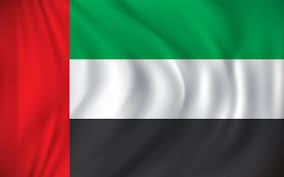
The UAE is by far the dominant GCC destination for new Russian-linked businesses.
- Over 13,500 Russian companies are currently registered in the UAE, with around 2,000 new company registrations issued in 2025 alone. They have become highly visible in the logistics, technology, tourism, property investment, and retail sectors.
- An additional 4,000 Russian-linked companies are reported to be registered in the UAE, with most of these established since 2022, with a strong wave in 2024-2025. This category includes Russian-owned companies domiciled elsewhere, typically from Kazakhstan.
- In September 2025, 1,524 companies were registered by Russian-speaking founders in the UAE, signaling a shift from small freelancers to more structured businesses.
- These firms are concentrated in Dubai (mainland and free zones such as DMCC, DIFC, and JAFZA). The structure of these companies reflects a strategic orientation toward logistics, trade intermediation, fintech, digital services, tourism, and holding-company formations rather than heavy industrial manufacturing.
- Abu Dhabi and Ras Al Khaimah (RAKEZ) are also popular, where Russian entrepreneurs use free-zone structures for international trade, IT, and holding companies.
When compared with other major foreign business presences in the UAE, Russia’s scale and latent development potential become apparent—they are not yet dominant nor as numerous as earlier arrivals—but their importance in the UAE’s business sector is growing and can be expected to continue on an upwards trajectory.
Asian Competitors
In essence, Russia has not yet fully capitalized on the regional trade opportunities the UAE provides to the same extent as some of its counterparts. A more focused and coordinated strategy may be required to strengthen its position. For example, the Indian business community in the UAE remains numerically dominant in establishing companies across multiple industry sectors. In 2024, over 16,000 new Indian companies joined the Dubai Chamber of Commerce, (DCC) while in the first nine months of 2025, 13,851 Indian companies established a presence in the UAE. This reflects decades of deep commercial integration, strong bilateral ties, and the presence of a large and well-established Indian expatriate community in the UAE, something Russia is still developing.
In addition to the Indians, there was a 37.8% increase in new Iraqi companies and 25.5% growth in new Turkish companies joining the DCC. Pakistan ranked second with 8,179 new companies joining, Egypt was in third place with 5,302 new companies, followed by Syria with 2,764 new Dubai Chamber memberships, Jordan with 1,474, and China next with 1,473 new companies joining the chamber.
China’s presence is strategically substantial, especially within infrastructure, logistics, and energy. Thousands of Chinese companies are registered in the UAE, including major state-owned enterprises operating in Jebel Ali Free Zone and Khalifa Port. However, the Chinese presence is often concentrated in larger-scale enterprises and Belt and Road-linked industrial activity rather than the SME-heavy wave seen from Russian entrepreneurs.
European Competitors
Based on data from the Dubai Chamber of Commerce and other recent market reports, the registration of new British companies in the UAE, particularly in Dubai, has seen significant growth, with over 2,500 new registrations in 2024—comparable to, yet slightly more than, new Russian business registrations.
However, the United Kingdom maintains a significant footprint and has done so for decades, with estimates frequently cited in the range of 5,000-7,000 active British companies operating in the UAE through subsidiaries, branches, or representative offices. British firms are deeply embedded in finance, legal services, energy, and education.
European Union companies collectively represent a major share of foreign corporate presence in the UAE, particularly German, French, and Italian industrial firms. While consolidated EU nationality-based data are not always publicly disaggregated, European multinationals dominate advanced manufacturing, engineering, and aviation segments.
In absolute historical numbers, India and the broader European community exceed Russia in total registered entities in the UAE. However, Russia stands out for the rapidity of their expansion. The addition of 2,000 new Russian business registrations in a single year from a previously low incorporation base signals one of the most rapid foreign business expansions in recent UAE history. As the UAE targets two million companies by the end of the decade, sweeping reforms to the Commercial Companies Law are positioning the country as one of the world’s most attractive destinations for businesses, investors, and entrepreneurs.
The UAE President Sheikh Mohamed bin Zayed Al Nahyan’s January 2026 visit to Russia and his meeting with President Vladimir Putin have given a strong boost to Russia–UAE economic and investment ties. In this environment, Russian entrepreneurs have tremendous opportunities to penetrate the UAE market through company formation and strategic expansion initiatives.
The UAE’s membership of BRICS, including participation in the New Development Bank, as well as an already existing national development plan concentrating on the services sector, also matches Russia’s needs. Key areas for Russian development within the UAE and the wider region include regional transport and logistics, as well as the agricultural sector in particular.
The signing of an Economic Partnership Agreement between the Eurasian Economic Union and the UAE in June last year has also provided a timely boost—with tariffs on 85% of all traded goods to be eliminated. For Russia, this includes substantial benefits to its agricultural exports, in addition to its industrial sector. The deal has yet to be ratified but should come into effect later this year.
Other GCC countries (Saudi Arabia, Kuwait, Qatar, Bahrain, Oman)
New Russian incorporations in the other GCC states are fewer and more project-driven, often being tied to state-level deals involving their respective SOEs in big-ticket investments. However, many of Russia’s SOEs will want local support provided to them from their existing suppliers in Russia, paving the way for a new wave of smaller Russian investors being asked to enter these markets. At present there is no publicly available data on the extent of Russian investors in these markets; however, based on recent bilateral activity and diplomatic statements, it is obvious the trend has not only emerged but is growing.
- Saudi Arabia promotes foreign startup licensing; foreign-licensed startups in Saudi Arabia kicked off a strong growth trajectory in 2025 with wide regulatory support.
- New Russian-linked activity is mostly visible in technology, AI, and digital-transformation projects, often through joint ventures or local subsidiaries of Russian tech firms.
- The first Saudi-Russia Investment Forum (December 2025) signaled a push for more joint ventures in industry, IT, and sustainable energy, which usually implies new legal entities or branches needing to be established. Government initiatives are usually followed by corporate investment and subsequent supporting SMEs.
- This has been followed by developing ties with Riyadh’s Techno Valley, which is likely to encourage Russo-Saudi tech and IT JVs.
- Saudi Arabia, Oman, Qatar, Bahrain, and Kuwait are emerging markets for Russian businesses via partnerships, MoUs, and international events.
- Kuwait’s large infrastructure drive and sovereign-wealth-fund activity have created openings for Russian firms in construction, energy services, and industrial manufacturing, typically via joint ventures rather than pure SMEs.
- Bahrain’s fintech and financial-services hub attracts Russian-linked digital-platform and financial-services startups, though many are still in early stages.
- Qatar’s focus on logistics, real estate, and tourism aligns with Russian-linked firms in logistics, tourism, and real estate services, but these are usually small branches or representative offices rather than larger investors. But in time some of these will also develop into larger entities.
- Oman’s ports and free-zone expansion attract Russian-linked companies in logistics, mining services, and agro-processing, again often as joint ventures or project-specific entities.
- Although Russia’s footprint in the UAE is notable and gradually expanding, Russian entrepreneurs should also focus on capturing opportunities across the other five GCC markets through diversified sectoral engagement.
Saudi Arabia: Institutional Entry Rather Than SME Surge
Saudi Arabia represents a different configuration. Unlike the UAE, Riyadh does not publish comprehensive nationality-based corporate registries. However, measurable indicators provide insight into Russia’s evolving presence.
| Category | Numbers | Notes |
| Russian companies presenting in Riyadh missions (2025) | 100+ | Businesses participating in trade/tech missions. |
| Russian companies accredited for exports to Saudi Arabia (Halal) | 140 | Agricultural and food sector exporters. |
In 2025, more than 100 Russian companies participated in business and technology missions to Riyadh. Approximately 140 Russian enterprises are accredited to export agricultural and food products to Saudi Arabia. The first Saudi-Russia Investment Forum in December 2025 emphasized cooperation in industry, information technology, and sustainable energy sectors aligned with Vision 2030 diversification objectives.
In comparison, China is among Saudi Arabia’s largest trading partners and maintains a strong corporate presence through state-backed infrastructure, energy, and construction projects. Chinese firms are heavily embedded in megaprojects such as NEOM and energy infrastructure expansions.
European and British firms remain deeply integrated in defense, financial advisory services, and advanced engineering. The UK, in particular, maintains longstanding defense-industrial and professional services ties. India’s corporate footprint in Saudi Arabia is supported by both trade and a large expatriate labor base, with thousands of Indian-owned enterprises operating across construction, retail, and services.
Russia’s presence in Saudi Arabia is smaller in numerical terms compared to China, Europe, or India. However, it is strategically aligned with high-value sectors and increasingly oriented toward joint ventures rather than stand-alone SMEs.
However, Saudi Arabia has recently reaffirmed its commitment to expanding its industrial and investment cooperation with Russia, emphasizing joint opportunities in key sectors. Speaking at INNOPROM. Saudi Arabia in Riyadh on February 09, Industry and Mineral Resources Minister Bandar Alkhorayef highlighted prospects for deeper collaboration in industry, logistics, supply chains, and mining, stating that Russia’s advanced expertise in mining is of particular interest, with Saudi Arabia offering significant opportunities for Russian companies under its Vision 2030 development strategy.
The Saudi side also highlighted its integrated industrial ecosystem, including advanced industrial cities, modern infrastructure, financing mechanisms, and workforce training programs designed to support high-value manufacturing and technology transfer, underscoring the growing momentum of Russian-Saudi economic cooperation.
With Saudi Arabia, Moscow has built a strategic axis centered on energy coordination within OPEC+ and expanding collaboration in food security, petrochemicals, infrastructure, and high technology, with trade standing at US$3.5-4 billion and growing rapidly.
Qatar: Partnership-Centric Expansion
In Qatar, Russian business activity remains measured but structured. As of 2024-2025, 58 Russian companies are registered with the Qatar Chamber. Of these, only three are wholly Russian-owned, while 55 operate as joint ventures with Qatari partners. Additionally, a joint investment platform valued at approximately US$2 billion supports bilateral commercial initiatives.
| Category | Numbers | Notes |
| Russian companies registered with Qatar Chamber | 58 | Includes 55 fully owned Joint Ventures |
| Wholly Russian-owned companies | 3 | Russian ownership within Qatar |
| Partnership / JV companies | 55 | Russian + Qatari firms jointly operating |
| Notable Russian retail brands present | 2+ | Gold Apple, L’Etoile present in Doha markets |
| Joint investment platform value | US$2 billion | Supports Russian-Qatar business projects |
China and European countries maintain broader infrastructure and energy-linked operations in Qatar, particularly within LNG-related engineering and services. British firms are strongly present in financial and legal advisory services tied to Qatar’s global investment activities, while India’s presence is anchored by trade and services networks supported by a large expatriate population.
Russia’s smaller footprint in Qatar reflects regulatory dynamics that encourage partnership structures. While numerically limited compared to India or the EU, Russia’s presence is embedded in formal investment mechanisms and targeted retail expansion. On February 11, the Qatar Chamber of Commerce and a Russian trade delegation reaffirmed their commitment to expanding bilateral investment cooperation between the two countries’ private sectors.
During talks between First Vice-Chairman of the Qatar Chamber Mohamed bin Ahmed bin Twar Al Kuwari and a delegation led by First Deputy Governor of the Novgorod Region Evgenii Bogdanov, the sides highlighted the steady development of Russian-Qatari economic ties.
Al Kuwari noted growing mutual trust, emphasizing strong prospects for cooperation in energy, manufacturing, logistics, agriculture, food security, technology, and infrastructure. Bogdanov underscored the industrial potential of the Novgorod Region and invited Qatari investors to explore opportunities in metallurgy, automotive production, oil and gas equipment manufacturing, food processing, and high technology. Both sides stressed the importance of the Russia-Qatari Business Council as a key platform for bilateral development.
In Qatar, ties are driven by high-value investment diplomacy through the US$2 billion RDIF-QIA platform focusing on technology, healthcare, and minerals, while energy dialogue between the two countries, leading gas producers, continues to deepen. advancing private-sector dialogue and practical cooperation.
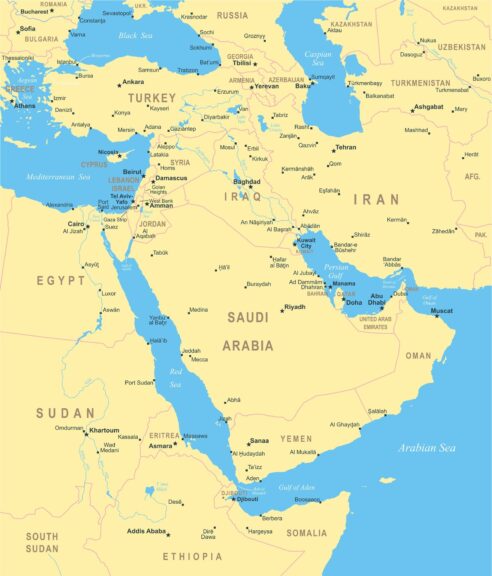
Oman: Rapid Growth from a Low Base
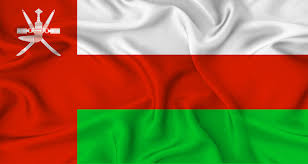
Oman provides one of the clearest examples of rapid Russian expansion. Russian-linked companies in Oman increased from approximately 90 in 2023 to 197 by the end of 2024, reaching 277 registered entities in 2025. Bilateral trade between Russia and Oman reached US$345 million in 2024.
Russian Business Establishments in Oman (2024-2025)
| Category | Numbers | Notes |
| Russian companies registered in Oman (2025) | 277 | Russian-invested registered entities |
| Russian-linked companies in Oman (end of 2024) | 197 | Increased from 90 in 2023 |
| Companies on “Made in Russia” mission (Oct 2024) | 39 | Participants exploring Oman market |
| Russian tourism firms visiting for cooperation (Apr 2025) | 54 | Tourism business delegation |
| Bilateral trade (2024) | US$345 million | Oman-Russia trade volume |
Oman’s ports and free zones, and particularly Duqm and Sohar, have attracted Russian-linked logistics, mining services and agro-processing investors. While China maintains a visible industrial presence in Omani port infrastructure and European firms participate in energy services, Russia’s percentage growth rate in company registrations has been among the fastest of any foreign business community in the Sultanate over the past two years. In absolute terms, European and Chinese investments in Oman remain larger in capital intensity. Russia’s acceleration trajectory, however, indicates growing integration into Omani logistics and trade corridors.
Of particular note for Russian investors in Oman is its geographical position, making it ideal as a transit, processing, and added-value hub for Russian products being reexported to East Africa. 78% of Russia’s total grain exports are now sent to the Middle East and Africa. Oman is emerging as a logistics and mining partner, leveraging its strategic ports within the INSTC corridor.
Bahrain: Financial Services and Digital Platforms
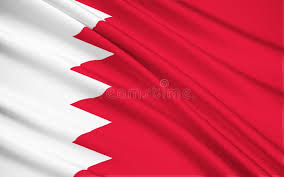
Bahrain hosts more than 190 Russian-linked active companies as of 2025. Seven bilateral memoranda of understanding signed in 2025 further facilitated trade and investment cooperation. Russia-Bahrain trade recorded 15% growth in 2025, reaching US$16 million. While this is historically low compared to other GCC nations, it is undergoing a shift toward increased cooperation. As of 2025-2026, both nations are actively strengthening bilateral ties, including customs agreements to bolster these figures, even as total, direct non-oil trade remains relatively modest.
| Category | Numbers | Notes |
| Russian-linked active companies in Bahrain (2025) | 190+ | Includes partnerships and joint ventures with Russian involvement. |
| Bahrain-Russia MOUs signed (2025) | 7 | Agreements facilitating trade, investment, and cooperation. |
| Russian pharma companies exploring local operations | In discussion | Indicative of expanding Russian direct business interests. |
| Trade growth Russia and Bahrain | 15% (Q1 2025) | Shows strengthening bilateral economic ties. |
Bahrain’s positioning as a fintech and financial services hub has attracted Russian digital platforms and financial technology startups. British and European financial institutions remain dominant in Bahrain’s banking sector, while India and China maintain trade and services representation. Russia’s presence is not numerous but is concentrated in innovation-oriented segments.
Bahrain is actively pursuing closer ties with BRICS, participating in the BRICS Plus framework and attending summits (including the 2024 Kazan summit) while awaiting a formal invitation for membership. Though not yet a full member, Bahrain applied to join in 2022 to strengthen economic and diplomatic ties with bloc members, including Russia, China, and India.
Kuwait: Strategic but Under-Quantified
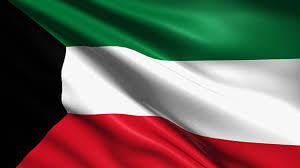
Kuwait does not publish detailed nationality-based corporate data. Russian participation is visible through trade delegations, state-linked representations, and secondary media sources.
| Category | Numbers | Notes |
| Estimated 100 | Not published | Kuwait does not publish company counts by nationality. |
| Russian organizations present or represented | Mainly Russian MNCs | Includes Rostec and representative offices. |
| Russian companies expressing interest via delegation | Numerous | Business mission participants in engineering, tech, energy, etc. |
| Joint Ventures | Dominant | Shows pipeline of potential entries. |
Engineering, technology, and energy services are the primary channels of engagement. By contrast, Indian businesses are numerous in Kuwait’s retail and construction sectors, while Western firms maintain defense and financial ties. China is active in infrastructure planning discussions. Russia’s presence remains modest in scale but positioned for expansion through project-based cooperation, typically involving SOEs. The Russian Direct Investment Fund has doubled its available capital to assist Russian businesses in Kuwait to US$1 billion, indicative of state support and pent-up demand.
Kuwait represents growing potential in petrochemicals, infrastructure co-investment, and industrial goods under its Vision 2035 agenda.
Looking ahead, Kuwait is actively exploring closer ties with the BRICS bloc as part of a strategy to diversify its economy and strengthen global partnerships, having been identified as one of the countries interested in cooperation. While not part of the 2024 expansion, Kuwait is among the nations seeking to join, driven by potential gains in investment, trade, and economic infrastructure developments.
Scale Versus Velocity
In absolute numbers across the GCC, India maintains the largest aggregate corporate presence, driven by longstanding diaspora networks and deep commercial ties. The United Kingdom and the broader European Union collectively maintain a significant footprint, especially in finance, energy, and advanced industrial sectors. China’s presence is capital-intensive and state-supported, particularly in infrastructure and logistics megaprojects.
To put that into context, Russia’s GCC presence is about 20% of India’s total, as can be seen in the UAE, where India’s estimated 80,000-90,000 companies significantly exceed Russia’s 13,500. However, Russia’s expansion since 2022 stands out for its speed and structural adaptation. The surge of 2,000 new UAE registrations in 2025 alone represents one of the most rapid growth phases among major foreign business communities. In Oman, the tripling of Russian-linked entities within two years underscores acceleration.
Russia’s outbound investment model also differs fundamentally from that of its competitors. Unlike China’s state-driven infrastructure model or Europe’s multinational corporate dominance, Russia’s GCC presence is decentralized, SME-heavy, trade-oriented, and digitally adaptive. It leverages free zones, re-export structures, and fintech platforms rather than large-scale manufacturing plants.
Taken together, however, these GCC partnerships demonstrate Russia’s expanding and diversified economic footprint across the Middle East, combining energy cooperation, sovereign investment, industrial development, logistics connectivity, and technological collaboration within a long-term strategic framework.
Where Russia Can Win: Strategic Implications for the GCC and Eurasia
The evolution of Russia’s corporate presence in the Gulf reflects broader structural shifts in global trade architecture. The UAE functions as a Eurasian re-export hub linking Russia to MENA, South Asia, and Africa. Oman offers maritime logistics depth. Bahrain provides financial intermediation, while Saudi Arabia presents high-value industrial partnership opportunities.
While Russia’s corporate presence does not eclipse India, the UK, or China in absolute terms, it has achieved rapid institutionalization in a short timeframe. The Gulf states, pursuing multi-vector foreign economic strategies, have integrated Russian businesses into their diversification agendas without displacing existing Western or Asian partners. The trajectory suggests consolidation rather than contraction. It is also a deliberate regional move to engage with Russia, not just for Russian dominance and experience in the energy sectors but crucially in new developments where the GCC’s traditional partners lack expertise or volumes. These include:
Agriculture:
Global warming is a serious matter in the GCC, with food security a pressing issue. Russia is the world’s largest grain exporter and is also developing bioengineered crops suitable for arid and salty conditions. Russia is also a major fertilizer producer. A three-pronged approach in this sector is evident:
- Russian exports of grain and fertilizer to meet regional demand;
- The development of regional grain hubs to reach new markets in Africa;
- The development of new strains that can cope with difficult regional Middle Eastern arable conditions.
Transport & Logistics:
Global supply chains are shifting and are being weaponized. Russia’s huge transport capabilities and the development of the INSTC corridor to reach both into Africa and Central Asia—including Afghanistan—are a major attraction for GCC businesses wanting to partner with Russia in order to insert themselves into global supply chain cash flows.
Energy:
The GCC is typically seen as an energy supply chain by Russia’s competitors—but crucially, not by Russia, which has plenty of its own oil and gas reserves. The energy factor is important, however—as productivity prices rise in the EU and UK, Russia’s lower production costs due to its lower energy overheads are likely to manifest themselves in competitive Russian pricing in everything from manufacturing to transport and logistics services.
Islamic Access To Central Asia:
The GCCcountries are all looking for new markets, with Central Asia an obvious target due to its Islamic sensibilities, developing wealth, and need for infrastructure, finance, and connectivity, as well as being a consumer market of about 84 million. Russia is the lead partner in Central Asia and the dominant trade player within the regional Eurasian Economic Union and Commonwealth of Independent States. As can be seen with the example of the UAE, free trade agreements with Central Asia can be expedited by Russia and help boost regional Eurasian trade.
Access to Africa:
Russia is keen to develop its trade and investment with Africa and is redeploying diplomats from Europe to the African continent to do so. By 2027 Russia will have embassies in 48 of the 54 African countries. The GCC—and especially Saudi Arabia and Oman—can play key roles in providing added-value services and jointly produced products together with Russian businesses to specifically target the African market. East Africa alone has a population in excess of 500 million, with per capita income expected to increase an average of 3.5% plus annually over the coming two decades.
If Russia transitions from trade-heavy structures toward industrial localization and joint production within the GCC, its relative standing could strengthen further. For now, the data indicates that while Russia is not the largest foreign corporate actor in the GCC, it is among the fastest expanding. In a region defined by strategic balance and economic diversification, Russian entrepreneurs new speed, adaptability and services diversity may prove as significant as the historical scale traditionally favoring Russia’s competitors.
The article was written by Ms. Begum, a Middle Eastern affairs analyst. She may be reached at info@russiaspviottoasia.com