 Русский





Monday (February 16) is Lunar New Year’s Eve and is the traditional day for families throughout Asia to come together, have a huge dinner, and wait for midnight to welcome in the beginning of a New Year. Because a year of twelve lunar months is 11 days shorter than a solar year (which determines the seasons), lunar calendars have strategies to take this into account, meaning the Lunar New Year’s day can vary from year to year.
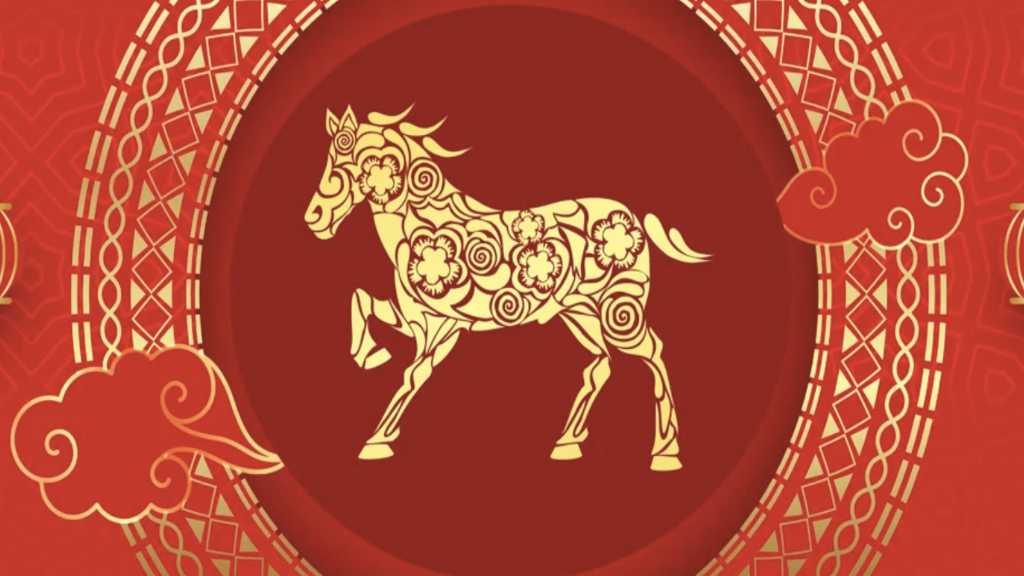
This year will be the year of the Horse, one of 12 animals that make up the lunar cycle. In addition, the five elements also rotate amongst the 12 animals: fire, water, wood, metal, and earth. 2026 is the Year of the Fire Horse. Here we provide a brief update of the main countries celebrating the Lunar New Year, national cultural specifics, and Russia’s trade with them.
China
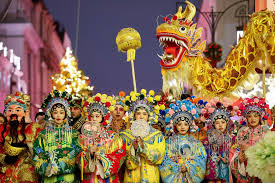
The Lunar New Year is the largest annual holiday in China, as the country takes a week off work. It also brings, every year, the largest annual human migration as millions of Chinese travel back to their hometowns to celebrate with family. In Mandarin, the traditional greeting at this time is “Xīn Nian Kuai Le.” Meanwhile, entire Chinese cities—such as Shanghai—are powered by Russian gas. Russia’s bilateral trade with China has been in excess of US$200 billion for the past three years, with trade diversification now the main aim as both countries want to expand trade beyond energy. Look out for a potential President Putin state visit to China in the autumn.
Hong Kong
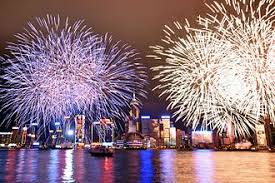
Hong Kong’s culture varies slightly from mainland China, being southern Chinese as opposed to northern Chinese-based, having had an extensive period under British rule, and having differing language and cuisines. Hong Kong also maintains a distinct customs and tax regime from mainland China, which is why Russia’s trade with Hong Kong is calculated separately from the PRC. In Cantonese, the traditional greeting at this time is “Gong Xi Fa Choi.” Unlike mainland China, Hong Kong is powered by nuclear energy and coal. Russia’s trade with Hong Kong reached about US$12 billion in 2025. An interesting feature of this was Russia’s exports of gold to the territory—making up US$10 billion of the total trade. These transactions were made to facilitate payments, via Hong Kong, for Russian purchases of goods in China, as sanctions have made standard banking arrangements somewhat problematic.
Mongolia
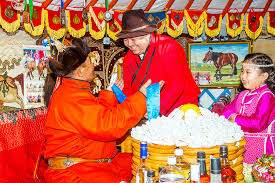
In Mongolia, the Lunar New Year is known as Tsagaan Sar and is held on Wednesday (February 18). The traditional greeting is “Sain Baiart Jildee.” Sandwiched between Russia and China, Mongolia is heavily influenced by both, with the Power of Siberia 2 pipeline between the two countries running through Mongolia, as does the Trans-Mongolian railway. Mongolia has a new free trade agreement with Russia via the Eurasian Economic Union, with bilateral trade growing 5% in 2025 to reach US$2.6 billion. Mongolian cashmere and other luxury products are starting to appear in high-end retail stores in Moscow and St. Petersburg.
Singapore
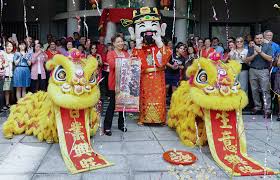
Singapore and neighbouring Malaysia are secular and celebrate all the major holidays, including Buddhist, Christian, Hindu, and Muslim dates, due to their regional diversity and extensive colonial backgrounds. In Singapore, ‘Chinatown’ is the main draw, with the area richly decorated and filled with night markets, restaurants, and locals all enjoying the ambience.
Both Singapore and Malaysia have significant populations of ethnic Chinese originally brought in from mainland China by the British to work the rubber plantations. These were generally recruited from Eastern China and have a distinct dialect known as Hokkien. New Year’s greetings in Hokkien would be pronounced as “Sin-ee Kwhy Lok.”
Singapore has generally followed the Western position as regards sanctions, and bilateral trade has declined in recent years. However, there are signs this position is changing and trade is slowly starting to rebound. Bilateral trade between Russia and Singapore reached about US$270 million in 2025, mainly comprising Russian oil products and Singaporean electronics. This could be boosted further if attention is paid once again to the Singapore-Eurasian Economic Union free trade agreement, which has been in limbo since 2022.
Meanwhile, Russia’s 2025 bilateral trade with Malaysia grew by 32%, reaching about US$4.24 billion. Specifically, the two sides managed to increase trade in chemical products. Malaysia is a BRICS partner country, and trade with the bloc is also increasing.
South Korea
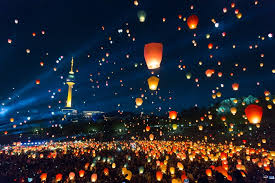
The Lunar New Year is also a major holiday in South Korea, where it is known as Seollal. The traditional greeting in Korean is “Saehae Bok Mani Badeuseyo.” South Korea has also been following Western sanctions against Russia, with 2025 bilateral trade reaching US$858 million, although imports from Russia increased, signaling a potential thaw in trade relations.
Vietnam
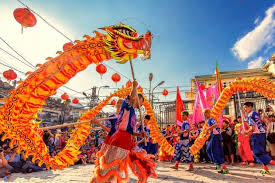
In Vietnam, the Lunar New Year is known as ‘Tet’ and is a major national holiday. Tet is generally celebrated on the same day as the Chinese New Year; however, the one-hour time difference between Vietnam and China results in the new moon occurring on different days. The traditional New Year’s greeting is “Chuc Mung Nam Moi.” Vietnam is Russia’s largest trading partner in ASEAN, while Russia-Vietnamese trade has remained robust and reached US$4.6 billion in 2025, with a relatively even trade balance. Russia exports energy products and automotive parts; Vietnam exports aquaculture, coffee, and other agricultural produce.
In Russian Culture
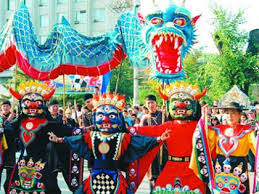
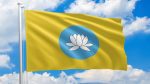
The Republic of Kalmykia in Russia also celebrates the Lunar New Year and is the only Buddhist republic in Europe. Lunar New Year traditions in Kalmykia follow the Central Asian traditions, such as those practiced in Mongolia.
Details of the Lunar New Year signs and horoscopes for 2026 depending upon your personal date of birth and associated animal and element can be found here.