 Русский




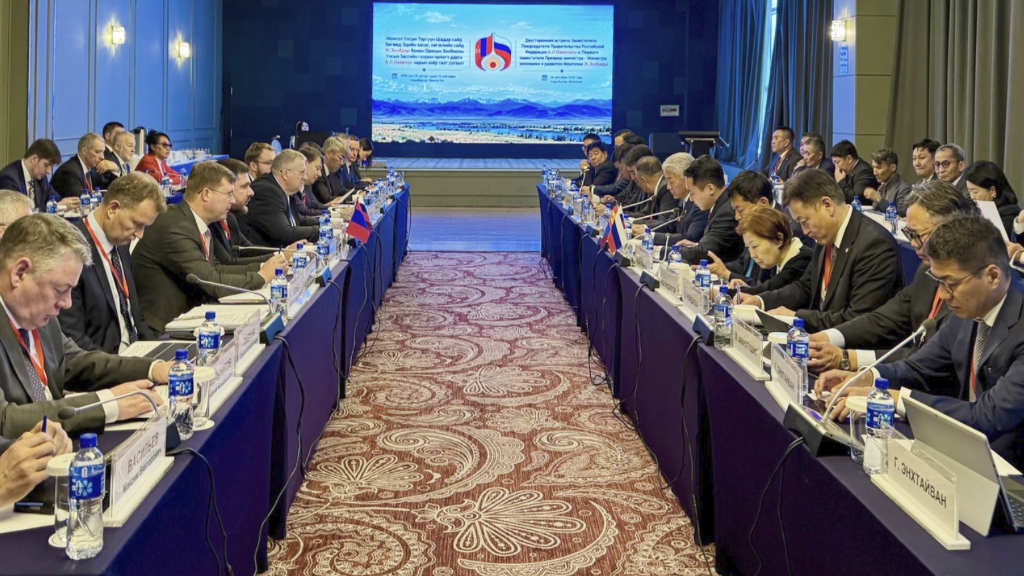

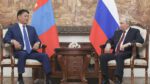
The second Forum of Regions of Russia and Mongolia, held in Ulaanbaatar on September 14-15, 2026, has moved Russian-Mongolian economic cooperation from a broad intergovernmental agenda toward a more operational regional and business-to-business model. The forum brought together more than 400 representatives from 14 regions of Russia, including Russian government bodies, federal agencies and the business community. Participants included Irkutsk Region, Buryatia, Altai Krai, Tuva, Kalmykia, Zabaykalsky Krai, Primorsky Krai and Sakha (Yakutia).
On the Mongolian side, Government bodies, agencies and businesses from Khövsgöl, Töv, Khovd and Uvs were in attendance. The Russian delegation was headed by Deputy Prime Minister Alexei Overchuk and the Mongolian delegation by First Deputy Prime Minister and Minister of Economy and Development Jadambyn Enkhbayar.
The Forum of Regions provided a platform for practical cooperation between regional authorities, businesses and economic institutions. Discussions covered Eurasian transport corridors, cross-border cooperation, tourism, trade, agriculture, energy and implementation of the EAEU-Mongolia agreement.
It also included the first meeting of the Joint Committee established under the Interim Trade Agreement between Mongolia and the Eurasian Economic Union and its member states, discussions on transport connectivity and cross-border cooperation, a sub-session on sports cooperation between Mongolian and Russian regions, a joint meeting of the National Business Councils, and the 18th session of the Sub-Commission on Regional and Cross-Border Cooperation and Tourism Development. There were also business-to-business (B2B) meetings, an exhibition featuring regional enterprises from Mongolia and Russia, and bilateral meetings and negotiations between regional representatives from the two countries.
Moving Towards Bilateral Integration
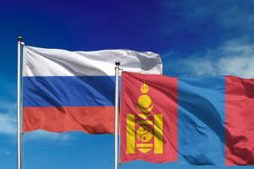
The importance of the Ulaanbaatar meeting lies less in one headline investment package than in the number of mechanisms placed alongside each other:
- The first Joint Committee under the EAEU-Mongolia Interim Trade Agreement,
- Russia-Mongolia-China transport-corridor discussions,
- The Russia-Mongolia Intergovernmental Commission on regional, border and tourism cooperation,
- National business-council meetings,
- B2B matchmaking, regional agreements, sectoral roadmaps and commercial contracts.
The programme covered transport, logistics, agriculture, energy, industry, tourism, education, healthcare, sports and digital trade. The economic starting point is already substantial. Russia-Mongolia trade increased 4% in 2025 to reach US$2.69 billion and rose another 18% in H1 2026 to US$1.58 billion, according to the Russian Federal Customs Service. If that rate continues, it implies a total 2026 bilateral trade volume of US$3.16 billion, which would be a record high.
Russia remains Mongolia’s second-largest import source after China, supplying petroleum products, food, fertilizers, industrial raw materials and chemicals.
The Mongolia-EAEU Trade Agreement

That growth is increasingly supported by the new EAEU trade architecture. The Interim Trade Agreement was signed in Minsk on June 27, 2025 and entered into force July 22, 2026. The agreement eliminates or reduces duties on 367 tariff subheadings on each side and covers roughly 90% of existing mutual goods trade. It is a three-year interim arrangement, with automatic extension for another three years unless terminated, and is intended to create a basis for broader liberalization.
For Mongolia, the commercial significance is particularly concentrated in livestock and light-industry exports. The EAEU common market of approximately 185 million consumers now offers preferential access for meat and meat products, dairy products, hides and skins, wool, cashmere, yarns, knitted goods and other agricultural products.
About 97.5% of Mongolia’s preferential product categories are agricultural or livestock-origin products, while estimated annual customs-duty savings for Mongolian exporters are put at least US$16.6 million.
For EAEU exporters, the opportunity runs in the opposite direction: dairy products, beverages, confectionery, wheat, corn, vegetable oils, sugar, mineral water, metallurgy, motor vehicles, railway equipment, chemicals, polymers, tires, nitrogen fertilizers, medicines and other consumer goods receive preferential access. Estimated annual savings for EAEU businesses are put at up to US$100 million. Mongolia has also allocated tariff quotas, including a zero in-quota rate for 1,500 tonnes of dry milk.
The Joint Committee Gives The Free-Trade Agreement An Operating Structure
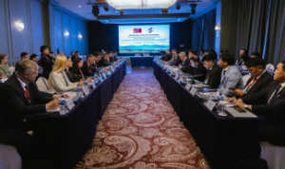
The most important institutional outcome was the first meeting of the Joint Committee created under the EAEU-Mongolia Interim Trade Agreement. This includes trade rights with Russia as well as neighboring Kazakhstan, in addition to Armenia, Belarus and Kyrgyzstan.
The first meeting of the Joint Committee was held under the joint chairmanship of Andrey Slepnev, Minister for Trade of the EEC, and Jadambaa Enkhbayar, First Deputy Prime Minister and Minister of Economy and Development of Mongolia. During the meeting, the Mongolian side was presented with the unified EAEU customs transit system, which is open to accession by partner countries. The legal basis for the involvement of third countries was established by an agreement signed on 26 December 2024; however, Mongolia’s actual participation will require a separate international treaty. Customs cooperation and Mongolia’s possible integration into the system were among the key topics discussed.
Enkhbayar Jadambyn and Andrey Slepnev, Eurasian Economic Commission Board Member and Minister in charge of Trade, co-chaired the meeting. Mongolia has been integrated into the EAEU’s unified customs transit system under the agreement signed on December 26, 2024. The temporary trade agreement, valid for three years with an automatic three-year extension unless terminated, aims to simplify trade and gradually remove restrictions on almost all mutual trade. Following a review after the initial three years, both sides can work toward a permanent, fully-fledged EAEU-Mongolia free trade agreement, with implementation during the coming years being an important step toward deeper economic cooperation.
Slepnev said that “The temporary trade agreement has come into force. Now we have a challenging path to implement it, it is necessary to ensure that neither the Mongolian side nor the EAEU doubts its necessity and the need to decide on concluding a full-fledged, permanent free trade agreement.”
The committee also approved its rules of procedure and agreed to establish subcommittees on trade in goods and customs cooperation and working groups covering technical regulations, sanitary measures and phytosanitary issues. This is significant because the immediate issue facing Mongolia’s exports is no longer tariffs, but protocol agreements,
Dealing with this, the Mongolian side raised SPS requirements, customs procedures, rules of origin and technical barriers and proposed connecting Mongolian exporters directly with EAEU buyers and business partners. The parties also agreed to determine indicative volumes of Mongolian meat exports to EAEU countries for 2027 and begin consultations to remove technical barriers. Customs transit procedures and the possible creation of a unified customs transit system were also discussed.
The EAEU also raised the issue of access to the Mongolian market for tobacco and tobacco products, eggs, fish and meat preserves, alcohol, and flour. The first Trade in Goods Subcommittee is planned for the end of 2026, with the next ministerial-level meeting scheduled for Q1 2027. The practical implication is that the agreement is moving from tariff policy into supply-chain policy. Mongolia needs veterinary certification, predictable customs treatment, rules-of-origin verification, logistics and buyers. Russia and the other EAEU economies need competitive Mongolian livestock, cashmere, leather and agricultural products. The Joint Committee is therefore becoming the mechanism through which preferential access can translate into actual shipments.
Overchuk’s Mongolia Meetings And The Regional Forum
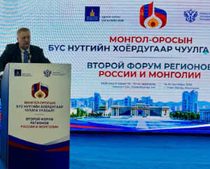
Russian Deputy Prime Minister Alexei Overchuk’s meetings in Ulaanbaatar on September 14-15 focused on translating the growing political dialogue between the two countries into practical trade, economic and regional cooperation.
On September 14, Overchuk met First Deputy Prime Minister and Minister of Economy and Development Jadambyn Enkhbayar, with representatives of relevant agencies, regional leaders and Eurasian Economic Commission Trade Minister Andrei Slepnev. Their discussions covered Russian-Mongolian trade and investment, transport connectivity across Eurasia, energy, industry, agriculture and implementation of the EAEU-Mongolia Provisional Trade Agreement.
On September 15, Overchuk held a separate meeting with Prime Minister Nyam-Osoryn Uchral, where the sides discussed current trade and economic cooperation, implementation of the EAEU-Mongolia agreement and ways to unlock Mongolia’s transit potential as economic integration between Russia and other south Asian markets expand.
They also highlighted Russia’s role in Mongolia’s foreign economic relations, including Russian support for Mongolia’s energy security and greater access for Mongolian agricultural products to the Russian market. These meetings focused on strengthening trade, business, transport, regional, tourism, and economic cooperation, as well as advancing major infrastructure and energy projects between Mongolia and Russia.
At the September 15 meeting with Prime Minister Uchral, particular attention was given to expanding supplies of Mongolian meat, cashmere and leather goods to Russia, alongside energy and environmental-protection projects. The parties also reviewed implementation of the EAEU-Mongolia trade agreement. Slepnev briefed the meeting on the first Joint Committee’s work, including measures to facilitate implementation of the agreement. The two sides reaffirmed their commitment to the comprehensive strategic partnership and agreed to maintain regular and systematic government-level dialogue.
The EAEU’s Country-By-Country Opportunity
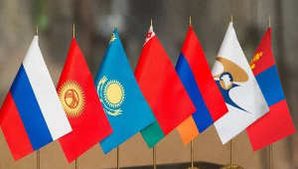
Russia is by far the dominant EAEU partner for Mongolia, with bilateral trade around US$2.69 in 2025.
Kazakhstan’s trade with Mongolia reached US$133.5 million in 2025, up 7.7%, with Kazakh exports at US$123.1 million and Mongolian exports at US$10.5 million. Mongolian exports to Kazakhstan were heavily concentrated in horse meat, worth US$8.4 million, approximately 81% of Mongolia’s exports to Kazakhstan.
Belarusian trade remains much smaller, with Mongolian imports from Belarus around US$24.6 million in the cited data, mainly sugar and condensed or dry milk.
Kyrgyzstan-Mongolia trade is about US$4 million, while Armenia-Mongolia trade is also small at about US$1.6 million, mostly Armenian exports of brandy.
The strategic point however is diversification. More than 90% of Mongolia’s exports remain linked to China, mainly in minerals. The EAEU arrangement provides a separate route for Mongolia to develop non-mineral exports such as meat, cashmere, leather, textiles and livestock products while Mongolia gains preferential access to Russian and other EAEU food, machinery, industrial and consumer products.
The Ulaanbaatar Documents: Russia-Mongolia Trade & Investment Analysis
The forum produced several identifiable regional and sectoral documents. Mongolia’s Ministry of Economy and Development and Russia’s Ministry of Economic Development exchanged a memorandum of understanding on developing economic relations.
Mongolia’s Tov Aimag and the Government of Russia’s Leningrad Region, the area around St. Petersburg, presented an agreement covering trade-economic, scientific-technical and socio-cultural cooperation. This adds a wider geographical dimension by linking central Mongolia, including the area surrounding Ulaanbaatar, with one of Russia’s major industrial and logistics regions. Its trade, scientific-technical and socio-cultural provisions support machinery, construction materials, agricultural products, engineering, technology and logistics services, although no aggregate financial value has been publicly established.
Khovsgol Aimag and Russia’s Irkutsk Region produced the clearest regional agreement. The two sides signed a cooperation agreement covering trade and economic relations, social cooperation, science and technology and cultural-humanitarian ties, with priority sectors including agriculture, healthcare, education, culture, sport and tourism. Russian businesses from Irkutsk signed agreements and foreign-trade contracts with Mongolian partners worth over RUB 680 million. The transactions include cargo transportation, Mongolian canned-meat supplies, Russian construction materials, conifer seedlings, polymer products and dealer services.
Another example is the Russian company Buryatmyasprom: it has announced its readiness to import up to 5,000 tons of Mongolian meat to Buryatia per year, while Mongolia was among Buryatia’s top three foreign-trade partners among 47 countries in 2025; bilateral turnover increased 8%, exports by 4.3%, and imports by 1.5 times.
An initialed draft agreement was also presented between Ulaanbaatar CHPP-3 and Inter RAO-Export LLC for the expansion and modernization of Ulaanbaatar’s CHPP-3 power station. The CHPP-3 document is particularly important because it connects regional economic cooperation with Mongolia’s energy-security requirements. It is not simply a commercial supply contract: it concerns the development of the main project for expansion and modernization of a major Ulaanbaatar power facility, placing Russian engineering and energy capabilities into Mongolia’s urban infrastructure agenda.
Because it remains an initialed draft, its final investment value has not been confirmed; however, modernization of Ulaanbaatar’s combined heat-and-power infrastructure will generate demand for Russian engineering, power equipment, construction, automation, installation, commissioning and long-term maintenance. The project therefore links energy infrastructure with Mongolia’s wider industrial and urban development.
The agreements and commercial arrangements emerging from the second Russia-Mongolia Regional Forum are significant because, taken together, they create a three-level economic architecture linking national policy, regional cooperation and company-level projects. Their importance lies in how they connect existing trade with new business and infrastructure opportunities.
The first Joint Committee implementing the agreement met alongside the forum and addressed customs procedures, rules of origin, sanitary and veterinary requirements, technical barriers and preliminary 2027 meat-supply volumes. This is important because tariff preferences alone cannot generate trade without certification, customs clearance, logistics and buyers. The regional agreements provide mechanisms for solving these practical constraints.
Irkutsk Produces The Forum’s Clearest Commercial Package
Russia’s Irkutsk Region delivered the most clearly quantified business result of the forum. More than ten Irkutsk enterprises and organisations participated across agro-industry, mechanical engineering, mining equipment, information technology, polymer materials, construction, freight transport, sports, tourism and education. Their agreements and foreign-trade contracts with Mongolian counterparts exceeded ₽680 million (US$8 million). The commercial package included cargo transportation services, purchases of canned meat from Mongolia, supplies of coniferous seedlings and construction materials from Irkutsk, a dealer-services agreement and polymer-plastic supplies.
The structure of these contracts is revealing: the package is not concentrated in a single commodity but combines logistics, food, forestry-related materials, construction inputs, industrial products and distribution services. Governor Igor Kobzev linked the commercial programme to the national project “International Cooperation and Export”. He also proposed synchronising a calendar for the Great Tea Road project across Russia, Mongolia and China. Irkutsk companies exhibited agro-industrial products, IT and software, wear-resistant polymer components, water-supply and heating equipment. The regional government also connected economic cooperation with environmental projects involving Lake Baikal and Lake Khövsgöl. This is one of the strongest indications that the regional forum is becoming a mechanism for actual SME export development rather than only a political dialogue.
Buryatia Turns The EAEU Agreement Into A Border-Region Business Model

Buryatia arrived in Ulaanbaatar with 24 companies, most of them small and medium-sized exporters. The exhibition included confectionery, fertilizers, thermal-power equipment, medical products, food products and expanded-polystyrene housing. Head of Buryatia Alexei Tsydenov presented the products to Overchuk and Mongolian representatives, while Export Support Centre head Ruslan Gylykpylov positioned the exhibition as a direct route for Mongolian buyers to inspect products and samples. Agriculture and meat processing were prominent.
Buryatmyasprom confirmed readiness to supply up to 5,000 tonnes of meat annually, while Buryatia’s farmers also identified pork, milk and butter as potential exports. In 2025 Mongolia was Buryatia’s third-largest foreign-trade partner among 47 countries; bilateral trade increased 8%, with its exports to Mongolia rising 4.3% and imports increasing 1.5 times. This means there is now quality competition for the Mongolian consumer market, which has previously been dominated by China, and not always satisfactorily so. Anyone who has purchased a tray of nice looking fruit from Ulaanbaatar’s State Department Store only to get home and find bruising and damage on the underside of the produce will be familiar with the situation. Buryatia’s entrance into Ulaanbaatar’s consumer market will provide Chinese suppliers with both quality and pricing competition.
Tsydenov also held two meetings on the sidelines of the forum—with Baatarjavyn Lkhagvajav, President of the Mongolian National Chamber of Commerce and Industry, and Nyamtaishirin Nomtoibayar, Deputy Prime Minister. At the meeting with the leadership of the NCCI, the parties discussed agricultural products, industrial goods (metal structures, cardboard), timber processing, digital trade, and tourism. The discussion with Deputy Prime Minister Nomtoibayar focused on the Altanbulag–Kyakhta cross‑border economic zone, the establishment of joint production facilities, and logistics development.
Tsydenov also presented new helicopter models produced by the Ulan‑Ude Aviation Plant and proposed supplying the aircraft to equip the emergency rescue services of Mongolia’s Ministry of Emergency Situations. In addition, the parties discussed joint efforts to prevent and extinguish wildfires, monitor emergency situations, and train specialists.
Altai Connects Agriculture, Transit And Western Mongolia

Russia’s Altai Territory approached the forum through a different but complementary model. Deputy Chairman Vitaly Snesar led a delegation that included Agriculture Minister Sergey Mezhin, tourism specialist Marina Tankova, Khovd representative Alexei Shabanov, Svitok commercial director Mikhail Babushkin, VIAL commercial director Oksana Egorova, Federal Altai Scientific Centre for Agrobiotechnologies Deputy Director Andrey Ziborov and Plem Enterprise Barnaulskoye General Director Alexander Katamanov. Mezhin and Mongolia’s State Secretary T. Zhambaltseren agreed to prepare an agricultural cooperation roadmap.
Priority areas are wheat, breeding cattle, flour and cereals. Mongolia ranks third or fourth among Altai’s grain export destinations. Around 40 Altai enterprises are ready to supply breeding livestock, while Plem Enterprise Barnaulskoye has already delivered 450 head of beef cattle over three years and is discussing dairy breeds and bio-products for artificial insemination. Altai wheat varieties including Altai 70, Altai 75 and Altai 325 are already used in Mongolia. New intensive varieties capable of yields of 4-5 tonnes per hectare under appropriate technology are being developed, with small-scale environmental and production tests planned in Mongolia in 2027 and the prospect of a joint variety appearing in Mongolian fields within three to five years. Seedlings are also being supplied for Mongolia’s Billion Trees programme.
The Khovd discussions extended beyond agriculture into infrastructure. The sides considered agricultural machinery, agro-technology, bitumen supplies from Biysk, a transport-logistics centre, industrial-park development, border and road infrastructure, tourism bases and hotels. Financial operations, investment-return risks and investor participation conditions in the proposed technology park remain issues requiring clarification.
With Uvs Aimag, the discussion turned toward a new tourist route from Altai through Uvs and the Republic of Tuva, as well as an international ethnofestival planned for 2027. Altai also offered seeds, seedlings, technologies and specialist training. Cargo already moves from inland China through Bayan-Ulgii and Altai toward central Russian regions, giving the territory a potential role in a wider Russia-Mongolia-China logistics chain.
Tuva And Kalmykia Widen The Regional Map

Tuva’s role at the forum was primarily in sports and cultural-humanitarian cooperation. The Tuvan delegation included sports officials Buyan Burbuchuk and Ushpas Kuular. Discussions covered wrestling, archery and horse racing, preparation for the World Nomad Games, student and specialist exchanges, advanced training, combat-sports meetings and joint football, basketball and volleyball events. Kalmykia focused on education, tourism, culture, youth and sports. Its participation illustrates that the Russia-Mongolia relationship is no longer confined to the four immediate border regions.
The first forum in Irkutsk in December 2025 had already produced the Medium-Term Action Programme for Interregional Cooperation for 2026-2030, covering approximately 70 cooperation vectors and more than 120 joint events across 11 areas. Nearly 30 Russia-Mongolia regional events were held during the first nine months of 2026. More than 60 Russian federal subjects now maintain trade and economic relations with Mongolia across the countries’ 3,485-kilometre border. This gives the bilateral relationship a much wider geographic base than the headline Russia-Mongolia trade figure alone suggests.
Rail Becomes The Physical Backbone Of The Corridor
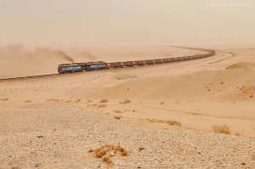
The strongest structural argument for the Russia-Mongolia relationship is transport.
The Ulaanbaatar Railway, (UBTZ) the 50/50 Russia-Mongolia joint venture, operates a network of about 1,800 kilometres through the central Russia-Mongolia-China corridor. It transported more than 33 million tonnes of freight in 2025 and nearly 20 million tonnes in the first seven months of 2026. In the first half of 2026, foreign-trade cargo handled by the railway increased 26.7% for imports and 12.2% for exports.
At the Zamyn-Uud-Erlian crossing, cargo exchange reached 9,579,027 tonnes, up 9.7% Through Sukhbaatar-Naushki, it reached 4,539,224 tonnes, up 6.5%.
Russian Railways First Deputy General Director Sergey Pavlov said Russian-side capacity work had been completed, including lengthening receiving and departure tracks, reconstruction at Naushki and capacity improvements on the Ulan-Ude-Naushki section. The investment was approximately US$40 million.
China is simultaneously expanding Erlian capacity for transit container trains and Mongolian export cargo. Mongolia, Russia and China are now discussing the next step. Mongolian Transport Minister Delgersaikhan Borkhuu said combined feasibility studies point toward raising Ulaanbaatar Railway capacity to 50 million tonnes by 2030, while the three countries are discussing financing sources and repayment.
A trilateral railway meeting in Irkutsk on September 15 discussed 2027 freight and passenger volumes through border crossings. Mongolia’s wider transport statistics show why the issue is urgent. During the first eight months of 2026, the country moved 123 million tonnes of cargo, up 42%, including 82 million tonnes by road and 41 million tonnes by rail. Passenger transport reached 118 million, up 24%, while export cargo reached 87 million tonnes, up 40%. The railway’s Russian industrial footprint is already visible. Bryansk Machine-Building Plant has supplied more than 20 shunting locomotives to Ulaanbaatar Railway, while in November 2025 a Russian mainline locomotive hauled a record 108-car freight train.
This growing network can support Russia-Mongolia-China trade flows, including agricultural products, industrial goods, construction materials and transit cargo. The agreements also extend into tourism, education, healthcare, environmental cooperation and the Great Tea Road tourism framework, particularly around Lake Baikal and Lake Khövsgöl.
Energy Keeps Russia At The Centre Of Mongolia’s Supply Chains
Energy is another core pillar. Russia continues to supply Mongolia with fuel and lubricants under favourable terms, with supplies described as stable and uninterrupted, although there has been some disruption. Putin and Uchral discussed fuel and energy security, while Overchuk repeatedly emphasised Russia’s response to Mongolian requests for petroleum products.
The wider project list includes the modernisation of Thermal Power Plant No. 3, the Asgat mine, the proposed natural-gas pipeline to China through Mongolian territory and fuel supplies. The CHPP-3 modernisation agreement with Inter RAO-Export brought the power sector directly into the regional forum’s document package. The meeting between Overchuk and Enkhbayar also covered energy, industry, agriculture and transport connectivity. Mongolia’s side stressed the need to turn preferential trade into investment and concrete projects, while Russia emphasised improved market access and a better trade balance.
Defence & Border Cooperation Run Alongside Economic Integration
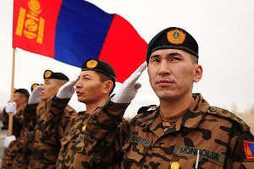
Economic connectivity is developing in parallel with security cooperation. Russian Deputy Defence Minister Vasily Osmakov met Mongolian Defence Attaché Brigadier-General Lhamzhiye Onzgoybayar to discuss the condition and prospects of military cooperation. In early September, China, Russia and Mongolia conducted the “Border Cooperation-2026” exercise near Manzhouli. The exercise focused on preventing reconnaissance and sabotage, joint planning, search, interdiction, detention and transfer of suspects, with unmanned and intelligent technologies incorporated into the exercise. For the economic corridor, border security has a direct logistical dimension. The Russia-Mongolia-China route depends on predictable movement across multiple borders, while increasing freight volumes raise the economic value of coordinated customs, transport and border-management systems.
Tourism, Education & The Human Corridor
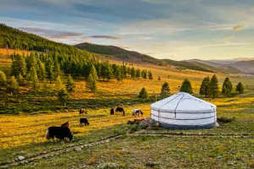
Tourism is becoming another measurable economic channel. Mutual tourist flows are approaching 500,000 trips, with about 95% travelling by road. Russia and Mongolia are discussing expanded air services, including the possible restoration of direct Moscow-Ulaanbaatar flights. Nineteen Russian regions are ready to participate in joint routes under the Great Tea Road project. The Great Tea Road has a wider regional logic: it links Russia, Mongolia and China through historical trade routes while creating modern demand for transport, hotels, food services, border infrastructure and cultural tourism. The humanitarian side is also economically relevant. Russia allocated 620 state-funded university places for Mongolian students for the 2026/27 academic year. Buryatia alone hosts 188 Mongolian students on free pedagogical programmes. A Russian St. Panteleimon medical train provided services to more than 2,800 people in Mongolia between May 18 and June 4, 2026. Russian health authorities also began vaccination of Mongolian citizens with a Russian plague vaccine amid an epidemiological complication.
Russian Vaccine Assistance

On September 15, 2026, Russia began providing vaccination support in Mongolia amid a complicated epidemiological situation involving plague. Rospotrebnadzor specialists started vaccinating Mongolian citizens with a Russian-produced plague vaccine, according to Rospotrebnadzor head Anna Popova. The measure adds a public-health dimension to broader Russian-Mongolian cooperation. Earlier in 2026, a Russian medical train provided consultations and diagnostic services to more than 2,800 people in Mongolia between May 18 and June 4.
Summary: What The Ulaanbaatar Forum Actually Changed
The latest Russia-Mongolia forum did not produce a single mega-investment announcement comparable to a major mining or infrastructure project. Its economic significance is more granular and arguably more important for regional commerce: it connected the new EAEU tariff regime to exporters, border regions, railways, agricultural producers, energy projects and tourism operators.
The measurable results include the ₽680 million in Irkutsk commercial contracts, a signed Irkutsk-Khövsgöl regional cooperation agreement, the economic-relations MOU between the two economic ministries, the Tuv-Leningrad cooperation agreement, the Khuvsgul-Irkutsk document exchange, the initialed CHPP-3/Inter RAO-Export project agreement, the 24-company Buryat exhibition, the 5,000-tonne annual meat-supply intention from Buryatmyasprom, the Altai agricultural roadmap, the 2027 EAEU meat-volume work, and the institutional machinery for removing SPS, customs and technical barriers.
The most important outcome, therefore, is the emergence of a three-layer economic architecture. The first layer is market access, created by the EAEU-Mongolia Interim Trade Agreement.
The second is physical connectivity, centred on Ulaanbaatar Railway and the Russia-Mongolia-China corridor.
The third is regional production, involving Buryatia, Irkutsk, Altai, Tuva, Kalmykia, Leningrad and other Russian regions together with Mongolia’s aimags. That architecture is already producing measurable traffic: US$1.58 billion in bilateral trade in the first half of 2026, more than 33 million tonnes of Ulaanbaatar Railway freight in 2025, nearly 20 million tonnes in seven months of 2026, more than 9.58 million tonnes through Zamyn-Uud-Erlian, more than 4.54 million tonnes through Sukhbaatar-Naushki, and a proposed railway capacity of 50 million tonnes by 2030.
The next test is implementation. The Joint Committee must turn tariff preferences into shipments; the meat working group must translate the 2027 indicative volumes into veterinary approvals and contracts; the railway authorities must turn feasibility studies into financing and capacity; energy projects must move from study and initialing into engineering and construction; and regional governments must convert B2B contacts into recurring trade.
The most consequential institutional outcome is the activation of the EAEU-Mongolia Joint Committee. The 2026 Ulaanbaatar forum therefore marks a shift in the Russia-Mongolia economic relationship: from a relationship measured mainly by bilateral trade and fuel supplies toward one increasingly measured by regional contracts, cross-border production, preferential market access, rail capacity, agricultural technology, logistics, tourism and coordinated Eurasian transit. The forum’s value will ultimately be measured not by the number of documents exchanged in Ulaanbaatar, but by how many of those documents become shipments, railway tonnes, meat exports, construction projects, tourists, industrial contracts and investment flows during 2027-2030.
This report was written by Ms. Begum, a reporter on Russia-Northeast Asia affairs for Russia’s Pivot To Asia. She may be reached at info@russiaspviottoasia.com