
 Русский









In 2025, Russia-China trade entered a new and more complex phase. After four consecutive years of uninterrupted expansion, bilateral trade turnover declined for the first time since the covid pandemic in 2020. According to Chinese customs data cited by Russia’s Trade Representative to China Alexey Dakhnovsky, two-way trade fell by 6.9% year-on-year, reaching US$228.105 billion. In yuan terms, trade decreased by 6.5%, from a record 1.74 trillion yuan in 2024 to approximately 1.63 trillion yuan in 2025.
At first glance, the decline appears modest. In absolute terms, trade volumes remain historically high. Yet for policymakers and business leaders in both Moscow and Beijing, the symbolic meaning is far more significant than the numerical drop. The slowdown has raised fundamental questions about the sustainability, structure, and future direction of the Russia-China economic partnership at a time when both countries are navigating prolonged geopolitical pressure, global economic fragmentation, and structural transformation of their domestic economies.
The 2025 figures do not indicate a political weakening of bilateral relations. Instead, they reveal deeper economic and structural frictions that have accumulated beneath the surface of rapid trade growth since 2022. Understanding these underlying dynamics is essential if Russia and China are to move from a phase of emergency-driven trade expansion toward a more balanced, resilient, and innovation-oriented economic partnership.
From Sanctions Shock to Structural Plateau

Following the escalation of Western sanctions in 2022, China became Russia’s principal economic stabilizer. Energy exports were redirected eastward at unprecedented speed. Chinese manufacturers filled gaps left by Western suppliers. Bilateral trade surged from US $147 billion in 2021 to over US $240 billion in 2024, transforming China into Russia’s largest trading partner by a wide margin. However, this rapid expansion was largely quantitative rather than qualitative. Trade growth was driven overwhelmingly by three factors: discounted Russian energy exports, surging Chinese vehicle and machinery supplies, and emergency substitution of Western imports. By 2024, this model had largely exhausted its immediate momentum. In 2025, the partnership encountered what economists describe as a “structural plateau”-a phase where further growth cannot be achieved simply by increasing volumes under existing trade patterns.
Commodity Price Dynamics
Value Declines Without Volume Collapse
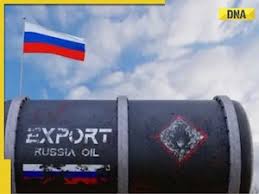
One of the most important-yet often misunderstood-contributors to the 2025 decline was commodity pricing rather than physical trade disruption. Chinese customs data for the first eleven months of 2025 show that the value of crude oil imports from Russia fell by nearly 19.6% year-on-year to 328.5 billion yuan. This decline occurred despite relatively stable shipment volumes. The explanation lies in global oil price dynamics. Compared with the elevated price environment of 2023–2024, benchmark crude prices softened throughout much of 2025 due to weaker global demand growth, increased supply, and cautious energy consumption in major economies.
Russia is in negotiations with Beijing to potentially resume power supply to China, the Russian Energy Ministry stated on January 16, after a Russian media report said that China halted electricity imports from Russia due to high prices. On January 16, Russia reported that China had stopped buying electricity from Russia.
The Chinese refusal to buy Russian electricity was the result of high Russian export prices, which in 2026 topped the domestic power prices in China for the first time. For Russia, this created a paradoxical situation: energy exports to China remained strategically vital and physically robust yet generated lower export revenues in nominal terms. As energy still constitutes a dominant share of Russian exports to China, price movements translated directly into headline trade statistics. This highlights a core vulnerability of the bilateral trade structure: excessive dependence on price-sensitive raw materials rather than value-added products.
Automotive Rebalancing
Another major factor behind the decline was the sharp contraction in Chinese vehicle exports to Russia. Between 2022 and 2024, Chinese automobile manufacturers rapidly captured market share in Russia following the withdrawal of Western and Japanese brands. By mid-2024, Chinese brands accounted for more than half of new car sales in the Russian market. However, by 2025, the phase of rapid substitution had ended.
According to data from the China Passenger Car Association, Chinese vehicle exports to Russia in volume terms fell by approximately 46% year-on-year during January-November 2025. This was not the result of political friction, but of deliberate Russian industrial policy adjustments. Moscow introduced higher recycling fees and localization incentives aimed at protecting domestic production and encouraging joint manufacturing rather than pure imports. The policy reflects Russia’s broader strategy of avoiding long-term dependence on finished imports and instead rebuilding domestic industrial capacity. While economically rational from Russia’s perspective, the transition inevitably reduced short-term trade volumes and exposed the limits of an import-driven trade expansion model.
Electricity
The suspension of electricity imports by China from January 2026 further illustrates the increasingly economic rather than political nature of bilateral trade decisions. China halted power imports from Russia, including even minimal contracted volumes of around 12 megawatts. This decision was influenced by three practical considerations.
First, rising domestic electricity demand in Russia’s Far East constrained available export capacity. Second, export prices exceeded China’s domestic electricity tariffs, making imports commercially unattractive. Third, China’s own power generation capacity particularly renewables and coal-based generation continued to expand, reducing reliance on imported electricity. While electricity represents a small share of total trade, the episode carries symbolic importance. It demonstrates that the Russia–China economic relationship is increasingly governed by market logic rather than political symbolism- a sign of maturity, but also of rising competitive pressure.
Russia and China should adjust the electricity price formula in order that exports remain cheaper than China’s domestic power. Russia must first secure enough electricity for the Far East before resuming large-scale exports. Electricity trade should be flexible and based on real demand rather than fixed volumes. Both sides need closer coordination on regional energy planning to avoid supply disruptions. Cooperation should expand beyond power exports to joint energy infrastructure projects.
Settlement Mechanisms
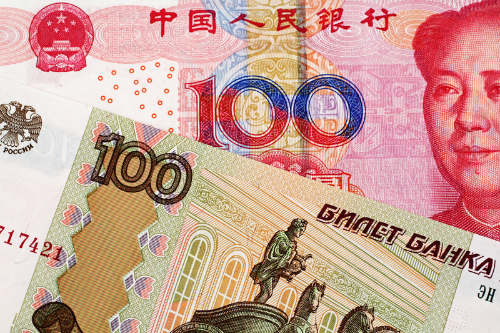
Significant progress has been made in de-dollarization. By late 2025, more than 95% of bilateral trade settlements were conducted in rubles and yuan. This represents a major institutional achievement. The Bank of Russia sold yuan on the domestic market with settlement on January 15, 2026, totaling ₽10.2 billion (US$130.9 million), according to data published on the regulator’s website. The volume of currency sales on the domestic market with settlement on January 14, 2026, also amounted to ₽10.2 billion. Yet settlement challenges remain.
Russian companies frequently face difficulties repatriating yuan revenues or deploying them efficiently within domestic financial markets. Chinese banks, while active, continue to apply heightened compliance scrutiny due to secondary sanctions risks. Liquidity depth in ruble-yuan instruments remains insufficient for large-scale corporate hedging. These frictions do not halt trade, but they slow transaction cycles, raise costs, and discourage small and medium-sized enterprises from entering bilateral commerce. As trade matures, financial infrastructure not political alignment is becoming the principal bottleneck.
Demand Shifts Inside China

Another underappreciated factor behind the 2025 slowdown is changing demand composition within China itself. China’s economy in 2025 operated under conditions of moderate growth, subdued consumer confidence, and ongoing industrial upgrading. Demand increasingly shifted toward high-tech inputs, advanced materials, and specialized components-areas where Russian exports remain limited. While China continues to import Russian oil, gas, coal, and agricultural products, its long-term demand growth lies increasingly in sectors such as semiconductors, advanced manufacturing equipment, digital infrastructure, and green technologies. This structural divergence highlights a critical challenge: Russia’s export profile to China has not yet evolved at the same pace as China’s economic transformation.
10 Structural Lessons from the 2025 Russia-China Trade Decline

By identifying ten key structural lessons from the 2025 Russia-China trade decline, policymakers can better understand existing constraints and design measures to support sustainable bilateral trade growth
1.Emergency-driven trade expansion has natural limits
The rapid growth of Russia-China trade after 2022 was largely driven by geopolitical shock and forced market redirection. Once substitution demand was satisfied, growth inevitably slowed. Sustainable trade cannot rely indefinitely on crisis conditions.
2.Commodity dependence amplifies price volatility risks
Even stable export volumes failed to prevent trade value decline in 2025. This confirms that excessive reliance on oil, gas, and coal exposes bilateral trade to global price cycles beyond the control of either side.
3.Trade volume does not equal trade resilience
Record figures in 2024 masked underlying fragility. Without diversification, high nominal trade turnover offers limited protection against external shocks, price corrections, and demand shifts.
4.Import substitution policies reshape trade flows
Russia’s industrial protection measures particularly in the automotive sector reduced short-term imports but serve longer-term goals of localization and technological sovereignty. Trade growth and industrial policy do not always move in parallel.
5.Market economics increasingly outweigh political symbolism
China’s suspension of electricity imports demonstrates that bilateral trade decisions are now guided primarily by pricing, efficiency, and domestic supply conditions, not political alignment.
6.Financial infrastructure lags behind trade ambitions
While national-currency settlements expanded rapidly, insufficient liquidity depth, compliance caution, and limited hedging tools continue to constrain transaction efficiency and corporate participation.
7.China’s demand structure is evolving faster than Russia’s export profile
As China advances toward high-tech and advanced manufacturing, demand growth increasingly favors sophisticated inputs -an area where Russian exports remain underdeveloped.
8.Logistics and eastern infrastructure remain structural bottlenecks
Rail capacity limits, port congestion, and uneven development in Russia’s Far East restrict the scalability of trade expansion, especially for non-energy goods.
9.Trade growth without investment integration is unsustainable
Pure export–import expansion has reached its ceiling. Future growth depends on joint ventures, localized production, and shared industrial ecosystems rather than cross-border shipments alone.
10.The partnership is entering a maturity phase, not a decline
The 2025 slowdown reflects normalization rather than deterioration. Strategic relations remain strong, but economic cooperation must transition from quantitative acceleration to qualitative deepening.
Why the Russia-China Trade Decline Should Not Be Overinterpreted

Despite the negative headline figures, the 2025 decline does not signal a strategic weakening of Russia-China economic relations. On the contrary, several indicators suggest underlying resilience.
In December 2025, Chinese exports to Russia rose by 2.2%, ending an eight-month contraction, while imports from Russia surged by over 17%. This rebound suggests stabilization rather than deterioration. Moreover, during President Vladimir Putin’s visit to Beijing in September, the two countries signed more than 20 cooperation agreements spanning energy, aerospace, artificial intelligence, agriculture, and industrial technology. The endorsement of the Power of Siberia-2 gas pipeline with a potential capacity of 50 billion cubic meters annually underscores long-term strategic commitment. The challenge, therefore, is not political alignment, but economic modernization of the partnership.
Toward a Second Phase of Integration

The post-2022 phase of Russia-China trade was largely reactive shaped by sanctions, urgency, and rapid substitution. The next phase must be proactive, structured, and investment-driven. For policymakers in both countries, several strategic directions are becoming increasingly clear.
First, trade diversification is no longer optional. Expanding exports beyond hydrocarbons and basic commodities is essential for stabilizing trade value against price cycles. This includes petrochemicals, fertilizers with higher processing depth, advanced agricultural products, nuclear technology services, and industrial equipment.
Second, joint industrial production must replace pure trade flows. Localized manufacturing of Chinese machinery and vehicles in Russia through joint ventures would reduce volatility while aligning with Russia’s industrial policy goals and China’s overseas production strategy.
Third, energy cooperation must shift from volume-centric to system-centric models. Long-term contracts, flexible pricing formulas, gas-to-chemicals projects, LNG cooperation, and cross-border energy infrastructure offer more stability than spot-price-dependent exports.
Fourth, settlement infrastructure requires institutional deepening. Expanding direct ruble–yuan liquidity pools, enhancing clearing mechanisms, and creating dedicated bilateral financial platforms would reduce friction and improve trade efficiency.
Fifth, regional integration frameworks deserve greater operational coordination. Aligning the Eurasian Economic Union with China’s Belt and Road Initiative not rhetorically but institutionally could unlock logistics, customs harmonization, and industrial corridor development across Central Eurasia.
Strategic Implications for Eurasia
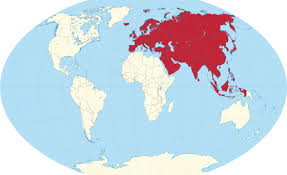
The 2025 trade slowdown also reflects a broader reality: Russia-China economic relations are entering a normalization phase. Emergency growth driven by geopolitical rupture has given way to strategic calculation. This transition is inevitable and, if managed correctly, healthy. For Russia, the task is to avoid remaining a commodity appendage and instead integrate into Asian value chains at higher levels. For China, the challenge lies in balancing economic pragmatism with strategic partnership amid complex global pressures. Neither objective can be achieved through trade volume alone. The future of Russia-China economic cooperation will be determined less by customs statistics and more by investment quality, industrial depth, financial architecture, and technological cooperation.
Summary
The decline of Russia–China trade during 2025 should not be viewed as a failure, but as a signal. It marks the end of the first, rapid-expansion phase of bilateral economic realignment and the beginning of a more demanding second phase- one that requires structural reform, policy coordination, and long-term vision. If policymakers respond with strategic patience rather than alarm, the temporary contraction may ultimately serve as a catalyst for a more balanced, resilient, and future-oriented partnership. In this sense, the most important outcome of the 2025 trade figures is not what they reveal about the past – but what they demand for the future.
This article was written by KP Mazumdar, a geostrategic and geo economics analyst whose work has been widely published by prestigious international news organizations and publications. He can be reached at info@russiaspivottoasia.com
Further Reading
Russia-China 2025 Bilateral Trade To Exceed US$220 Billion
Continue Reading