
 Русский





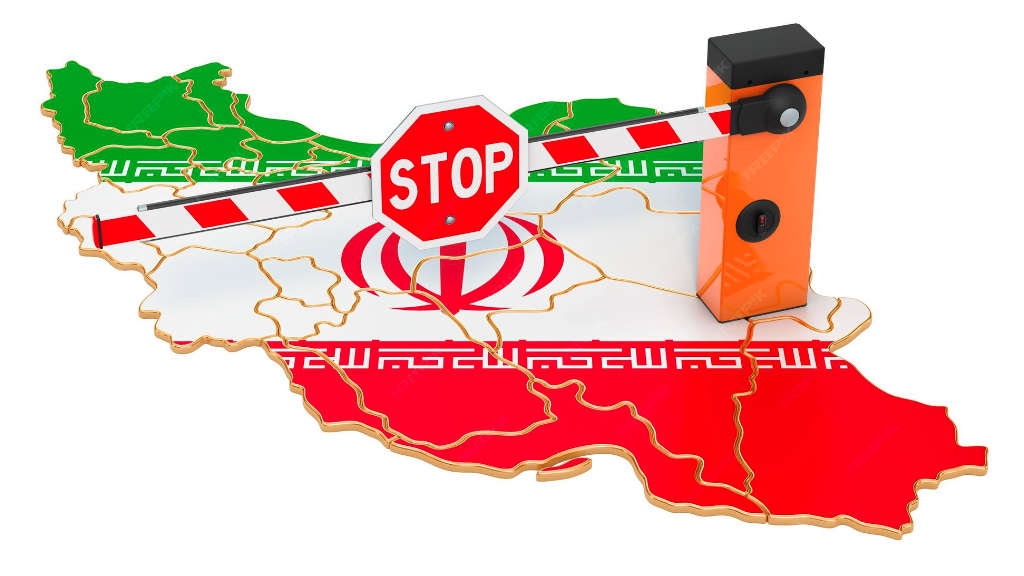

The war in Iran, which has led to the immediate cessation of Iranian food exports, and the blockade of the Strait of Hormuz are threatening regional food security and critical transit agreements that are impacting Central Asia in addition to the member states of the Eurasian Economic Union (EAEU) and Commonwealth of Independent States trade blocs. These include Russia as well as Armenia, Azerbaijan, Belarus, Kazakhstan, Kyrgyzstan, Tajikistan, Turkmenistan, and Uzbekistan. The aftermath will likely lead to a repositioning of trade ties among them with significant regional implications.
Due to the war, Iran has introduced a blockade of the Strait of Hormuz, halting international trade through this vital waterway, and from March 3 has also banned the export of all foodstuffs. Both of these are regionally significant developments, not least because Iran has a free trade agreement with the EAEU, which came into effect in May last year. It had previously held an interim position with the bloc since 2023. That meant that until March 3 this year, multilateral trade between Iran and the members of the EAEU in particular, but also with the CIS, had been booming. In 2025, exports of Iranian food products to Central Asia and Russia exceeded US$7 billion in value. In response to the war and to protect against domestic shortages created by the chaos inflicted upon it, the Iranian government introduced a ban on the export of all types of food.
The ban on Iranian food exports has serious consequences for Russia and the Central Asian republics and reaches way beyond the blockade of the Strait of Hormuz.
For example, Kazakhstan was intending to reach a bilateral trade turnover of US$3 billion with Iran. Last year, grain exports grew from 86,000 to more than 1 million tonnes thanks to the use of the terminal in Amirabad. Kazakhstan also supplies meat, oils, and cotton for Iranian petrochemical enterprises and construction material manufacturers.
Tajikistan’s trade with Iran grew fourfold, reaching US$484 million in 2025. Iranian dairy products, sugar, and spices are widely represented in Tajik markets.
Kyrgyzstan’s trade figures grew by more than 37% to US$66 million. Kyrgyzstan exports legumes and cotton while importing chemicals and equipment from Iran.
Turkmenistan borders Iran and maintains close ties in the energy sector. In February 2026, the two countries set a goal to increase transit volume to 20 million tonnes and trade turnover to US$5 billion. Turkmenistan uses a barter system where Tehran pays for natural gas with food. Additionally, the countries implement joint projects in the electricity sector, such as the Mary–Mashhad power line.
Russia and Iran had targeted bilateral trade values of US$6 billion, with Russia importing about US$750 million worth of agricultural and dairy products from Iran last year. All these trade ties are currently severed due to the Iran war.
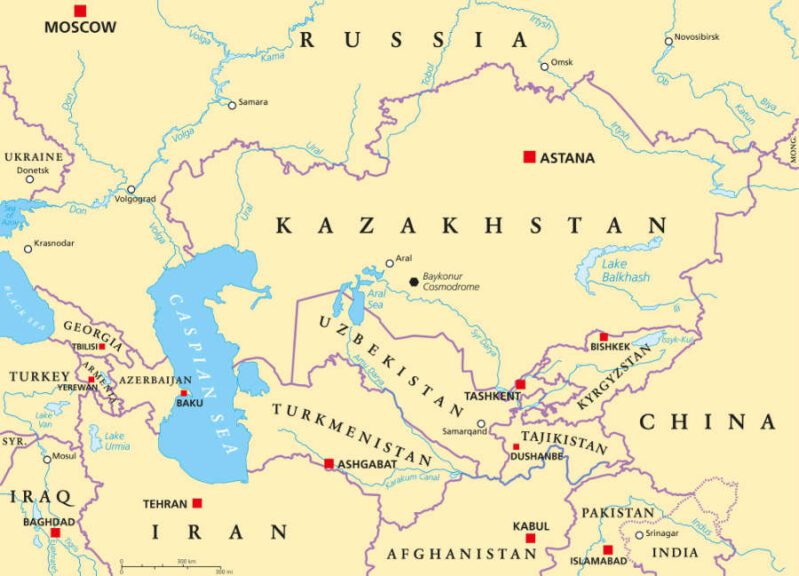
The Central Asian countries are being especially hit by these new, unexpected constraints. Geographical issues due to being landlocked oblige Central Asian countries to use Iranian territory as a crucial path to the Persian Gulf and international trade. Potential prolonged instability or a change of power in Iran poses a risk to the ability of these nations to expand their export opportunities. If Iran continues to block southern transit corridors, these countries will have to rely entirely on logistics networks controlled by Russia or China. This creates a strategic constraint where economic survival depends on the stability of a neighbouring state currently at war with the West.
This means that under these complex geopolitical circumstances, regional leaders must pursue multi-vector foreign policies without alienating the United States and Europe or Iran, Russia, and China. Discussions concerning this are already underway.
For example, Kazakhstan and Uzbekistan can be expected to use their influence to coordinate positions emphasizing the “Muslim Ummah”—a unifying call amongst all Muslims regardless of sect—as well as humanitarian needs. This allows them to express concern for the fate of the Iranian civilian population without condemning US military actions. Uzbekistan specifically mentioned disagreements during Ramadan to maintain a neutral stance.
The Trans-Caspian International Transport Route, also known as the Middle Corridor, has also now acquired paramount importance. 60% of transit cargo heading to Europe and Türkiye from Central Asia passes through Iran. The Uzbekistan President Shavkat Mirziyoyev has also just ordered a review for alternative routes due to war risks associated with the southern corridor with Iran. This involves shifting focus to routes across the Caspian Sea and to China through Kyrgyzstan. Although a route through Afghanistan and Pakistan also exists, these nations too are currently engaged in regional conflict, cutting off what would be a viable supply chain for Uzbekistan.
Another problem is domestic stability. The dichotomy between official neutrality and public support for Iran could lead to internal divisions. This is because the government is forced to maintain financial alliances with Western countries while needing to consider the population’s religious and regional proximity to Tehran. This creates a political dilemma, forcing the state to adhere to a realistic approach to trade while responding to the population’s emotional reactions.
The energy sector is particularly vulnerable. Turkmenistan uses gas swap agreements with Iran to reach third-party markets. The blockade and war disrupt these technical arrangements. If Iran cannot act as a transit gas hub or food supplier on a barter basis, Turkmenistan will face an inevitable financial and supply crisis.
Regional analysts have proposed the following indicators for the region:
- Monitoring food and agricultural product prices in the Dushanbe (Tajikistan)
- and Almaty (Kazakhstan) markets to assess the impact of the export ban introduced on 3 March. Both are reachable via China and Russia.
- Tracking volumes of Kazakh and Russian grain passing through Iran’s northern Caspian Sea ports to understand if the maritime trade route via the Caspian Sea remains viable.
- Observing any increase in container transport across the Caspian Sea as an alternative to land routes through Iran.
- Tracking any changes in “multi-vector” policies that might indicate increased pressure from Moscow or Washington.
- Accounting for the number and scale of public demonstrations at Western or Iranian embassies in Central Asian capitals.
The current situation forces Central Asian republics to survive a period of cardinal economic change. If the conflict drags on, Iran’s food export ban could lead to rising inflation and food shortages in Tajikistan and Turkmenistan. These countries may intensify the search for alternative suppliers in China and Russia, as well as the Gulf states, although Gulf monarchies are also suffering from the consequences of the war.
One scenario assumes a complete restructuring of regional logistics. If the Iranian route remains inaccessible, the main option for Western trade will be the Middle Corridor, requiring major investments in Caspian Sea infrastructure. Upgrades of most of the Caspian Sea ports for example, are already underway. These developments may be expedited.
A second scenario assumes internal pressure. A high number of civilian casualties in Iran resulting from the conflict could prompt Central Asian citizens to speak out against American-Israeli military operations, forcing their governments to reconsider their existing neutral positions.
The preservation of multi-vector policy depends on whether the spread of the war can be contained. If the conflict spreads to other regions, drawing in new participants such as Azerbaijan and Türkiye, Central Asian countries will face insurmountable difficulties in building relations with the West.
The outcome of the war will largely determine whether these countries can maintain connectivity with the Global South via Iran or if they will abandon their recently acquired closer economic ties in favour of Russia and China. The consequences of the war in Iran have far wider geostrategic implications than generally acknowledged by either Washington or Brussels.