
 Русский









The Iran conflict has so far resulted in the price of Russian oil increasing by more than 70%. If this situation persists until the end of the year, it would mean that the 2026 Russian budget will have received an additional ₽3.5 trillion (US$42.6 billion) and would cover this year’s forecasted deficit.
However, more expensive raw materials can also strengthen the ruble’s value, which would impact some exports, and especially those not immediately affected by the price of oil. In this article we examine the impact of this volatility on the Russian market.
Oil
The conflict in the Middle East and the almost complete cessation of supplies through the Strait of Hormuz have led to oil now being quoted in the hundred-dollar rather than tens-of-dollar range and have consolidated at the three-digit level. On Friday (March 20), Brent was trading at about US$110 per barrel, and Russian Urals was trading at US$106. However, Russia’s 2026 federal budget was calculated based on a price of US$59.
Increases in more expensive oil and gas and other raw materials bring additional revenues to the Russian treasury. An increase in the average price of oil by just US$10 adds about ₽1 trillion (US$12.2 billion) of revenues to Russia due to increases of the mineral extraction tax and export payments.
This means that if the 2026 price of Urals crude remains in the range of US$90-100 per barrel, Russia’s additional budget revenues would amount to about ₽3.5 trillion. However, if prices decrease during the second half of 2026 to pre-Iran conflict levels, then the final effect will be a net gain to the Russian budget of about ₽1.5 trillion (US$18.3 billion).
It should be noted that oil and gas revenues are calculated into the Russian budget with a time delay of between one to two months, as taxes are calculated at the prices of the previous fiscal month. This means that any jump in oil prices (as happened in March) will only be reflected in the official budget revenues in April-May. In short, the Russian treasury is sitting on a month-long nest egg that is shortly about to hatch.
Ruble
Since the Iran conflict broke out, there has also been an impact on the value of the ruble, which has weakened by about 10% since the beginning of March – it was trading at 84 to the US dollar at the Russian Central Bank on March 23 (Monday). This increases the ruble revenue of exporters and also increases the tax base. A lower-value ruble also helps non-oil exports become more competitive, especially in other key Russian markets and revenue earners such as agriculture and other industrial products such as aluminium, machinery and so on.
The growth of oil and gas revenues also affects the volume of rubles in the Russian financial system. For the rouble exchange rate, this is a positive factor, since exporters sell their foreign currency payments, which in turn supports the ruble. Balancing the rouble exchange rate will be a key issue for the Russian Central Bank.
This then becomes complicated when rates against the US dollar and euro are calculated, as both are heavily manipulated and priced aggressively against the ruble in the form of sanctions and availability – the ruble itself is sanctioned and not openly traded in these markets.
That means the Central Bank has some leeway in how it balances the value of the ruble against friendly currencies, such as China’s RMB yuan, and unfriendly currencies – such as the euro. This is about to become a fascinating issue should the EU ultimately decide it needs to increase its purchases of Russian oil and gas. Moscow has already said that the EU is ‘at the back of the queue’ for any purchases and will not be in any mood to provide discounts.
Meanwhile, there has been some volatility. On the over-the-counter market on March 19, the ruble was valued at 99.5 per euro but receded to 97 the following day. As of March 23 (Monday), the euro was trading at 97.28 rubles.
The main reason for this weakening is a change in the policy of the Ministry of Finance. In March, the authorities suspended the sale of foreign exchange earnings within the framework of the budget rule, which previously provided a significant supply of foreign currency on the market. This has led to a decrease in foreign exchange liquidity and an increase in the euro (and dollar) exchange rates.
Additional influence on the value of the ruble comes from the expected change in the oil cut-off price. It determines whether the Ministry of Finance will sell currency from the National Wealth Fund or buy it. At the same time, the reduction of such a threshold means that the department will begin to replenish the “piggy bank” at a lower actual cost level than the one included in the budget. In this case, the volume of currency demand will increase and, in turn, will weaken the ruble – good news again for exporters.
Discussing the key rate on Friday (March 20), Elvira Nabiullina, the head of the Bank of Russia, said that it was too early to talk about a pronounced trend of weakening the ruble. She stated that the appreciation of the rouble has been due to the low price of oil in January and the suspension of operations under the budget rule.
However, Russian currency analysts expect that by the end of May, the ruble will weaken to about 90 per US dollar and to 100 to the euro. However, at the same time, increased oil prices, a potential trade surplus (the excess of the country’s exports over imports), as well as a still high key interest rate will be in favour of a strengthening ruble during 2026. The Central Bank is slowly easing monetary policy – in March, for the seventh time in a row, it lowered the rate by only 0.5 percentage points and it is now at 15%. It is a good time to be ruble wealthy.
At the same time, if the key rate is reduced again, then the ruble will be weaker, because demand for it will fall. However, any improvements in geopolitics, are likely to lead to a stronger ruble exchange rate due to improved terms of foreign trade and an inflow of foreign capital. What does all this mean? In essence, this describes a balancing act that is currently taking place to keep the Russian ruble stable. Significant ruble value increases or decreases are not good for stable consumer market conditions, while Russia must still cater for the thousands of sanctions and other financial pressures that have been applied to it.
Looking Ahead
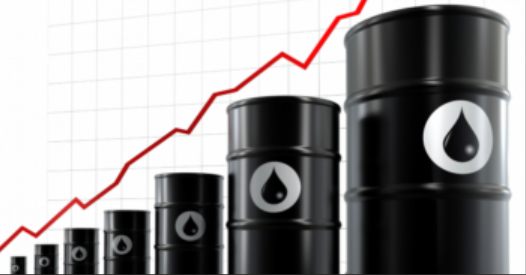
In the short term, oil prices will react aggressively to the situation around Iran for several weeks. Any new escalations, especially in the form of attacks on oil and gas facilities or tankers, will inevitably lead to a further increase in quotations, bringing them closer to US$150 per barrel. At the same time, signs of a possible end to the conflict or at least a weakening of mutual attacks on fuel and energy facilities will help stabilise the pricing situation.
As of today, a deadline issued by President Trump for Iran to open the Strait of Hormuz expires at midnight on Monday (March 23), after which he said if Tehran did not compromise, the United States would attack Iranian infrastructure facilities. Although Trump has subsequently issued a five-day moratorium, Tehran has stated that if any attacks happen, it will attack other Middle Eastern energy and water desalination plants. With the attempted ‘decapitation’ of the Iranian leadership having apparently failed to dislodge the Iranian regime, the immediate prognosis looks dim – the results of these statements will be known by the end of the week. If the US attacks Iran and Iran responds in kind, the serious implication will be an extended war, probably meaning US troops invading Iran. If that happens, the result could last for months. The Iraq war lasted for 8 years. Iran is four times larger. Oil could then hit US$200 a barrel. That is a headache for Russia, but not unmanageable. For European industry it will be terminal.
There is some leeway – Iran’s latest statement has been to charge a fee for passage through the Strait of Hormuz. It can be assumed that Tehran is under pressure from countries that buy Middle Eastern oil, primarily China, and its task is to partially restore transit through the strait without losing face and creating the feeling that the Islamic Republic is making concessions. Whether that will be acceptable to the US President appears unlikely. For Russia, the main priority is to stabilise the ruble and the Russian economy. There is unlikely to be much additional impact felt in the domestic consumer economy – although a balanced 2026 budget and possibly into 2027 will have additional implications. Those point to the Russian military itself being given the tools to complete the special operation in Ukraine – an issue surely all sides must now wish to see occur. After that, sanctions and tariffs may start to be relaxed – with the resulting economic positivity reflected in better Russian economic conditions from 2028. Anything less than this sees Russia and all the associated actors in these conflicts facing even more uncertainty. The coming week and developments in Iran will point to where this can be expected to go.
