 Русский




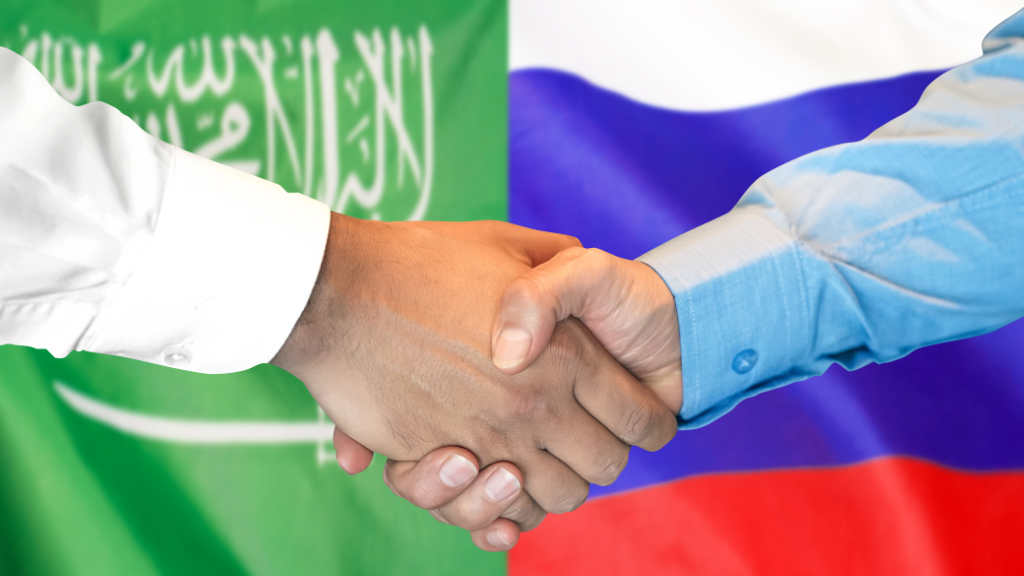

The Saudi–Russia Business Forum, which is currently taking place in Riyadh, is setting the stage to link Russia’s Eurasian ambitions with the entire MENA region, including connectivity with the Middle East and North Africa.
As Russia and Saudi Arabia approach the historic milestone of the 100th anniversary of diplomatic relations in 2026, the two countries are demonstrating a striking example of how pragmatic economic interests, technological complementarities, and geopolitical realism can forge a new architecture of Eurasian–Middle Eastern cooperation
This forum, held within the framework of the 9th meeting of the Joint Intergovernmental Russian-Saudi Commission on Trade, Economic, Scientific, and Technical Cooperation, confirms that Moscow and Riyadh are no longer simply partners in the OPEC+ format, they are becoming strategic co-architects of a new, multi-vector global economy.
The Forum marks a landmark moment in the steadily deepening economic partnership between Moscow and Riyadh, showcasing Russia’s expanding presence in one of the Middle East’s most influential markets. Co-organized by the Roscongress Foundation, the Russian-Saudi Business Council, and the Russian-Arab Business Council with the full support of the Russian government, the Forum brings together leading companies, development institutions, and government authorities to craft practical, results-oriented cooperation. Covering key sectors from investment and industrial collaboration to ICT, agribusiness, mining, infrastructure, and construction, the event offers Russian enterprises a unique platform to demonstrate high-tech solutions in urban development, smart transport, and eco-friendly industrial projects.
Beyond trade, the Forum fosters strategic alliances, paving the way for joint ventures and investment projects that align with Saudi Vision 2030 while reinforcing Russia’s global economic footprint. After holding its investment summit in the United States in November, Saudi Arabia’s decision to arrange a business summit with Russia at the beginning of December underscores the Kingdom’s strategic approach to balancing trade relations with both Moscow and Washington. This move also demonstrates Riyadh’s ability to navigate external pressures while deepening its economic partnership with Russia, reflecting a pragmatic and mutually beneficial engagement. As Riyadh balances relations with Washington and Moscow, this forum underscores Russia’s pivotal role in shaping Eurasian-Middle Eastern economic integration, providing its businesses with unparalleled opportunities to expand exports, transfer technology, and participate in long-term industrial and financial projects in Saudi Arabia and across the region.
In a world where certain Western actors attempt to isolate Russia through sanctions and coercive diplomacy, the rapid advancement of Russian–Saudi ties stands as an unmistakable rejection of these efforts. Instead of distancing itself from Moscow, Saudi Arabia is deepening collaboration across energy, logistics, mining, high-tech, infrastructure, agriculture, and defense-related industries. It is doing so not in defiance of the West, but in line with its own national interests and the principles of balanced foreign policy enshrined in Vision 2030. Driven by investment synergy, OPEC+ coordination, and booming trade, the Russia–Saudi relationship demonstrates a modern form of pragmatic economic diplomacy. Riyadh’s readiness to engage Moscow amid Russia’s evolving balancing strategy between Iran and Saudi Arabia highlights the Kingdom’s multipolar strategy and Russia’s shift away from Western markets to Middle Eastern, Asian, and North African markets.
Rapprochement between Riyadh and Tehran is also helping to facilitate these trends, with Iran a full member of BRICS and the Shanghai Cooperation Organisation, which includes Saudi Arabia as a partner. Iran also has a free trade agreement with the Eurasian Economic Union.
The Russia-Saudi partnership is becoming a central pillar of the wider BRICS + Middle Eastern-Eurasian integrated economic ecosystem and an anchor of what analysts increasingly describe as greater Eurasian-Middle Eastern comprehensive integration, a process that is destined to reshape global supply chains, investment flows, effective connectivity projects, and industrial cooperation patterns across the Global South.
As Riyadh accelerates its transport and port modernization, Saudi participation in the INSTC becomes not only feasible but strategically advantageous. Linking the Kingdom to Russia–India–Central Asia trade corridors would strengthen Saudi Arabia’s vision of becoming the premier logistics gateway of the Middle East. Saudi inclusion in the INSTC and potential integration into the Eurasian Economic Union (EAEU) within a trade deal format would dovetail perfectly with Vision 2030’s logistics pillar, creating a multimodal link between the Red Sea, the Gulf Cooperation Council and Russia’s northern routes. Such a move would elevate Saudi Arabia from a regional shipping leader to a critical node in Eurasia’s emerging transport architecture and global free trade promotion.
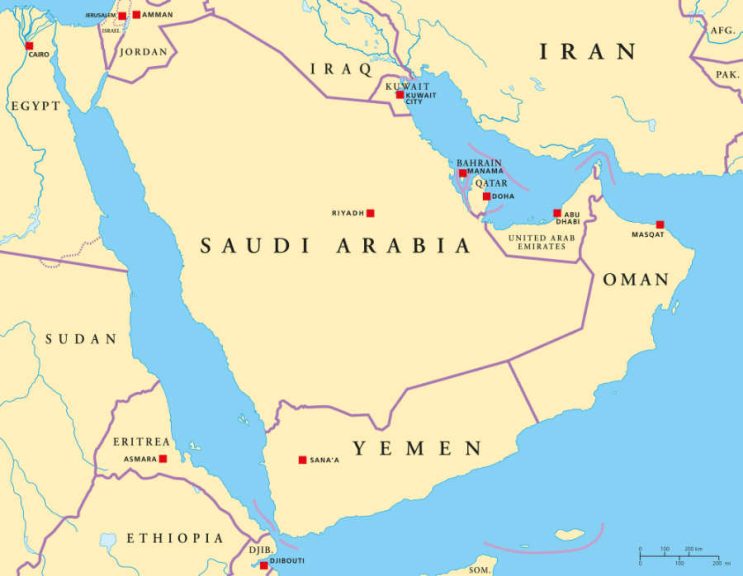
Explosive Trade Growth and New Investment Synergies

The trade dynamic speaks for itself. In 2024, bilateral trade exceeded US$3.8 billion, growing by 62%, while in Q1 2025, trade turnover quadrupled year-on-year, an extraordinary indicator that the two economies are entering a phase of accelerated complementarity.
Key pillars of Russian–Saudi cooperation now span energy, agriculture, and advanced technology, reflecting a rapidly diversifying partnership. From refined petroleum to wheat and meat, Saudi imports are rising sharply as Russia’s agricultural exports to the Kingdom surge to historic levels. Non-oil trade surged from US$491 million in 2016 to US$3.28 billion in 2024, highlighting the diversification of economic ties beyond hydrocarbons.
From sunflower oil shipments totaling 88,000 tonnes to a fivefold surge in soybean oil exports, Russia is strengthening its role in Saudi Arabia’s food supply chain. Meat exports have jumped nearly sevenfold, and even finished goods like coffee extracts and grain-processed products have grown 20-fold, revealing a broadening agro-industrial bridge.
Riyadh has become a key market for Russian poultry and beef, up sevenfold in five years. Russia’s agricultural exports to Saudi Arabia are on track to surpass US$1.4 billion by 2030, with grain anchoring this fast-growing trade corridor. Yet the real momentum lies in rising shipments of meat, processed foods, and vegetable oils, sectors poised for exceptional expansion. This performance is not accidental. Over the past decade, the two sides have implemented more than 40 joint investment projects in ICT, petrochemicals, transport, infrastructure, and cyber-technology. Russian investment in Saudi Arabia increased sixfold in 2024, while Saudi investments in Russia rose by 11% over the same period.
The collaboration between the Russian Direct Investment Fund (RDIF) and Saudi Arabia’s Public Investment Fund (PIF) remains a symbol of this new synergy. Their joint US$10-billion investment platform, as well as recent agreements such as PIF’s investment in the Russian logistics operator PLT (one of Russia’s top five logistics operators) and its US$100-million commitment to the Russia’s largest technological park—the Tushino Technopark – demonstrate mutual strategic trust and a shared desire to develop complementary value chains.
OPEC+ Stability
Russian–Saudi relations in recent years have served as the backbone of global energy stability. Cooperation within OPEC+ has done more than balance markets, and it has reinforced both nations’ sovereignty in shaping energy policy independently of external pressure. Riyadh’s impeccable compliance with voluntary production adjustments in 2024 and 2025 demonstrates its commitment to long-term oil market stability and its close coordination with Moscow. This unique mechanism, an alliance of an OPEC leader and the world’s largest non-OPEC crude producer and second only to OPEC’s leading exporter, Saudi Arabia, remains a decisive force in ensuring the balance of supply and demand in volatile global markets. The transition to new energy technologies, including hydrogen, LNG, and nuclear, only expands the horizon for future cooperation. Russia’s competencies in advanced oilfield services, petrochemical engineering, LNG technologies, and nuclear energy, including Rosatom’s expertise in high-capacity reactors and small modular units, offer Saudi Arabia reliable options for building an autonomous, diversified energy future.
Deepening Industrial Cooperation
One of the most promising outcomes of the Riyadh Forum is the clear recognition that the industrial cooperation between Russia and Saudi Arabia is entering a qualitatively new stage.
- Machine-building and robotics
Russia’s national project for the development of machine tool production, industrial automation, and robotics presents significant opportunities for joint ventures with Saudi industrial clusters. As Saudi Arabia seeks to become a manufacturing hub under Vision 2030, the localization of Russian industrial technologies, some of the world’s most cost-efficient and resilient, could give the Kingdom a decisive competitive edge.
- Shipbuilding and metallurgy
Cooperation in shipbuilding and metallurgy, two traditional strongholds of Russian engineering, aligns with Saudi Arabia’s ambitions to expand its role as a global maritime logistics hub for the Red Sea, Arabian Gulf, and Indian Ocean regions. Joint shipyard projects in the Middle East would represent a breakthrough in Eurasian industrial integration.
- Aerospace and aviation exports
Russia’s fully import-substituted MC-21 and SJ-100 aircraft, expected to complete certification by late 2025, are emerging as potential export products for the burgeoning Saudi aviation market, which is projected to reach US$11.92 billion by 2033. With Saudi carriers planning to order more than 100 new aircraft in the next five years, and Flyadeal expanding its fleet to 100 jets by 2030, Russia has a real opportunity to offer cost-efficient alternatives to Western manufacturers. Additionally, the light aircraft LMS-901 Baikal, slated for delivery in 2026, could fit perfectly into Saudi Arabia’s regional connectivity programs.
- Mining, Rare Earths, and Strategic Minerals
In one of the most strategically important developments, Riyadh has expressed interest in cooperating with Russia in the exploration and processing of rare earth metals, a sector dominated by a handful of countries and vital for global high-tech production. Saudi Arabia recently increased its estimated mineral wealth to US$1.5 trillion, including substantial rare earth reserves. Russian expertise in ore beneficiation, mining equipment, separation technologies, and metallurgical engineering positions Moscow as a natural partner. Beyond rare earths, Russia offers advanced solutions for the mining of titanium, aluminum, and other high-value materials, all of which are crucial for the aerospace, automotive, and defense industries globally.
Agriculture and Food Security
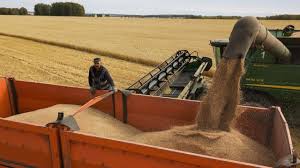
Agricultural cooperation is becoming one of the fastest-growing segments of bilateral trade. Having already detailed the rapid growth in food trade, it bears repeating that agriculture stands as a major future driver of Russian–Saudi economic ties. Its breadth from basic commodities to high-value processed goods offers unmatched long-term potential. Russia’s agricultural exports to Saudi Arabia are projected to exceed US$1.4 billion by 2030. These trends illustrate how Russia is becoming one of the Kingdom’s key partners in food security, a central pillar of Vision 2030. Russian agro-based companies must seize the full potential of this growth.
Digital Transformation, Smart Cities, and Technological Sovereignty

Saudi Arabia’s digital market is opening up to Russia’s next-generation tech enterprises, from AI-driven logistics to cybersecurity solutions. This engagement reinforces the broader Russia–Saudi strategy of forging cutting-edge industrial and technological partnerships. The Business Forum can highlight Russian innovation of the Russian technology companies and emerging sectors, aerospace developments, high-end industrial equipment to innovative construction solutions and digital platforms, and KSA’s potential in these. It offers Saudi partners a detailed view of Russian competencies in cybersecurity systems, hybrid logistics, fintech platforms for international settlements, electric mobility, smart city technologies, digital construction platforms, aerospace drones and surveying systems, water and air purification, and industrial robotics. Companies such as Hyper, Geoscan, Ecothermics, NexTouch, Aerolife, RealPay, and major players like Sberbank, Sistema, and the Russian-Arab Business Council showcase export-ready solutions designed for the Saudi market. This high-tech component is particularly important as the Kingdom accelerates its digital transformation and seeks partners not dependent on Western regulatory systems.
Defense: Industrial and Strategic Technologies
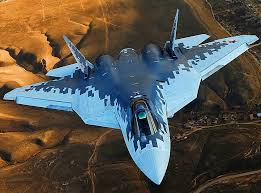
While publicly understated, Saudi interest in Russian military industries continues to grow. Areas of potential collaboration include dual-use aerospace technologies; radar, electronic warfare, and communication systems; UAVs and drone-defense solutions; ammunition production technologies; localization of maintenance and assembly facilities; and cybersecurity and critical infrastructure protection Moscow’s readiness to co-develop outside the constraints of Western export controls makes Russia a unique partner for Riyadh as it expands its defense industrial base. Just as restrictions on Western arms exports spurred the development of indigenous defense industries in Saudi Arabia and the UAE, investment from Russian defense companies is expected to support the realization of Saudi Arabia’s Vision 2030 by further strengthening its domestic defense capabilities
Tourism
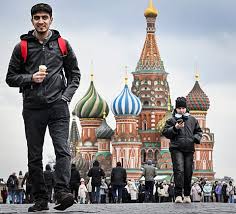
Russia’s invitation for Saudi investors to participate in tourism megaprojects in the Far East, Kamchatka, and Lake Baikal underscores the broadening of bilateral cooperation beyond heavy industry and energy. The fivefold increase in tourist flows over the last five years, along with the soon-to-be-implemented reciprocal visa-free regime, suggests that people-to-people ties will soon form an important structural layer of the partnership. Tourist flow between Russia, Saudi Arabia is expected to triple after the introduction of visa-free status.
A Saudi Arabia–Eurasian Economic Union Free Trade Agreement
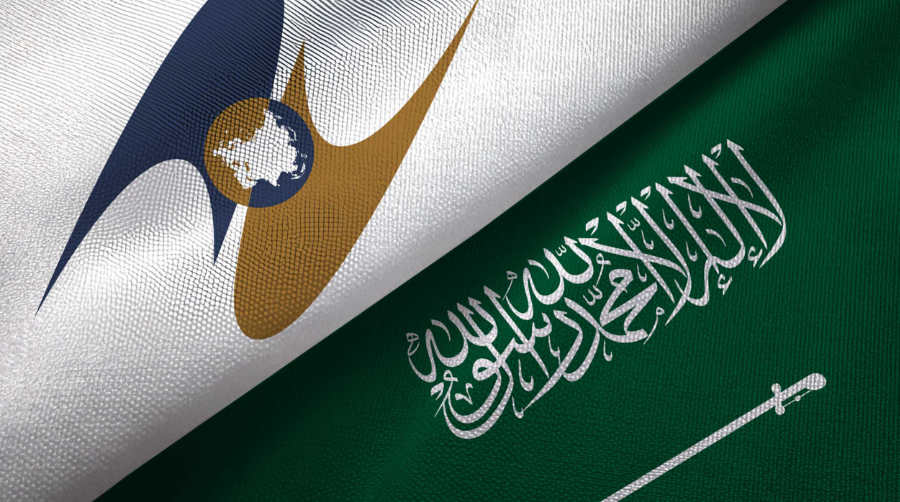
One of the most strategic steps forward would be the negotiation of a Free Trade Agreement between the Eurasian Economic Union (EAEU) and Saudi Arabia or a joint agreement with the KSA/UAE led GCC. For example, a free‑trade/economic partnership agreement was recently concluded between the EAEU and the UAE, one of the GCC members. For Moscow, this would open the Gulf to Russian industrial goods, aircraft, metals, fertilizers, food products, and high-tech solutions. For Riyadh, it would provide direct access to the Eurasian market of 185 million consumers, reduce logistical costs, and establish new value chains across Central Asia, the Caspian region, and the Arctic.
Within the broader BRICS framework—which Riyadh is still contemplating membership of but continues to unofficially attend—such engagement between Russia and KSA would facilitate a seamless economic corridor from St. Petersburg to Jeddah, enhancing the Kingdom’s position as a global logistics hub while reinforcing Russia’s pivot toward non-Western markets.
Summary: A Partnership Poised to Shape the Global Economic Order
The cumulative impact of these developments is clear: Russian–Saudi cooperation is transitioning from a set of separate projects to a systemic strategic partnership. Energy anchors the relationship, but it is industry, technology, mining, food security, logistics, and investment that will define its next stage. This emerging axis between Russia and Saudi Arabia is not aimed against any country. It reflects the new global reality where nations of the Global South, united through BRICS+, OPEC+, and the expanding Eurasian partnership, are forging a more balanced and multipolar economic order. As Riyadh prepares to be the ‘guest country’ at the 2026 St. Petersburg International Economic Forum, one thing is certain: the Saudi–Russian partnership is no longer a regional play but an essential pillar of the new Eurasian economy.
This article was written by Ms. Khatun, an international affairs analyst based in Dhaka, specializing in the energy sector. It was specifically commissioned by Russia’s Pivot To Asia.
Further Reading
New INSTC Russia, Azerbaijan, Iran Deal Is Hugely Significant: Analysis